7 Strange Discoveries About the Roman Empire
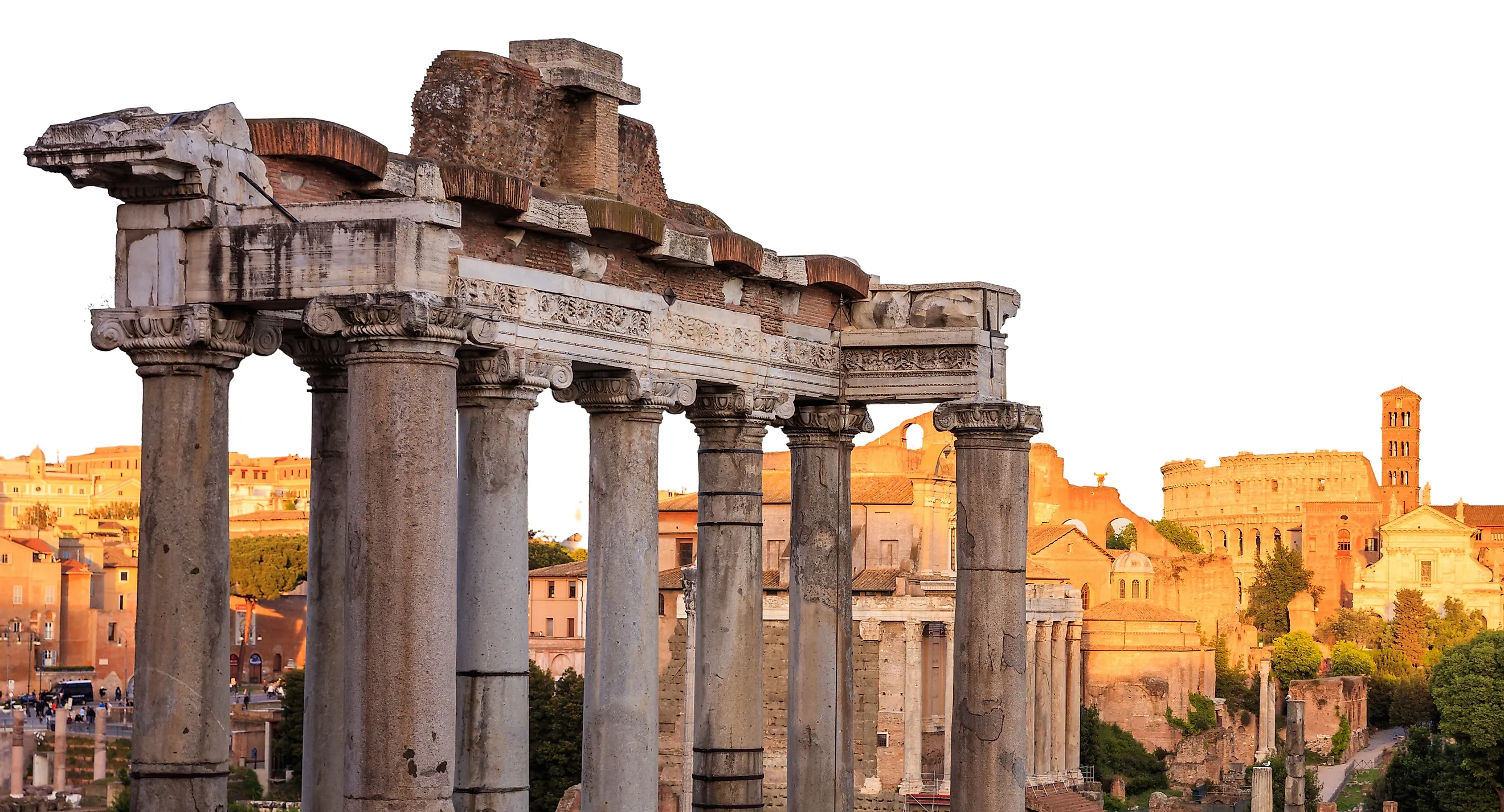
Rome has been described as the City of the Soul. You can feel it in its stones, its solemn grandeur, its sacrilegious boldness. The Roman Empire, a vast realm that encompassed huge swathes of the ancient world, from Hadrian's Wall in northern England to the Red Sea coast of Egypt, is studded with remnants of its imperial glory, from architectural marvels that amaze modern engineers to literature and poetry of the highest quality. The once mighty empire long ago exited the stage, yet there's something colossal even in her ruins. If Rome was not built in a day, it will similarly take us a long time to unravel its remains. And the discoveries indeed travel the whole gamut, from the ordinary to the strange. Continue reading to discover 7 strange discoveries about the Roman Empire.
Concrete That “Heals” Its Own Cracks

Why is it that the concrete used to build magnificent structures such as the Colosseum and the Pantheon has been intact for almost 2,000 years, yet the concrete we use today has a lifetime of just about 100 years? Part of the answer is that Rome wasn't built with the concrete of today. In 2023, scientists at the Massachusetts Institute of Technology and collaborators presented new evidence for special lime chunks hidden within the ancient concrete mix. The material appeared to have one crucial quality: it may help the concrete heal small cracks when water seeps in. However, the healing was not magical; it was pure science. Romans made these lime chunks by combining volcanic ash, lime, seawater (in marine structures), and crushed stone. Consequently, when cracks form, a subsequent interaction with water can trigger chemical reactions, whose outcome is a solution that crystallizes and helps fill up the cracks over time. That's one leading explanation for how Roman concrete has endured for 2,000 years and left us remnants of its architectural genius.
Ancient Roman “Fast-Food” Counters

Much like urban life today, life in ancient Rome was hard and fast, with meals eaten on the go, especially if the 2020 findings announced by Massimo Osanna, interim director general of the Archaeological Park of Pompeii, are anything to go by. The researchers in the ill-fated city discovered a remarkably intact “thermopolium,” the equivalent of a fast-food eatery. The earthen pots that the researchers uncovered contained remnants of duck, goat, pig, fish, and even snails. Some of these items were combined in the same pot. Not just that. They also found ceramic jars, wine flasks, amphora, and a drinking bowl, perhaps implying that food was often paired with some sparkling drink.
The finding is strange because we often expect the menu of fast-food restaurants to be fairly short and simple, but this discovery reveals that this downtown restaurant offered a rich and varied menu. In many Roman cities, poorer residents rented space in tall apartment blocks called insulae, which in the capital could be up to 7 stories tall. The rooms were cramped, noisy, and often built without a dedicated kitchen or chimney. Instead of cooking full meals at home, people in these buildings frequently depended on nearby street stalls, taverns, and communal bake ovens, buying ready‑to‑eat dishes or having bread baked for them. The layout of the well-preserved restaurant in Pompeii, with its eye-catching frescoes and decorations, reveals a side of Roman culture that is unfamiliar to many people today.
Roman Restaurant Trash Included . . . a Giraffe Bone

In Ancient Rome, diet followed social class. Wealthy households and banquet guests could afford items such as fine wheat bread, imported fish sauces, oysters, game, and occasional exotic birds, while most urban workers lived on simpler fare based on grain porridge or bread, cheap wine, olives, pulses, and small amounts of local meat or fish when they could get it. Giraffes and other large wild animals were brought to Rome alive as diplomatic gifts or curiosities from Africa and were mainly displayed in the arena or at elite shows, which made their meat an extreme rarity once the animals were killed.
However, a 2014 study of food waste from a modest restaurant in Pompeii identified a single giraffe leg bone, along with remains of shellfish, sea urchins, and other foods. Some researchers have argued that this hints that lower-status diners might occasionally have tasted very exotic items. However, given how rare and valuable such animals were, a more cautious explanation is that scraps from an elite banquet, pilfered portions taken by servants, or pieces picked up by impoverished people or animals rummaging in garbage piles could have carried that bone into the tavern’s rubbish. In other words, the find shows that a trace of giraffe meat reached a non‑elite context, but it does not mean giraffe was genuinely “on the menu” for ordinary Romans, or even a regular dish for the upper class, for that matter.
Playing Board Games in the Toilet

In 2019, archeologists uncovered a cracked stone game board while excavating a third-century building in Vindolanda, one of 14 forts along Hadrian's Wall. The game board was discovered behind a bathhouse. However, the strange part of the story is that some archeologists believe the board was likely used inside the bath house and was only repurposed as a floor stone in the adjacent building after it was broken. In Ancient Rome, wealthy people had their latrines, which were private spaces. On the other hand, the public had the “foricae,” which were public toilets, usually multi-seat stone or marble benches with drainage channels beneath. Going to these toilets, you would sit together along a row with no barriers or cubicles. Construction of Hadrian's Wall began in 122 A.D. and was spearheaded by Roman emperor Hadrian, hence the name. Strange as it seems, the discovery sheds light on an intriguing aspect of Roman life and culture, especially because archaeologists have also previously uncovered game boards etched between toilet seats.
Secret “Slave” Tunnels Under Hadrian's Villa

After subduing and eclipsing Greece, the Romans were attracted to the luxury and beauty of the Hellenistic art. One example is how they steadily adopted Hellenistic architecture, both in public and private spheres. The villa was perhaps the best representation of this trend, and none was more opulent and luxurious than Hadrian's Villa in Tivoli near Rome. If you can wrap your head around it, think of a complex that spans about 120 hectares, complete with beautiful fountains, several buildings, colorful gardens, and the most ornate accents that wealth and power could procure.
In 2013, archaeologists and surveyors brought renewed attention to a massive network of tunnels under the Roman Emperor Hadrian's Villa.The tunnels are strange for several reasons, including the fact that they were not mentioned in any ancient plans of the grounds. Also, no one is sure about their overarching purpose. However, archeologists hypothesize that running the humongous villa, often the site of luxurious dinner parties or meetings, would come with unnecessary public attention and spectacle, especially in the streets. To avoid this, therefore, the passageways were probably designed to allow large numbers of slaves and merchants to keep the estate running without drawing attention at the street level. Still, this gives a glimpse into the extent to which the Roman elite went in their raw display of wealth and finesse.
The Dodecahedra and Their Elusive Identity

Imagine stumbling upon more than a hundred strange objects scattered across the western Roman world and still having no clear idea what they were for. That is the puzzle of the so‑called Roman dodecahedra. The name itself is not very helpful: “dodecahedron” just comes from Greek for “twelve‑sided object.” These hollow metal pieces have turned up from Hadrian’s Wall in Britain to Avenches in Switzerland, in all kinds of contexts, including baths, theaters, and temples.
Despite that wide distribution, no surviving ancient text or image actually explains them, which makes their purpose especially elusive. Each object is a regular, twelve‑faced hollow form, cast in metal, with small knobs on the corners and circular holes of different sizes in each face. Some examples are quite plain, while others are decorated, but all seem to date roughly to the 2nd-4th centuries AD, and their manufacture would have taken skill and resources.
Over the years, people have proposed all sorts of uses: children’s toys, gaming pieces, tools for fortune‑telling, or even specialized sundials that might have suited the cloudier climates of northern Europe. Other suggestions focus on textile work or measuring devices. The honest answer, though, is that none of these ideas has enough evidence behind it to be definitive, so for now the function of the dodecahedron remains an open question.
Falerii Novi’s Water Pipes

Falerii Novi, about 30 miles north of Rome, thrived between the 3rd century B.C. and the early Middle Ages. Ground‑penetrating radar (GPR), which uses radio waves to map buried structures without digging, has produced remarkably detailed images of the site. These surveys show a well‑planned Roman town with a substantial bath complex, theater, market, and temple. What surprised researchers most was the sophistication of its water system. Instead of following only the street grid, the main pipelines run beneath building plots laid out in advance, indicating that engineers designed the water network and the urban plan together from the start. That level of integrated planning, where infrastructure is carefully coordinated with future construction, would be impressive even by modern standards.
Rome Continues to Amaze And Perplex
Ancient Rome still shapes the modern world in powerful ways. Its laws, political ideas, and engineering solutions continue to influence Western governments and cities, even though the empire itself disappeared long ago. Monumental structures such as temples, villas, and aqueducts remain impressive for their technical skill and scale, and new excavations keep revealing details that challenge assumptions about how Romans lived. These finds show a society that can feel familiar in some respects and very alien in others, reminding us that Roman civilization was both foundational and, at times, deeply strange by modern standards