How The Roman Legion Actually Worked
In the centuries following the fall of the Roman Republic and its replacement by the Roman Empire, the Roman legion became one of the most effective fighting forces in history. The legion evolved over the centuries from a semi-professional force of elites into a professional fighting force made up of volunteers drawn from all segments of the Roman world, supplemented with non-citizens in support roles. The legion was disciplined, well-trained, and highly adaptable, making it one of the most dangerous and respected military forces of the ancient world.
The Army of the Roman Republic
In the early years of the Roman Republic, the army was composed entirely of men from the property-owning classes. Every year, soldiers and officers were chosen from the Roman tribes to fill four consular legions in a process called the dilectus, and their roles were assigned according to their wealth and experience. These four legions made up the Roman army of the mid-to-late Republic, and are sometimes referred to as the Polybian legion, after the Greek historian Polybius who described them.
Early on, the Romans found that the phalanx formation used by the Greeks was too cumbersome for the hilly terrain of central Italy. Adapting to their surroundings, the early Romans organized their army into units called maniples, arranged on the battlefield in a checkerboard pattern. This spacing gave each group room to retreat and re-form a tighter line if needed.
Ranks and Roles in the Legion

The soldiers of the early Roman Republic were all property-owning men. Because soldiers had to provide their own equipment, their duties depended heavily on their social status and wealth. The poorest soldiers served in groups of light infantry called velites. Behind the velites came the heavy infantry, their ranks filled by men with more wealth, age, or experience. The first line was the hastati, then the principes behind them. Third came the triarii, older or more experienced soldiers armed with long spears. Finally, the richest soldiers formed cavalry units called equites. A typical formation was arranged in three lines of infantry maniples.
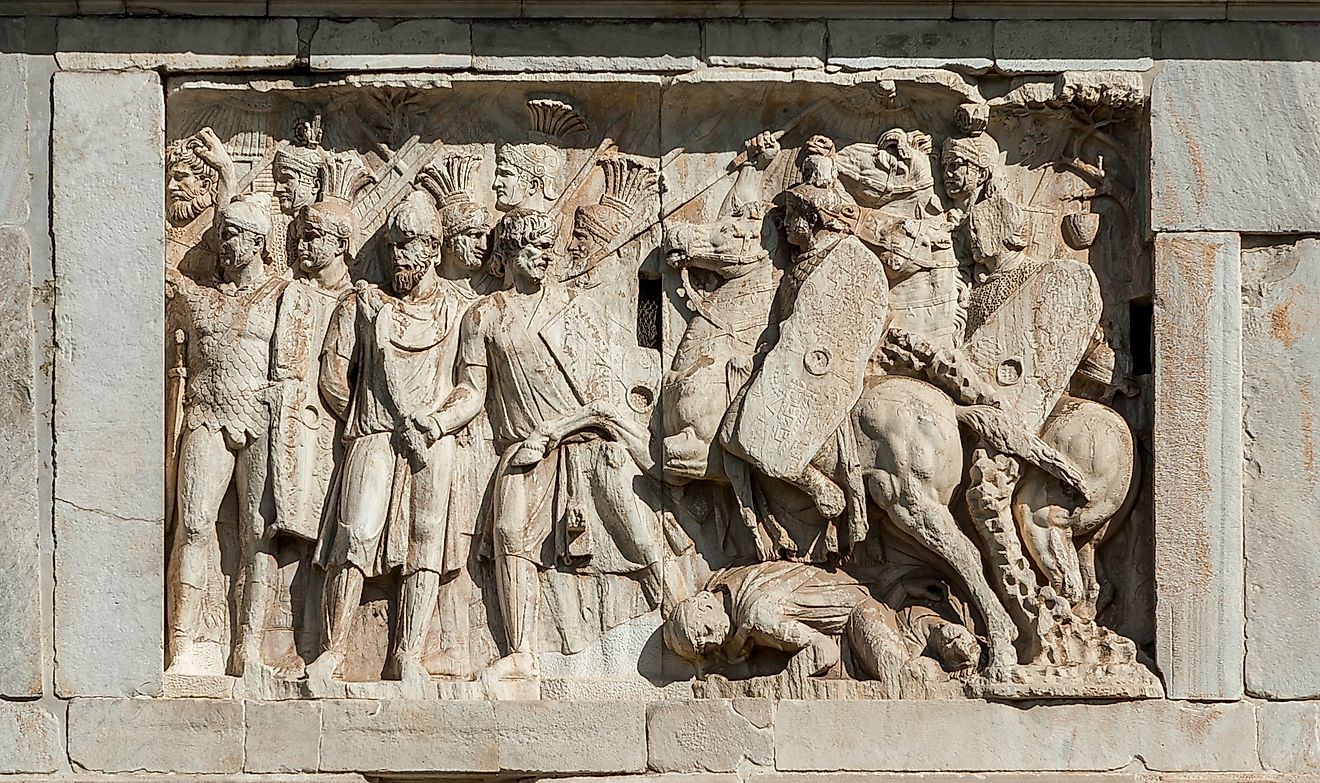
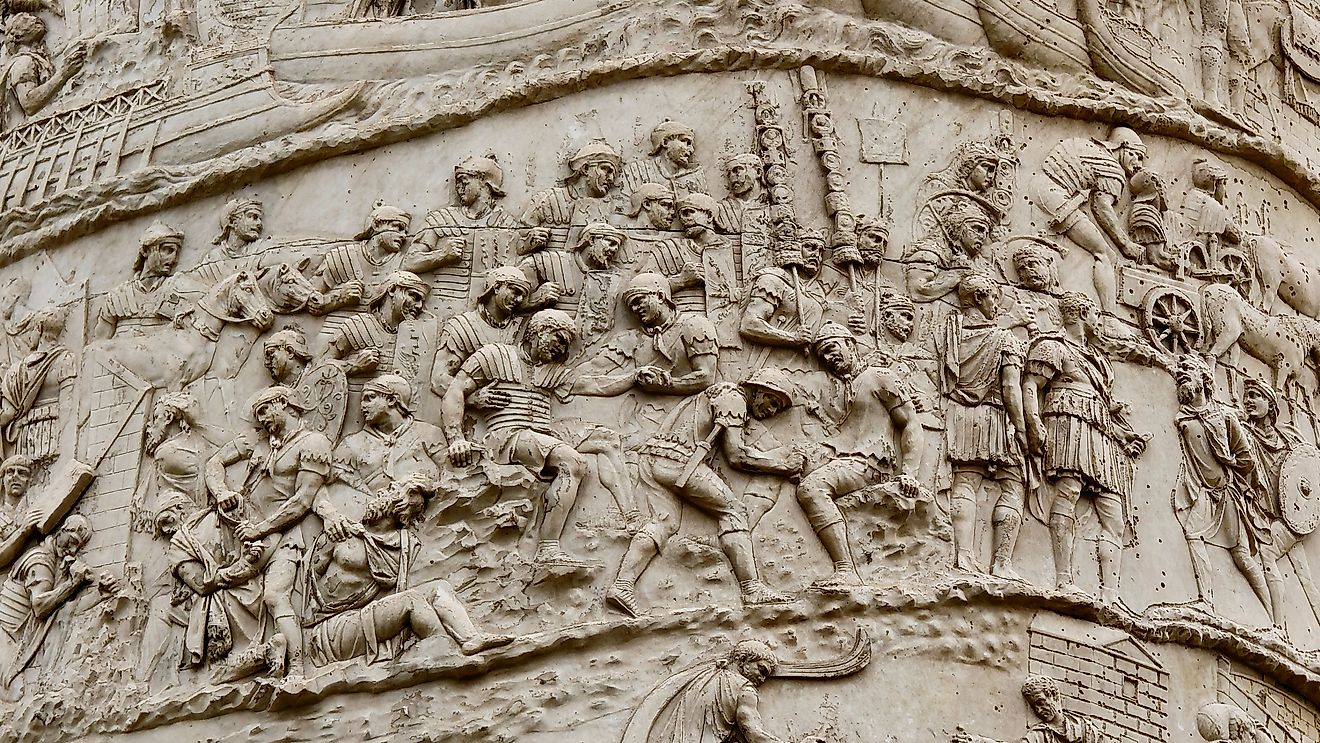
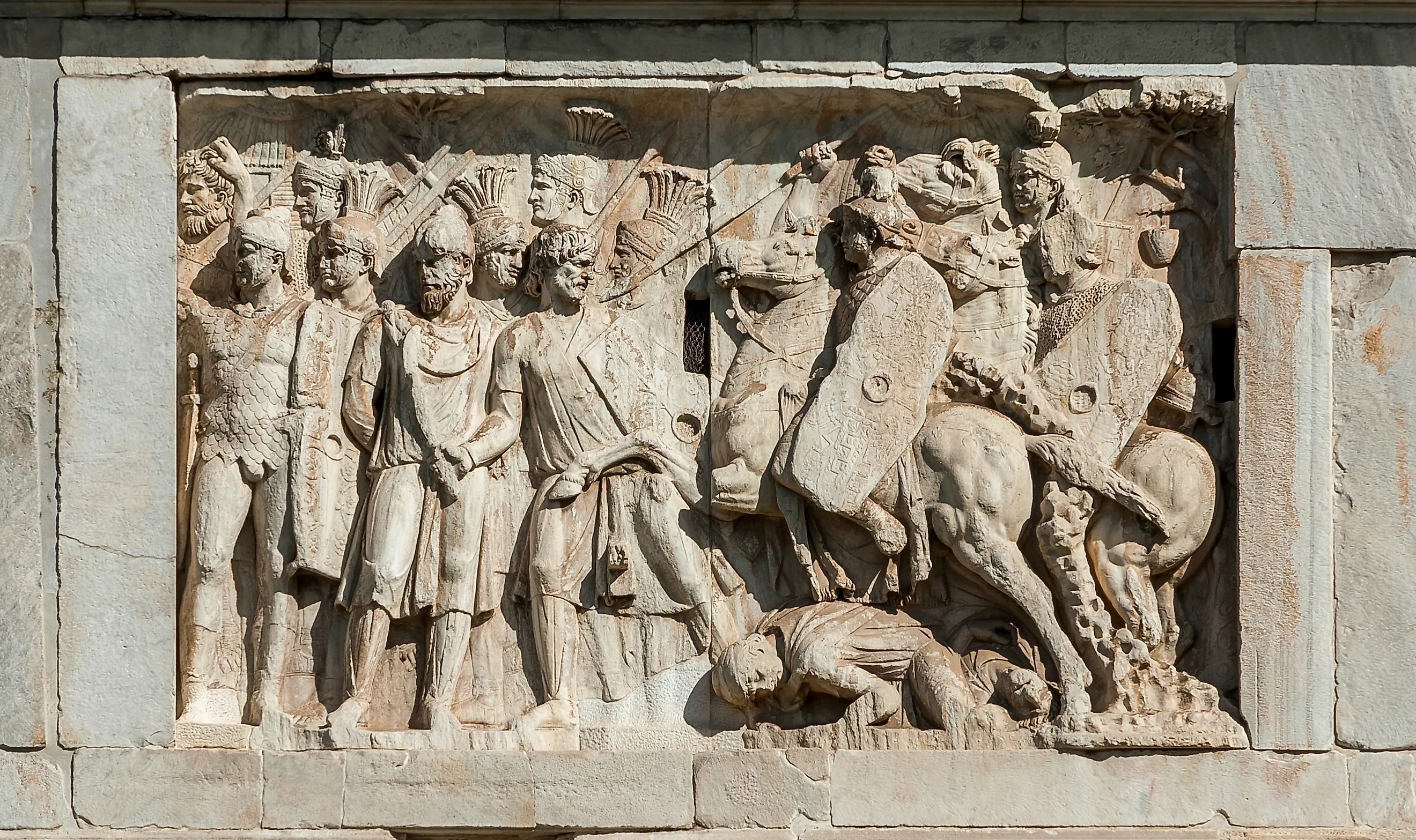
Legionaries were typically clad in a bronze helmet and breastplate with leather straps, though soldiers who could afford them would instead don a mail cuirass. Most soldiers carried a gladius, a short sword of Spanish origin used for both thrusting and cutting, as well as a short dagger called a pugio. To protect themselves, legionaries carried a tall, curved shield called a scutum. Additionally, the hastati and principes were equipped with a pair of heavy javelins called pila (singular: pilum) that could be thrust or thrown. Once a thrown pilum struck its target, the soft metal shank behind the tip would bend, creating an awkward angle that prevented enemy soldiers from throwing them back and made the weapon difficult to pull from a shield. The last line of infantry, the triarii, carried long thrusting spears instead.
The Marian Reforms and the Roman Empire

The Roman military underwent a series of changes late in the 2nd century BC known as the Marian Reforms. Associated with the Roman general and politician Gaius Marius, consul in 107 BC, these reforms made several key changes to the Roman army, forming the basis for what would become the legion under the Roman Empire.
First, Marius set aside the property requirement that had restricted who could serve. Following his reforms, Romans from the poorer classes, or capite censi, could enlist. The second major change was to move away from the maniple as the staple tactical unit. Instead, the legion was built around larger groups of around 480 men called cohorts. Each cohort combined the old lines of heavy infantry into a single formation. At the highest level, a legion numbered roughly 4,800 to 5,200 men and was divided into ten cohorts. Cohorts were further divided into centuries of around 80 men, each commanded by a centurion. At the smallest level, centuries were organized into groups of roughly eight men called contubernia, who shared a tent and a mess.

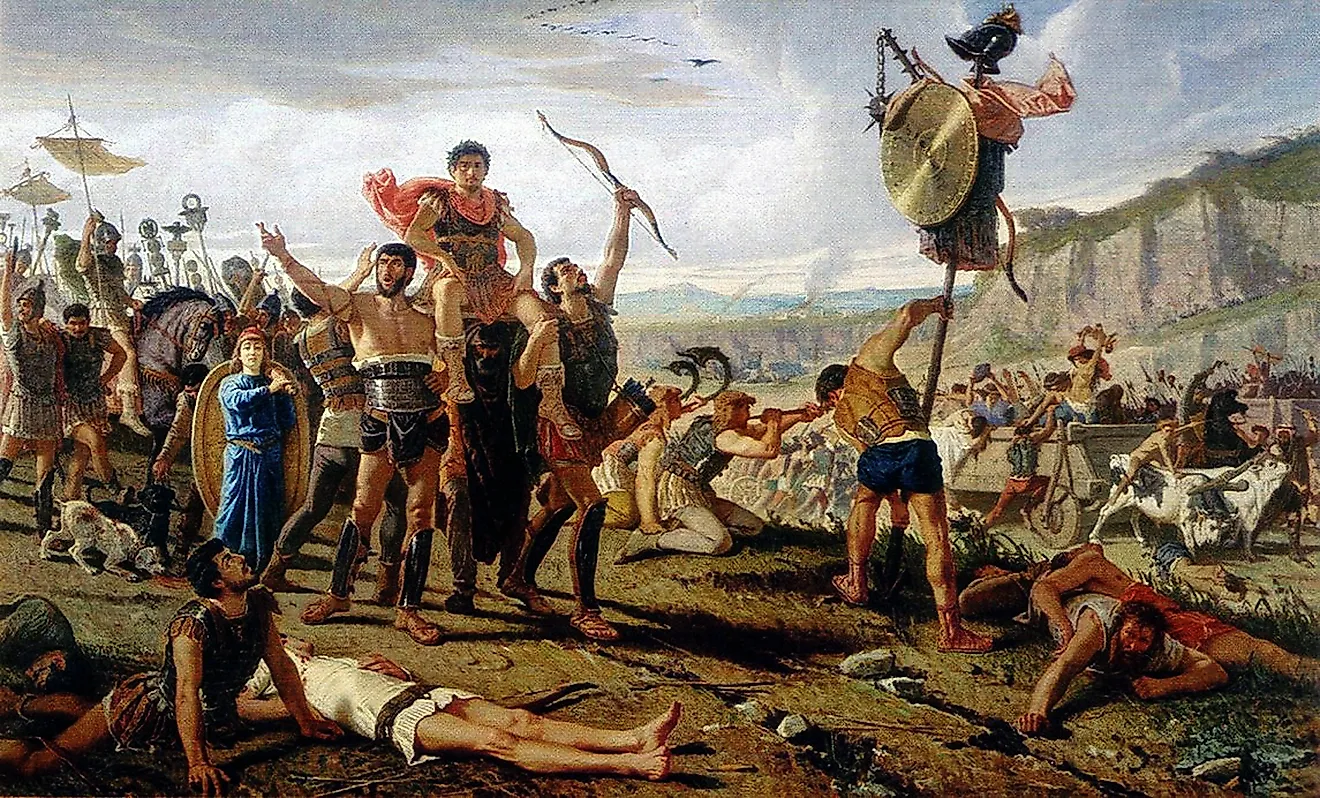
This new system had several benefits, chief among them that by no longer separating soldiers by experience, the Roman army gained cohesion and could function better as a single body. Other changes associated with this era included the provision of clothing, weapons, and armor to soldiers by the Roman state, and the adoption of the eagle as the standard of the legion. As Rome came to rely on long-serving enlisted men rather than annually levied elites, the Roman legion, formerly a semi-professional militia, became a full-time professional army. This gave the army a greater sense of purpose and provided Rome with soldiers who could devote decades of their lives to honing their skills as warriors.
Service, Pay, and the Path to Citizenship

Over time, enlisting became a source of economic stability and advancement, especially after Caesar Augustus, the first emperor of Rome, instituted his own reforms in the late 1st century BC. Under Augustus, legionaries served terms of around 25 years and drew regular pay from the imperial treasury. After their service, provided they survived, they could retire, often with a discharge bonus or a parcel of farmland. Many veterans settled together in communities of former soldiers called coloniae, which spread Roman customs into the provinces. Pay and land, though, were not the only draw.
Service also opened a path to citizenship for non-citizens. Though the legions were made up of male Roman citizens, men from conquered lands could join as auxiliaries. Auxiliaries were paid less and often served in exposed front-line roles, but after their term, they and their families could be granted Roman citizenship. That status carried broad civil rights, including the vote and the recognition of their children as Romans. Because of this, service in the legion became a powerful engine for assimilating conquered peoples and solidifying Rome's hold over the Mediterranean.
Tactics and Training

What made the legion so powerful was its focus on fighting as a whole. Roman soldiers were trained to fight as one group rather than as individuals, forming shield walls or moving as a unit to outflank an enemy. One famous formation was the testudo, or tortoise, in which the front line held shields ahead while the following lines raised theirs overhead or to the sides, creating a shell-like screen against projectiles. Staying in formation, the front lines would hurl a volley of javelins, then draw their swords and charge. It was this series of attacks, one line after another, that broke up enemy formations and gave Roman soldiers an edge.
Behind the tactics stood hard training and standard kit. Legionaries and auxiliaries were expected to march about 20 miles a day in their gear, swim, dig ditches, and build fortifications. Early imperial legionaries carried two pila, the short gladius, and a scutum, and many wore the lorica segmentata with a Gallic-style helmet. From the late 2nd through the 3rd century CE, the longer spatha gradually replaced the gladius in the infantry. Above all, the legion stayed adaptable, adding archers, slingers, cavalry, and siege engines as new enemies demanded. That flexibility, paired with discipline, kept it among the fiercest forces of the ancient world.
The Legion's Lasting Mark

The Roman legion was never a single, fixed institution. It began as a militia of propertied citizens who supplied their own arms, hardened into a professional force under Marius and Augustus, and adapted its weapons and armor across five centuries of warfare. What held across all those changes was the emphasis on the unit over the individual: disciplined lines, engineered camps, and soldiers who could fight, march, and build in equal measure. That combination is why the legion outlasted its enemies for so long, and why it remains the benchmark against which later armies of the ancient world are measured.