The Most Hated Roman Emperors In History
The Roman Empire had some of the most infamous leaders the world has ever known. Consider Caligula. While many of the stories ancient historians recorded are likely false, he was still deeply unpopular and autocratic. Commodus was another notorious leader. He preferred fighting as a gladiator to ruling. These are just two examples of some of the most hated Roman emperors in history.
Caligula (37 to 41 CE)

The son of the immensely popular general named Germanicus, Caligula was widely expected to become emperor. The first months of his reign went well, as he freed prisoners, recalled exiles, and eased tax burdens. However, Caligula soon fell ill. The exact illness remains unknown, but it apparently completely changed his personality. Afterward, Caligula killed people such as Naevius Sutorius Macro (the Praetorian Guard prefect who helped him take power) and his cousin Tiberius Gemellus. He also revived treason trials, allowing him to torture or execute senators he disliked. Finally, Caligula supposedly declared war on the sea and named his horse as consul. While these two stories (and others like them) are probably false or misinterpreted, the fact that they were recorded the way they were by ancient historians indicates Caligula’s unpopularity. Ultimately, the Roman elite grew tired of his antics, so they had him (and his family) killed in 41 CE.
Nero (54 to 68 CE)

Much like Caligula, Nero’s reign began with promise. Under the guidance of his mother, Agrippina, and other advisors, the young emperor banned secret trials, reduced taxes, granted rights to slaves, and sponsored public events. As he grew older, Nero sought greater independence and had Agrippina killed in 59 CE. Without a major moderating influence, he grew increasingly unpopular. Nero’s love of performing embarrassed many Roman elites, who believed he was betraying the sanctity of the emperorship. His response to the Great Fire of Rome in 64 CE was also problematic.

While he didn’t start it or play a fiddle while Rome burned (as is often falsely believed), Nero did build a massive golden structure on the land it cleared. The optics were terrible, and his persecution of Christians afterward didn’t help matters. Such behavior contributed to a plot to assassinate Nero in 65 CE. When Nero learned of it, he purged those responsible by forcing them to commit suicide or executing them. While this made him even more unpopular, the final straw was his failure to suppress a rebellion in 68 CE. The Senate stripped Nero of his powers, and he ultimately committed suicide.
Domitian (81 to 96 CE)

Unlike many of the emperors discussed in this article, Domitian was a highly effective administrator. He increased soldiers’ wages to ensure their continued support, strengthened frontier defenses, and paid attention to the needs of provincial governments. However, as the years went on, Domitian grew increasingly paranoid. This paranoia resulted in a deterioration in his relationship with the Roman elites, particularly the Senate. Domitian used treason trials to execute senators he deemed disloyal. He also often confiscated their property and money. These purges extended to his family, with his cousin, Falvius Clemens, being executed in 95 CE. All this led palace officials and members of his household guard to conspire to assassinate Domitian, which they did in 96 CE.
Commodus (180 to 192 CE)

While Commodus would have been a poor emperor by any standard, the comparison to his predecessor and father, Marcus Aurelius, made him particularly hated. Aurelius was renowned for his stoic philosophy. Despite numerous crises during his reign, including a plague and several invasions, he remained level-headed and led the Romans to victory. Aurelius also co-ruled with his son for several years before his death. In other words, there was no reason to expect that Commodus would be anything other than a great emperor.

This wasn’t the case. Commodus believed he was the living embodiment of Heracles and was more interested in fighting as a gladiator than ruling. He therefore hastily ended his father’s campaigns in Germania so he could return to Rome to pursue his true passion. Commodus also renamed Roman institutions in his honor and executed political opponents. As his reign progressed, corruption and palace intrigue spread. The empire also became increasingly financially unstable due to Commodus’ over-the-top spending habits. Eventually, the Roman elites had enough, and Commodus was assassinated in late 192 CE.
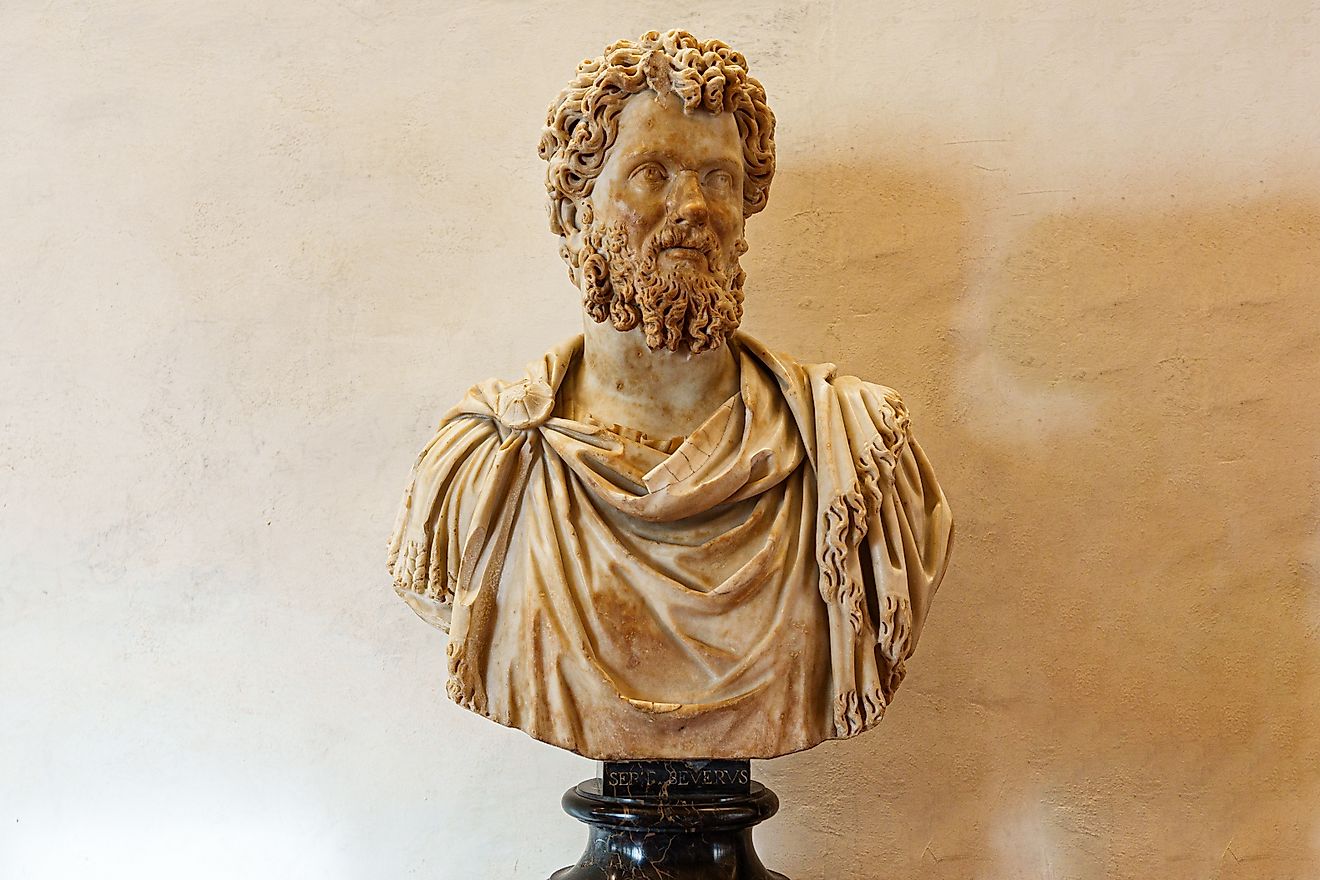
Elagabus (218 to 222 CE)

Elagabalus is one of the most notorious emperors in Roman history. A member of the Severan dynasty, he rose to power at the age of 14. Perhaps his most controversial act was attempting to replace the Roman god Jupiter as the head of the state pantheon with the Syrian sun god Elagabal. He also supposedly held wild parties featuring mock naval battles and chariots pulled by elephants or camels. Finally, Elagabulus’ sexuality and sexual identity were a constant source of conversation. Several ancient sources state that he sought gender reassignment surgery and preferred to be referred to as a “woman,” “lady,” or “empress.” However, we need to take these accounts with a grain of salt, since they were mostly antagonistic toward Elagabalus. Regardless, his actions alienated the upper echelons of Roman society. The final straw came when he attempted to strip Alexander Severus, his chosen heir, of power. With this, the Praetorian Guard revolted and killed Elagabalus and his mother. Their bodies were reportedly dragged through Rome and dumped in the Tiber River.
Impact And Legacy
The most hated Roman emperors remain notorious even 2,000 years later. While much of what was written about Caligula is likely false or exaggerated, he was still a cruel despot. Nero used the Great Fire of Rome to fund his own construction projects and later purged those who planned to assassinate him. Domitian became increasingly paranoid and violent over time. Commodus never showed much interest in ruling and undid many of his father’s accomplishments. Finally, Elagabalus’ upheaval of Roman religious norms, paired with lurid rumors about his sexuality, led to his assassination after just four years as emperor.