The Non-Italian Emperors Who Ruled Rome
The Roman Empire is often remembered as a predominantly Italian state. To some extent, this makes sense. After all, it began as an Italian city. However, it was actually a Mediterranean-wide power that encompassed numerous peoples and cultures. As such, non-Italians often rose to prominence, with some even attaining the highest-ranking position in the empire. For example, Trajan came from Hispania which is modern-day Spain and Septimius Severus was from Leptis Magna in Africa. Here are the many non-Italian emperors who ruled Rome.
Trajan (98 to 117 CE)

Trajan was one of the most famous and consequential emperors of all time. Born in Hispania (modern-day Spain), he became emperor in 98 CE. Trajan oversaw major military campaigns. His most famous conquest was Dacia (modern-day Romania). Over the course of two wars (one lasting from 101 to 102 CE and another from 105 to 106 CE), Trajan brought the region and its leader, the notoriously difficult King Decebalus, to heel. Afterwards, he turned his attention further east, making major gains in places like Armenia and Mesopotamia. In doing so, Trajan brought the Roman Empire to its furthest territorial extent.

Trajan wasn’t just a conqueror. He’s also remembered for his investments in public infrastructure and welfare. He sponsored roads, bridges, and baths throughout the empire. Perhaps his two most famous constructions were Trajan’s Forum and Trajan’s Column in Rome. Trajan also created the alimenta, a program that provided public support, education, and food to poor and orphaned children across Italy. These measures, paired with his military conquests, are why historians often rank Trajan among the best Roman emperors.
Hadrian (117 to 138 CE)

Also born in Hispania, Hadrian was a relative of Trajan and his direct successor. He’s remembered as a great emperor as well, albeit for different reasons. Whereas Trajan’s reign was associated with the expansion of Roman territory, Hadrian focused on consolidation. He reversed several of Trajan’s eastern conquests, judging them too costly to hold over the long run. He then strengthened the empire’s borders and invested in provincial governments. Hadrian’s most famous accomplishment was likely Hadrian’s Wall. Construction began in northern Britain in 122 CE, and it helped secure the empire’s border in the region for centuries.
Much like Trajan, Hadrian isn’t remembered only for his military achievements. He rebuilt or commissioned several major projects, including the Pantheon in Rome. Hadrian’s reign is also associated with relative peace and prosperity, a period only briefly interrupted by the Bar Kokhba Revolt in Judea from 132 to 135 CE.
Septimius Severus (193 to 211 CE)

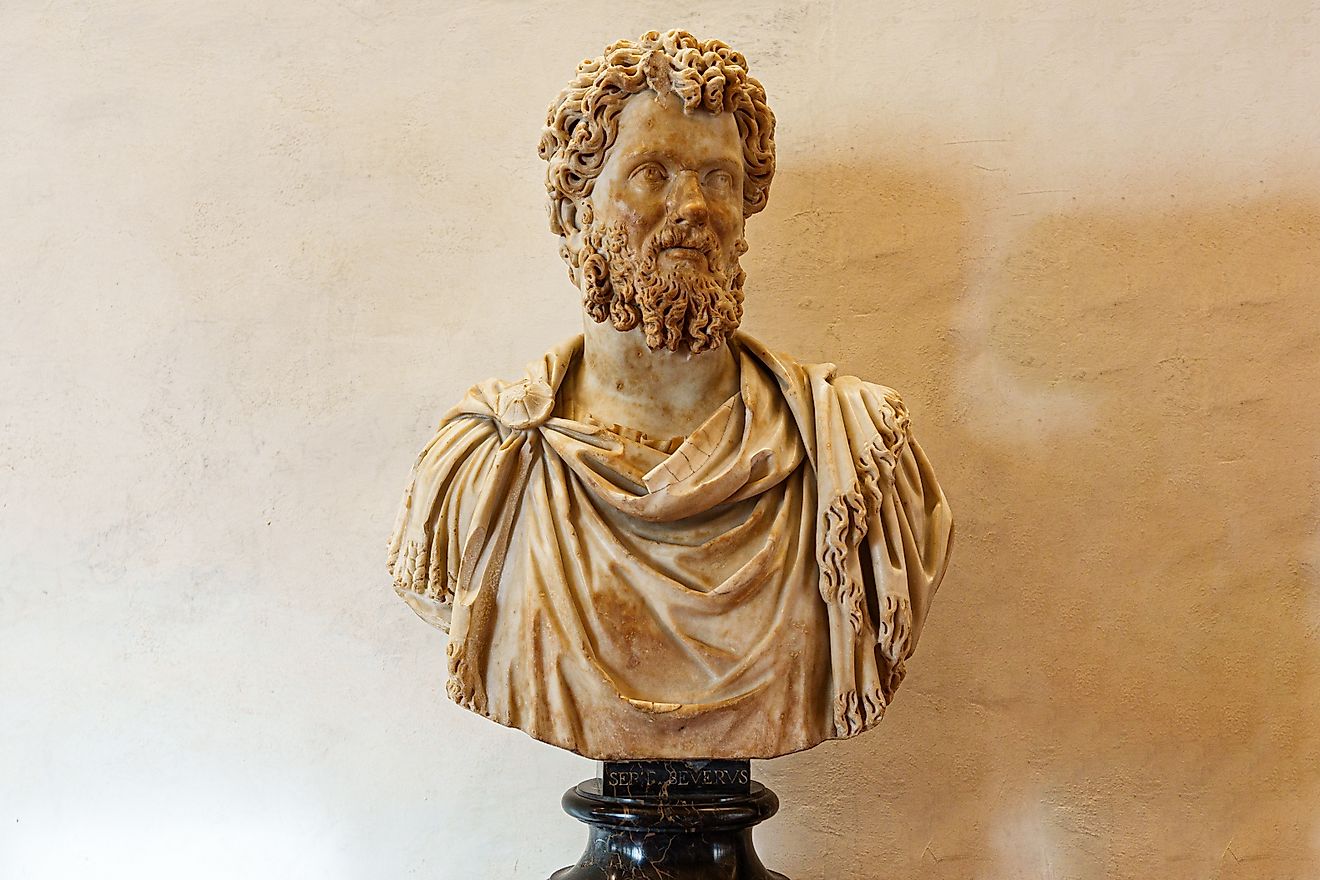
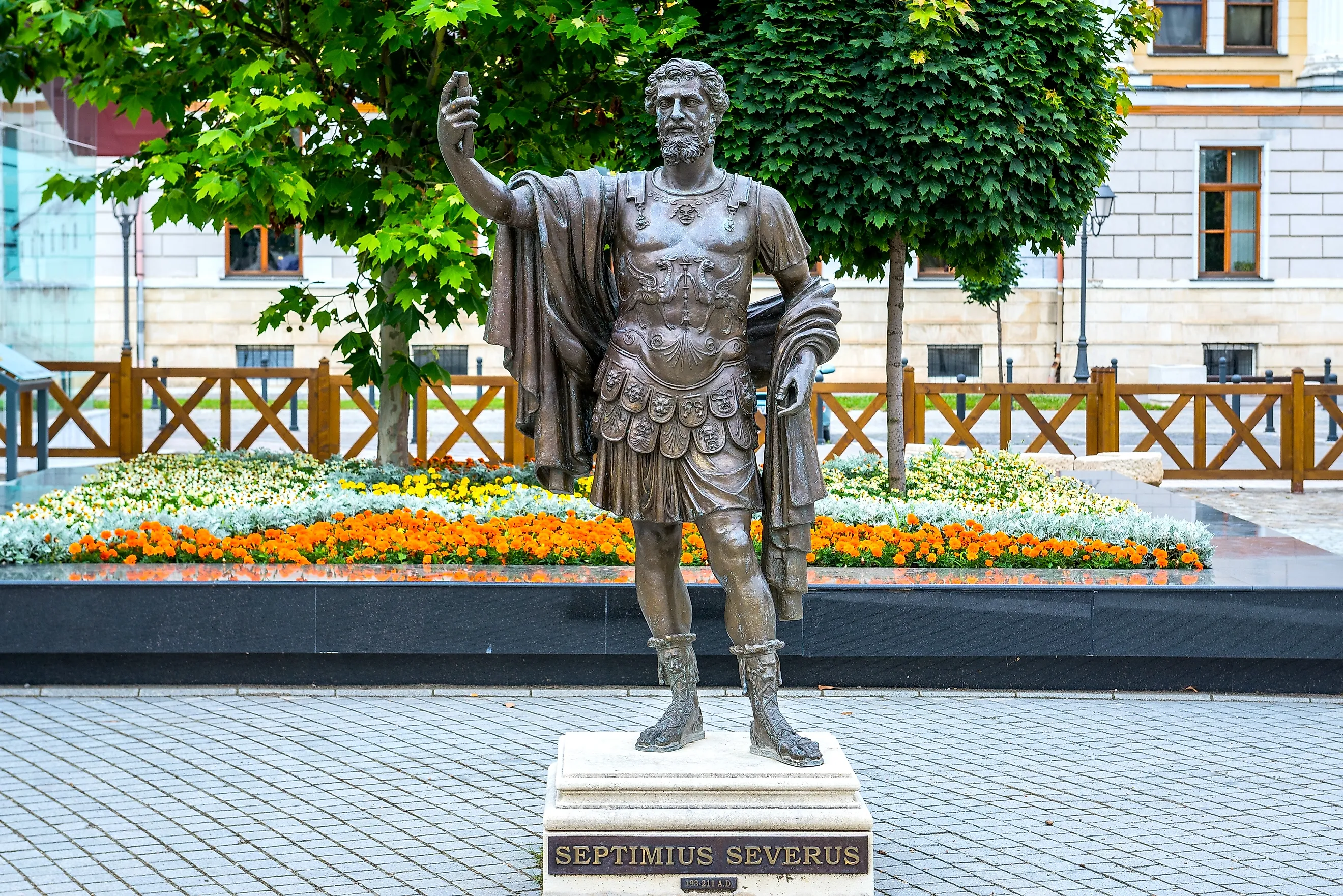
Septimius Severus was born in Leptis Magna, a city in modern-day Libya, in 146 CE. He spent the first fifty years of his life rising through the military and political ranks, emerging as Roman emperor in 193 CE after the chaotic Year of the Five Emperors. Severus was an enormously consequential ruler. He increased soldiers’ pay, thereby securing their loyalty. He also oversaw military campaigns in Parthia (Persia) and Britain.
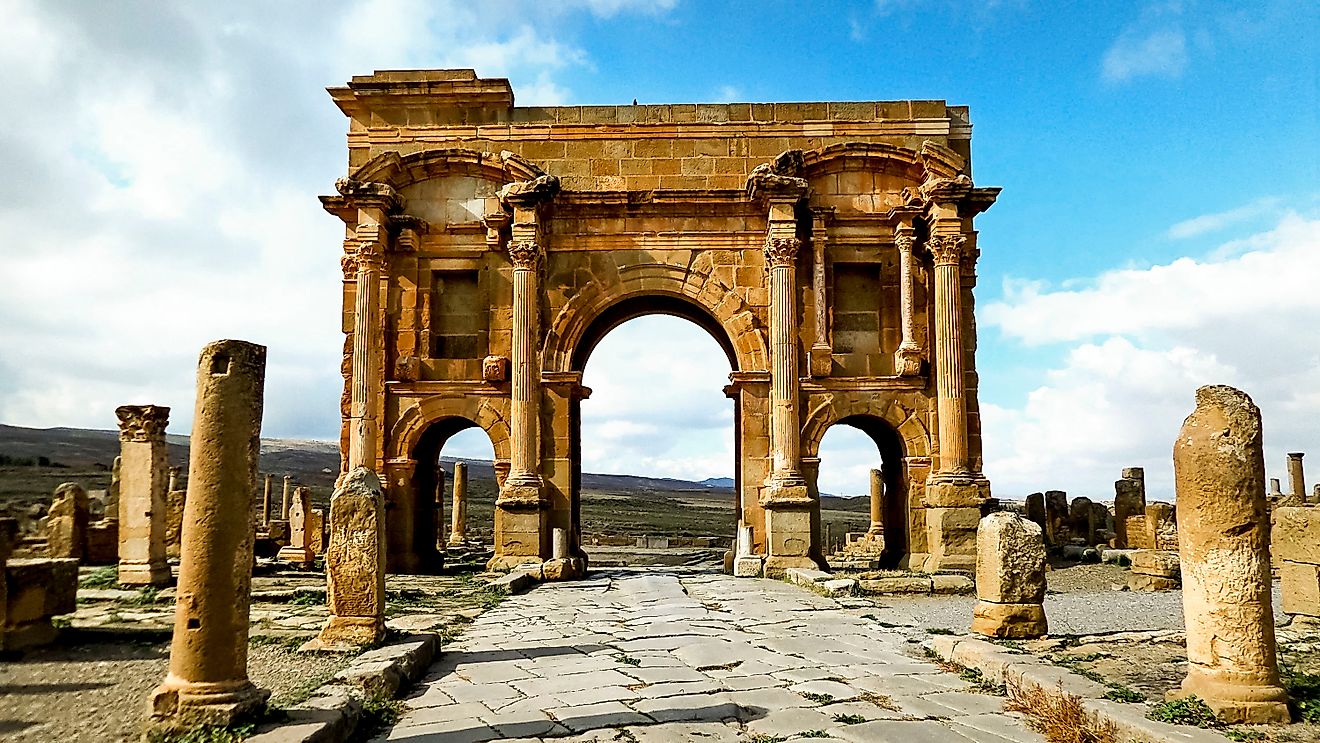
Severus never forgot his roots. Half Punic and half Italian, he embodied this fusion of identities by investing heavily in his hometown. Severus built a massive arch, a public forum, a basilica, and several streets. He also greatly expanded the city's harbor, making it an even stronger economic hub. These measures further Romanized North Africa and integrated it even more closely into the empire.
Constantine The Great (306 to 337 CE)

Constantine the Great could reasonably be seen as the most important emperor in Roman history. Born in Moesia (modern-day Serbia), he rose to power amid civil war. The empire was divided between several emperors, so Constantine spent the first two decades of his reign consolidating power. His victory over Maxentius at the Battle of the Milvian Bridge in 312 CE was one of the most significant moments in this regard, and Constantine finally emerged as the sole ruler of the Roman Empire in 324 CE.

The Battle of the Milvian Bridge wasn’t just important for its military implications. The night before, Constantine supposedly converted to Christianity after seeing a Christian vision in the sky. He legalized the religion the following year. Throughout the rest of his reign, Constantine was instrumental in the development of Christian doctrine and institutions. The First Council of Nicaea in 325 CE was particularly relevant. A gathering of Christian bishops, Constantine organized it to settle major theological disputes, the most notable of which involved the nature of the Holy Trinity.
In 330 CE, Constantine made Constantinople the new imperial capital. Situated on the Bosporus Strait, its strategic location between Europe and Asia made it a key military and economic hub. This shift of power away from Rome also paved the way for the Roman Empire to split into an Eastern and Western Empire in 395 CE.
Alexander Severus (222 to 235 CE)

Born in modern-day Lebanon, Alexander Severus was the last emperor of the Severan dynasty, which began with Septimius Severus. He sought to restore stability after the chaotic and controversial reign of his cousin, Elagabalus. Severus thus emphasized cooperation with the Senate and relied on advisors such as Ulpian and Paulus. While initially successful, this moderate approach grew increasingly unpopular as Rome faced mounting threats. The newly established Sasanian Persian Empire and Germanic tribes in the north were among the most significant enemies. Severus campaigned against them but favored negotiation over decisive action. This angered some in the army, who wanted more aggression. Hence, in 235 CE, Alexander Severus and his mother were assassinated by mutinous soldiers in Germany. This set off a nearly fifty-year period marked by civil war, barbarian invasions, and disease known as the Crisis of the Third Century.
Impact And Legacy
Many non-Italian emperors left their mark on Ancient Rome. Trajan led the empire to its greatest territorial extent. Hadrian reduced some of these gains but heavily invested in defense. Septimius Severus oversaw major military campaigns and further Romanized North Africa. Constantine laid the foundation for Rome’s conversion to Christianity and its split into an eastern and western empire. Finally, Alexander Severus’ moderate rule proved unpopular with some in the military, and his subsequent assassination led to a half-century of chaos.