The Difference Between The Roman Empire And The Byzantine Empire
While the Western Roman Empire fell in 476 CE, the Eastern Empire, known retroactively as the Byzantine Empire, continued for the next thousand years. The people living in it considered themselves Romans, and Western European historians only started to view it as separate from the Roman Empire in the 15th and 16th centuries. This doesn’t change the fact that the two powers had meaningful differences. Language, territorial reach, religion, and culture were just some of the ways the Roman and Byzantine Empires distinguished themselves.
Language

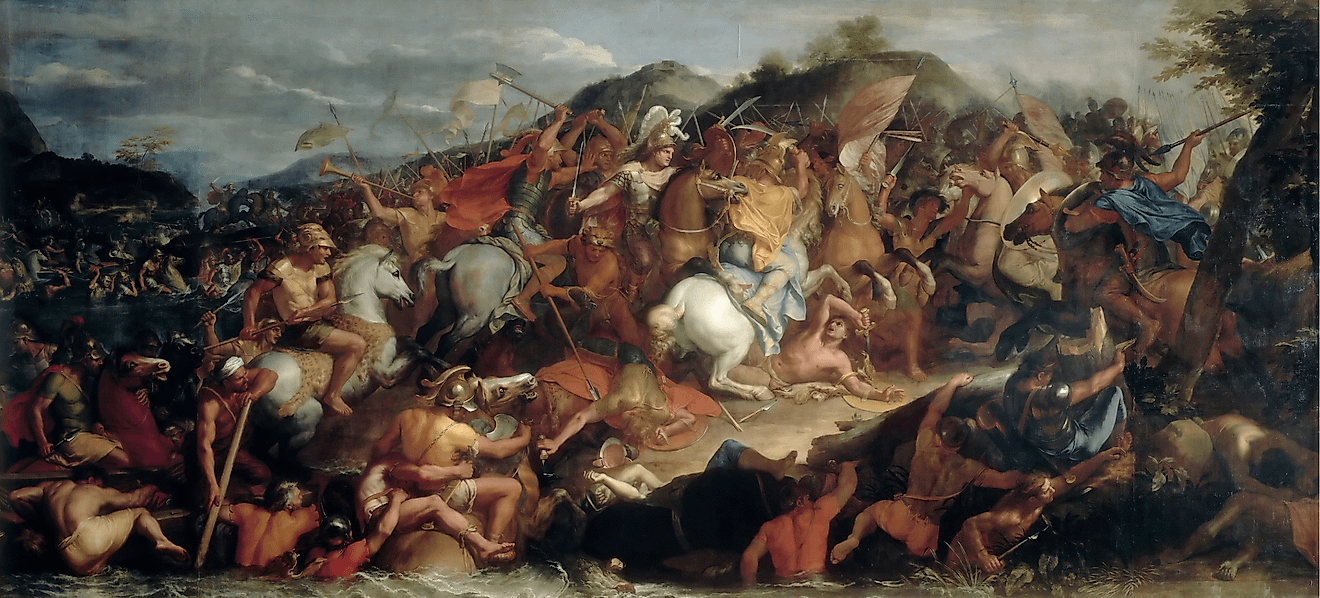
Language was perhaps the most obvious difference. During the height of the Roman Empire, Latin dominated the upper echelons of society. It was spoken in government and the military, used to write laws, and embedded on coinage. Nevertheless, Greek had a major presence due to the continued legacy of Alexander the Great’s conquests. Once the Roman Empire split into East and West in 395 CE, this influence only grew. Finally, under the reign of Emperor Heraclius (610 to 641 CE), Greek was made the official language of the Byzantine Empire.
Territorial Reach

Another important difference between the Roman and Byzantine Empires was their territorial reach. At the height of its power, the Roman Empire stretched from Britain to Mesopotamia, controlling much of Europe, North Africa, and the Middle East. The Byzantine Empire was smaller. It did regain much of its former territory under the reign of Justinian the Great (527 to 565 CE).

The Byzantines took North Africa from the Vandals in 534 CE, Italy from the Ostrogoths between 535 and 554 CE, and parts of Spain from the Visigoths in 555 CE. However, these gains were short-lived. Over time, the empire became centered around the Eastern Mediterranean and Anatolia.
Economy

These size differences necessitated different economic approaches. The Roman Empire’s economy relied heavily on conquest, taxation, slavery, and agriculture. When it expanded, this meant that there were new people it could tax, which in turn brought in more revenue. Its sheer size also allowed it to develop a network of intra-empire trade, which further spurred economic growth.

On the other hand, the Byzantines’ lesser territorial reach forced them to develop commercial relationships with other powers. Its capital, Constantinople, became an international trade hub, with merchants from Europe, Asia, and Africa travelling to it to buy and sell goods. While it did sometimes expand territorially, the Byzantine Empire’s sophisticated monetary and commercial system formed its economic backbone.
Religion

During the Roman Republic and the first centuries of the Empire, Romans were generally polytheistic. They worshiped Greek-inspired gods like Jupiter, Mars, and Venus, and religion was tied to state power. Christianity existed, but its adherents were brutally persecuted (particularly under emperors like Nero and Diocletian).

This changed with Emperor Constantine (306 to 337 CE), who converted to Christianity in 312 CE and legalized it the next year. It was then made the state religion in 380 CE. Christianity was now a dominant force in Roman life and became even more important in the Eastern Empire. Constantinople was considered the capital of the Christian world, and the emperor was viewed as God’s representative on Earth. In short, Christianity played a much bigger role in the Byzantine Empire than in the Roman Empire.
Culture

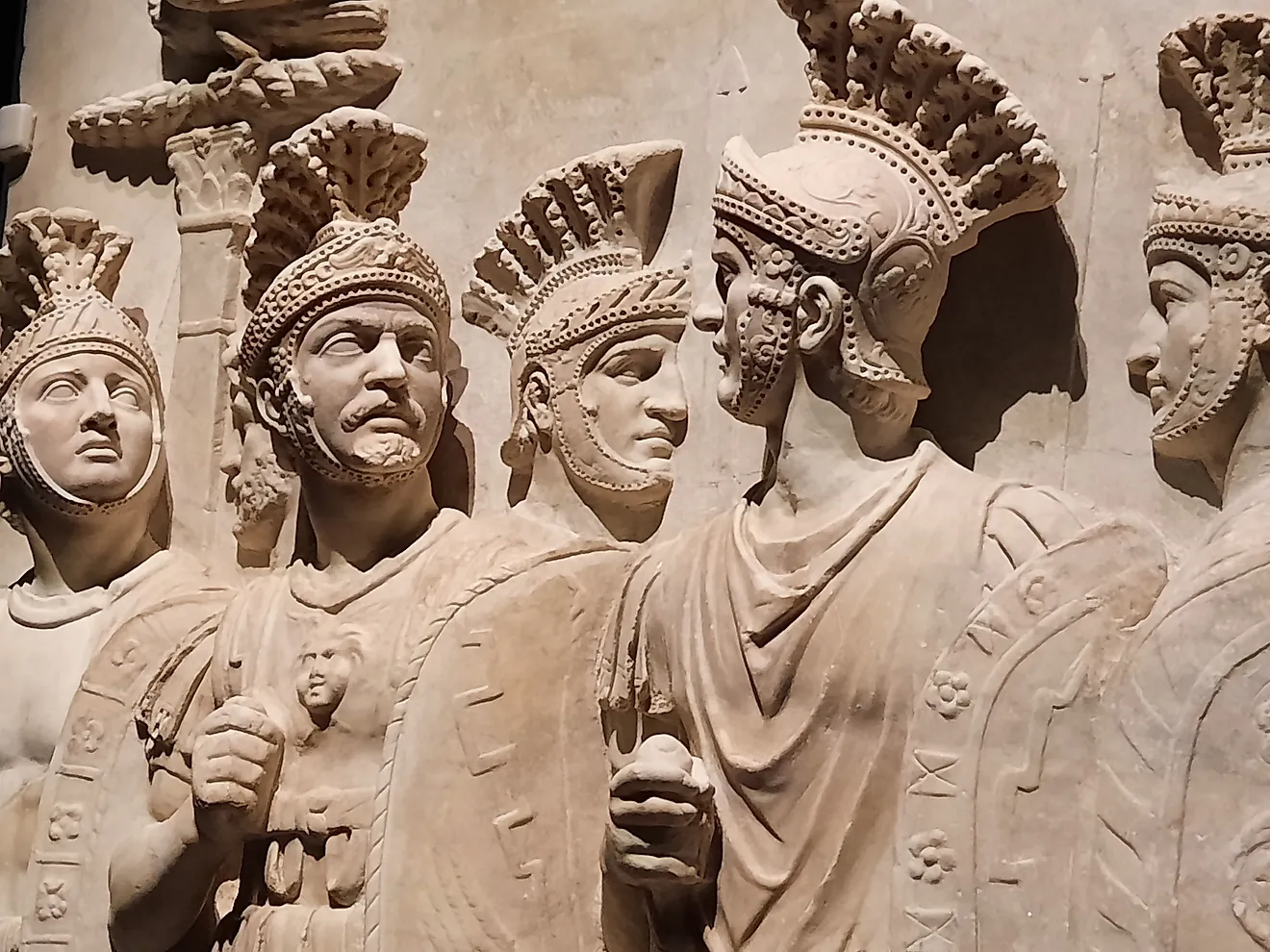
While there was cultural overlap between the Byzantines and the Romans, there were also important differences. Roman culture was heavily militaristic. Men were expected to serve in the military, and Roman identity was tied to citizenship and loyalty to the state. The widespread popularity of gladiatorial games reflected this obsession with conquest on the battlefield. There were some democratic traditions, as evidenced by the existence of popular assemblies and the Senate, but these were mostly remnants from the Republican period.

The Byzantines kept some aspects of Roman culture, but merged it with Greek learning and Christian values. Scholars preserved Classical Greek texts by philosophers like Plato and Aristotle. Religious art, like the Justinian and Theodora mosaics in Italy or the Christ Pantocrator in the Hagia Sophia, was also considered a major cultural achievement. To summarize, Byzantine culture focused more on religious and intellectual pursuits than its comparatively militaristic Roman counterpart.
Relationship With Western Europe

The final main difference between the Roman and Byzantine Empires was their relationships with Western Europe. As previously noted, the Roman Empire united the Mediterranean world and much of Europe at the height of its power. On the other hand, geographic separation meant that the Byzantines found themselves increasingly isolated from Western Europe. All the aforementioned linguistic, cultural, religious, and economic differences grew even more vast over time. These differences reached a peak in 1054 CE. Disagreements about the nature of the Holy Trinity between Eastern and Western churches led to the East-West Schism, a formal separation of Christianity into Roman Catholic and Eastern Orthodox. This split continues to this day.
Impact And Legacy
Even though the Byzantine Empire was a continuation of the Roman Empire, the two had some important differences. The Byzantines spoke Greek, whereas the Romans spoke Latin. The Byzantine Empire was also significantly smaller than the Roman Empire, a size difference which necessitated a different economic approach. Religion and culture were other areas of divergence. Finally, the two empires had fundamentally different relationships with Western Europe.