How Did The Roman Empire Defend Its Borders?
The Roman Empire is iconic for many reasons. Perhaps the biggest factor is its size. At the empire's peak, it stretched from Britain to Mesopotamia. Defending such extensive borders and maintaining territorial integrity for hundreds of years posed a formidable challenge. The Romans accomplished this without modern technology for rapid transportation or mass surveillance. Their approach changed over time. Early imperial defense emphasized frontier garrisons and fortified corridors, while the later empire increasingly combined permanent frontier troops with mobile field armies. Roads, rivers, and control of cross-border movement also played important roles.
Heavy Fortifications

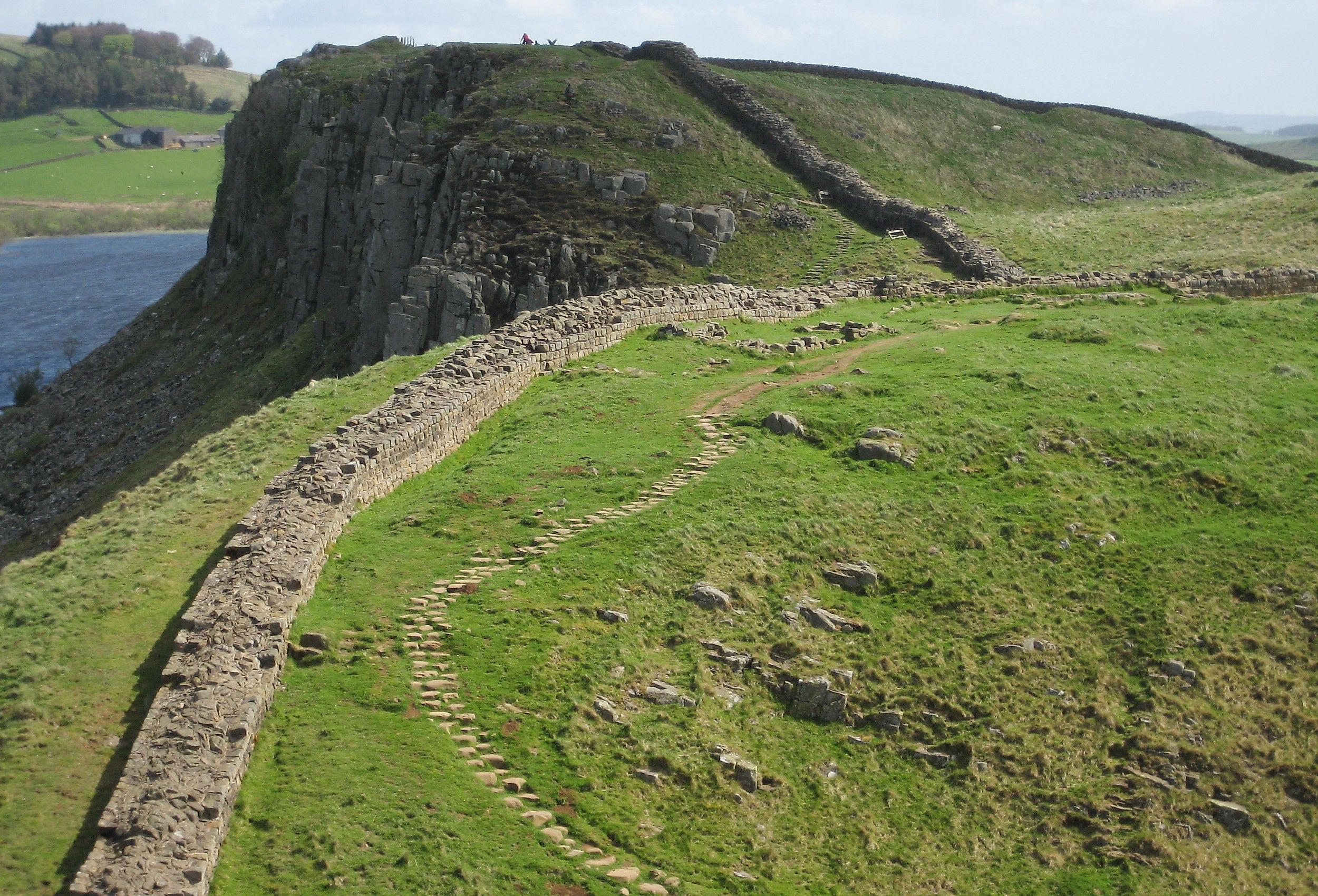
Fortifications were the most obvious way the Romans defended their borders. Walls, watchtowers, and military settlements, among other things, helped prevent incursions by the empire's enemies. Hadrian's Wall is likely the most famous defensive fortification. When Hadrian became emperor in 117 CE, Rome already controlled most of Britain. Northern unrest remained a concern, and during his visit to Britain in 122 CE, Hadrian ordered the wall as part of his broader policy of consolidating the empire's existing frontiers. The finished frontier ran 73 miles (117 kilometers) across northern Britain, beginning at Wallsend on the River Tyne in the east and ending at Bowness-on-Solway on the Solway Firth. The Romans also built numerous fortified enclosures called milecastles along the wall. This was indicative of its true purpose. Rather than preventing all passage, it was designed to control movement. The milecastles thus functioned as border checkpoints where soldiers could monitor activity beyond Roman territory and control who entered the empire.
Legions

Legions were the Roman army's largest standard formations, but they shared frontier defense with auxiliary units, which supplied more than half the manpower in Rome's provincial armies. Rather than being evenly distributed across Roman territory, legions were concentrated in frontier regions such as Britain, the Rhine and Danube provinces, and the eastern borderlands. There, they operated out of large, permanent fortresses. These complexes contained barracks, headquarters, granaries, armories, workshops, hospitals, and administrative buildings. Legions operated alongside auxiliary infantry and cavalry, originally recruited largely from noncitizen provincial populations. Auxiliary units were often stationed far from their original homelands and supplied capabilities such as cavalry, archery, and frontier patrols. Together, legions and auxiliaries formed durable frontier forces, but their bases were not self-sustaining. By the fourth century, permanent frontier troops known as limitanei guarded strategic locations, while mobile field armies called comitatenses could respond to major incursions.
Sophisticated Logistics

The sheer size of the Roman Empire necessitated a sophisticated logistics network. Perhaps the most famous component of this was the roads. These served two main purposes: moving soldiers and moving supplies. Even though legions were stationed on the borders, they sometimes needed help. Roads, therefore, allowed other soldiers to travel quickly to the frontier provinces and provide backup. Frontier armies required steady deliveries of food, animals, equipment, and other goods from provincial economies and wider military supply networks. Roads helped transport these things. Naval forces also patrolled coasts and rivers such as the Rhine and Danube while transporting troops and supplies.
Legionaries were trained to leverage logistical superiority. Rather than being a pure fighting force, they were also skilled builders. This allowed them to rapidly construct bridges and camps. Doing so made them more flexible and created infrastructure for future campaigns. In short, nearly every aspect of Roman border defense relied on sophisticated logistics.
Natural Geography

Geography played a role in defense. Rivers were natural roads and were used to rapidly transport troops and supplies. They also served as borders, with both the Rhine and Danube Rivers functioning as such for extended periods. Although the Rhine and Danube formed long stretches of frontier, Rome also held substantial territories beyond them, including Dacia north of the Danube, before later withdrawals restored parts of the river boundaries.

Rivers weren't the only thing used as natural borders. In North Africa and the Levant, deserts channeled movement toward wells, caravan routes, and cultivated land that Roman forts could monitor. The Mediterranean Sea primarily connected the empire's provinces through shipping, although fleets and coastal fortifications also defended vulnerable maritime approaches. Mountain terrain could slow armies and channel travel, but the Alps and Pyrenees lay within Roman territory during most of the imperial period. Hannibal Barca's Alpine crossing in 218 BCE occurred during the Republic and preceded a series of major Roman defeats, but Rome fought on, beating Carthage at Zama in 202 BCE and closing the war with a peace settlement the following year.
Intelligence, Reconnaissance, Division, and Diplomacy

The Romans didn't just use brute force to defend their borders. Intelligence, division, and diplomacy were also integral. Mounted scouts called exploratores patrolled well beyond the frontier, while speculatores handled the more covert work of observation and courier duty, and Roman writers did not always draw a firm line between the two. Both gathered information about enemy movements, roads, camps, and changes in local political conditions. This information then allowed the Romans to exploit their enemies. Consider Julius Caesar's campaign to take Gaul in the 50s BCE. Rather than defeating all the Gallic tribes at once, he divided and played them against each other. Caesar exploited divisions among the Gallic peoples, but this did not prevent organized resistance: Vercingetorix assembled a major coalition against Rome in 52 BCE before his eventual defeat at Alesia.
The Romans also used diplomacy to defend their borders. When faced with a shared threat, they often joined forces with traditional enemies. This occurred more and more frequently in the last two or so centuries of the Western Roman Empire's existence. Consider Attila the Hun. The leader of the Central and Eastern Europe-based Hunnic Empire, he invaded Gaul in 451 CE. Aetius assembled Roman troops and allied contingents, most importantly Visigoths and Alans, with Franks and Burgundians also named among the coalition. These people had complicated relationships with Rome and included federates and settled allies, not simply traditional enemies. The coalition checked Attila in Gaul, although he invaded Italy the following year.
Impact And Legacy
The Romans used various tactics to defend their borders. Fortifications like Hadrian's Wall helped control who entered the empire. Legions and auxiliary troops occupied permanent frontier bases that depended on regional economies and extensive supply networks. Roads were the backbone of the Roman logistical capacity and were crucial in moving troops and supplies. Natural geography aided logistics and served as borders. Finally, reconnaissance and intelligence helped commanders assess threats, while diplomacy, subsidies, and alliances allowed Rome to manage or divide potential opponents.