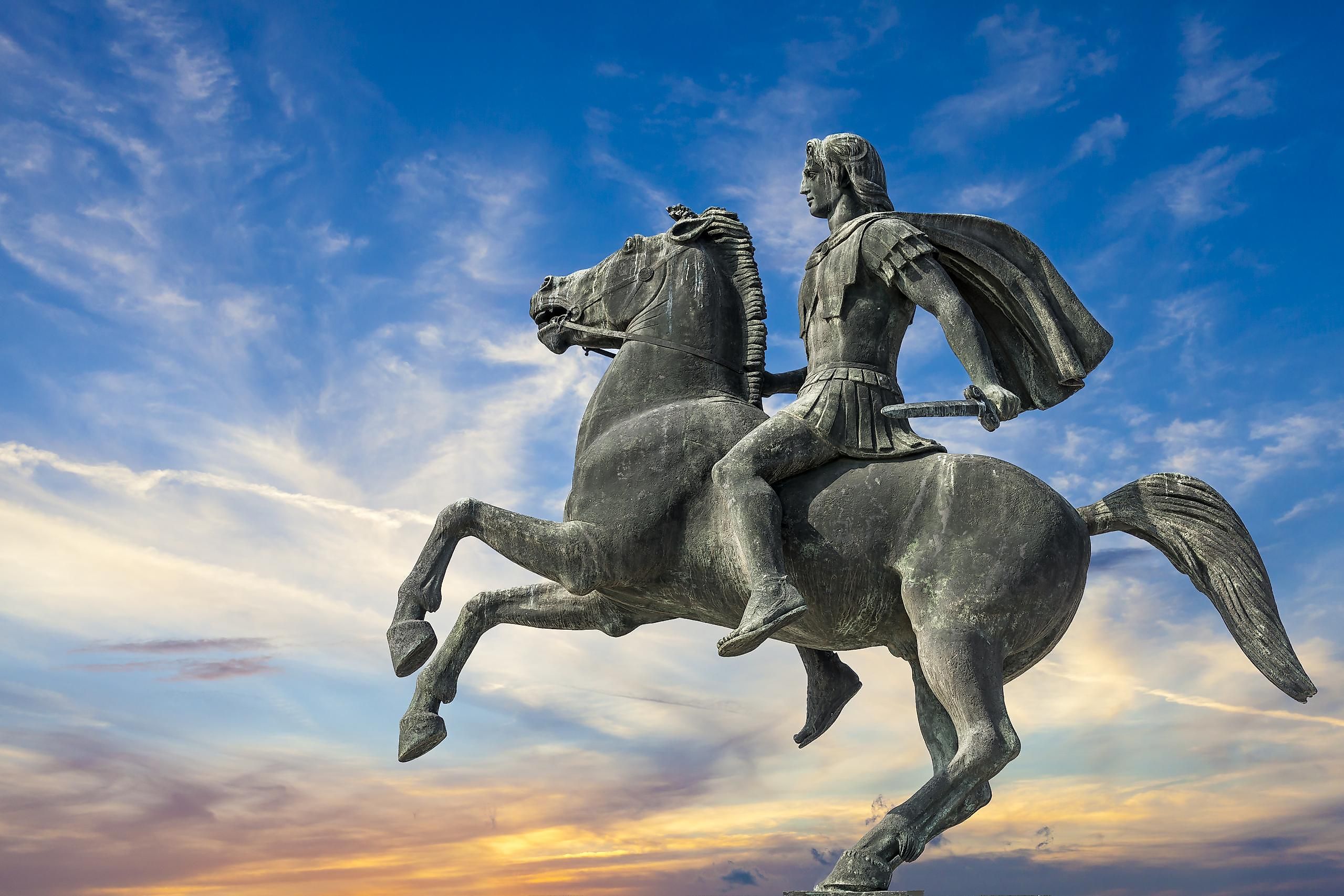
The Greatest Generals Of The Ancient World
Great generals often change the course of history. This was particularly true in the ancient world, where one battle could determine the fate of an entire state. Take Philip II. He reformed the Macedonian military and established the groundwork for his son, Alexander the Great, to become one of the greatest conquerors in history. Julius Caesar was similarly important, as his conquests paved the way for Rome to transition from a republic to an empire. For all these reasons, and more, exploring the greatest generals of the ancient world is a worthwhile endeavor.
Philip II

Philip II became King of Macedon in 359 BCE. Over the next twenty years, he transformed the state from a "backwards" and "wild" polity on the periphery of the Greek world into the dominant power in the region. The foundation of this strength was Philip's military reforms. He replaced seasonal peasant levies with a professional, standing army. Doing so ensured that the Macedonians outmatched any other contemporary military force. Philip also armed his infantrymen with an 18-foot-long (5.5-meter) pike called the sarissa, which made frontal assaults by the enemy nearly impossible. When utilized in conjunction with a combined arms approach of cavalry and infantry, the Macedonian army became nearly unbeatable. This allowed Philip to establish control of the Balkans and Greece. The climactic moment came in 338 BCE, when Philip and his son Alexander defeated a coalition of Athenian and Theban forces in the Battle of Chaeronea. In the aftermath, Philip created the League of Corinth, an alliance of Greek city-states that formally established Macedon as the regional hegemon.
Alexander The Great

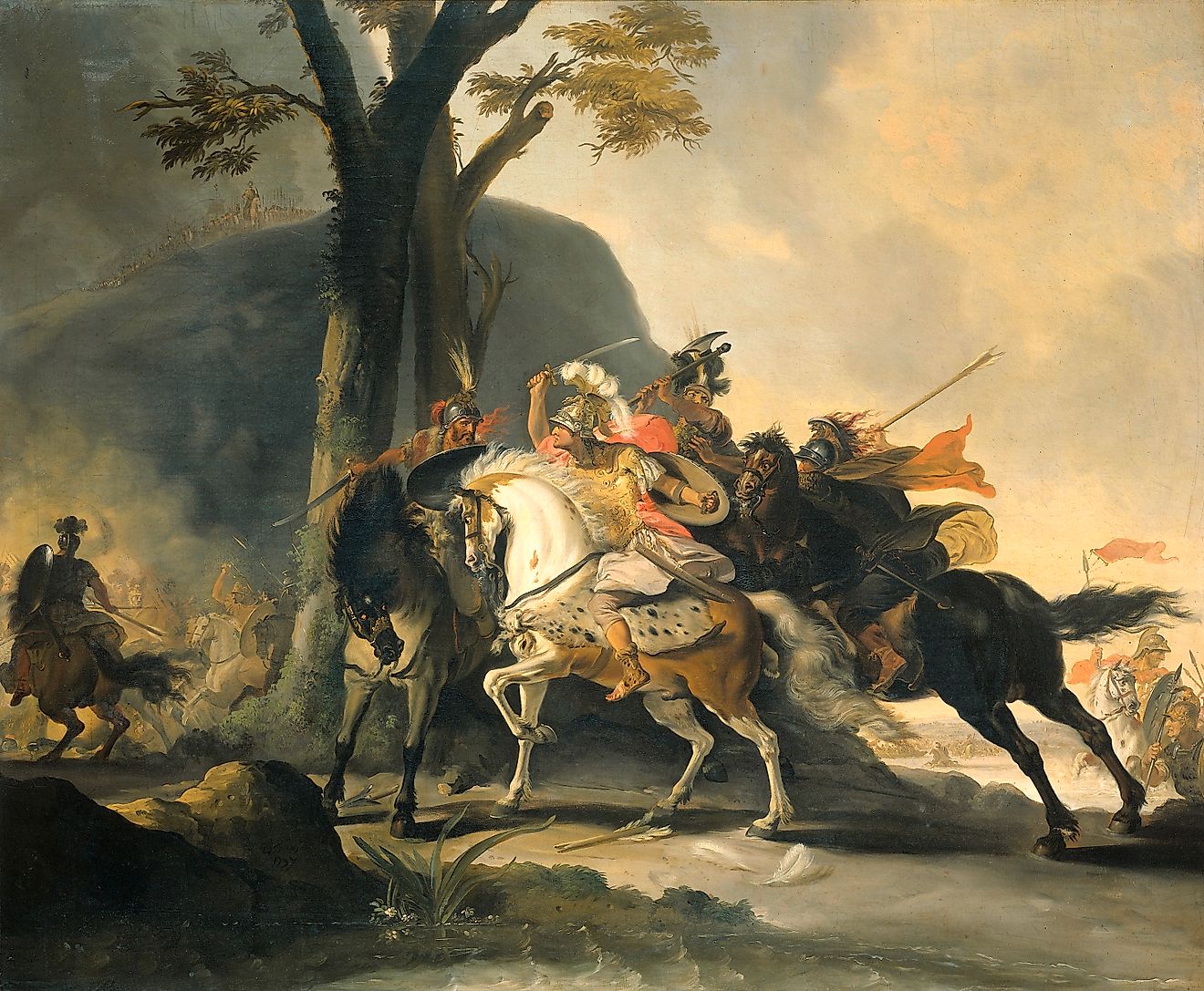
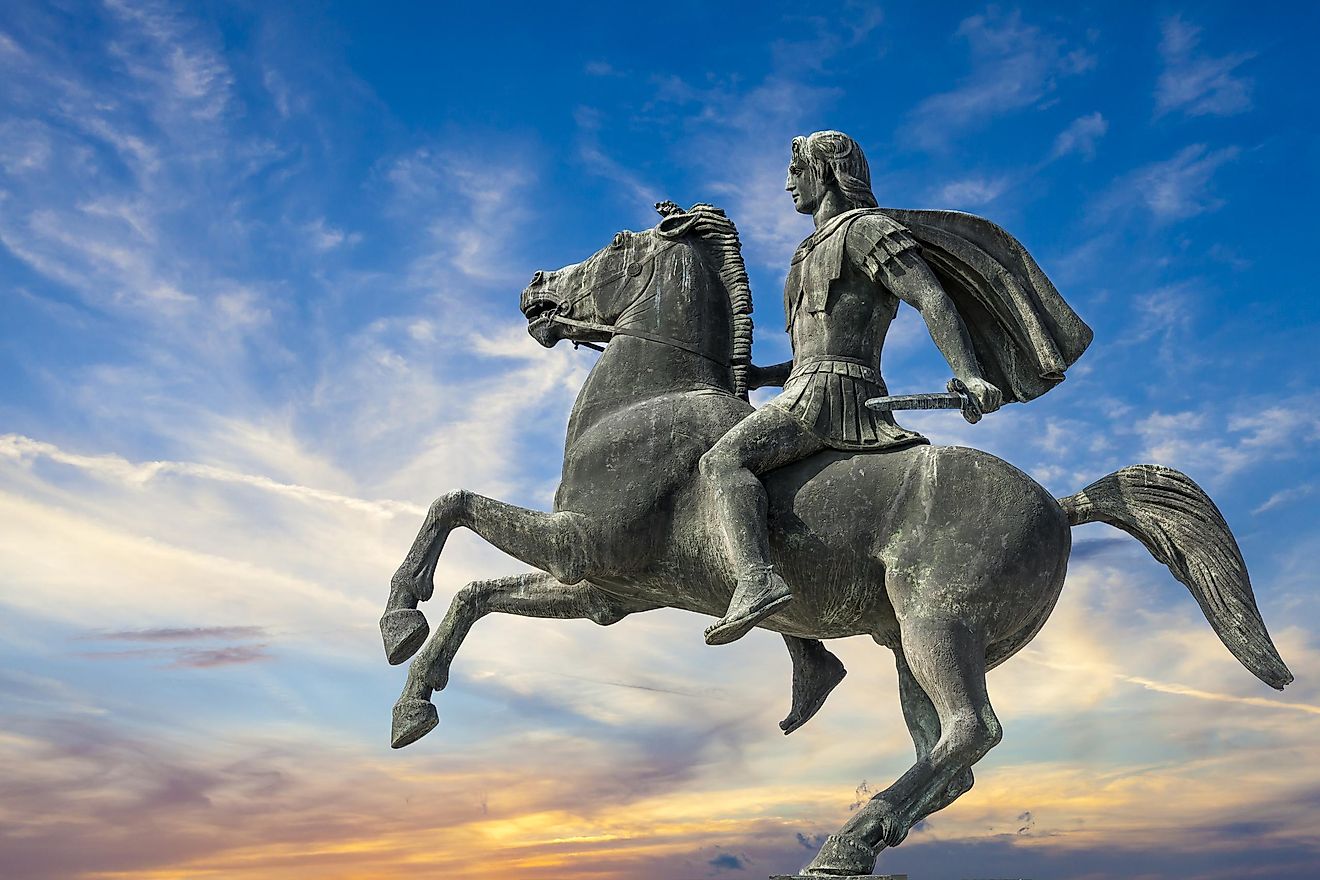
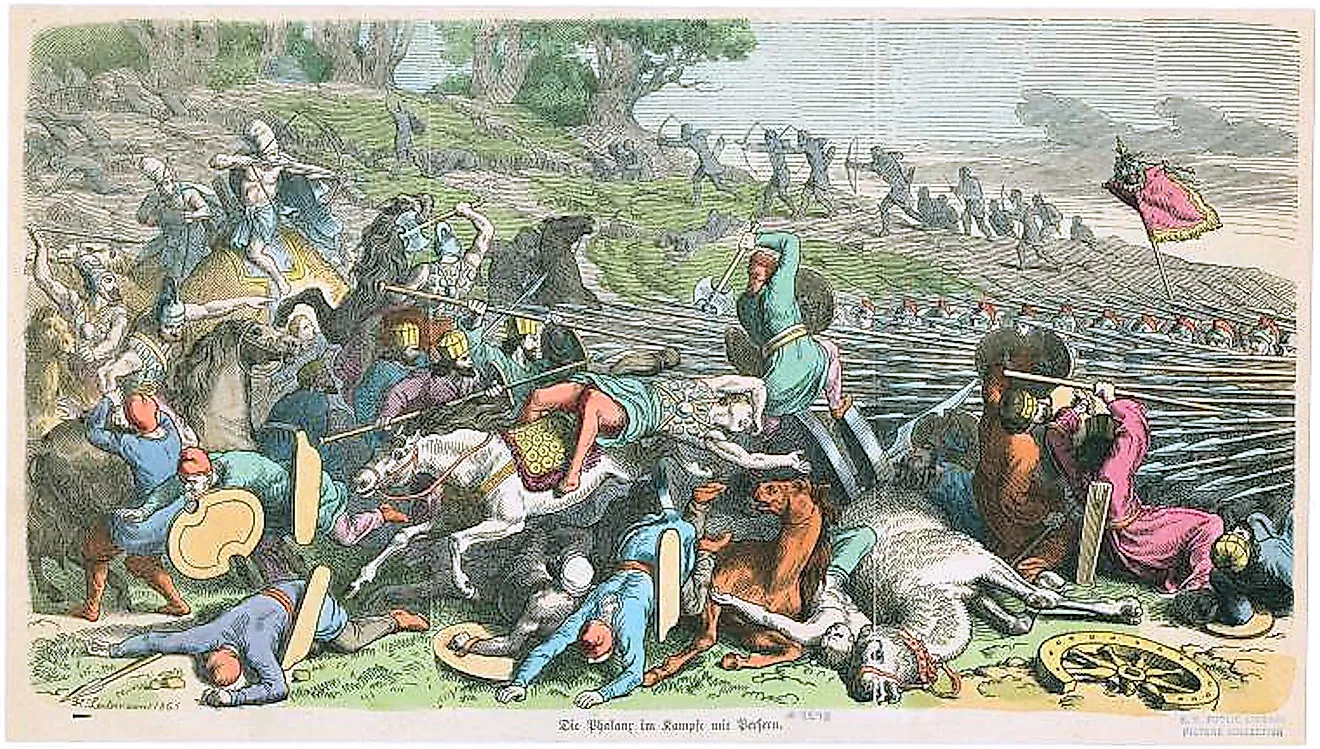
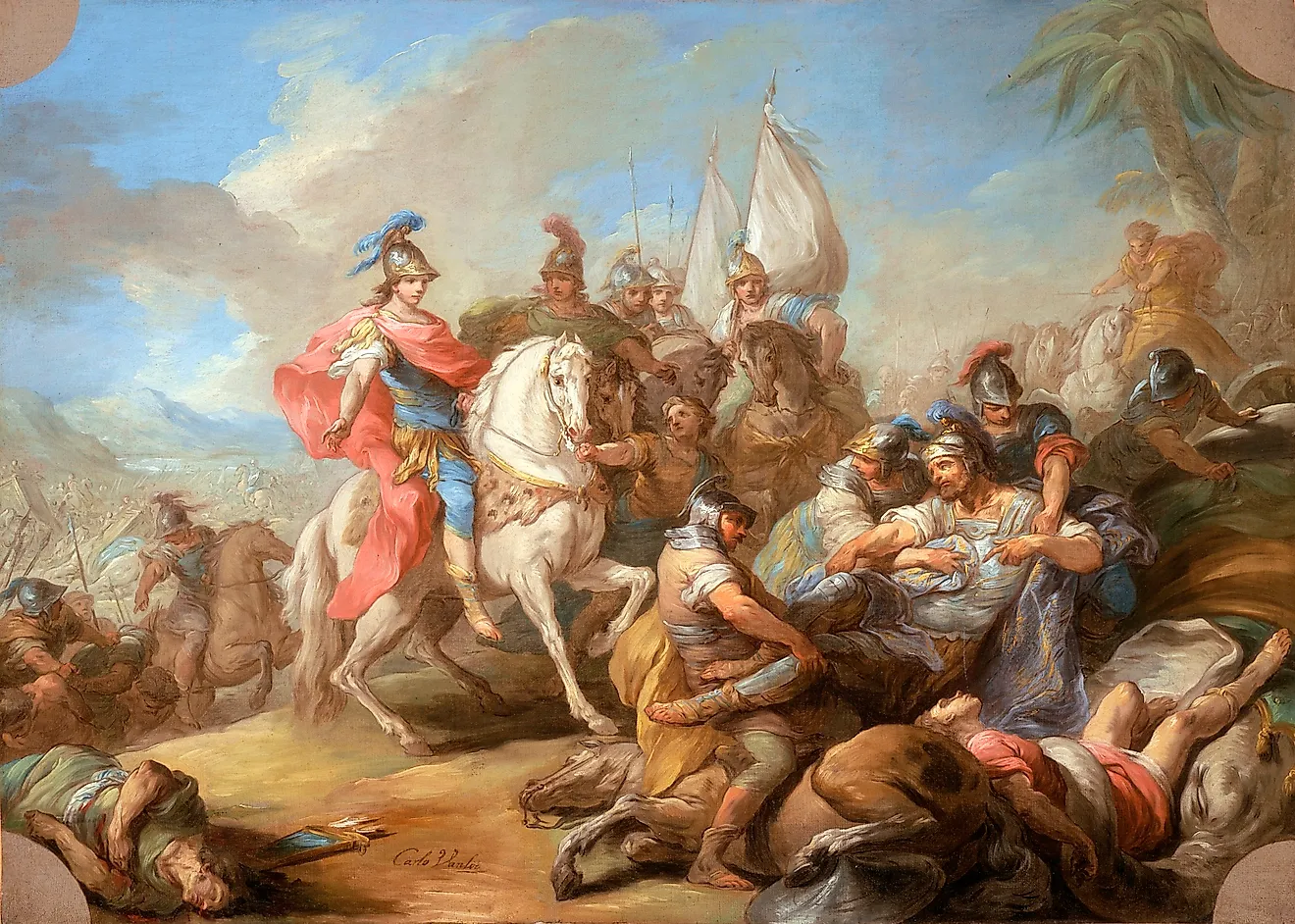
With his immediate vicinity secured, Philip turned his attention to Greece's historic enemy, Persia. However, on the eve of his planned invasion in 336 BCE, Philip was assassinated, leaving his 20-year-old son Alexander as his heir. Many Persians (and Greeks) initially underestimated the young king. He quickly proved them wrong. After suppressing rebellions in the Balkans and Greece, Alexander turned his attention back to Persia and invaded it in 334 BCE. He inherited the military strength established by Philip's reforms and added his own tactical skill. The Macedonians racked up victory after victory, and they finally defeated the Persians in the Battle of Gaugamela in 331 BCE.
Alexander's campaign didn't stop with Persia. He continued into Central Asia, where he faced prolonged resistance due to difficult terrain and guerrilla warfare tactics utilized by his enemies. Nevertheless, he eventually managed to subdue the region and marched even further east into India. After winning the Battle of the Hydaspes (326 BCE), his exhausted army refused to follow him any further, and Alexander was forced to turn back. He returned to Persia in 324 BCE, where he began planning future military campaigns. These were never realized, since Alexander died amidst mysterious circumstances in 323 BCE. Despite only living to the age of 32, he ruled an empire that reached the Adriatic in the west and the Indus River in the east. He also spread Greek culture across the eastern Mediterranean and western Asia, an influence felt for centuries following his death.
Hannibal Barca

Carthage was humiliated by the Roman Republic in the First Punic War (264 to 241 BCE). Many in the upper echelons of the Carthaginian political and military world thus plotted revenge. One such person was Hannibal Barca. The commander of the Carthaginian forces in Iberia, Hannibal attacked the Roman-allied city of Saguntum in 219 BCE. The eight-month siege that followed triggered the Second Punic War, which Rome declared the next year. As the Roman Republic prepared for future Carthaginian attacks, Hannibal enacted a brilliant yet daring plan. The Republic expected Carthage to attack by sea. Hannibal therefore marched his troops across the Alps and invaded Italy from the north. Doing so completely overwhelmed the Romans, and they suffered a series of devastating losses.

Perhaps Hannibal's biggest military achievement came at the Battle of Cannae in 216 BCE. Fought in southeastern Italy, the Romans assembled an army of between 80,000 and 86,000 soldiers, whereas the Carthaginians had only between 40,000 and 60,000. Even though he was massively outnumbered, Hannibal's superior tactics gave him the advantage. He placed his weak Gallic and Spanish infantry troops at the center, and his stronger African infantry and cavalry units on the side. As the Romans pushed towards the center, these stronger units moved in and surrounded them. With no ability to retreat, the Romans were slaughtered. Between 50,000 and 70,000 Romans were killed at the Battle of Cannae, whereas roughly 6,000 Carthaginians died.
Despite this tactical brilliance, Hannibal couldn't change the reality that the Romans had far more troops and resources. By avoiding future catastrophic defeats, they were able to gradually wear the Carthaginians down. Ultimately, Hannibal was forced to retreat to North Africa, where he was defeated in the Battle of Zama in 202 BCE.
Julius Caesar

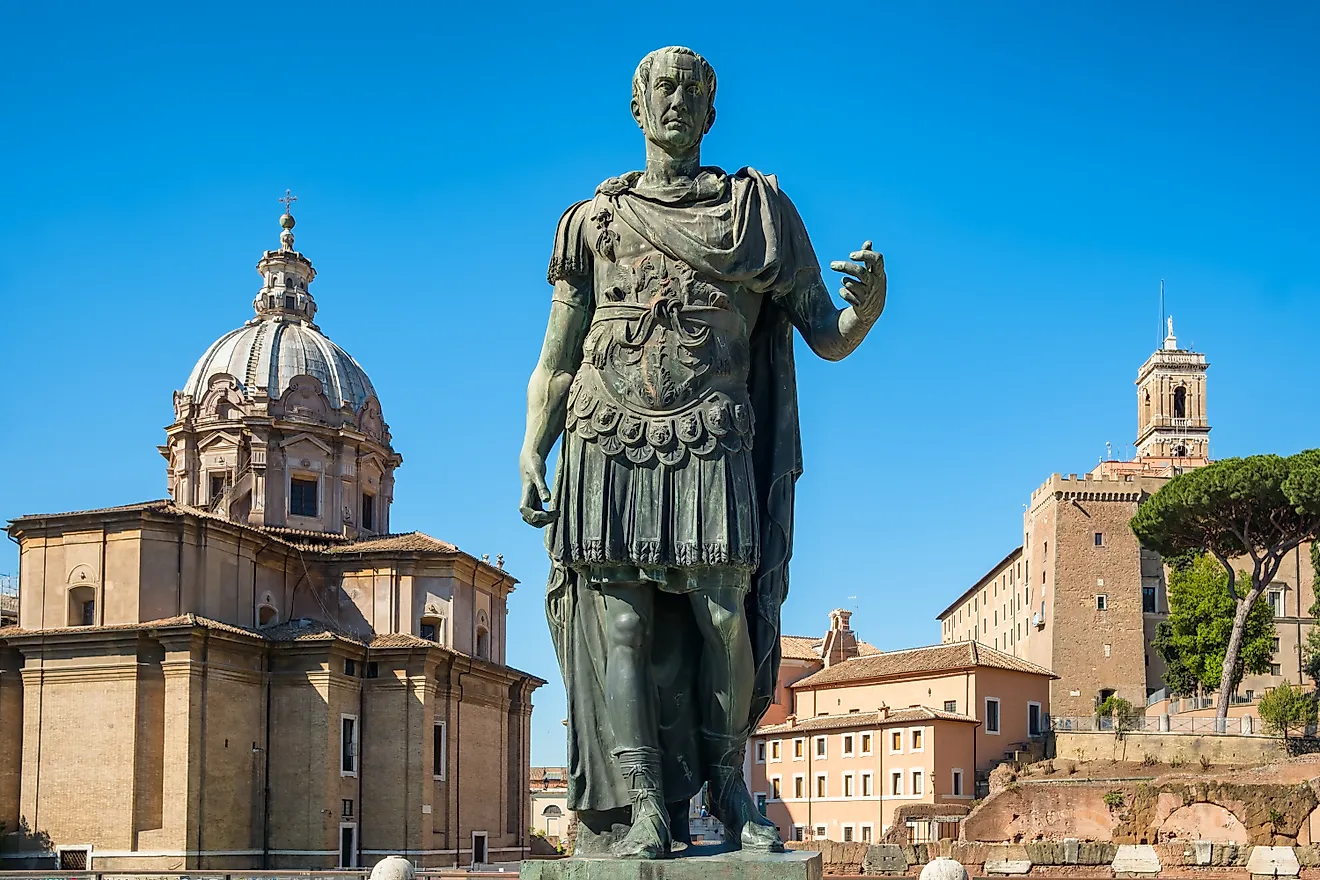
Born in 100 BCE to a noble but not particularly wealthy family, Julius Caesar spent the first forty or so years of his life rising through the political and military ranks. In 60 BCE, he established an informal alliance with two other generals, Pompey the Great and Marcus Licinius Crassus. Known as the First Triumvirate, this allowed him to exert enormous political power. Caesar then became the de facto military leader of Rome when he invaded Gaul in 58 BCE. Over the next eight years, he conquered the region through a combination of alliance building and genocidal brutality.
Caesar emerged from the Gallic campaign as the most powerful person in Rome. Anxious about this reality, the Senate (with which Pompey was now aligned) demanded that Caesar give up his army and return to life as a private citizen. He refused and crossed the Rubicon River with his army in 49 BCE, triggering a civil war. After quickly taking Italy, Caesar annihilated Pompey's forces in Greece, forcing him to flee to Egypt where he was promptly assassinated. Caesar then spent the next few years eliminating the rest of Pompey's forces, becoming the undisputed ruler of Rome by 45 BCE. This wouldn't last long. Shortly after declaring himself dictator for life in 44 BCE, Caesar was assassinated by a group of senators concerned about his increasingly tyrannical rule. Even though it was meant to save the Republic, this assassination set off a chain reaction that led to the rise of the Roman Empire.
Four Equally Legendary Commanders
These four generals succeeded in very different ways, and the differences say as much about their states as about their talent. Philip built a standing army that outlived him, which meant Alexander began his Persian campaign with a force already capable of the conquests he is remembered for. Hannibal had no comparable inheritance. His victory at Cannae was a tactical performance of the highest order, but Carthage could not replace losses the way Rome could, and tactical superiority alone was never enough. Caesar's case is different again, because the point of the Gallic campaign was not the territory it added but the veteran army it produced, an army loyal to him rather than to the Senate. Philip and Caesar left their states permanently restructured. Alexander's empire fragmented within a generation of his death, and Carthage lost the war Hannibal had come closest to winning.