How Big Was The City Of Rome At Its Peak?
For over a thousand years, the city of Rome was the heart of one of the most influential civilizations in human history. Serving as the seat of an empire that spanned three continents, some estimates put the city of Rome's population at over a million people during the height of the Roman Empire in the Second Century CE. The City of Rome began as a city-state led by a series of kings. Centuries later, Rome replaced its leaders with elected statesmen called Consuls, beginning the Roman Republic. Eventually, that republic would be terminated, replaced by an empire that would last half a millennium in the West, and a millennium and a half in the East.
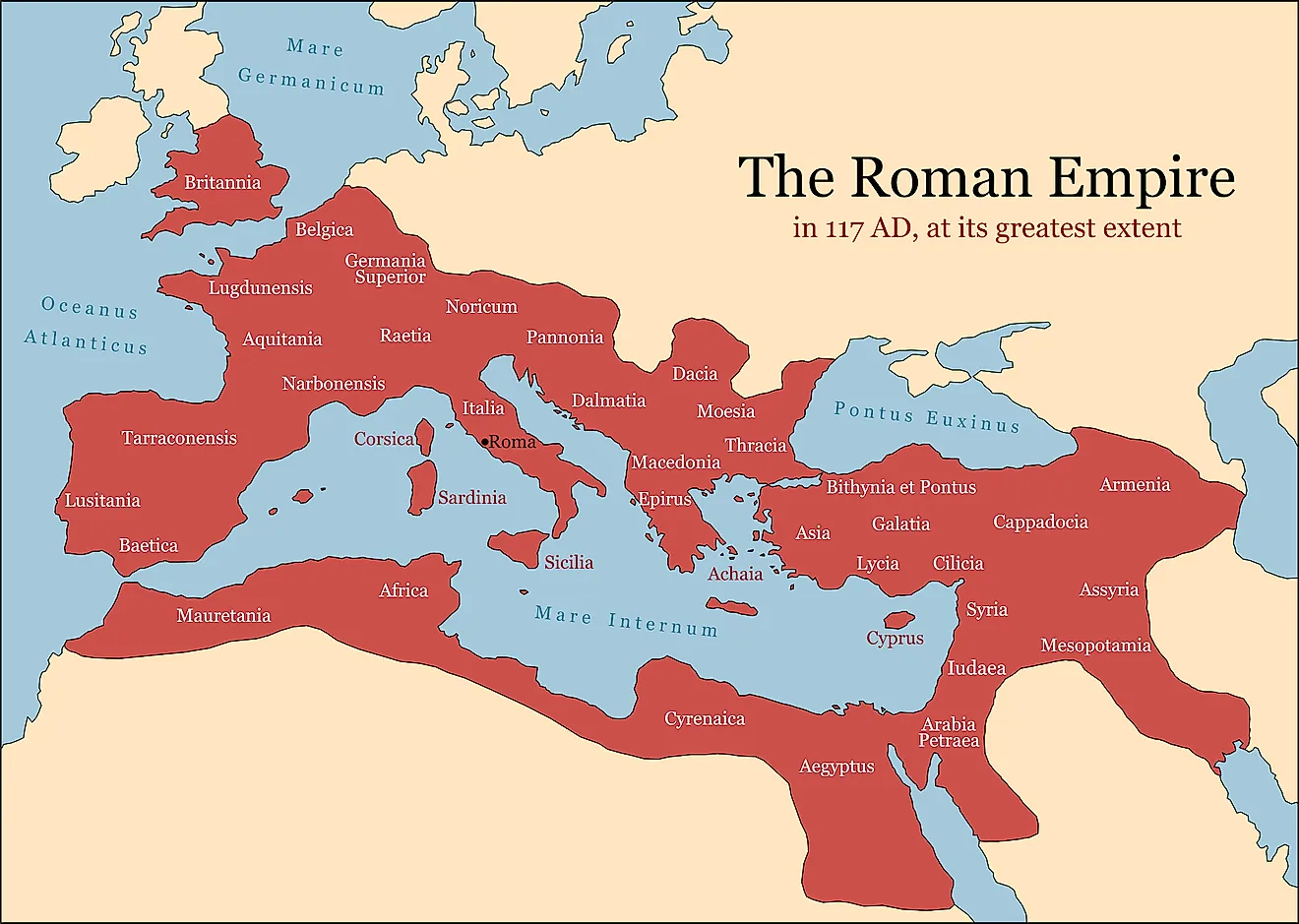
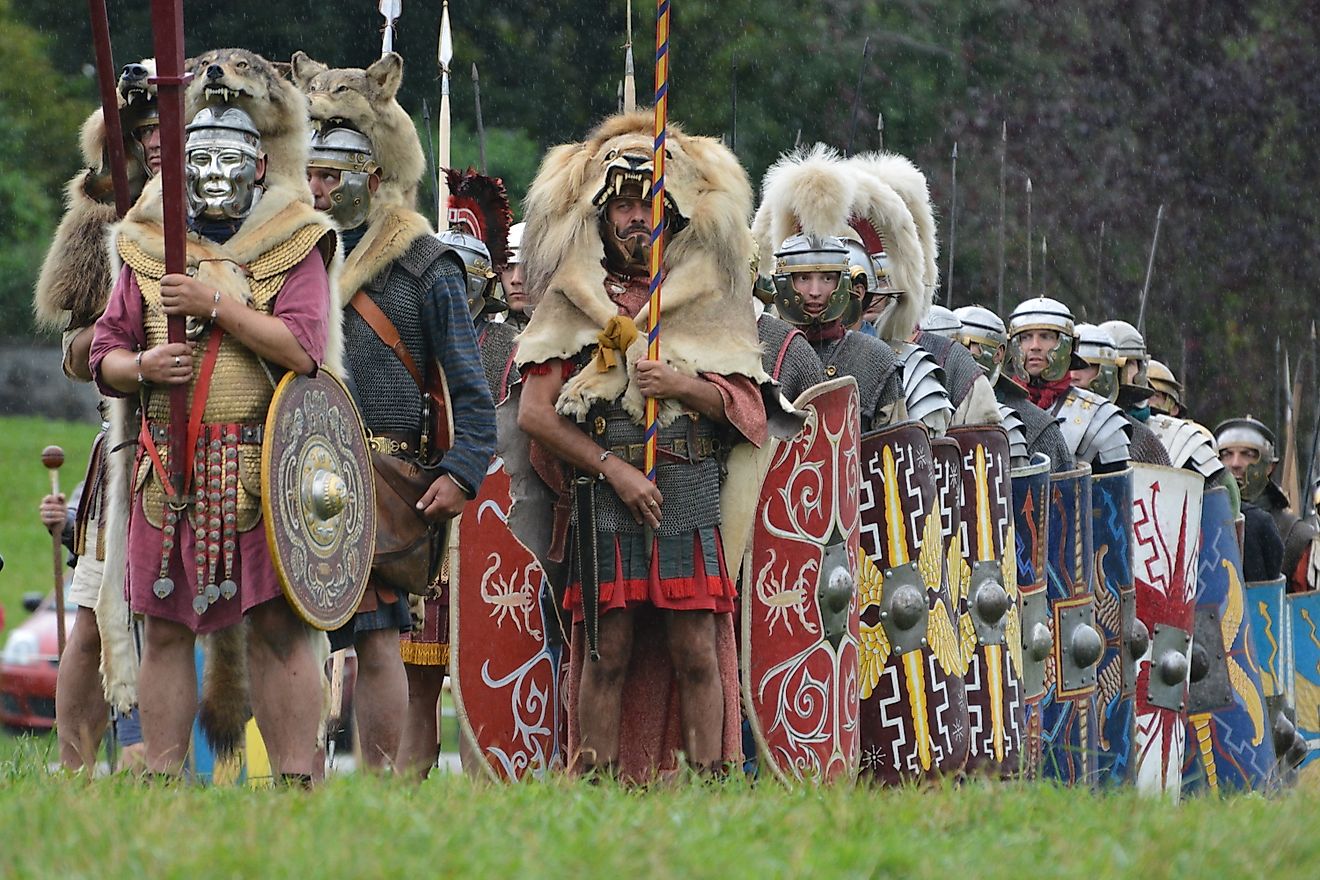
At its height, Roman rule stretched across most of Western Europe and into Britain, East into modern-day Türkiye, and South across the edge of North Africa. With a total population of 60 to 75 million people, the Roman Empire accounted for roughly 20 percent of the world's population. With impressive accomplishments in government, architecture, engineering, and warfare, the legacy of the Roman Empire continues to shape the modern world in innumerable ways. It serves as a model of power and influence that many modern nations seek to emulate.
A City Upon a Hill

According to Roman tradition, Rome was founded in 753 BCE, though archaeological evidence shows the Palatine Hill was inhabited centuries earlier, by around the 10th-9th century BCE. Initially built on Palatine Hill, the city later expanded to cover what are today called the Seven Hills of Rome: The Palatine, Capitoline, Quirinal, Viminal, Esquiline, Caelian, and Aventine.
Traditional Roman history states that the city was founded by two brothers, Romulus and Remus, supposedly descendants of the mythological Trojan hero Aeneas. According to Roman legend, the brothers were abandoned as infants, suckled by a she-wolf before they were found and ultimately raised by a herdsman and his wife.
Roman tradition states that a period of benevolent monarchy followed, but that the seventh king of Rome, Lucius Tarquinius Superbus, became cruel and tyrannical. Most Roman accounts state that the people of Rome overthrew their king, replacing him with elected officials called consuls, and beginning the Roman Republic. Some, however, have argued that rather than the Romans ousting their tyrant king, their leader was deposed by a rival culture, the Etruscans. Then, before a new king could be chosen, the Etruscans were forced out of Rome. This vacuum, some scholars argue, gave the Romans space to choose their own leaders.
Punic Power

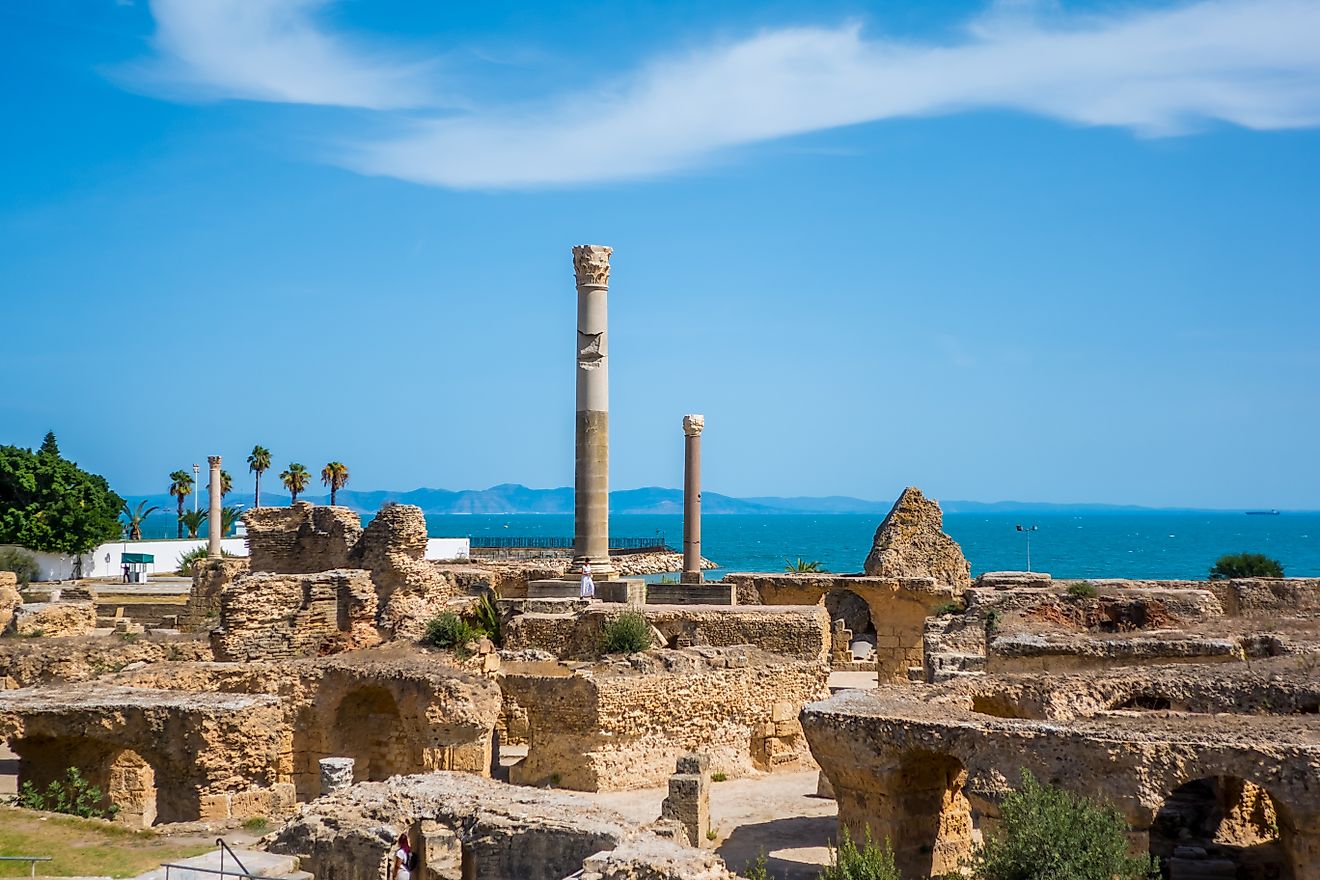
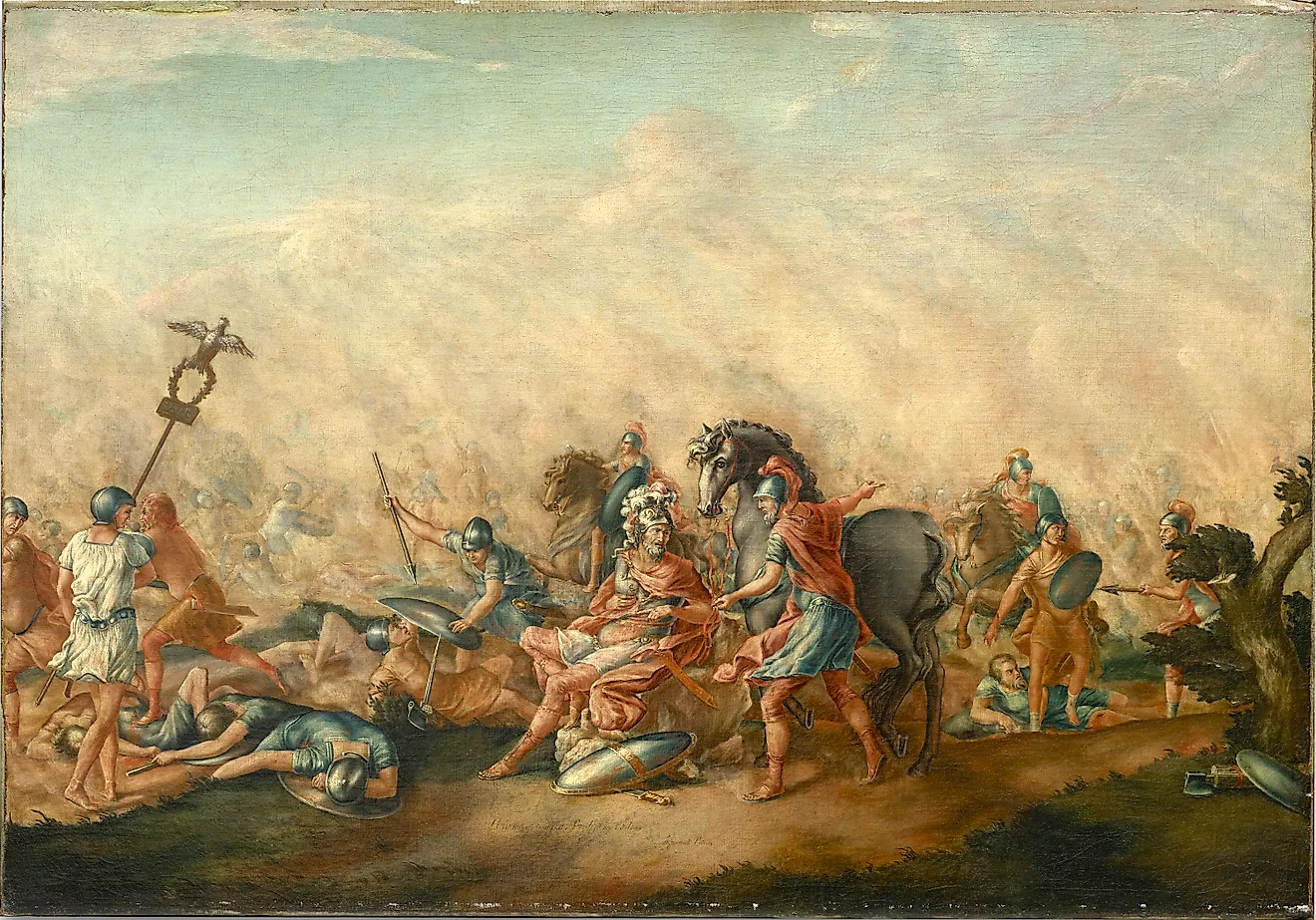
Between the 6th and 3rd Centuries BCE, Rome expanded across Italy, beating out the Etruscans and other neighboring city-states and powers to gain dominance. By the 4th Century BCE, Rome was surrounded by a wall that ran around the whole or parts of each of the seven hills. Two hundred years later, the growing Republic had beaten out the rival power Carthage, established dominance over the Mediterranean Sea, and cleared the way for the emergence of the Roman Empire a century later.
When was the Height of the Roman Empire?

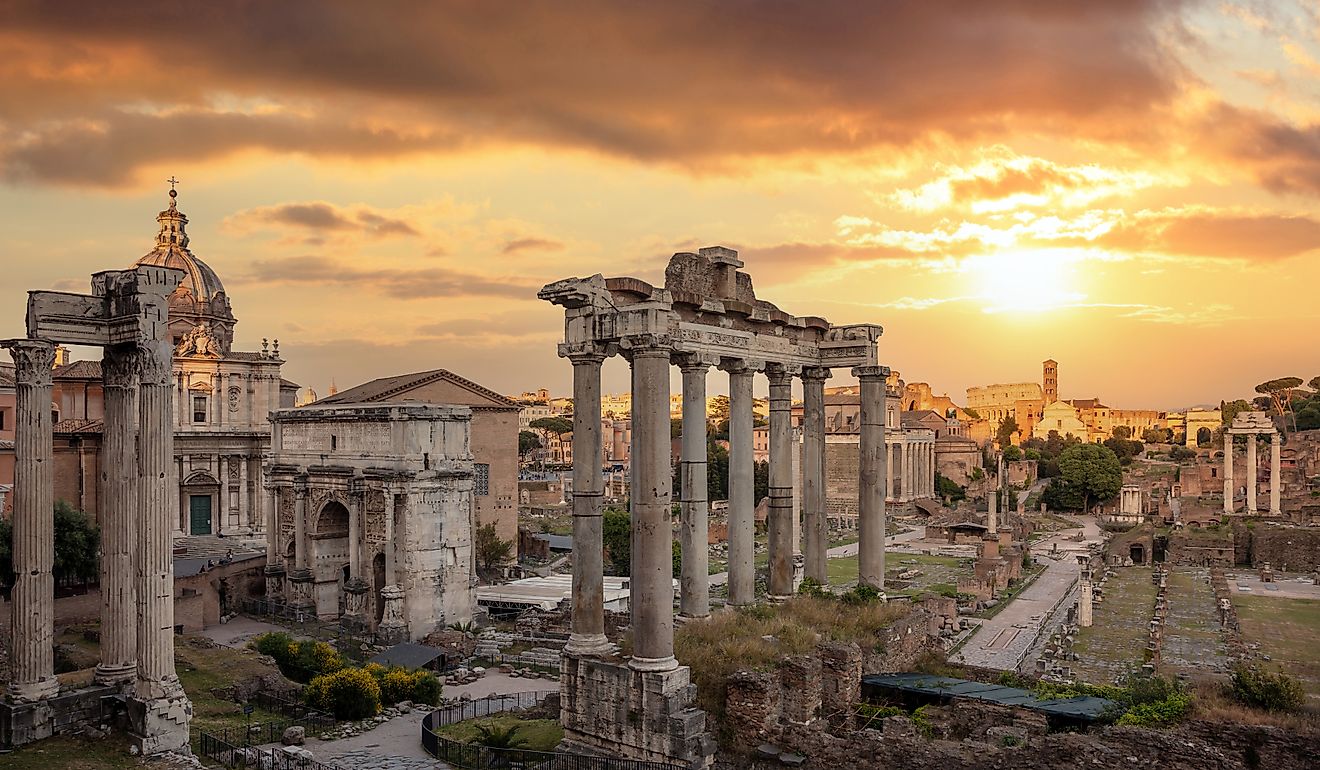
From the founding of the Roman Empire in 27 BCE to about 180 CE, Rome experienced a golden age of internal peace and stability known as the Pax Romana, or Roman peace. During this time, the empire effectively governed and protected its territories, even as conquest and expansion made the Roman state richer and richer. It was also during this time that the Romans built many of their most iconic landmarks. The Colosseum, the Pantheon, and the Arch of Augustus were all built during the Pax Romana.

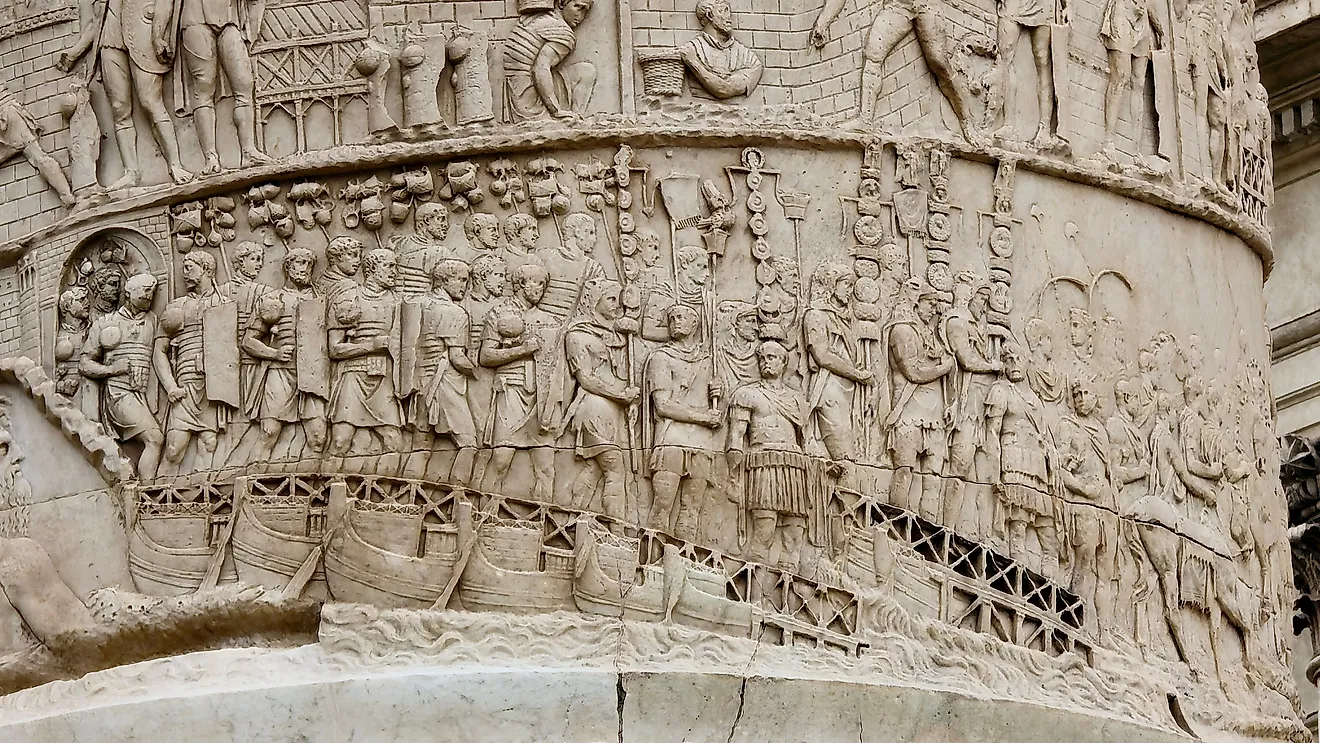
Rome reached its greatest territorial extent under Emperor Trajan in 117 CE. One of Rome's so-called Five Good Emperors who presided over the empire during the latter half of the Pax Romana, Trajan led the Roman Empire to its absolute territorial height. The prosperity of Roman civilization during this period resulted in enormous growth. At that peak, Roman territory stretched from Britain in the northwest to Egypt in the south, across North Africa, much of continental Europe, and east into Asia Minor, Syria, and Mesopotamia. By the late 3rd century CE, a century after the end of the Pax Romana, the Aurelian Walls were being constructed to protect the city of Rome, which had continued to expand since the days of the Republic. The new walls stretched 12.5 miles and enclosed an area of roughly 5 square miles, a fraction of the modern city's 496 square miles.
Head Count

Though the ancient city of Rome's geographic extent is evident from the walls that still stand today, estimating the city's population at the height of the empire is more difficult. Scholarly estimates of ancient Rome's population range from 250,000 to 2 million. Many scholars fall into one of two categories: "Great Rome" theorists, who argue the city's ancient population peaked at a little over 1 million residents during the Second Century CE, and "Little Rome" theorists who say it peaked at or below half a million.
Those theories are difficult to confirm. Although Roman officials conducted censuses, no contemporary counts of the city of Rome's official population survive. This means that researchers are forced to rely on educated guesses and reconstructions rather than primary sources that explicitly state the city's ancient population. Some of those methods include extrapolating from maps and city plans, or using the density of other Roman cities, such as Pompeii, to estimate Rome's population.
Additionally, it can be difficult to define who, or rather what, made up that population. One document states that under Caesar Augustus, the first emperor of Rome, the state distributed grain to some 200,000 eligible recipients, commonly understood as adult male citizens. However, sources such as these may have exaggerated the numbers to make their leaders' accomplishments seem more impressive, and thus should be taken with a grain of salt. Beyond the reliability of official documents, it can be hard to decipher who was being counted when populations were discussed. Those 200,000 residents to whom the Roman state gave grain were likely the male heads of households, scholars argue. That means the population could have been significantly larger once women, children, foreigners, and enslaved peoples were included.
Is Rome still at its Peak?
Today, what was once the seat of one of the world's greatest civilizations is now Italy's capital. As of 2022, Rome had a metropolitan population of over 4 million. The city of Rome's majesty lies in how seamlessly it transitions between modernity and history, as brand-new office buildings and shops butt up against millennia-old marble and concrete structures. People go about their daily lives under the shadows of ancient monuments, they walk on streets paved thousands of years ago, and they live in places that have been inhabited for generations. Thousands of years later, Rome is still a hub of history, architecture, religion, tourism, business, and culture. Though the government and society of ancient Rome have long since ceased to exist, in many ways, the city of Rome is still at its peak today. In that way, it truly is the Eternal City.