Who Was Alexander The Great’s Father?
Alexander the Great is perhaps the most well-known figure in world history. As the king of Macedonia, he led an empire that stretched from Greece to India. However, the foundation of Alexander's success was actually established by his father, Phillip II. Indeed, under Phillip's rule, Macedonia emerged as the hegemon of Greece, contrasting its historical reputation as a backwards and semi-barbaric state. Therefore, to truly understand Alexander the Great, one must first comprehend Phillip II.
Ancient Greece In The 300s BCE

After the Peloponnesian War (431 BCE to 401 BCE), Ancient Greece was weak. Nearly thirty years of fighting had dramatically weakened the economies of its city-states. Furthermore, whereas before the conflict, Greece often united to fight a common enemy, like Persia, the post-war period saw a lack of meaningful alliances. While Sparta was supposedly the hegemon, it was unpopular and had little experience governing a Greek-wide empire. Several wars subsequently broke out, and Spartan rule ended with the Battle of Leuctra (371 BCE). Thereafter, Thebes temporarily became the strongest city-state, but this too was short-lived. This division thus made Greece a prime target for a strong and unified state to assert control.
Macedonia And The Rest Of Greece

Located in the far north, Macedonia historically had a complicated relationship with the rest of Greece. While technically part of the Greek world, it had a reputation for being "backwards". Indeed, Macedonia's monarchical system often resulted in bloody power struggles between members of the royalty. Moreover, it contrasted with the democracies or elite-led oligarchies seen in the rest of Greece. Macedonia also had a mountainous and untamed landscape, which further contributed to its "wild" reputation. Finally, since Macedonia was located between the "civilised" Greek world and the "uncivilised " Balkan interior, which contained peoples like the Ilyrians and the Thracians, the Macedonians themselves were often considered "semi-barbarians" by the southern Greeks,
Phillip II Becomes King

Phillip II's rise to power perhaps reflects the reputation of Macedonia at the time. The youngest son of King Amyntas III, there was little expectation that Phillip would ever become king. However, after his oldest brother, King Alexander, was killed, Phillip was sent as a hostage to Illyria. Later, he was held in Thebes. This period was crucial, since Phillip was educated by Epaminondas, the famed Theban politician and military commander who had led Thebes out of Spartan subjugation. In 364 BCE, Phillip finally returned to Macedonia. Then, in 359 BCE, Phillip's other brother, King Perdiccas, was killed in a battle against the Illyrians. This left Perdiccas' six-year-old son, Amyntas IV, as heir to the throne. With Macedonia's leadership weakened, the Illyrians and Thracians began threatening to invade. Phillip was therefore named Amyntas' regent, which effectively made him the leader of Macedonia. He took the official title of king later in 359 BCE.
Macedonia's Rise To Power
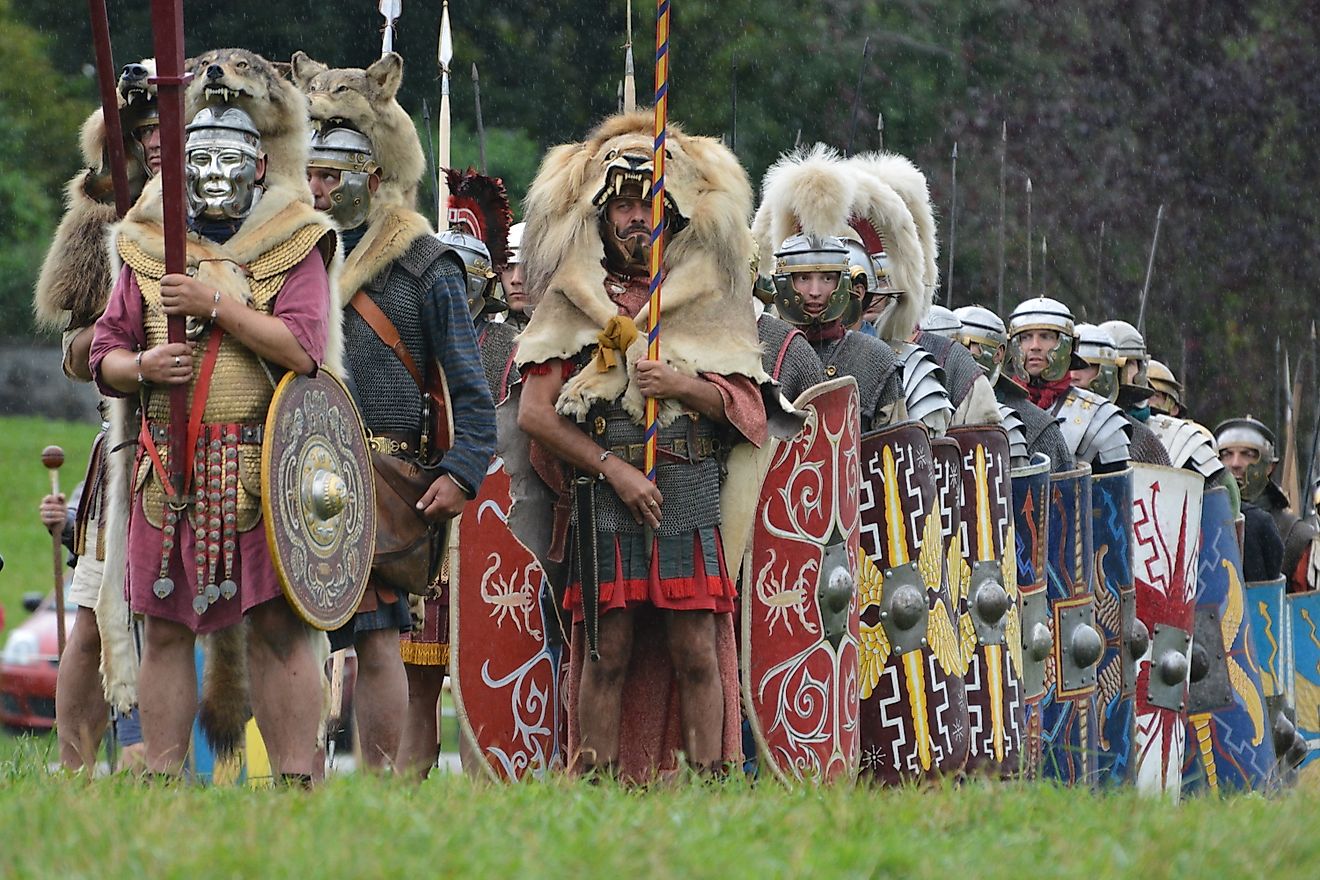
Phillip II proceeded to transform Macedonia. To do so, he started with military reforms, utilising the knowledge he acquired from Epaminondas. First, he created a professional standing army, which contrasted with the citizen-based armies seen in much of the rest of Greece. This meant that the Macedonian Army was better trained and more disciplined than other contemporary forces. Phillip also introduced the Macedonian Phalanx, a dense infantry formation that utilised a long spear called the sarissa. This made frontal assaults by enemy combatants nearly impossible. When utilised in conjunction with a combined arms strategy, which saw cavalry and light troops working alongside the infantry, the Macedonian Army became unstoppable under Phillip II.
However, Phillip did not just rely on military might to expand Macedonia's influence. For instance, he married Audata, an Illyrian princess, to prevent invasions from the northwest. He also married Olympias of Epirus to secure an alliance with the Molossians in southwestern Greece (Olympias then gave birth to Alexander). Furthermore, Phillip seized control of important resources, like gold mines in Amphipolis, which provided funds for further diplomatic efforts. All these measures allowed Phillip to make consistent incursions south for twenty years. This eventually culiminated in the Battle of Chaeronea in 338 BCE, in which Macedonia defeated a Theban and Athenian-led coalition. Afterward, Phillip established the Corinthian League, which formally united Greece under Macedonian leadership.
Phillp's Death

Now that Greece was united, Phillip II turned his attention east. However, just as he was about to invade Persia, he was assassinated in 336 BCE by Pausanias, one of his bodyguards. The reasons behind this assassination are heavily debated. The most widely accepted motive is that Pausanias was angry at Phillip for failing to adequately punish the associates of a powerful noble who had assaulted and humiliated him. However, some theorize that Olympias and Alexander were actually responsible, since they feared that Alexander was about to be cut out of the line of succession. Regardless of the reason, soon afterward, Alexander was named King of Macedonia.
Impact and Legacy
Phillip II was one of the most important rulers in world history. Indeed, by modernizing its military and utilising smart diplomacy, he transformed Macedonia from a "backward" state on the periphery of Greece into the hegemon of the region. This set the stage for his son, Alexander, to expand Macedonia from a Greek empire into the largest power of the ancient world.