Which Roman Generals Never Lost A Battle?
Some of the best generals came from the ancient world. The Roman Republic and Empire in particular are known for their military figures. Historical records indicate that some of these generals from Rome never lost a decisive battle. Scipio Africanus helped secure Rome's dominance beyond the Italian peninsula and Julius Caesar became famous for his conquests and elaborate triumphal processions. Their achievements made them seem almost invincible. Yet such claims warrant caution, as surviving ancient sources are often incomplete, biased, or inconsistent. However, based on the surviving historical records, here are some of Rome's generals with the best military records.
Scipio Africanus (236 to 183 BCE)

Scipio Africanus is perhaps the most clear-cut example of a Roman general who never lost a battle. An instrumental figure in the Second Punic War (218 to 201 BCE), Scipio was made a commanding officer in Spain after his father and uncle died. He proceeded to win battle after battle against the invading Carthaginians, including at Carthago Nova in 209 BCE, Baecula in 208 BCE, and Ilipa in 206 BCE. However, Scipio's greatest achievements came when the Romans invaded North Africa. He won at the Great Plains in 203 BCE and then decisively defeated Carthaginian general Hannibal Barca at the Battle of Zama in 202 BCE. This engagement effectively ended the war and made Scipio a hero in Rome.

Scipio's seemingly spotless record only applies if you count the battles in which he was a commanding officer. He was present for disastrous defeats at the beginning of the war, including the Battles of Ticinus and Trebia in 218 BCE. Most importantly, Scipio was at the Battle of Cannae in 216 BCE, in which the Romans lost between 50,000 and 75,000 out of an initial fighting force of between 80,000 and 86,000. It is therefore inaccurate to say that he never experienced a defeat. Regardless, Scipio does have a strong claim to an unbeaten record as a general.
Marcus Agrippa (64/63 to 12 BCE)

One can reasonably claim that Marcus Agrippa is another general who never lost a battle. A major military figure in the late Roman Republic and early Empire, he was instrumental in Octavian's rise as emperor. His victory against Sextus Pompey at Naulochus in 36 BCE eliminated Pompeian resistance to the Second Triumvirate (a ruling alliance made up of Mark Antony, Octavian, and Lepidus).

When this alliance broke down, Octavian relied on Agrippa to eliminate Mark Antony. This culminated in the Battle of Actium in 31 BCE, in which Agrippa crushed both Antony and Egyptian leader Cleopatra's fleets. He spent most of the rest of his life in administrative and political positions, though he was briefly dispatched to Iberia in 19 BCE to subdue unrest. Ultimately, Agrippa died in 12 BCE, with no record of him ever losing a battle. At the same time, his career was less well documented than someone like Scipio, so this record can't be proven.
Julius Caesar (100 to 44 BCE)

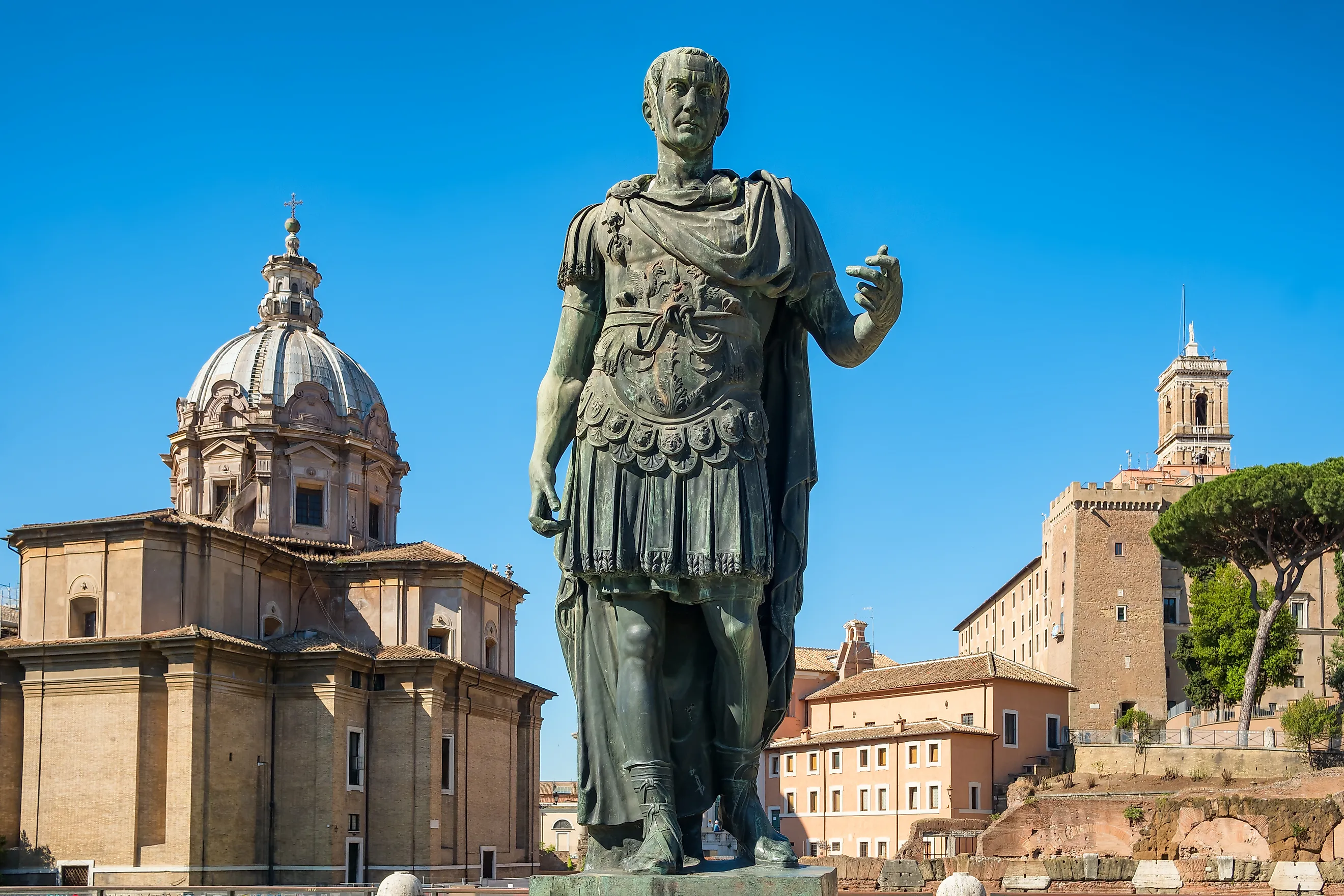
Julius Caesar's addition to an article about generals who never lost a battle is controversial. During his two most famous military campaigns, the Gallic Wars and his civil war against Pompey the Great, he suffered significant setbacks. Consider the Battle of Gergovia in 52 BCE, when Gallic leader Vercingetorix withstood Caesar's siege and launched a counterattack that forced the Romans to flee. Another setback occurred at Dyrrachium in 48 BCE, when Caesar's army narrowly avoided catastrophe after being attacked by Pompeian forces.
Crucially, none of these defeats were decisive, as was often the case in the ancient world, and Caesar quickly recovered. Soon after Gergovia, he successfully sieged Vercingetorix at Alesia and withstood a Gallic relief army. Caesar also soundly defeated Pompey at the Battle of Pharsalus in 48 BCE and forced him to flee to Egypt. Hence, while he may not be undefeated if we count every single engagement, Caesar was certainly successful in achieving all his long-term military objectives.
Gnaeus Domitius Corbulo (7 to 67 CE)

Gnaeus Domitius Corbulo was one of the most accomplished generals of the early Roman Empire. He first served under Emperor Claudius, where he oversaw several victories against Germanic tribes along the Rhine River. Corbulo then reached new heights during Nero's reign, when he was sent to the east to confront the Persia-based Parthian Empire over control of Armenia. He invaded Armenia in 58 CE, capturing and burning Artaxata in the process and taking Tigranocerta the following year. Even though there were setbacks once Corbulo left Armenia, he reestablished dominance in 63 CE and forced King Tiridates I to accept Roman influence. Corbulo ultimately died in 67 CE, with no evidence of him ever losing a battle. At the same time, much of his military success was defined by sieges and diplomacy, rather than open combat, thereby complicating his unbeaten record.
Aurelian (214 to 275 CE)

Aurelian's reign as emperor was short but impactful. Ruling from 270 to 275 CE, he helped reunite the Roman Empire after it separated into three different states during the Crisis of the Third Century. He first addressed the short-lived Palmyrene Empire in the east, conquering it in 272 CE. Aurelian then turned his attention to the Gallic Empire in the west, also reincorporating it in 274 CE. Throughout all of this, he successfully fended off incursions from peoples like the Alamanni, Goths, and Vandals. While planning a campaign against the Persia-based Sasanian Empire in 275 CE, Aurelian was assassinated. Aurelian was reportedly ambushed and defeated at Placentia in 271 CE, though some historians doubt the account. The main source about his life, the Historia Augusta, contains several fabricated letters "from" Aurelian. Modern historians therefore recommend caution when talking about his victories.
Impact And Legacy
Stories about Rome's "unbeaten" generals are complicated. Scipio Africanus and Marcus Agrippa have the most credible claims to this achievement, but even these should be caveated. Julius Caesar lost individual battles, but never to the point where it affected his overall goal. Finally, limited historical records and sources of questionable credibility mean that statements about Gnaeus Domitius Corbulo and Aurelian need to be taken with a grain of salt.