Which Roman Generals Committed The Worst Atrocities?
Roman generals are remembered for many reasons. Their military accomplishments, or failures, are generally the most important factor in their legacy. However, atrocities frequently defined them as well. Consider Lucius Cornelius Sulla, who purged his political opponents, or Julius Caesar, who likely committed genocide in Gaul. Exploring such atrocities in detail helps us paint a fuller picture of Ancient Rome's brutality.
Lucius Cornelius Sulla (138 to 78 BCE)

Sulla's atrocities can't be understood without context. Born to an aristocratic family around 138 BCE, he first gained prominence while serving under Gaius Marius in the Jugurthine War. The two men quickly formed a bitter rivalry. Marius was a self-made "novus homo" (new man) and one of the most popular politicians in Roman history, contrasting him with the elitist Sulla. Their competition reached a fever pitch when both sought command in the war against King Mithridates VI of Pontus. After control was unexpectedly shifted to Marius, Sulla marched on Rome with his army. Marius and his allies regained control after Sulla left to fight wars in the east, but Sulla returned to Italy once again in 83 BCE and re-established dominance.

Between 82 and 81 BCE, Sulla became dictator of Rome. He proceeded to brutally purge former Marius supporters via proscriptions, otherwise known as public death lists. Once someone's name appeared on a list, it was legal to kill them and confiscate their property. These measures caused widespread trauma across the Roman Republic and upended political norms. Now, there was precedent for using violence against one's political opponents. This ultimately paved the way for the civil wars that led to the rise of the Roman Empire.
Marcus Licinius Crassus (115 to 53 BCE)

The Third Servile War lasted from 73 to 71 BCE. The final and most devastating slave rebellion of the late Roman Republic, it saw Thracian gladiator Spartacus lead an army of tens of thousands against the government. Even though they were eventually defeated, they terrorized Italy for 2 years and even beat several Roman armies.
Marcus Licinius Crassus ultimately oversaw Spartacus' defeat. From the very beginning, his campaign was defined by brutality. Roman troops had grown frightened of the slaves. To "prove" that he was more dangerous than they, Crassus revived decimation. Legions that had shown cowardice were separated into groups of 10. The men then drew lots, and the one who drew the shortest straw was beaten to death. Some ancient historians assert that only 50 Roman legionnaires were killed via decimation, while others claim that thousands were murdered. Regardless, this process was still indicative of Crassus' brutality.

The final battle of the Third Servile War occurred in southern Italy in 71 BCE, during which Spartacus was killed. About 60,000 rebel slaves in total died during the conflict. However, Crassus wasn't finished. Since slaves were considered property, rather than citizens, it was legal to treat them as prisoners of war. This meant that they could be tortured. Crassus, therefore, crucified thousands of rebel slaves along 100 miles of the Appian Way, Rome's busiest highway. As people died, their bodies were left to rot. This sent a clear message to other slaves that they risked the same fate should they choose to rebel. The mass crucifixion also functioned as a monument to Crassus' victory.
Julius Caesar (100 to 44 BCE)

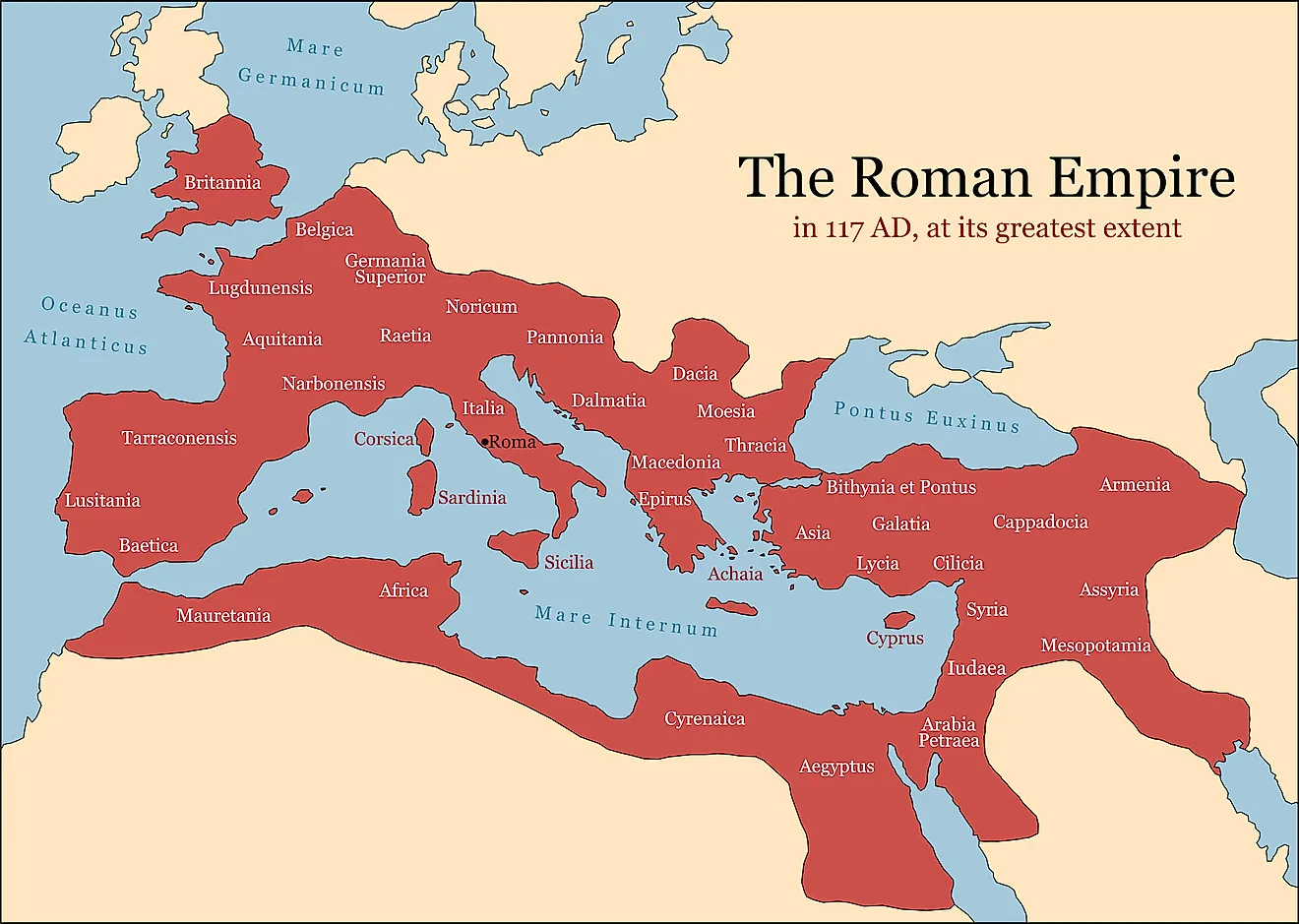
Julius Caesar is remembered for many reasons. His Gallic Campaign is perhaps the most controversial. From 58 to 50 BCE, he established control over Gaul (modern-day France, Belgium, and Luxembourg), which had long threatened the Roman Republic. While impressive, the way he conquered it was unfathomably brutal. Consider the first major campaign against the Helvetii, in which Caesar claimed that he killed hundreds of thousands. We shouldn't take this number at face value, but the death toll was undoubtedly high. His massacre of the Usipetes and Tencteri in 55 BCE was also horrific. After negotiating with their leaders, Caesar attacked them. Ancient sources state that 400,000 people were killed, but again, these numbers are likely exaggerated.
Regardless, the scale of the violence, paired with Caesar's disregard for diplomatic norms, caused controversy in Rome itself. Politicians like Cato the Younger even argued that Caesar should have surrendered himself to the Germanic tribes for violating Rome's diplomatic and religious obligations. In total, Caesar claimed that he killed 1 million Gauls and enslaved 1 million more. His quotes about intention are also revealing. When discussing the Gallic tribes, Caesar frequently said he wanted to destroy their "stock and name". Such proclamations are why some modern-day historians argue that this campaign was genocidal, even if the term itself wouldn't be coined until thousands of years later.
Germanicus (15 BCE to 19 CE)

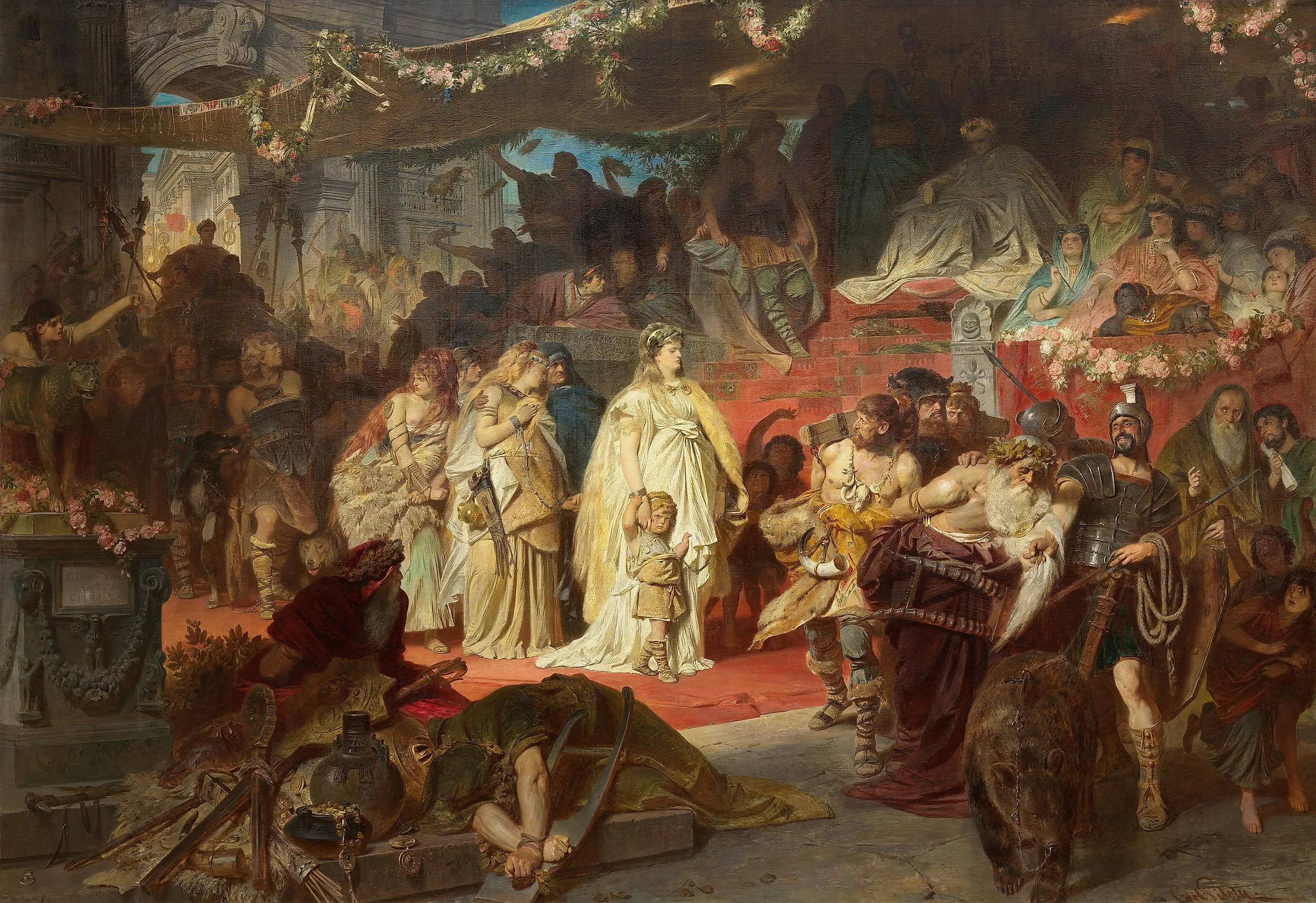
In 9 CE, 3 Roman legions were ambushed and decimated by Germanic tribes in the Teutoburg Forest. Between 15,000 and 20,000 soldiers were killed, and the scale of the defeat was so great that it effectively ended Roman plans to expand past the Rhine River. People also wanted revenge. This is where Germanicus came in. One of the most famous generals in Roman history and an instrumental political figure (his son was future emperor Caligula, and his daughter was Agrippina the Younger, mother of future emperor Nero), he's usually remembered for his charisma and success in reviving Roman morale.
At the same time, his wars in Germania were brutal and punitive. Consider the first major campaign against the Marsi in 14 CE. Germanicus deliberately attacked during a religious festival, massacring civilians and destroying important religious monuments in the process. Civilians were again targeted during his campaign against the Chatti the following year. None of this is to say that Germanicus was uniquely bloodthirsty. He was able to restrain himself and condemned what he believed was an unreasonable use of force. Regardless, his actions speak to the broader Roman goal: retaliation and revenge.
Impact And Legacy
Several of the most well-remembered Roman generals committed the worst atrocities. Sulla's proscriptions, on top of their immediate bloody impact, also established the precedent of using violence to deal with one's political opponents. Crassus' draconian actions during the Third Servile War had a practical and personal utility. Caesar's Gallic campaign was arguably genocidal. Finally, Germanicus' wars in Germania were purposefully brutal, since they served as retribution for the Battle of the Teutoburg Forest.