The 5 Most Important Leaders In Ancient Egypt
Great leaders are often the backbone of any long-lasting civilization. Ancient Egypt was no exception. Over its 3,000-year existence, several pharaohs shaped and reshaped its historical trajectory. Narmer founded the Egyptian state. Ramses II brought it to the height of its military, cultural, and political power. Exploring the five most important leaders of Ancient Egypt helps us gain a more holistic understanding of a state that defined the ancient world.
Narmer

For much of the fourth millennium BCE, Egypt was divided between Upper and Lower Egypt. This changed around 3100 BCE with the rise of Narmer. The main archaeological evidence telling us what he did is the Narmer Palette. On one side, it depicts Narmer wearing the White Crown of Upper Egypt and striking an enemy associated with Lower Egypt. On the other side, he's shown wearing the Red Crown of Lower Egypt. This indicates that he ruled and likely unified both states. Whether he did so via military conquest, diplomacy, or a combination of both is unclear.
Regardless, by creating an Egyptian-wide state based around the Nile River, Narmer paved the way for a government that could easily collect taxes, control agricultural production, regulate trade, and support its armies. Narmer also helped establish the title of Pharaoh. Rather than just being a king who ruled over earthly affairs, a pharaoh also had divine authority. Belief in the pharaoh's holiness was a major reason why Egyptians stayed unified under one political banner for so long.
Khufu

Pyramids are perhaps the most famous aspect of Ancient Egypt. The first was built during the reign of Djoser, about 2670 to 2650 BCE. Impressive as it was, the stepped design was smaller and more awkwardly shaped than the one that came next. Khufu ruled from about 2589 to 2566 BCE and oversaw the construction of the Great Pyramid of Giza. His son Khafre and his grandson Menkaure raised the other two pyramids on the same plateau. These were religious complexes that served as tombs and were thought to maintain cosmic order, and building them on such a scale required coordination across all aspects of Egyptian society. Contrary to popular belief, the work fell to Egyptian crews rather than slaves: conscripted seasonal laborers working alongside permanent skilled craftsmen.
This isn't to say that Khufu was necessarily a tolerant or benevolent leader. Ancient historians like Herodotus, who wrote 2,000 years after Khufu's reign, portrayed him as an oppressive leader who wasn't afraid to use force to achieve his goals. At the same time, archaeological evidence suggests that the workers were housed and fed, indicating that Khufu had some concern for their well-being.
Tutankhamun

Tutankhamun ruled from about 1332 to 1323 BCE, becoming pharaoh at only eight or nine years old. He had some accomplishments, including restoring the traditional Egyptian religious system, which his father, Akhenaten, had suppressed. However, Tutankhamun died at 18 or 19 before having done anything particularly earth-shattering.
For thousands of years, Tutankhamun was forgotten. Lists of pharaohs often excluded him, and when he was mentioned, it was often in discussions about the least important Egyptian leaders. Everything changed in 1922 when his tomb was discovered by British archaeologist Howard Carter. Left almost completely intact, it contained thousands of artifacts, including furniture, jewelry, weapons, and ceremonial objects. It was also home to Tutankhamun's sarcophagus and golden mask. With this, Tutankhamun gained new importance. Much of what we know about Ancient Egypt comes from his tomb, and he's now one of the most famous figures from the ancient world.
Ramses II

Ramses II was likely the most consequential ruler in Ancient Egyptian history. Reigning between 1279 and 1213 BCE, he led Egypt to new military and cultural heights. Ramses campaigned in Syria, Canaan (the southern Levant), and Nubia (modern-day southern Egypt and northern Sudan). Perhaps the most famous engagement occurred in 1274 BCE with the Battle of Kadesh. Fought against the Hittite King Muwatalli II in modern-day Syria, Ramses was nearly defeated but managed to rally his forces into achieving a stalemate. He then used propaganda to display himself as the protector of Egypt. This made Ramses very popular at home and spread fear among his enemies.
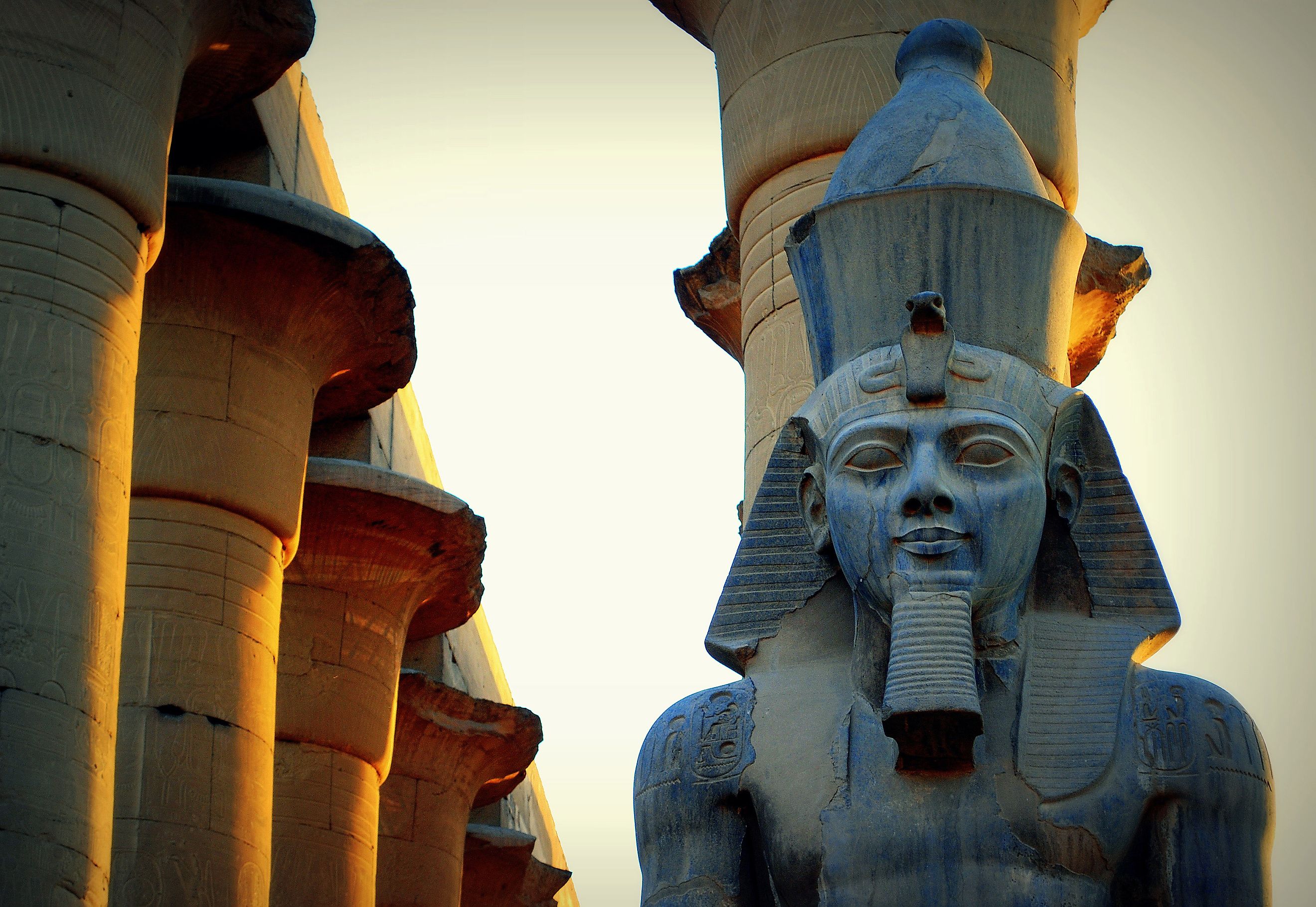
Ramses II is also remembered as a builder. He oversaw the construction of many monuments, including the Abu Simbel temples and the Ramesseum. According to Ancient Egyptian religion, temples were essential for maintaining good relations with the gods. The monuments also served a propagandistic purpose, since their grandeur helped portray Ramses as a great and powerful leader.
Cleopatra

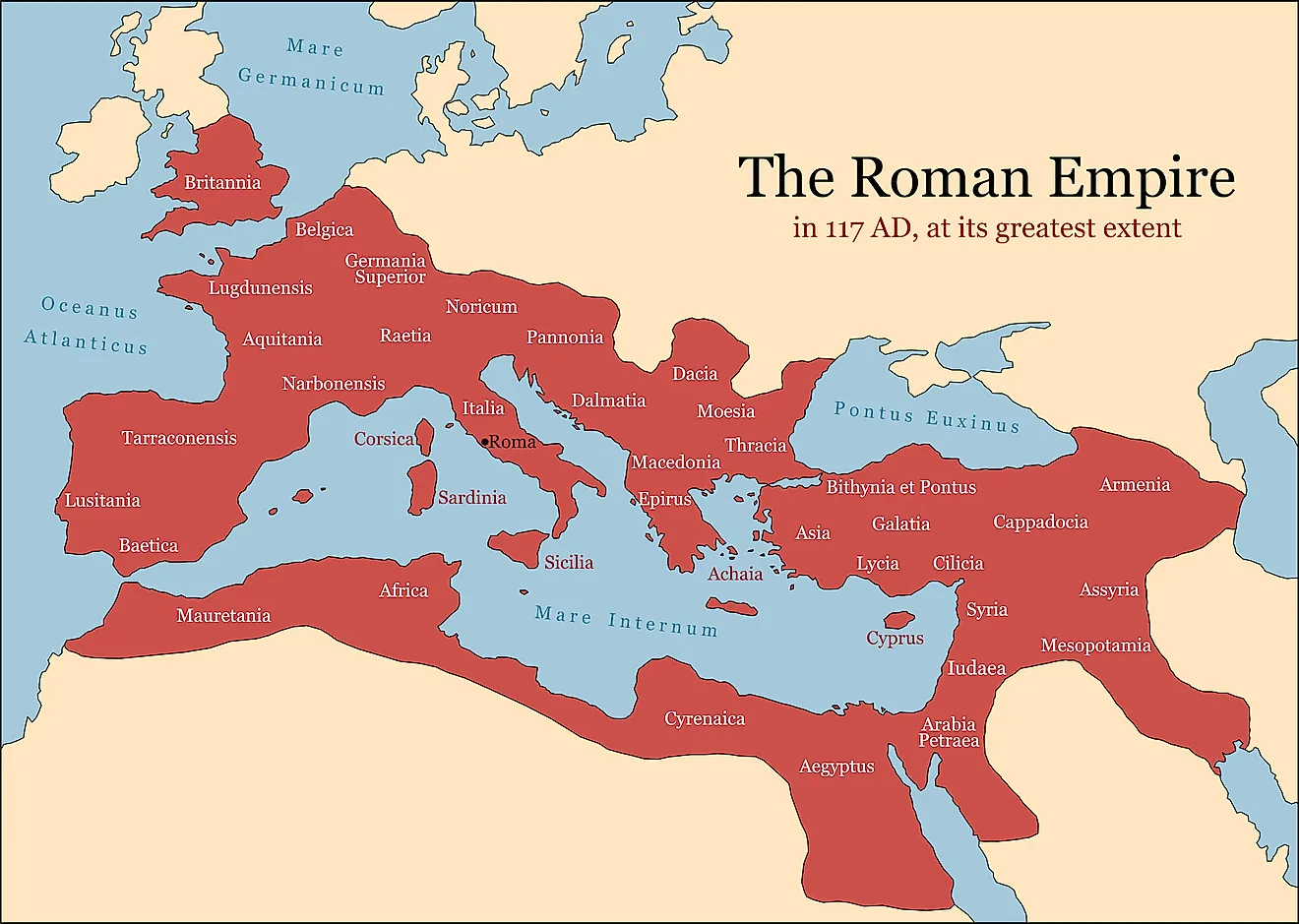
After Alexander the Great died in 323 BCE, his empire was divided between his generals. One such general, Ptolemy I Soter, controlled Egypt. Despite being Greek, he took the title of Pharaoh. Doing so was crucial, since it helped ingratiate him with the local populace by making him appear part of a 3,000-year-old tradition. The Ptolemaic dynasty proceeded to rule over Egypt for close to 300 years. Cleopatra VII Thea Philopator (or just "Cleopatra") was the final ruler of this line, becoming pharaoh in 51 BCE at the age of 18. For the first part of her reign, she co-ruled with her brother (and husband), Ptolemy XIII. A civil war soon broke out between the siblings. With the help of Roman general and dictator Julius Caesar, Cleopatra eventually defeated her brother and became the undisputed, sole ruler of Egypt.
Disaster struck when Caesar was assassinated in 44 BCE. Egypt had relied on Roman military support to maintain its independence for decades. Therefore, Cleopatra courted Roman general Mark Antony in 41 BCE. The two entered into a romantic and political relationship, much to the dismay of the Roman political elite. Octavian, Antony's main rival, used it to argue that Antony was no longer loyal to Rome and had been corrupted by a "foreign queen." These arguments worked, and the Roman Senate declared war on Cleopatra (and in turn, Antony). The climactic engagement of the war was the Battle of Actium in 31 BCE, in which the fleets of Antony and Cleopatra were destroyed. The pair fled to Egypt, where both took their own lives the following year. Egypt became a Roman province soon afterward, marking the end of an independent Ancient Egyptian civilization.
What Held Ancient Egypt Together
Ancient Egypt lasted roughly 3,000 years along a single river, and the office of pharaoh is a large part of why. Khufu's Great Pyramid required a state capable of quarrying stone and feeding work crews for two decades, which says as much about administration as it does about engineering. Cleopatra inherited a throne that had been Greek for close to three centuries and still governed as a pharaoh, because the title carried an authority no dynasty could manufacture on its own. These five reigns span almost the whole of Egyptian history, and each one shows a different way the same institution held the Nile valley together.