The Crisis Years That Nearly Destroyed The Ottoman Empire
In 1402, the conqueror Timur captured Sultan Bayezid I at the Battle of Ankara. The Ottoman throne sat empty, and four princes went to war over it. Their struggle nearly ended the empire about a century after its founding. The Ottomans survived, then faced more crises before their final collapse in 1922. Some struck early, when a single defeat could have erased the state. Others came late, as European powers carved off its provinces one war at a time.
The Ottoman Interregnum (1402 to 1413)

In the first 150 years of its existence, the Ottoman Empire almost continuously expanded. There was one exception. From 1402 to 1413, it fought a civil war, known as the Ottoman Interregnum, that nearly destroyed it. The inciting incident came when the Central Asian conqueror Timur captured Sultan Bayezid I at the Battle of Ankara. Since he left no clear successor, the empire descended into chaos as his four sons, Süleyman Çelebi, İsa Çelebi, Mehmed Çelebi, and Musa Çelebi, fought for control. The following eleven years were characterized by constant warfare and shifting rivalries. Ultimately, Mehmed Çelebi emerged victorious in 1413. While the Ottoman Empire became a world power soon afterwards when it took Constantinople in 1453, the Interregnum demonstrated the fragility in its succession system. The civil war also helped establish fratricide as an accepted practice in the royal family.
The Great Turkish War (1683 to 1699)

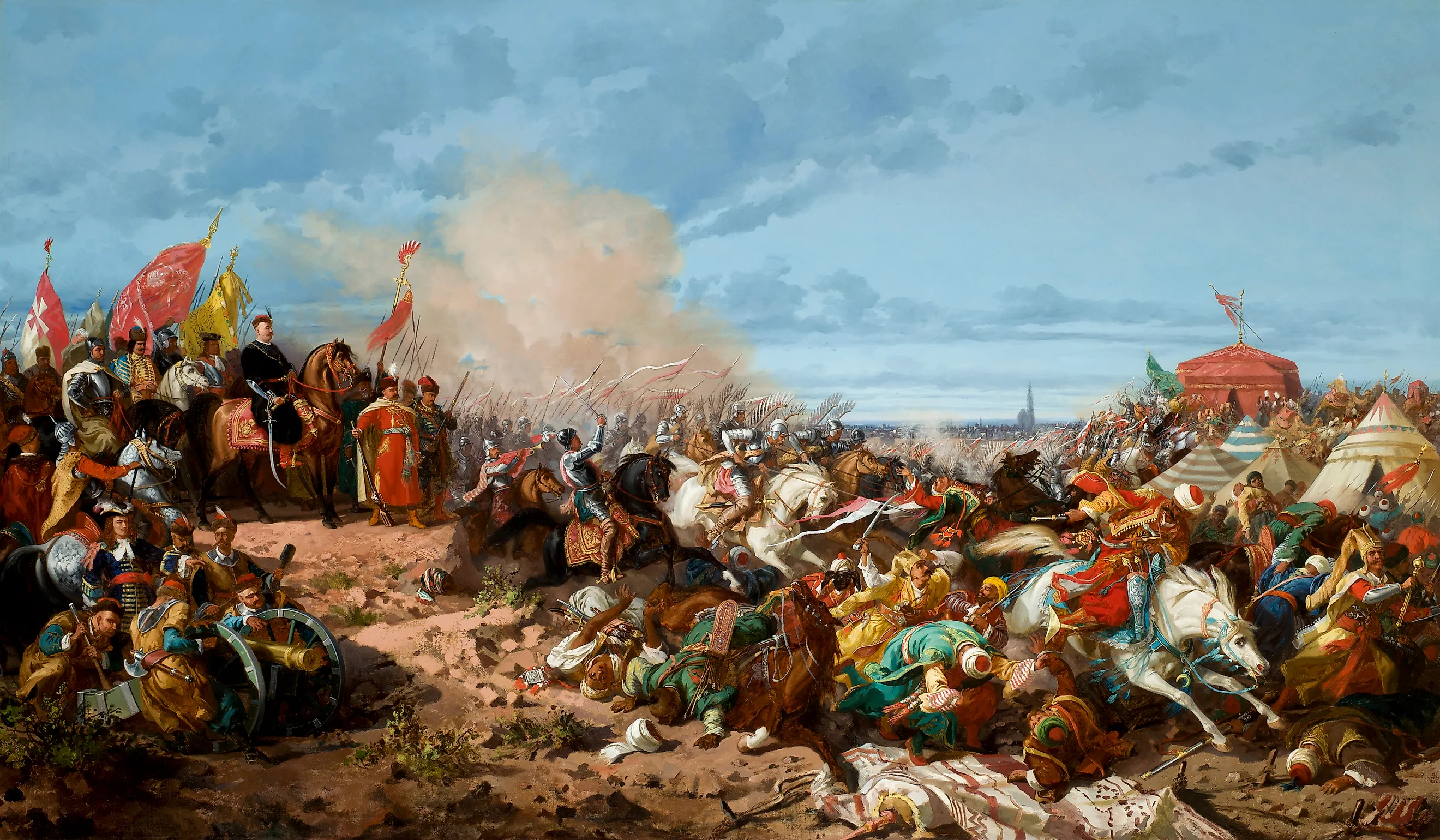
If the Interregnum signified a temporary pause in the Ottoman Empire's rise to power, the Great Turkish War marked the beginning of its downfall. It began in 1683 with the Siege of Vienna. This was the last-ditch effort by the Ottomans to establish a major foothold in Central Europe. The siege lasted nearly two months and came close to succeeding. People in the city began to starve, and disease ran rampant. Just when it looked like Vienna was going to surrender, a relief army of Polish, German, and Lithuanian troops arrived and drove the Ottomans back. With this, the Great Turkish War had begun. For the next fifteen years, the Ottoman Empire lost battle after battle. The war eventually ended in 1699 with the Treaty of Karlowitz. Under this agreement, the Ottomans lost almost all of their Central European territories. It also signified the end of any major Ottoman expansion into Europe.
The Egyptian Crisis (1831 to 1841)

By the early 19th century, Egypt, officially an Ottoman province, was effectively an independent state. Its governor, Muhammad Ali Pasha, had modernized Egypt's economy and military to the point where it posed a theoretical threat to the government in Constantinople. This threat became real in 1831, when Egypt invaded the Levant. The Ottomans, with help from their Russian allies, halted Muhammad Ali's advance in 1833. However, in doing so, they gave him control of Syria and the Hejaz.

Giving up this territory angered the Ottomans, and they invaded Syria in 1839 to regain it. After being crushed at the Battle of Nezib, the Ottoman navy defected to Egypt, and it looked like the empire was on the brink of collapse. Terrified by the implications this would have for the balance of power in Europe, Britain, Russia, Austria, and Prussia intervened. Facing overwhelming international pressure, Muhammad Ali was forced to surrender, evacuate Syria, and return the Ottoman fleet. In turn, the Ottomans recognized Ali and his descendants as permanent hereditary rulers of Egypt.
The Balkan Wars (1912 to 1913)

Greece, Serbia, Montenegro, and Romania also fought wars with the Ottomans and became independent during the 19th century. The culmination of these independence movements came in 1912, when a coalition of Balkan states declared war on the empire. Already exhausted from a war with Italy the previous year, the Ottomans suffered defeat after defeat. By the end of this First Balkan War, they had lost Macedonia, Albania and most of Thrace. Disagreements over how to divide up their newly acquired land led to another war, this time between Bulgaria, Serbia and Greece. The Ottomans entered the conflict as well to reclaim some lost territory. Even though the empire managed to make some small gains, they did little to reverse the long-term trend of territorial shrinkage and population decline.
World War I (1914 to 1918)

When World War I began in July 1914, the Ottoman Empire did not join immediately. As the so-called "Sick Man of Europe", entering into major conflicts recklessly was ill-advised. Ultimately, they joined on the side of the Central Powers (Germany and Austria-Hungary) in October 1914 when Ottoman ships fired on Russian ports in the Black Sea. Despite its supposed weakness, the empire managed to fight a war for the next four years on four fronts. The most successful campaign was at Gallipoli (1915 to 1916). There, Ottoman forces pushed the Allies back from the Dardanelles and prevented them from capturing Constantinople. One of their commanders was Mustafa Kemal, the future Atatürk.
The situation was more problematic on the other fronts. In the Caucasus, the Ottomans suffered a devastating defeat in the Battle of Sarikamish, during which they lost between 60,000 and 90,000 soldiers. Desperation for a scapegoat, paired with intense Turkish nationalism, led to the Armenian Genocide. This saw the Ottoman government murder up to 1.5 million Armenians. In Mesopotamia, the Ottomans put up an impressive resistance, only to be pushed back by the British in 1917. Finally, in Sinai and Arabia, the dual threat of the British and rebelling Arab nationalists proved to be too much, and they eventually captured territory as far north as Syria.
The Fall Of The Ottoman Empire
All these defeats, paired with their German and Austro-Hungarian allies collapsing, proved to be overwhelming for the Ottomans. They therefore signed the Armistice of Mudros in October 1918, ending the war. In the years that followed, European powers partitioned the empire. Turkish nationalists, led by Mustafa Kemal, rejected many aspects of this partition, leading to the Turkish War of Independence (1919 to 1922). The Sultanate was abolished in 1922, marking the official end of the Ottoman Empire. Turkey emerged as its main successor state the following year.