How The Ottomans Conquered Constantinople In 1453
The Ottoman conquest of Constantinople was one of the most important events in world history. Many historians consider it to have signaled the end of the Middle Ages. It also contributed to the beginning of the Renaissance. Furthermore, the conquest of Constantinople firmly established the Ottoman Empire as a major world power. All these factors make exploring how the Ottomans actually conquered Constantinople a worthwhile endeavour.
Background
Throughout the 1300s, an Anatolian state (known as a Beylik), initially led by a man named Osman (Ottoman in English), rapidly accumulated power and territory. There were several reasons why this occurred. First, the founding myth was strong; Osman apparently saw a vision of himself leading an empire that stretched across the Middle East, Europe, and North Africa. This provided the "Ottoman" state with a sense of strength and legitimacy.

Second, Ottoman governance was very decentralised; after they conquered an area, they often let local leaders maintain their positions of power. Doing so helped prevent the emergence of resistance movements, since people's lives remained mostly unchanged. It also meant that the Ottomans did not get bogged down with any major bureaucratic or administrative challenges.

Finally, the Ottoman military was strong. This was largely due to the Janissaries, an elite military corps tasked with protecting the sultan. Made up of boys who were forcibly collected from the Balkans and then trained in high-quality military schools, their lack of connection to local Anatolian politics made them completely reliant on the sultan. It also ensured that they had no local biases. All these factors, paired with the fact that they were the first modern, paid standing army, meant that the Janissaries far outmatched other contemporary armies.
The Siege

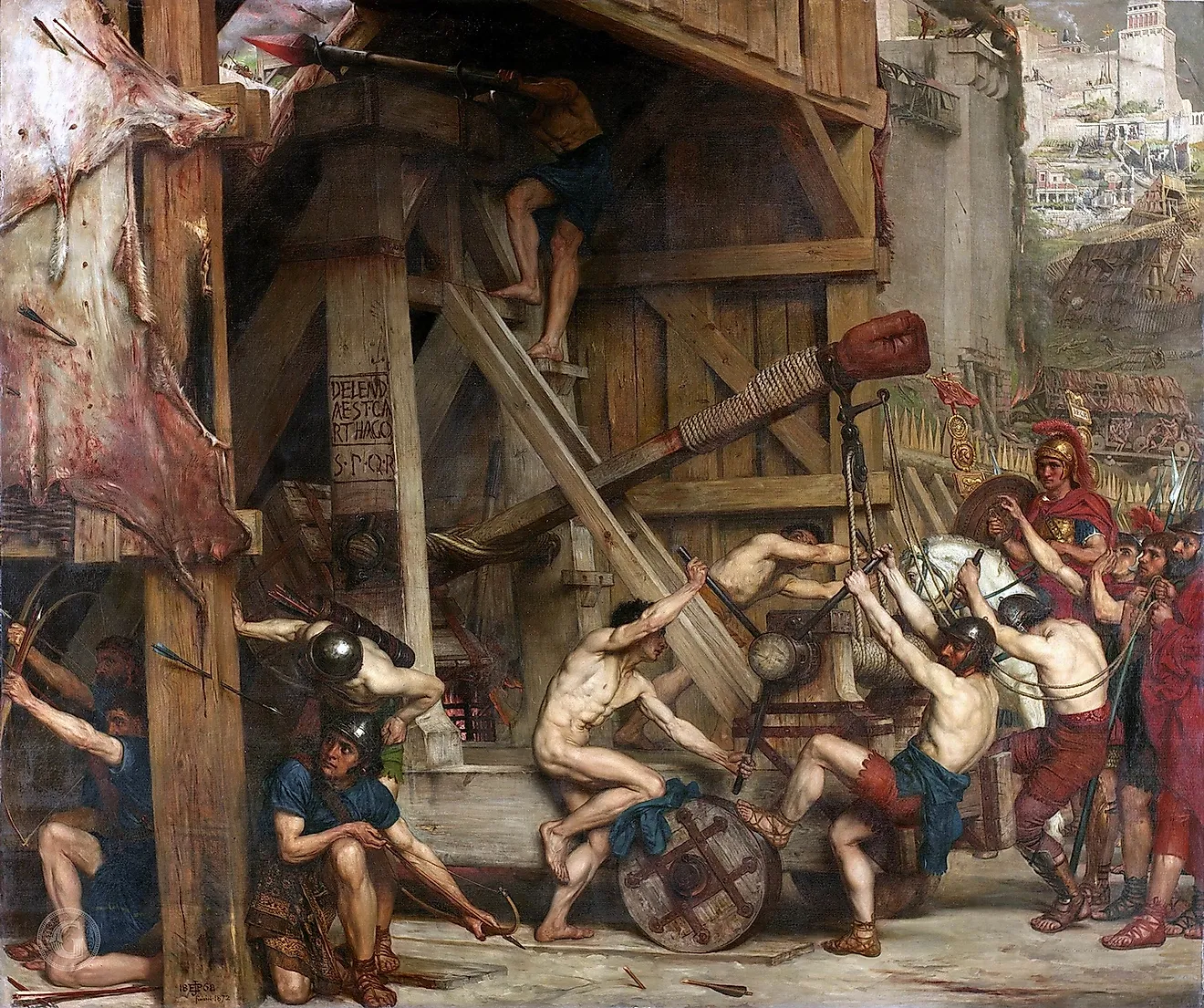
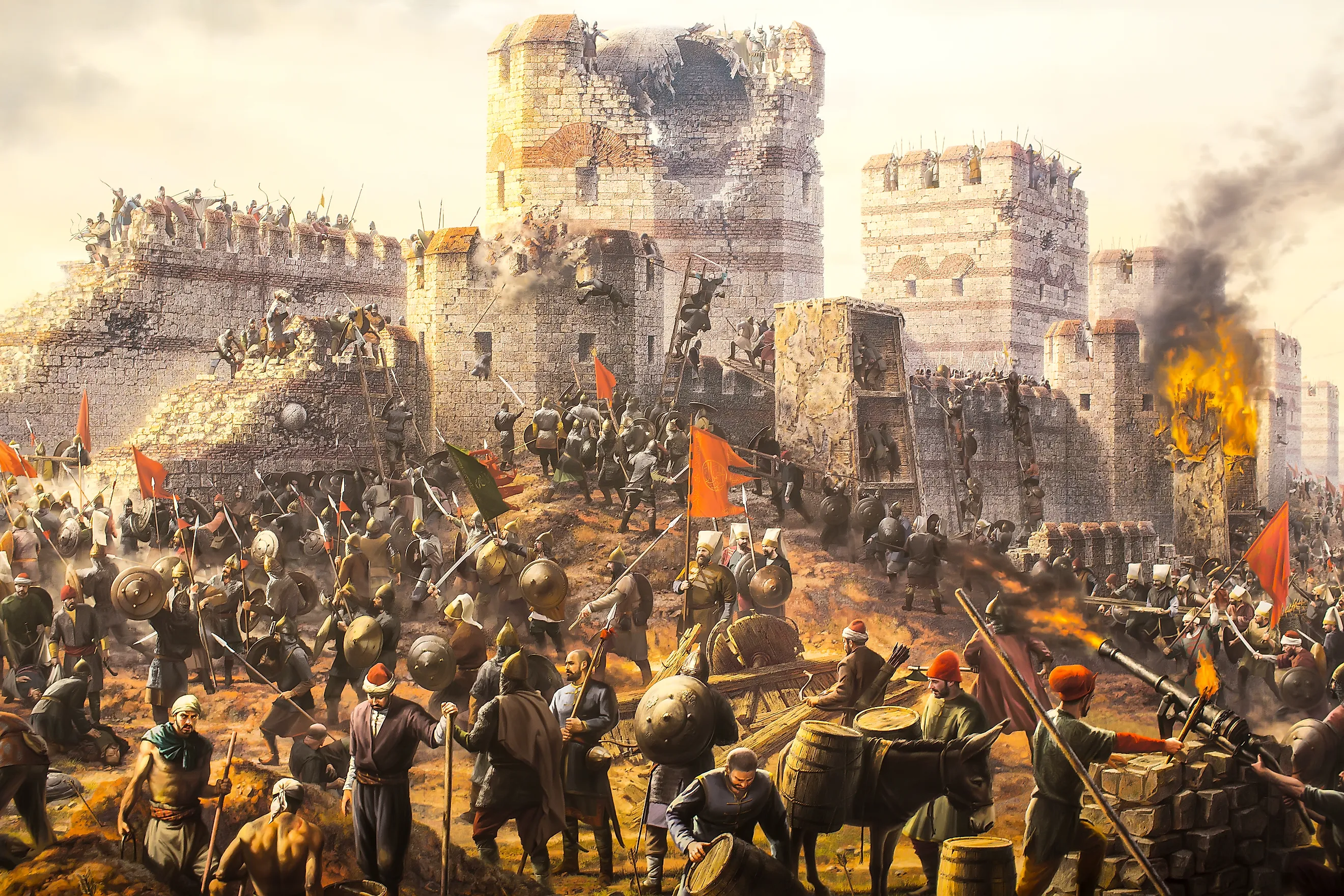
By the mid-1400s, the Ottomans had conquered most of Anatolia and the Balkans. This left Constantinople, the capital of the Byzantine Empire, surrounded. Therefore, the Ottomans began making plans to besiege the city. Sultan Mehmed II assembled an army of between 80,000 and 100,000 troops. The full force of the Ottoman navy was also called upon to blockade the city by sea. Finally, several large cannons, including the Basilica cannon, were assembled to bombard Constantinople's walls.

On April 6, 1453, the siege began. First, a group of soldiers was sent to fight Byzantine defenders outside the city. Then, cannons were placed all around Constantinople and began bombarding the city for weeks. Despite this, the walls mostly held strong. Another problem for the Ottomans was the chain blocking the Golden Horn waterway. This prevented ships from passing through, which was necessary to surround the city. Therefore, the Ottomans created a road of greased logs and pulled their ships over land. They then launched the ships behind the chain. With this, the Ottomans began to make progress, and in late May, the city began to fall.
The Fall Of Constantinople

On May 29, 1453, Sultan Mehmed II ordered the final assault on the city. This occurred in three waves. In the first wave, poorly trained, irregular soldiers were sent to exhaust the Byzantines. Better-trained, regular Ottoman forces were then sent to thin them out. Finally, the Janissaries were sent in the third wave to fully eliminate the Byzantine forces. This three-tiered attack worked well, and by the end of the day, Constantinople was under Ottoman control.

There were many atrocities during this process. While Mehmed II did not want the city to be completely sacked, he permitted a period of looting. This resulted in churches being burned, people being raped (most of whom were women, but there are also accounts of men being sexually assaulted), and citizens being murdered or enslaved. Thus, while the fall of Constantinople is sometimes considered less brutal than other comparable events around the same time (like the Sack of Constantinople during the Fourth Crusade), it was still an enormously destructive event filled with human rights abuses.
Aftermath And Legacy
As the Byzantine capital, the fall of Constantinople meant the end of the empire itself. Nonetheless, it was also a major contributing factor in the transition from the Middle Ages to the Renaissance. The flight of Byzantine scholars to places like the Italian city-states led to the re-emergence of Greek/Roman humanities in Western Europe. As for the Ottoman Empire, the conquest of Constantinople meant that it was now a major player on the European (and world) stage. Indeed, the next centuries saw it consistently accumulate more and more territory, making it a major threat to other regional powers.