Who Were The Roman Army’s Most Dangerous Enemies?
The Roman army was arguably the most formidable military force of the ancient world, but this doesn't mean that it never struggled. Consider the Carthaginians, who invaded Italy in the 210s BCE, or the Sasanians, who captured a Roman emperor. Exploring the most dangerous enemies in Roman history paints a more holistic picture of an army that, at times, seemed near invincible.
The Carthaginians

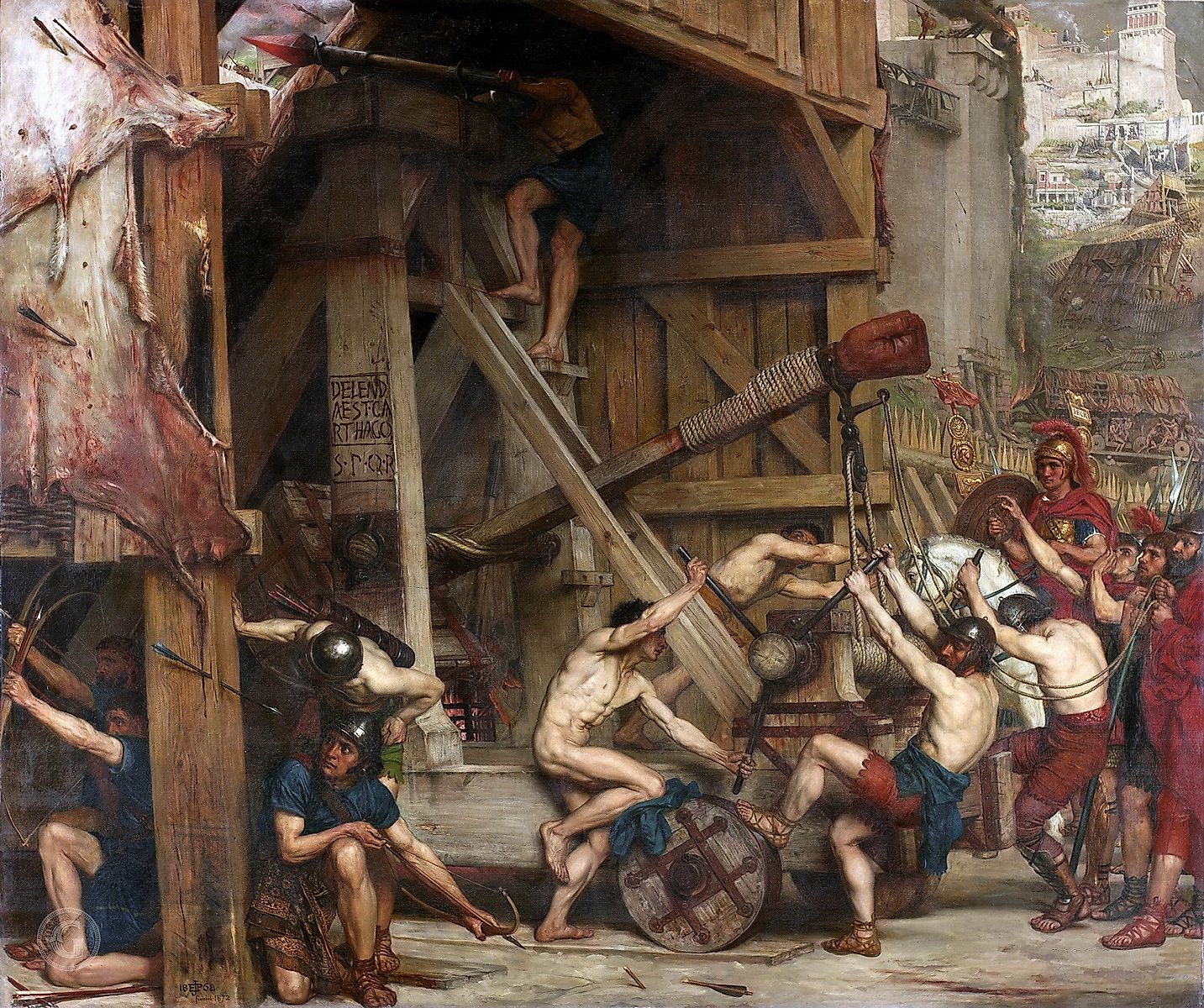
By the mid-200s BCE, two states dominated the Western Mediterranean, namely the Roman Republic and the North Africa-based empire of Carthage. To determine who would become the hegemon of the region, they began competing over the island of Sicily. Situated between Europe and North Africa, it was a crucial strategic objective. This competition eventually spiraled into the First Punic War (264 to 241 BCE). At the beginning, the Carthaginians had the advantage due to their naval supremacy. However, the Romans quickly built up their sea power and developed the corvus, a mobile landing bridge that allowed them to leverage their superior land forces. Eventually, they beat Carthage and took Sicily.
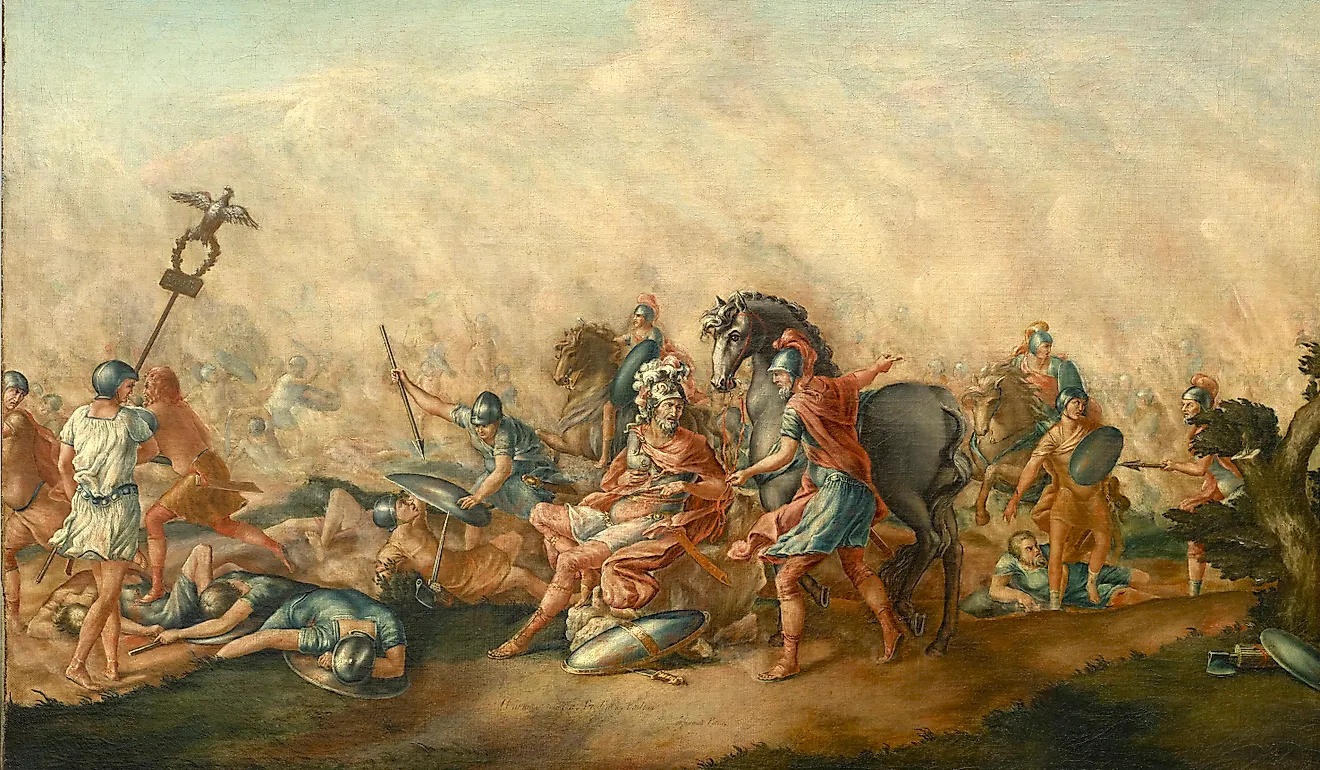
This defeat infuriated and humiliated the Carthaginian military and political leadership, which spent the next twenty years plotting revenge. These plans were enacted in 218 BCE, when Hannibal Barca marched over the Alps with his army and invaded Italy from the North. This maneuver completely caught the Romans off guard. They lost battle after battle to begin the Second Punic War, culminating in the near-catastrophic Battle of Cannae in 216 BCE, in which between 50,000 and 75,000 troops were killed.

The scale of this defeat forced a change of approach. For the next stage of the war, the Romans adopted the Fabian Strategy, which emphasized guerrilla warfare and winning by attrition. This controversial approach was successful, and Hannibal was ultimately defeated at the Battle of Zama in 202 BCE. Carthage continued to exist for the next fifty years, albeit in a much diminished state. It was eventually annihilated in the Third Punic War (149 to 146 BCE), when the Romans razed the city to the ground after a brutal siege.
The Parthians

The Parthian Empire emerged in the mid-200s BCE. It controlled most of Mesopotamia and modern-day Iran. Being stationed along the Silk Road gave it immense economic and military importance and made it a natural rival to the Roman Republic.
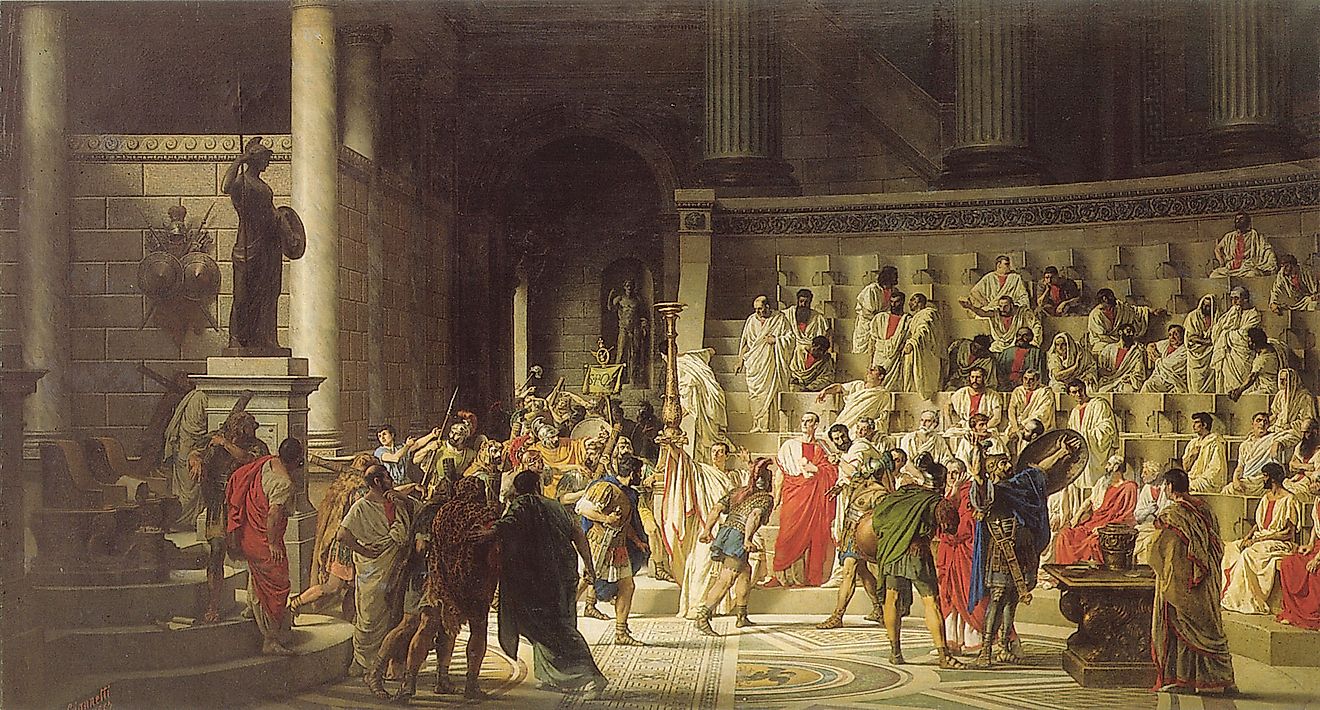
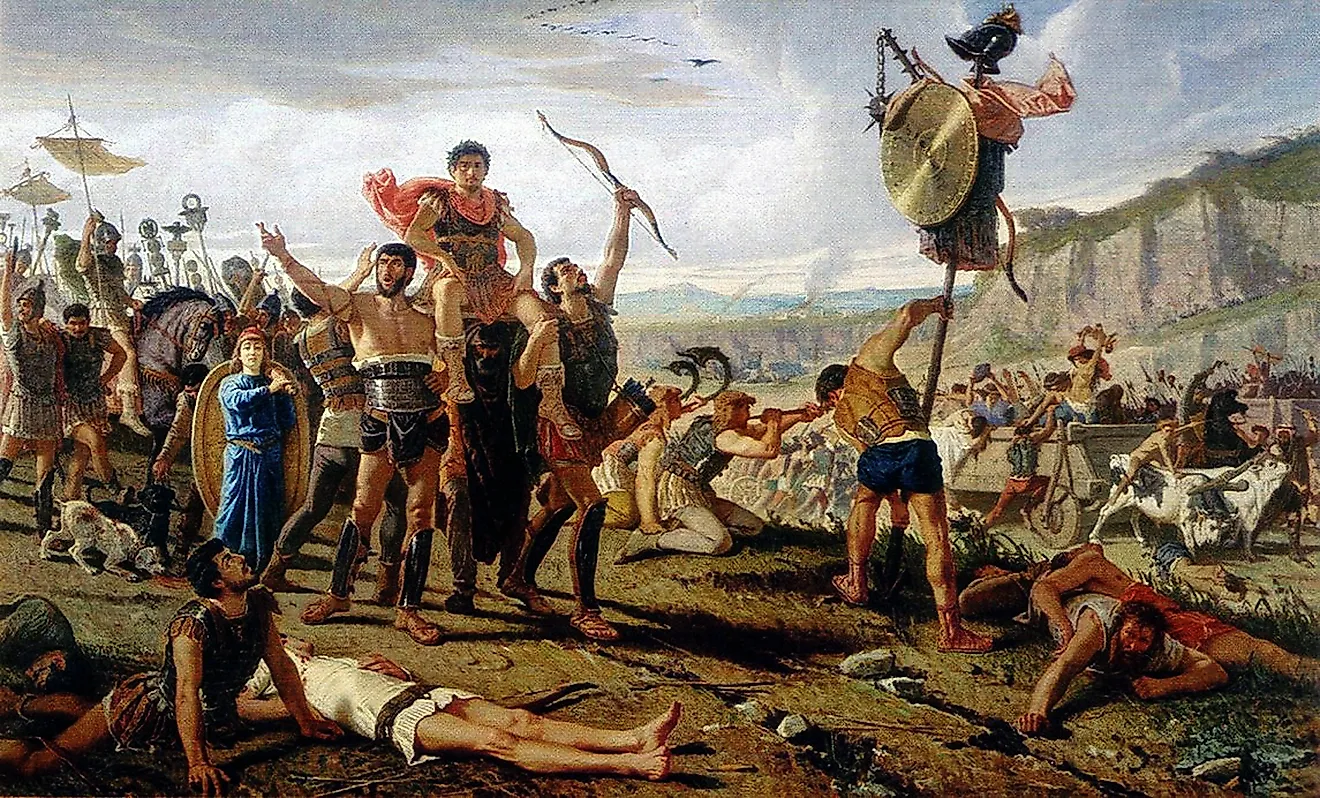
Perhaps the most famous conflict between the two states occurred in the mid-50s BCE when Marcus Licinius Crassus invaded Parthia. A member of the First Triumvirate (an informal alliance made up of Julius Caesar, Pompey the Great, and Crassus that dominated Roman politics during that period), he was jealous of his allies' success. Caesar's ongoing campaign in Gaul was bringing him unprecedented personal popularity and power, and Pompey had countless military victories to his name. Crassus thus began campaigning against Parthia to prove his worth. It initially went well, but problems soon emerged. Roman infantry was ill-equipped to deal with the Parthian horse archers and was decimated at the Battle of Carrhae in 53 BCE. Crassus survived the engagement but was killed in a failed negotiation attempt afterward. This altered the balance of power in Roman political leadership, leading to two decades of civil war that ended with the rise of the Roman Empire.
The Sasanians

The Parthians continued to fight the Romans for nearly three centuries before eventually being replaced by the Sasanian Empire in the 220s CE. More centralized and organized than their Parthian counterparts, the Sasanians proved an even greater challenge for the Romans. They established themselves as a major threat in 260 CE at the Battle of Edessa, where they captured Emperor Valerian alive. The only emperor of the classical Roman period ever captured alive by a foreign enemy, Valerian spent the rest of his life in Sasanian captivity. Emperor Julian was then killed 100 years later during an invasion of Persia in 363 CE. Even after the Western Roman Empire fell in 476 CE, the Sasanians and the Eastern Roman Empire (later known as the Byzantine Empire) continued to fight. Their final war in the early 7th century CE exhausted both states economically and militarily, ultimately contributing to the Sasanian Empire's collapse in 651 CE.
Various Germanic Tribes

Despite being portrayed as "barbaric" and "backward," Germanic tribes proved a constant threat to Rome throughout its existence. The Cimbri and Teutones were responsible for a near-disaster in 105 BCE when they defeated two Roman armies at the Battle of Arausio. Ancient historians assert that 80,000 Romans were killed, but these numbers are likely exaggerated. Regardless, the defeat was still enormous and likely led to reforms that made the army more professional and opened recruitment up to a wider array of citizens.
Germanic tribes again proved a formidable foe during the early imperial period. Ever since Julius Caesar made incursions into Germania in the 50s BCE, the Romans wanted to settle the region. They began to do so in the 10s BCE by building fortifications, military camps, and other infrastructure along the Rhine River. Things went well until 9 CE, when general Publius Quinctilius Varus led three legions into the Teutoburg Forest. He had been told by Arminius, a Germanic chieftain and supposed Roman ally, that a rebellion had broken out. This was a lie, and several Germanic tribes ambushed them. Over the next three to four days, the legions were destroyed, and between 15,000 and 20,000 Roman soldiers were killed. The scale of this defeat was so traumatic that Emperor Augustus reportedly had a nervous breakdown, and the Romans eventually abandoned plans to conquer Germania.
Impact And Legacy
Rome's most dangerous enemies altered its historical trajectory. Wars with Carthage forced the Romans to build up their navy and fundamentally alter their tactical approach. The Parthians killed Marcus Crassus, setting off a chain reaction that ended with the rise of the Roman Empire. Wars with the Sasanians were among the most expensive and deadliest of late antiquity. Finally, defeats by various Germanic tribes led to reforms in the army and to the establishment of the territorial limits of the Roman state.


.jpg)
