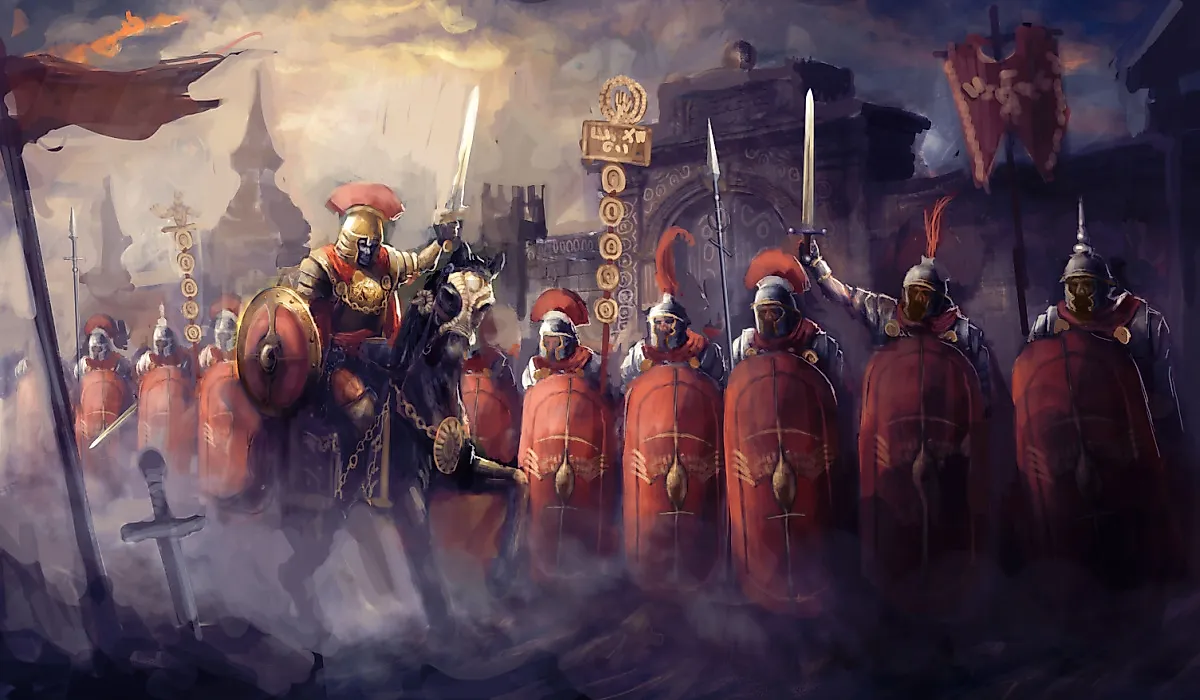
The Most Feared Roman Legions in History
When three Roman legions disappeared into a German forest in September 9 CE, the emperor Augustus tore his clothes, let his hair and beard grow out for months, and reportedly slammed his head against the walls of his palace, shouting "Quintilius Varus, give me back my legions!" He never got them back. The XVII, XVIII, and XIX were destroyed by Arminius and the Cherusci over three days of running ambush at Teutoburg Forest, and their numbers were retired forever after. No subsequent Roman legion ever carried them. Rome had about 28 standing legions at its imperial peak. The ones below were the legions that other people learned to fear by name.
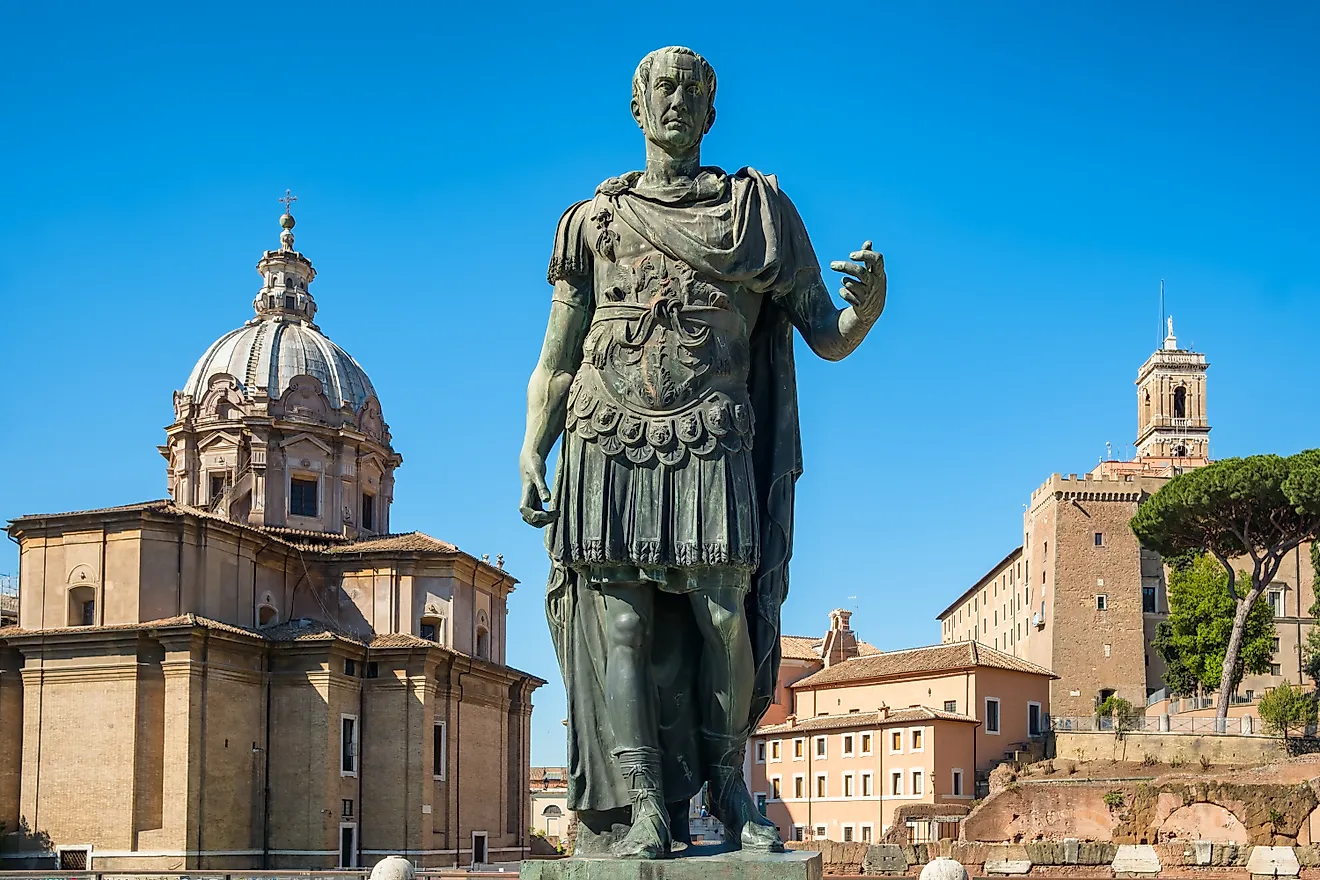
Legio X Equestris (Caesar's Tenth)

The Tenth got its weird cognomen, "Equestris" (meaning "of the cavalry"), the day Julius Caesar mounted his infantry on horseback to negotiate with the German chieftain Ariovistus in 58 BCE. Caesar didn't trust his Gallic cavalry around Ariovistus, so he put his most reliable infantry in the saddle and called them riders. The men loved the joke. The name stuck.
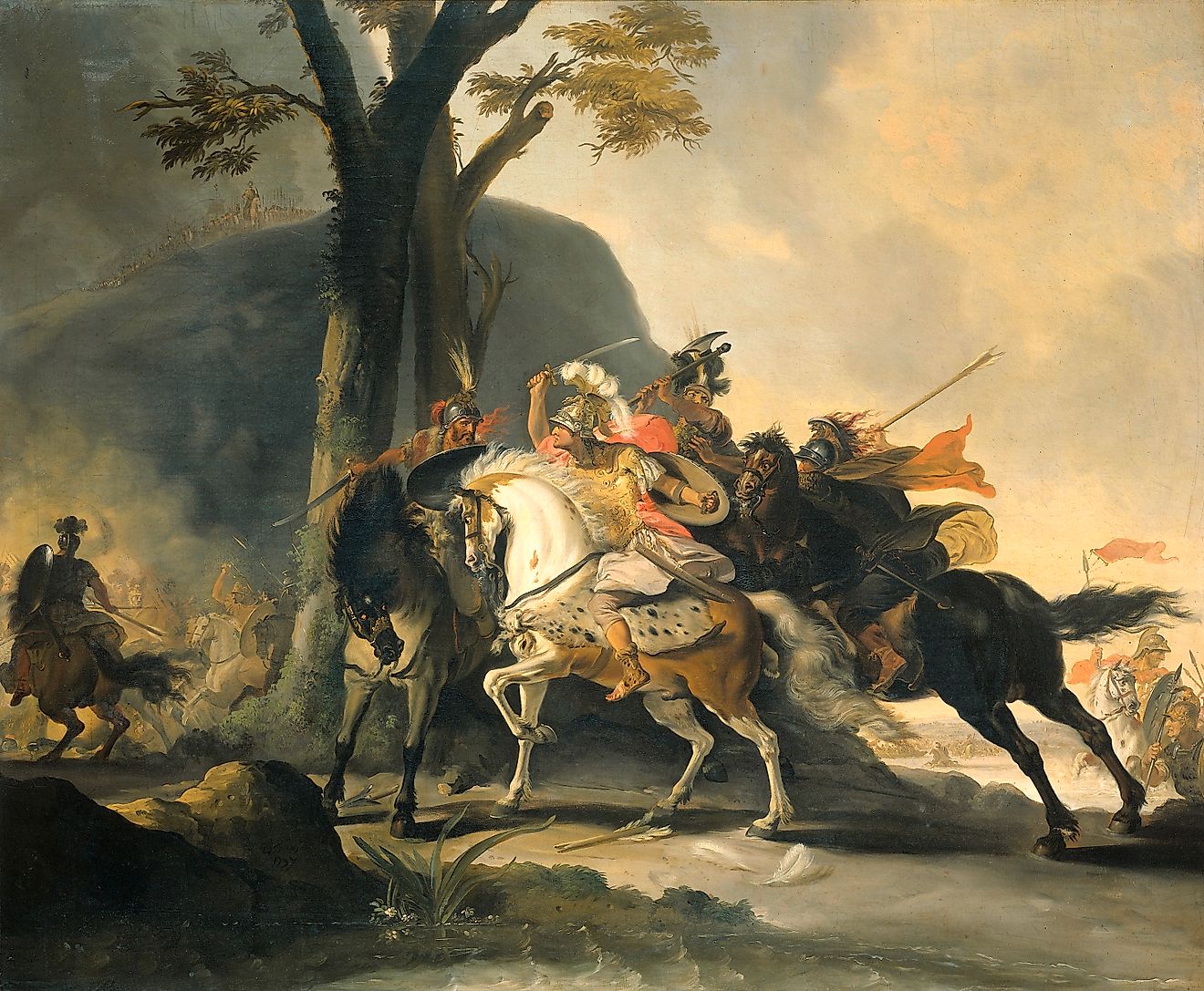
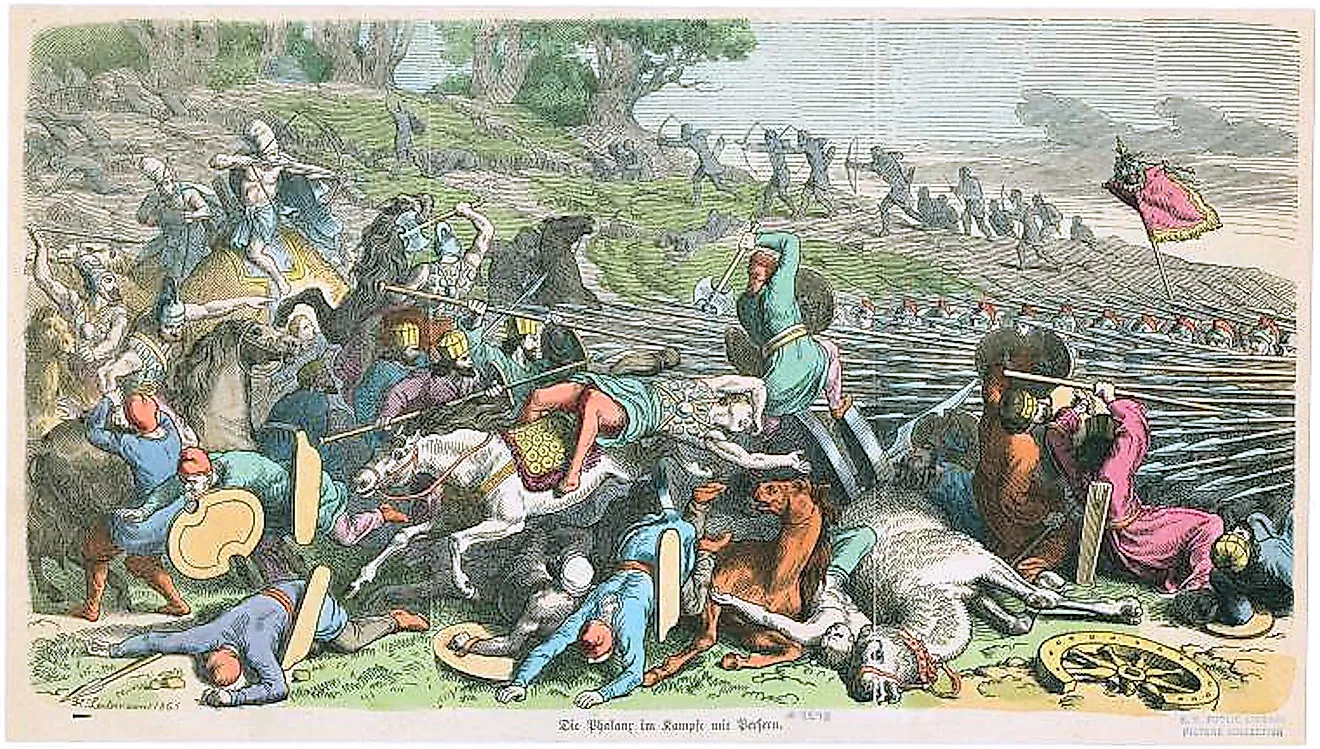
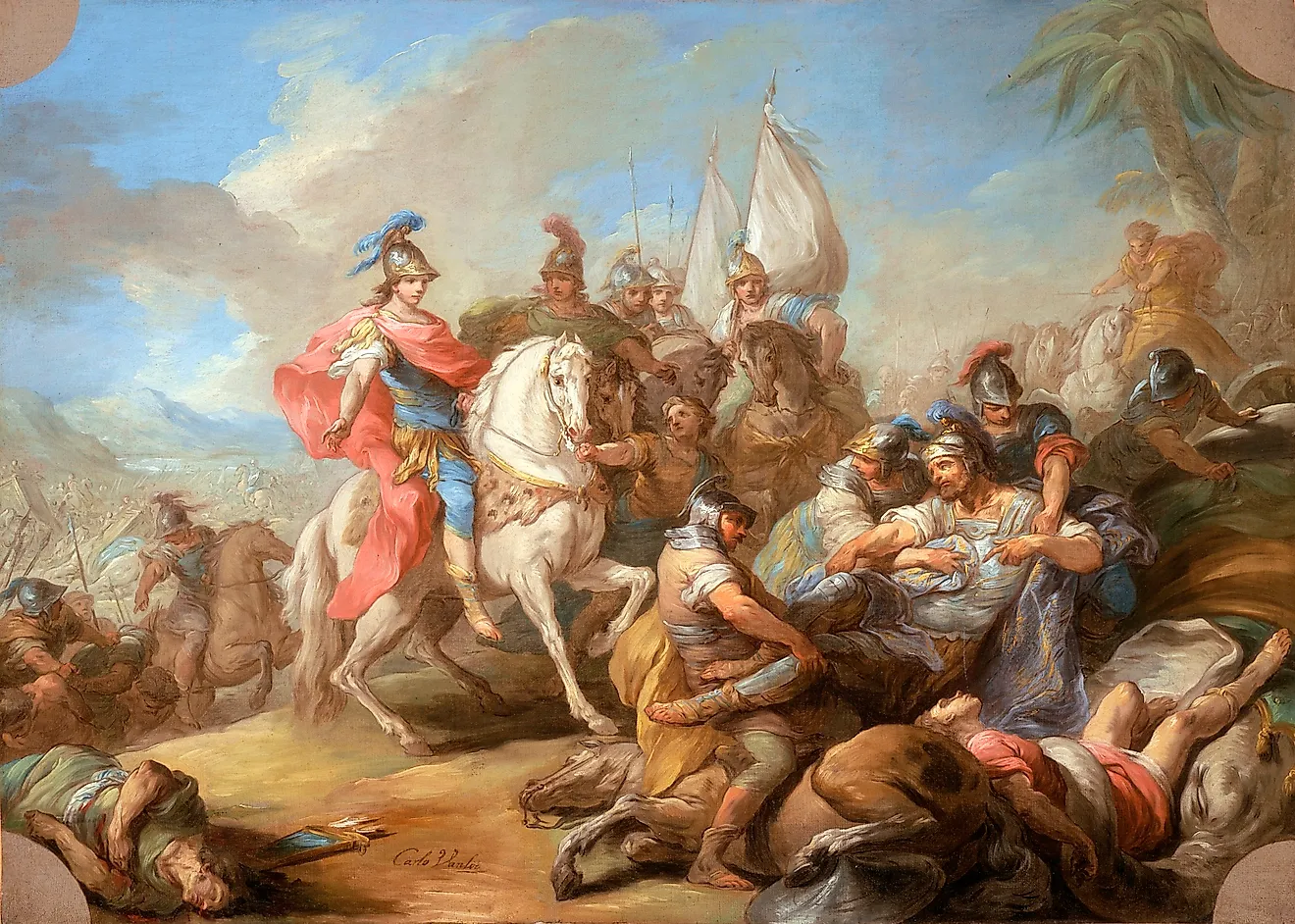
Their real test came ten years later at Pharsalus, on August 9, 48 BCE. Caesar had about 22,000 men. Pompey had 45,000. Caesar put the Tenth on his right flank with one order: stop the cavalry charge. When Pompey's heavy horse came, the Tenth held, broke them, then wheeled behind Pompey's infantry to deliver the killing blow. The battle ended the Roman Republic in everything but name. Caesar disbanded the Tenth after Pompey's death and called them back when he needed them, the way you might shelve a sword you trust. After Caesar's assassination in 44 BCE, Octavian rebuilt the legion and kept it in active service well into the Imperial period.
Legio XIV Gemina Martia Victrix (The Boudicca Slayers)
The Fourteenth earned its double cognomen, "Martia Victrix" ("Warlike and Victorious"), in a single afternoon. In 60 or 61 CE, the Iceni queen Boudicca led a revolt that had already burned three Roman cities (Camulodunum, Londinium, and Verulamium, today Colchester, London, and St Albans) and killed somewhere between 70,000 and 80,000 Romans and Romanized Britons. The governor of Britain, Gaius Suetonius Paulinus, had about 10,000 men. Boudicca had perhaps 100,000.
Paulinus picked his ground carefully. He backed the Fourteenth Legion, a detachment of the Twentieth, and his auxiliaries into a narrow defile with forest on the flanks, then waited. Boudicca had no choice but a frontal attack. Tacitus puts Roman dead at 400. He puts British dead at 80,000. Boudicca took poison the next day. Nero personally awarded the Fourteenth its honor titles. The legion was transferred to the Danube a few years later and remained one of the most reliable units in the imperial army until at least the fifth century.
Legio XII Fulminata (The Thundering Legion)
The Twelfth was Caesar's, raised in 58 BCE for Gaul, blooded at Alesia in 52 BCE against Vercingetorix. The name "Fulminata" ("Thundering," or sometimes "Armed with Lightning") came later, after the legion's standard was struck by lightning during the civil wars. Romans read that kind of thing as a sign. The legion took the name and kept it for four centuries.
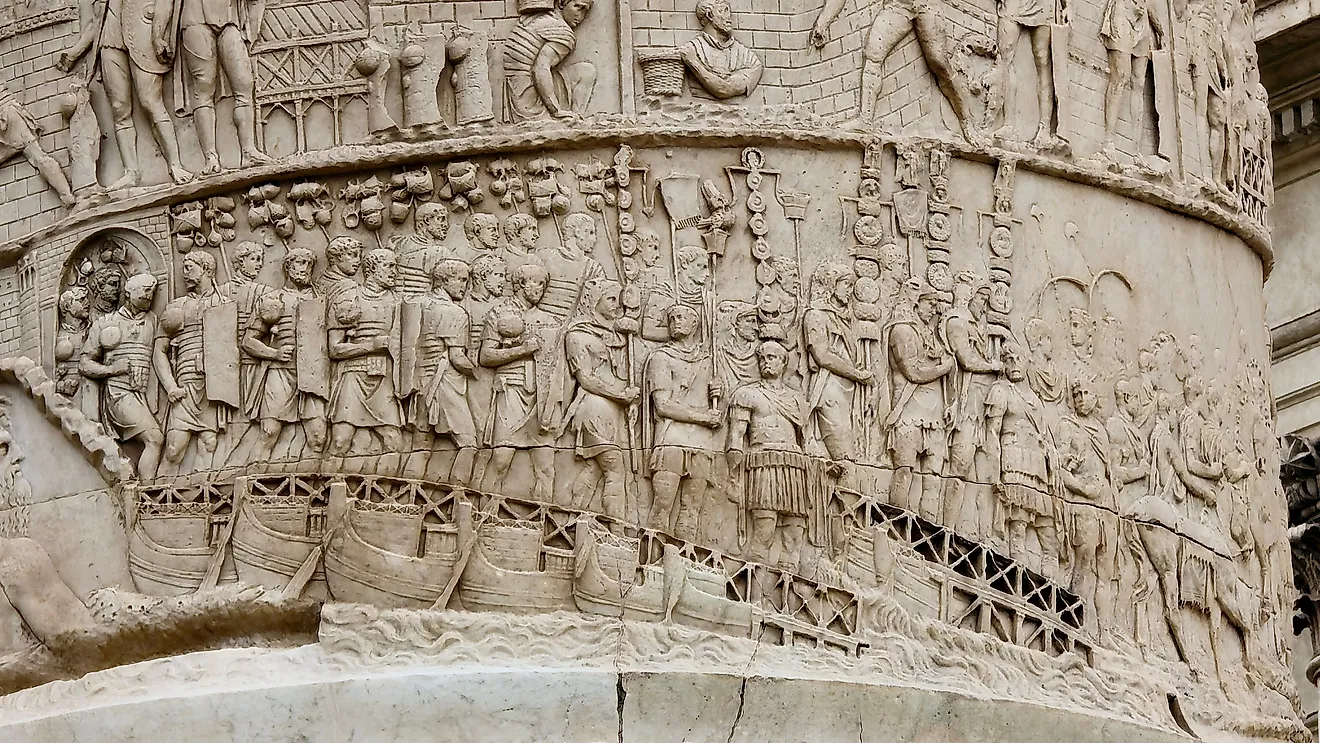
The Twelfth got assigned to the eastern frontier and stayed there. From the early second century onward it was based at Melitene on the upper Euphrates (modern Malatya, Turkey), fighting Parthia, then Sasanian Persia, then everyone who pushed against the limes. In 174 CE, during Marcus Aurelius's campaign against the Quadi, a Christian tradition (first recorded by Tertullian) holds that the Twelfth was saved from death by thirst when Christian soldiers within the legion prayed down a rainstorm. The event is commemorated on the Column of Marcus Aurelius in Rome. Believe the miracle or don't; the legion was still at Melitene in the early fifth century, more than 450 years after Caesar first raised it.
Legio III Gallica

Four hundred years. The Third Gallic fought on three continents for four hundred years. Caesar raised it in 49 BCE for the civil war against Pompey, drew the core from his Gallic War veterans, and sent it across the Mediterranean. After Caesar's assassination, the legion passed to Mark Antony and fought at Philippi in 42 BCE against Brutus and Cassius. Antony then dragged it on his catastrophic Parthian campaign of 36 BCE, where Roman casualties ran around 24,000.
The Third somehow kept going. It fought Corbulo's Armenian campaigns in the 60s, helped destroy Jerusalem in 70 CE, installed Vespasian as emperor during the chaos of 69 CE, marched with Trajan into Dacia, marched with Lucius Verus into Parthia, and ended its active history still on the Syrian frontier under the Severan dynasty. By the early fifth century the Third was still listed in the Roman order of battle, defending Phoenice (modern Lebanon). It outlasted the Western Roman state itself.
Legio IX Hispana (The Lost Legion)
Then the Ninth simply disappears. The Hispana fought everywhere Rome cared about (Pompey raised it in Hispania around 65 BCE, Caesar took it through Gaul, it bled at Pharsalus in 48 BCE, it crossed to Britain with Claudius in 43 CE, it built the legionary fortress at Eboracum that became modern York). And then sometime in the early second century CE, the historical record stops mentioning it. No battle account, no disbanding ceremony, no transfer notice. Just silence.
Where did it go? Rosemary Sutcliff's 1954 novel The Eagle of the Ninth popularized the romantic theory that the legion was wiped out in a Caledonian uprising somewhere north of Hadrian's Wall, and the eagle standard buried in a Pictish hill fort. Modern scholarship has mostly moved off that idea. The legionary fortress at York was rebuilt around 122 CE by the Sixth Legion (the Ninth left in good order, not destroyed) and several Ninth officers appear in inscriptions on the Continent after that date. The current best guess is that the Ninth was transferred east and lost during the Bar Kokhba revolt in Judea between 132 and 136 CE, or somewhere in the Parthian wars before that. The eagle has never been found.
Legio V Macedonica (680 Years In Active Service)

Six hundred and eighty years. The Fifth Macedonian was raised by Octavian in 43 BCE for the civil war against Brutus and Cassius and was finally lost defending Egypt against the Arab conquest in 637 CE. Nothing else in military history comes close. No other Roman legion, no other military unit in any civilization, served continuously for that long.
The Fifth's campaigns read like a transcript of Roman foreign policy: the lower Danube under Augustus, the 6 CE Pannonian revolt, Thrace, Judea (the Fifth was at the destruction of the Second Temple in 70 CE), Crimea (a vexillation left inscriptions at Chersonesus), Trajan's Dacian Wars, Lucius Verus's Parthian campaign, multiple Sasanian frontier wars, and finally Egypt under the late Roman and early Byzantine emperors. By the time the Fifth dissolved, the Western Empire had been gone for 160 years, Roman religion had been Christian for three centuries, and Latin was no longer the working language of the legion's command. The Fifth had simply kept going.
Legio II Augusta (Vespasian's Britain Conquerors)
The Second Augusta hit Britain in 43 CE under a 33-year-old legate named Vespasian, three decades before he became emperor. Vespasian led the legion through the southwest of the island and according to Suetonius fought 30 set battles, subdued two tribes, and captured more than 20 oppida (Iron Age hill forts). One of those was Maiden Castle in Dorset, the largest Iron Age earthwork in Britain.
Archaeology has caught up with the textual account. The Maiden Castle "war cemetery," excavated by Mortimer Wheeler in 1934-1937, contains British dead with Roman ballista bolts still lodged in their spines, evidence of an organized siege assault by a Roman legion. The Second Augusta was based at Isca (modern Caerleon, Wales) for most of the second and third centuries and may have continued in some form until the early fifth century. Its eagle has never been recovered.
Legio XX Valeria Victrix (Brave and Victorious)
The Twentieth was the other legion at Watling Street, fighting alongside the Fourteenth against Boudicca's army and earning the same double cognomen ("Valeria Victrix," meaning "Brave and Victorious") on the same afternoon. After Boudicca, the Twentieth went to the British frontier and stayed there for the next three centuries.
The Twentieth's boar standard appears on more than 400 surviving inscriptions across Hadrian's Wall, the Antonine Wall, the legionary fortress at Deva (modern Chester), and the Severan campaigns into the Caledonian highlands. That makes the Twentieth the best-documented Roman legion anywhere outside Italy. The legion seems to have been disbanded sometime in the late third or early fourth century, but the records peter out without giving a date. The Twentieth left Britain the way the Ninth had: silently.
How A Legion Was Built To Be Feared

Before 107 BCE there was no such thing as a professional Roman army. Legions were levied each spring from property-owning citizens, fought one campaign, then went home for the harvest. Then Gaius Marius blew the system up. He opened recruitment to landless citizens, the capite censi, gave them state-issued kit and regular pay, and promised land grants on retirement in exchange for a 16- or 25-year service commitment. The result was the first standing army in Western history with institutional memory, written drill manuals, and unit identities that outlived the men in them.
The structure that survived was rigid. A legion at full strength fielded about 5,000 men in ten cohorts. The First Cohort doubled the standard cohort size (roughly 800 men) and contained the legion's senior officers. Each of the other nine cohorts split into six centuries of 80 men, and each century split into ten contubernia (units of eight men who shared a tent, a cooking pot, a pack mule, and the consequences of one another's mistakes). The legion was commanded by a senatorial-rank legate. The primus pilus, senior centurion of the First Cohort, was the most experienced soldier in the legion and one of the most prestigious non-senatorial positions in Roman society.
Then there was the discipline. Roman drill was relentless (Vegetius, writing in the fourth century, still recommended three full-equipment exercises per month for veteran troops) and the punishments were medieval. The worst was decimatio. In a unit charged with mutiny or cowardice, the soldiers drew lots in groups of ten. Every tenth man was beaten to death by the other nine, his own comrades, with clubs. The punishment was rare (Crassus used it against the units that fled Spartacus in 71 BCE, Mark Antony used it during the Parthian campaign of 36 BCE) precisely because the threat alone was usually enough.
Teutoburg Forest And The Three Lost Legions
Which brings us back to the forest. In early September 9 CE, the governor of Germania, Publius Quinctilius Varus, marched the XVII, XVIII, and XIX Legions (about 15,000 to 20,000 men with auxiliaries and a baggage train) along a road through the Teutoburger Wald in northwest Germany. His route had been suggested by a trusted Cherusci ally named Arminius, a Roman citizen by upbringing and a Roman officer by training. Arminius had spent years working his way into Varus's inner circle. Now he led a Germanic coalition that fell on the column from three sides in driving rain across dense forest over three days.
All three legions were destroyed. Varus fell on his sword. The eagles of all three were captured (two were eventually recovered in raids by Germanicus six and seven years later; the third was never found). Augustus, who heard the news in Rome weeks later, went into the public mourning described at the top of this article. The Rhine became Rome's permanent northern frontier rather than the projected Elbe, which is why most of modern Germany never became Romance-speaking and most of France did. The legions Rome feared most after Teutoburg were sometimes the ones that took up positions the dead three had been meant to hold.