The National Forests With The Most Bobcats
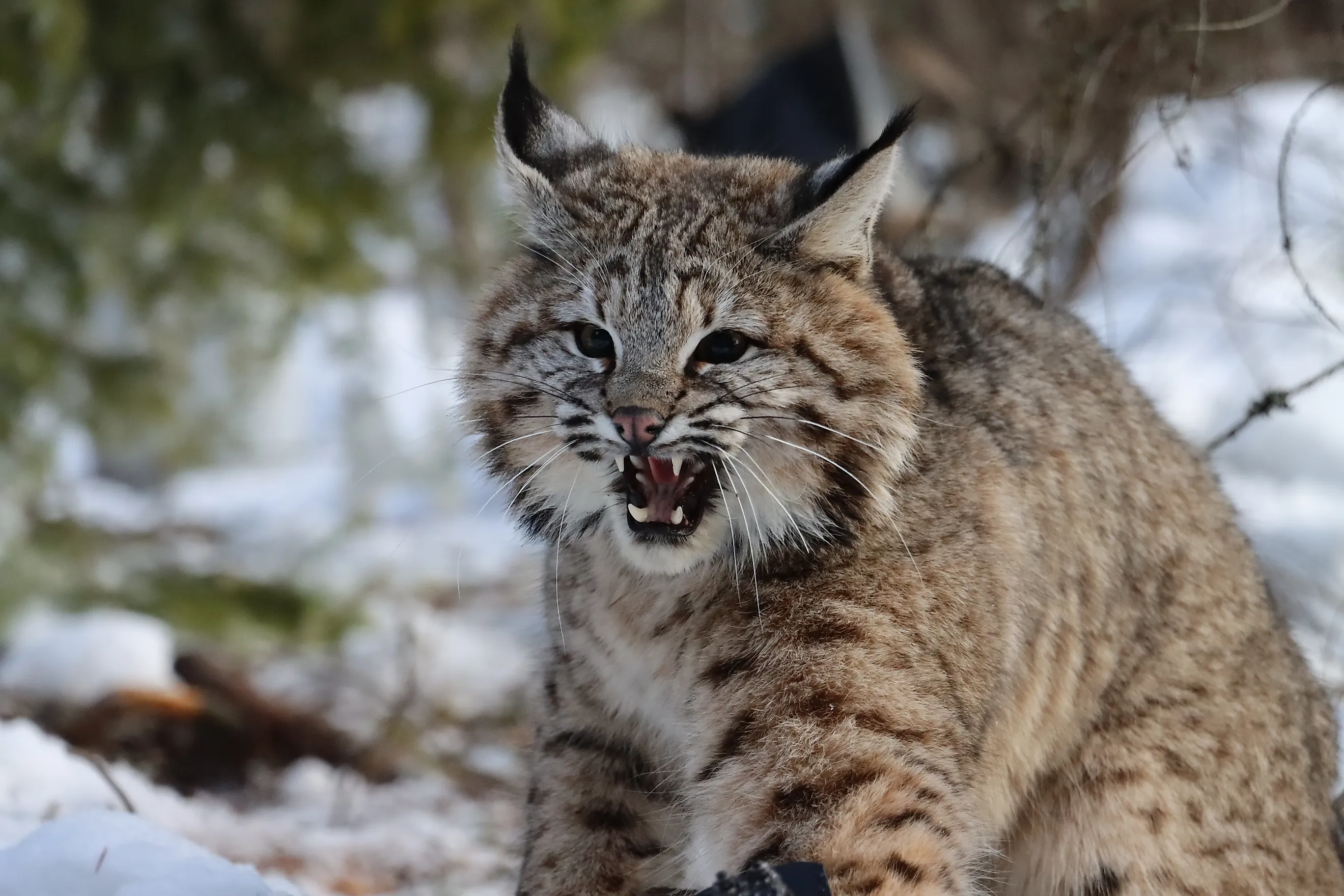
A bobcat could be watching you from the brush on your next forest hike, and you might never know it. These wild cats are roughly twice the size of a house cat, with an extraordinary ability to disappear into their surroundings. California alone has an estimated 62,000 bobcats, according to a 2026 state wildlife survey. Although no nationwide census ranks national forests by bobcat population, several offer enormous stretches of suitable habitat, and wildlife researchers have documented the cats in many of them. These ten forests are particularly promising examples, including Arizona's desert mountains, California's chaparral hills, and the hardwood forests of the Southeast.
Tonto National Forest, Arizona

With nearly 2.9 million acres stretching across central Arizona, Tonto National Forest has plenty of room for bobcats. Its lower elevations feature saguaro-covered desert slopes, while higher ground reaches the pine forests near the Mogollon Rim. In between are rugged canyons, washes, and chaparral hillsides where a bobcat can move through the landscape without spending much time in the open. Arizona wildlife officials describe bobcats as common across the state, including in desert environments that might seem far too exposed for a secretive predator.
Researchers have actually photographed bobcats here. A Forest Service camera-trap survey in the Greater Oak Flat Watershed near Superior recorded the species alongside ringtails and coatis. The cameras were positioned mainly in drainages, where animals naturally move through the rocky terrain. The survey also documented the area's distinctive mixture of upper Sonoran Desert vegetation and interior chaparral. For visitors, the Superstition Mountains and Salt River Canyon offer a look at the dramatic country these cats inhabit, although seeing one is considerably harder than finding its footprints.
Prescott National Forest, Arizona

There is an unusually clear reason to include Prescott National Forest. The U.S. Forest Service specifically identifies bobcats as relatively common in its Juniper Mesa Wilderness, a remote 7,554-acre area northwest of Prescott. The mesa rises above steep limestone cliffs, with pinyon pine and Utah juniper on its southern slopes. Ponderosa pine and alligator juniper grow farther north, giving the area a changing landscape across a relatively small distance. Mule deer, black bears, and Abert's squirrels also live here, although each occupies its own part of the ecosystem.
Juniper Mesa reaches about 7,000 feet near its higher western terrain. Springs are unreliable during dry periods, and there are no perennial water sources within the wilderness. Bobcats can obtain some of their moisture through prey, an advantage in Arizona's drier mountain environments.
The Juniper Mesa trails offer experienced hikers a chance to explore this remote habitat, though access generally involves unpaved roads. A bobcat sighting would be a fantastic bonus, but the more realistic discovery is a set of paw prints crossing a quiet trail.
Coronado National Forest, Arizona

Southern Arizona's Coronado National Forest is famous for its Sky Islands, isolated mountain ranges rising above the surrounding desert. Its changing elevations create noticeably different environments within short distances. Scrub-covered foothills give way to oak woodlands and higher mountain forests, providing opportunities for bobcats to hunt in several kinds of terrain. One particularly good example is Cochise Stronghold in the Dragoon Mountains, where the Forest Service explicitly lists bobcats among the resident wildlife.
Cochise Stronghold has enormous granite formations, balanced boulders, and wooded slopes. The crevices between these rocks make useful shelters, while nearby vegetation provides hunting cover. Rabbits and squirrels are among the mammals recorded in the area. Visitors exploring the Stronghold will also encounter rock formations associated with the history of Cochise and the Chiricahua Apache.
Bobcats here are more likely to be active around twilight than during a busy afternoon on the trails. Their presence is particularly interesting because these mountains also support mountain lions, a much larger feline predator. Both species use the same broad landscape, although their hunting ranges and preferred prey differ considerably.
Los Padres National Forest, California

Nearly two million acres of rugged coastal mountains make Los Padres National Forest one of California's most extensive protected landscapes. Its northern division includes part of the Big Sur region, while the larger southern division covers mountain country inland of Santa Barbara and Ventura. Chaparral dominates many sunny slopes, with dense stands of manzanita and other shrubs providing excellent concealment for bobcats. Oak woodlands offer additional hunting habitat, particularly where the tree canopy opens into grassier patches frequented by small mammals. The Forest Service identifies bobcats among the wildlife of the forest's remote interior, including areas associated with the Dick Smith Wilderness. Los Padres also has extensive roadless country where animals can occupy territories away from major development. The Sespe Wilderness is especially impressive, with steep canyon walls and long stretches of isolated backcountry. California prohibited recreational bobcat hunting and commercial trapping in 2020, providing statewide legal protection against those activities. However, the number of bobcats actually living within Los Padres has not been established by a forest-wide census.
Angeles National Forest, California

Just outside the Los Angeles metropolitan area, the San Gabriel Mountains rise into a landscape of steep ridges, deep canyons, and chaparral-covered slopes. Angeles National Forest includes extensive foothill habitat that suits bobcats, particularly where oak woodland meets scrub vegetation. These boundaries provide cover near places where rabbits and other small animals forage. The rugged terrain also offers natural shelter around rock formations and dense vegetation. Despite the nearby urban population, large parts of the forest remain difficult to access, creating quieter areas beyond heavily traveled roads and recreation sites.
Wildfire has changed portions of this landscape considerably. The 2020 Bobcat Fire burned roughly 115,000 acres in and around the San Gabriel Mountains, altering vegetation across large sections of the forest. Recovering areas can develop patches of new growth that attract small mammals, although severe fires can also remove important cover. Around the Devil's Punchbowl area, the dramatic sandstone formations and recovering hillsides illustrate the changing environments wildlife must navigate. Bobcats are adaptable animals, but their local abundance depends on the condition of the surrounding habitat.
Cleveland National Forest, California

Southern California's Cleveland National Forest covers roughly 460,000 acres across parts of San Diego, Riverside, and Orange counties. Its mountains have a distinctly different appearance from the tall conifer forests many Americans associate with national forests. Chaparral covers much of the lower terrain, while oak woodland and pine forest become more prominent at higher elevations. These vegetation patterns produce the combination of concealment and hunting opportunities that bobcats favor.
The Laguna Mountains offer an especially interesting change in scenery. Along the Sunrise Scenic Byway, wooded highlands overlook the much drier Anza-Borrego Desert region. A bobcat moving through these mountains can encounter different prey communities as vegetation and elevation change.
Desert cottontails, woodrats, and ground squirrels are potential food sources in suitable parts of the forest. Dense shrub cover is also important for protecting resting animals and kittens. Cleveland's location near expanding Southern California communities creates challenges, however. Highways and developed areas can interrupt wildlife movement between mountain habitats, so the forest's protected land does not completely eliminate the dangers associated with surrounding development.
Pisgah National Forest, North Carolina

North Carolina's Pisgah National Forest covers more than 500,000 acres of the southern Appalachian Mountains. Its landscape includes towering hardwood forests, steep mountain slopes, and clearings where sunlight reaches the forest floor. According to the North Carolina Wildlife Resources Commission, the state's mountain bobcats favor mature forests with nearby openings or younger forest growth. These areas support rabbits and mice while allowing the cats to retreat into thicker cover. Uprooted tree roots and rock piles are among the den sites they can use.
The forest's extensive network of streams and valleys creates additional habitat variety. In places such as the Pisgah Ranger District near Brevard, hiking trails pass through mature woodland before reaching rocky overlooks and open mountain slopes. Bobcats occur throughout North Carolina and are considered common statewide, but a forest-specific population estimate is unavailable. They usually live alone, becoming more social during the February and March breeding season. Most visitors are more likely to hear the birds and streams than encounter one of these elusive hunters, even in areas where bobcats regularly travel.
Chattahoochee National Forest, Georgia

Bobcats are established residents of northern Georgia's Chattahoochee National Forest, where the National Forest Foundation identifies them among the animals hunting throughout the wooded landscape. The forest occupies a large section of the Blue Ridge Mountains, with oak and hickory trees covering many upper slopes. Cooler mountain coves support other hardwood species, creating variations in vegetation that influence where prey animals feed. The Cohutta Wilderness, near the Tennessee border, is one of the forest's most extensive remote areas. Its steep ridges and creek valleys provide a contrasting environment to the chaparral forests of the West. Bobcats here can pursue woodland prey, including squirrels and rabbits, while using fallen timber and undergrowth for concealment. The Conasauga River watershed is another notable part of this mountain system, with trails reaching deep into the forest. Visitors sometimes discover animal tracks along muddy ground, although identifying a bobcat requires attention to the rounded shape of its prints and the usual absence of visible claw marks. Seeing the animal that left them is another matter entirely.
Ocala National Forest, Florida

Florida might seem an unlikely place to search for wild cats, but bobcats occur throughout the state, including in swamps and forests. Ocala National Forest is particularly interesting because of its extensive sand pine scrub, a landscape quite unlike the mountains of Arizona or North Carolina. The Big Scrub contains one of the world's largest concentrations of sand pine, with evergreen shrubs growing beneath the trees across sandy ridges.
According to the Florida Fish and Wildlife Conservation Commission, bobcats use thick patches of saw palmetto and shrub thickets for resting and denning. Ocala has plenty of this vegetation, along with hardwood hammocks and wetter areas near its rivers and lakes. These different environments support small mammals and other animals that bobcats hunt. Their flexible diet is particularly useful in a forest where dry scrub can lie surprisingly close to wetland habitats.
Visitors can experience the forest's unusual terrain along the Florida National Scenic Trail, which passes through Ocala. The contrast between pale sandy ground and dense green scrub makes this one of the country's more distinctive bobcat habitats. Wildlife sightings are never guaranteed, especially with an animal capable of remaining almost completely concealed in low vegetation.
Sam Houston National Forest, Texas

North of Houston, the landscape changes into the pine forests and wooded creek bottoms of East Texas. Sam Houston National Forest protects a substantial portion of this habitat, including the Big Creek Scenic Area. Texas Parks and Wildlife specifically identifies bobcats among the mammals visitors may encounter along Big Creek and the surrounding trail system. The creek flows through wooded country with a sandy streambed and abundant fallen timber, providing a very different setting from the rocky canyons of the Southwest.
The Big Creek Scenic Area covers approximately 1,420 acres and is accessible through its own trails and the longer Lone Star Hiking Trail. Hardwood vegetation along the watercourses contrasts with the surrounding pine forest. This combination provides feeding areas and protective cover for wildlife.
Bobcats are capable hunters in these wooded settings, taking advantage of rabbits and rodents living near forest openings. The species also occurs elsewhere across Texas, including surprisingly close to developed communities. At Sam Houston, the combination of documented presence and an established trail network makes Big Creek a particularly relevant location for understanding how these cats occupy the southeastern pinewoods.
Wild Neighbors
A bobcat sighting is rare even in forests where the species is well established. These solitary hunters often travel at dawn or dusk, and their spotted coats help them disappear into vegetation. California's chaparral and Arizona's rocky mountains offer very different surroundings from the pinewoods of Texas and Florida, yet bobcats successfully occupy all of them. Population surveys, camera traps, and wildlife observations confirm their presence across these landscapes, although precise forest-by-forest totals remain unknown. For hikers, a rounded paw print in the mud may be the only clue that one recently passed along the same trail.