How Long Would It Take To Walk Around Lake Michigan
Somebody has already done it, which saves a lot of theorizing. In 2009 a 45-year-old mother of two from Battle Creek named Loreen Niewenhuis walked the entire perimeter of Lake Michigan, starting and finishing at Navy Pier in Chicago, going counterclockwise, covering 1,019 miles in 64 days of actual walking. She did it in ten segments spread from March to September, because she also had a family and, at one point, a gallstone attack. The honest answer to the question is therefore about nine weeks of walking, and here is everything that makes that number more complicated and considerably more interesting than it sounds.
Nobody Agrees How Long The Shoreline Is

The standard figure for Lake Michigan's shoreline is more than 1,600 miles. Niewenhuis walked 1,019. That is a gap of roughly 620 miles, or 38 percent, and neither number is wrong.
The reason is a genuine problem in geography called the coastline paradox. Measure a shoreline with a long ruler and you get one number; measure it with a short ruler, following every cove and inlet and rock, and you get a bigger one. Keep shrinking the ruler and the length keeps growing, essentially forever.
So the official figure follows the convolutions. A person walking follows the practical line, cutting across the base of a headland rather than tracing its outline, because a person has knees.
What The Pace Actually Was
Niewenhuis averaged about 15.9 miles a day across her 64 walking days, which is a respectable clip for terrain that includes a great deal of sand. Her own view on that terrain is worth quoting, because it inverts what most people would assume. She would rather do 20 miles on soft sand than 10 miles on the side of a road. Anybody who has tried to walk fast on dry beach will find that surprising until they remember the alternative involves traffic.
Her summary of the accumulation is the better quote: you put in a day and it is 15 miles, but day after day, it really stacks up.
Doing The Full 1,600
If you insisted on walking the official shoreline figure rather than a sensible route, the arithmetic gets considerably less friendly. At 10 miles a day it takes 164 days, about five and a half months. At 15 miles a day, 109 days. At a punishing 20 miles a day, 82 days. At 25 miles a day, which almost nobody sustains on sand for months, 66 days.
Those figures also assume you never take a day off, which is not how any long walk has ever gone.
The Route Is Not A Beach

The mental image is a thousand miles of golden sand. What Niewenhuis actually reported includes swamps, wetlands and forest thickets, plus industrial sites contaminated with mercury, asbestos and PCBs.
She also walked around nuclear power plants, which is not a sentence that appears in most beach holiday brochures.
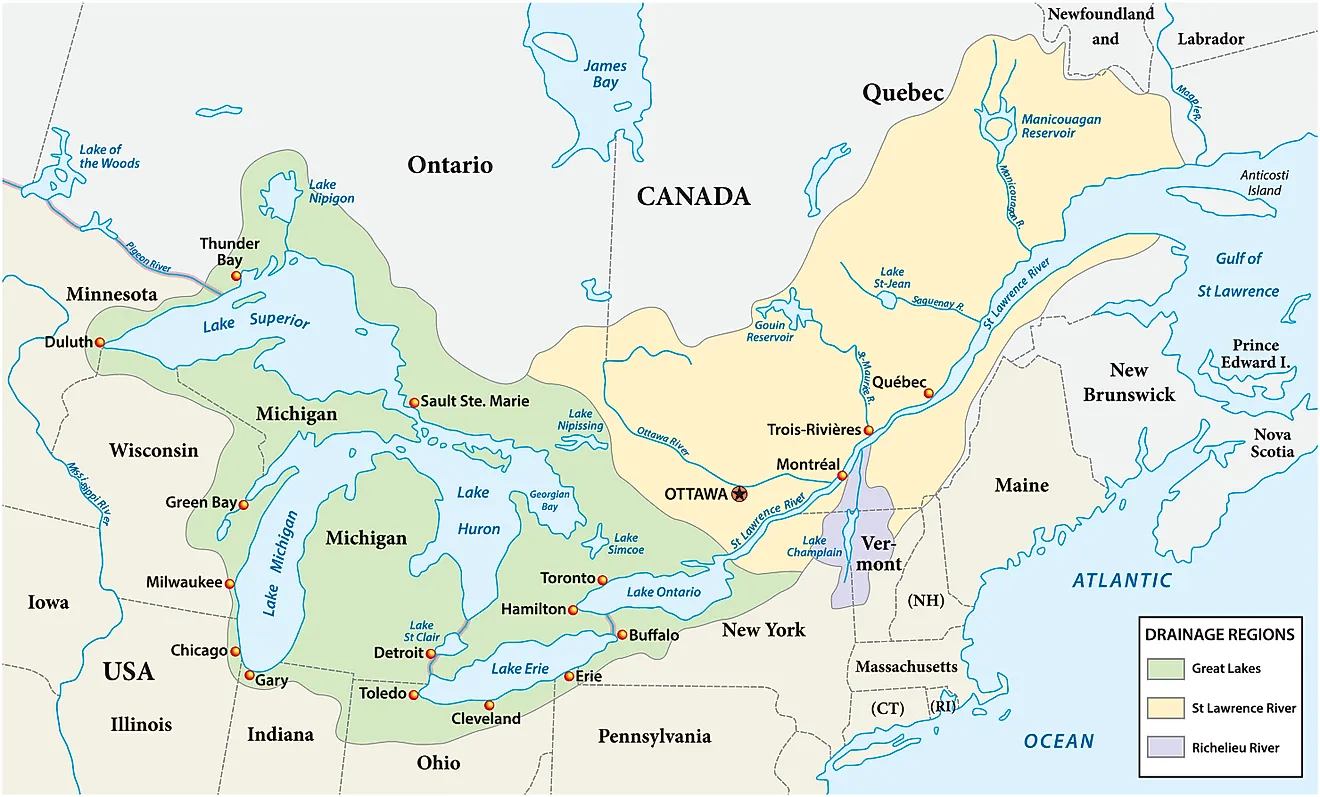
The Lake Michigan shoreline runs through Chicago, Gary, Milwaukee and Green Bay as well as Sleeping Bear Dunes and Door County. A circumnavigation is a tour of heavy industry and protected dune country in roughly equal measure, and the industrial stretches are the ones with fences.
What The Lake Does To Walkers
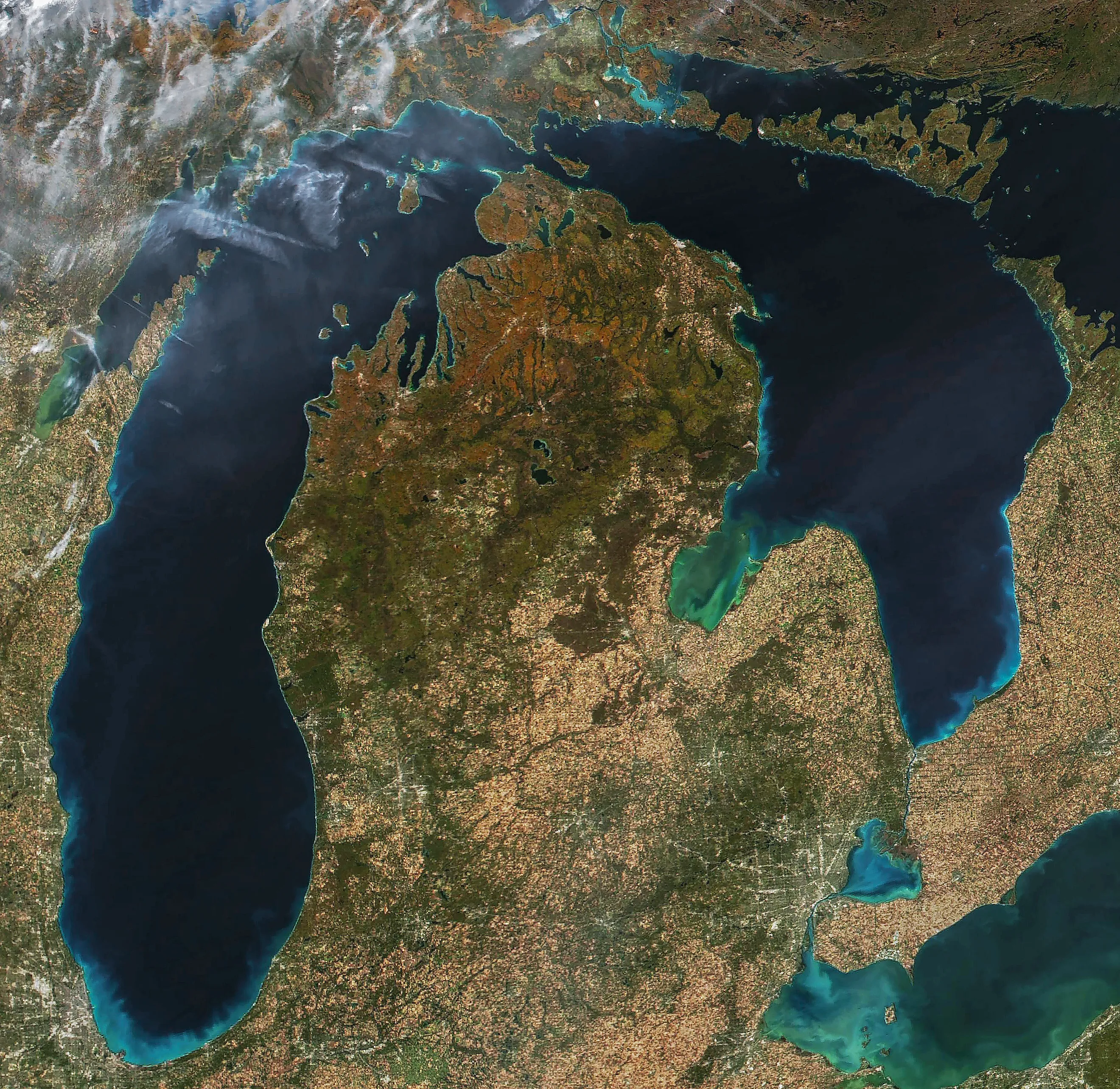
One thing a shoreline walk has that a trail walk does not is a very large body of water generating its own weather beside you the entire way. Lake Michigan runs 307 miles north to south and 118 miles across, and the prevailing westerlies build waves along that whole fetch before dumping them on the eastern shore. A walker on the Michigan side is therefore exposed to onshore wind for weeks at a time, with waves that arrive every three to five seconds rather than the ten or twelve of an ocean swell.
Niewenhuis started in March, which in Michigan means hiking past snow drifts on a beach. The lake moderates the shoreline climate slightly, and it also produces lake-effect snow, fog that arrives without warning, and storms that make the water genuinely dangerous to be near.
The Private Property Problem
The thing that would actually stop most people is neither distance nor terrain. It is ownership. Great stretches of the Michigan and Wisconsin shoreline are privately held, and the public right to walk the beach varies by state and by where the water happens to be that week. Michigan law has been litigated on exactly this point, and the practical outcome is that a long shoreline walk involves a steady background hum of uncertainty about whether you are trespassing.
That is why a continuous walk requires detours inland, which adds miles while subtracting shoreline, and is another reason the walked distance and the mapped distance diverge.
Four States, One Lake

The loop crosses Illinois, Indiana, Michigan and Wisconsin, and the character of the walk changes completely at least four times. Chicago's lakefront is an engineered park. Northwest Indiana is steel mills interleaved with the Indiana Dunes. Michigan's western shore is the long sand coast everyone pictures, running past South Haven, Ludington and Sleeping Bear. Wisconsin brings Door County's limestone and the industrial harbors at Manitowoc and Milwaukee.
Then there is the Upper Peninsula across the top, which is where the lake stops feeling like a holiday and starts feeling like geography.
The Gallstone
The detail that says the most about this undertaking is medical rather than geographic. Partway through the walk Niewenhuis suffered a gall bladder attack. She dealt with it and finished the route. Across the full trek she also collected the blisters you would expect from several hundred miles of sand, and kept going through all of it.
That is the part a distance calculation never captures. The arithmetic says 64 days at 16 miles. It does not say anything about doing day 40 with an organ in revolt.
She Did Not Stop There
The detail that recalibrates the whole achievement is that Lake Michigan was only the first of three. Niewenhuis followed it with a 1,000-mile walk along the shorelines of all five Great Lakes, then a third 1,000-mile expedition exploring the islands of the Great Lakes. Three books came out of it, and her son Lucas joined her for a 50-mile stretch of the original Lake Michigan trek.
She financed each walk partly with proceeds from the book about the previous one, which is a sustainable model as long as you keep walking.
Somebody Walked Much Further

For scale, Josephine Mandamin walked roughly 17,000 kilometers around every one of the Great Lakes, carrying water, to draw attention to the destruction of waters sacred to Native American communities.
That is more than ten times the Lake Michigan loop, undertaken as an act of advocacy rather than adventure. Any discussion of walking around a Great Lake that does not mention the Water Walkers is missing the most significant long-distance shoreline walking in the region.
Could You Do It Faster
In principle yes, and the limits are more about logistics than legs. A thru-hiker in good condition sustains 20 to 25 miles a day on a trail with reliable resupply, which would put the practical route under seven weeks. The Lake Michigan shoreline does not have reliable resupply, a continuous trail, or a consistent legal right of way, so every one of those miles requires planning that a waymarked route does not.
The fastest realistic attempt is therefore probably somewhere around six to eight weeks of continuous walking, assuming nothing goes wrong, which on a 1,000-mile walk it always does.
The Answer

Walking around Lake Michigan takes about 64 days at a shade under 16 miles a day, which is the number one actual person actually recorded rather than an estimate anybody calculated. Spread across a calendar with a life attached, it took her six months.
If you want the full mapped shoreline you are looking at three to five months depending on pace. And if you want the version where it is all beach and sunsets, that walk does not exist, because a meaningful share of the route is fenced, industrial or somebody's back garden. The person who has done it would still rather be on the sand.