Why Were Roman Emperors Constantly Afraid Of Assassination
Roman emperors were among the most powerful people in history, yet many were under constant fear of assassination. This stemmed from several factors. Rivals were everywhere, and there was no clear succession system. The Praetorian Guard also had a history of assassinating emperors, and violence was normalized in Roman political culture. Finally, emperors like Caligula and Domitian increased their risk of assassination through their cruelty and paranoia.
Rivals Were Everywhere

Roman emperors had access to seemingly unlimited wealth and military power, which made their position highly attractive. As a result, many rivals emerged. The Crisis of the Third Century (235 to 284 CE) exemplified this. A nearly fifty-year period of civil war, economic instability, invasions, and disease, it began in 235 CE with the assassination of Emperor Severus Alexander. Alexander had been campaigning against Germanic peoples along the Rhine River. Dissatisfied with his leadership, the soldiers killed him and his mother and proclaimed one of their generals, Maximus Thrax, as emperor. Over the next fifty or so years, over twenty emperors rose and fell. This was but one of many examples throughout Roman history of rival emperors competing for power and killing each other.
There Was No Clear Succession System

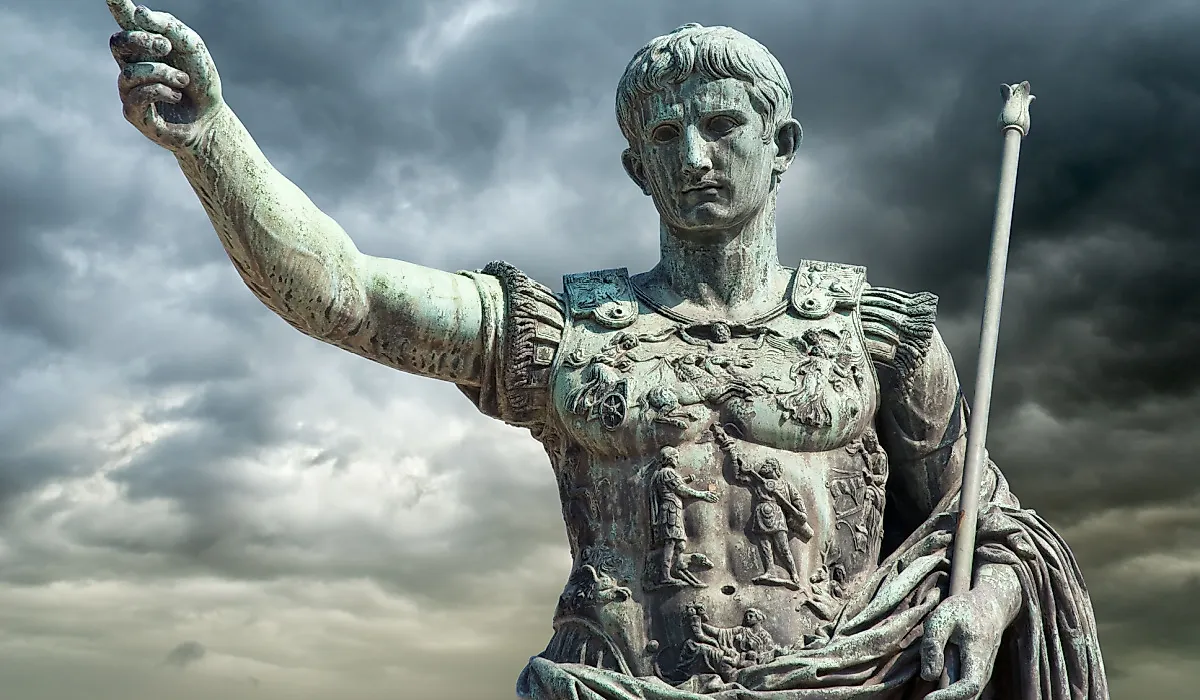
The lack of a clear succession system was a major source of instability in the Roman Empire. Its first emperor, Augustus, deliberately avoided declaring something like "the emperor's eldest son becomes the next emperor" because that too closely resembled a monarchy. At the same time, being a member of the emperor's family certainly improved one's chances of ascending to power. Numerous dynasties, like the Julio-Claudian, Flavian, and Severan, dominated Roman politics for decades.
Problems arose when there wasn't a clear familial candidate. Consider Nero's death. After he committed suicide in 68 CE, there was no immediately obvious heir. This led to the Year of the Four Emperors, in which Galba, Otho, Vitellius, and Vespasian all became emperor within roughly 365 days. Needless to say, this year was filled with bloodshed. There was even more chaos after Commodus was assassinated on Christmas Eve of 192 CE, as five emperors rose and fell over the subsequent year.
The Praetorian Guard Was A Constant Problem

The Praetorian Guard was an elite military unit created by Augustus to protect the emperor. They had better pay and living conditions than ordinary soldiers. Praetorians were also physically closer to the emperor than nearly every other member of the military. This created a situation where emperors were forced to appease the Praetorian Guard by maintaining their privileges, or risk being assassinated.
Caligula found this out the hard way. As emperor from 37 to 41 CE, he frequently humiliated members of the Guard. In one notable example, Caligula mocked Cassius Chaerea, a well-respected Praetorian, by calling him effeminate. Actions such as these led to the Guard assassinating him and his family in January 41 CE.
Another famous Praetorian-led assassination occurred in 193 CE. Emperor Pertinax recognized that the Guard was a problem and refused to bow to its demands. This enraged the Praetorians, so on March 28th, 193 CE, 200 marched on the imperial palace and killed Pertinax. They then auctioned off the emperorship to the highest bidder, a scandalous act that precipitated the aforementioned Year of the Five Emperors.
Roman Political Culture Was Steeped In Violence

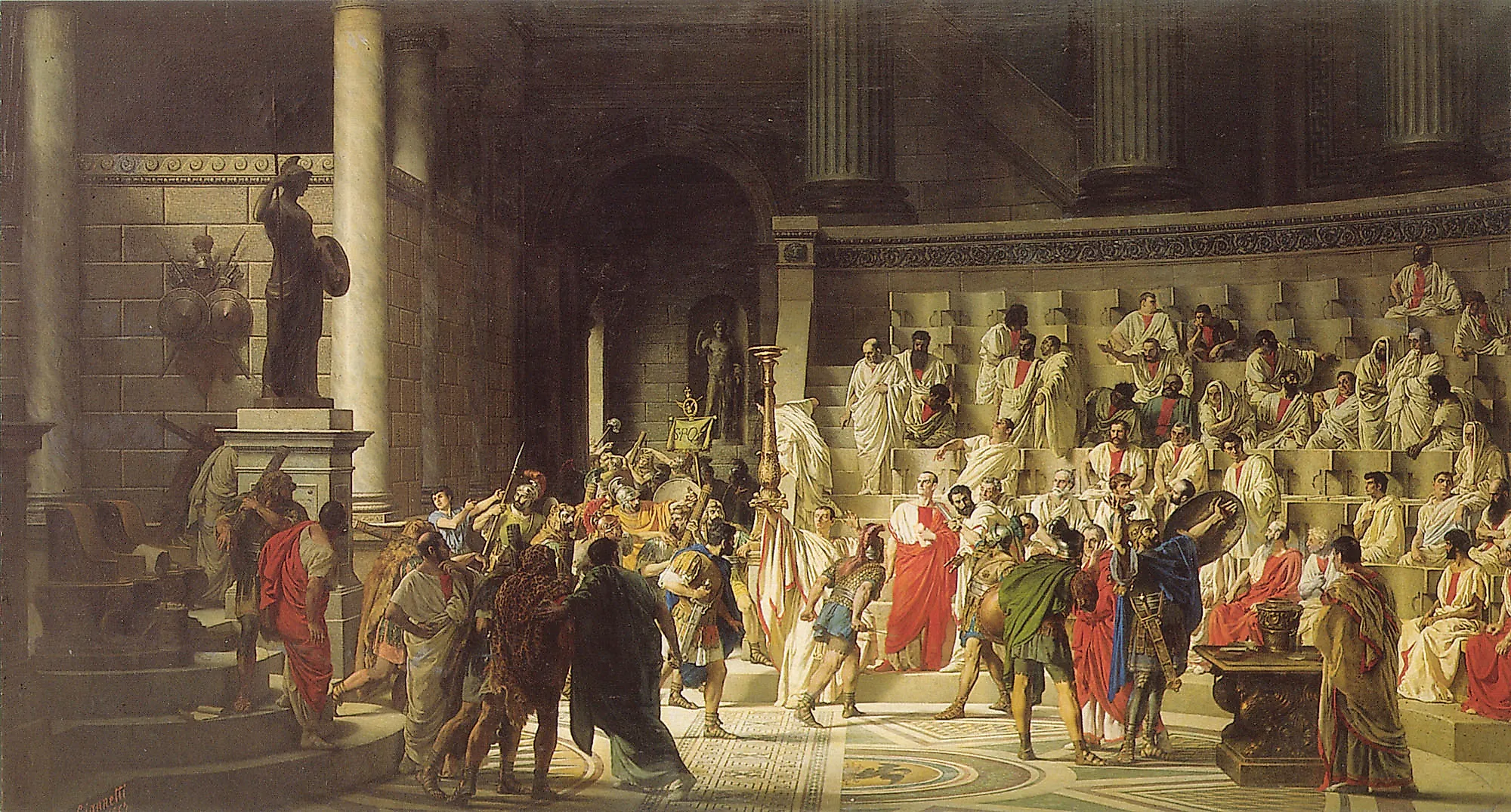
From the late Republican era onwards, violence was a core part of Roman political culture. This arguably began in the 80s BCE, when generals Gaius Marius and Lucius Cornelius Sulla used their armies to settle domestic political disputes. In the aftermath, Sulla purged many of Marius' supporters via proscriptions (public death lists). Julius Caesar and Pompey the Great then fought for power from 49 to 45 BCE. Even though Caesar won, he was assassinated in 44 BCE, further normalizing violence in Roman politics. After his assassination, three of Caesar's allies, Mark Antony, Octavian, and Lepidus, formed an alliance called the Second Triumvirate and used their combined power to purge the assassins. This alliance eventually broke down, leading to a war between Antony and Octavian that ended with Antony's death and Octavian (now renamed Augustus) becoming Rome's first emperor. All of this is to say that the foundation of the Roman Empire was built on violence and assassination. It makes sense that similar practices would continue into its existence.
Emperors Sometimes Made Things Worse

Not all Roman emperors were the same. Leaders like Trajan and Marcus Aurelius were well liked and thus had little reason to be worried about assassination. Others were less popular. Some had good intentions. Consider Pertinax, who, as previously mentioned, attempted to rein in the power of the Praetorian Guard. On the other hand, several emperors were particularly cruel, incompetent, and paranoid, which increased their chances of assassination.
Caligula is again illustrative in this regard. At the beginning of his reign, he was supposedly a kind and considerate ruler. However, a mysterious illness seemingly changed his entire personality, resulting in him becoming a tyrant who alienated nearly every member of the Roman political and military elite. Domitian was another authoritarian emperor. Ruling from 81 to 96 CE, he was paranoid and executed several senators whom he feared were challenging his rule. The execution of Titus Flavius Clemens, Domitian's cousin, in 95 CE, was the last straw. His family members, Praetorians, and other people inside Domitian's household all conspired to assassinate him, which they did on September 18th, 96 CE.
Impact And Legacy
Some Roman emperors constantly feared assassination. Rivals were everywhere, and the lack of a clear succession system gave them ample opportunities to assert their claims to the emperorship. The Praetorian Guard also sometimes killed emperors who threatened to take away its privileges. Political violence had been normalized since the late Republican period as well. Finally, some emperors, like Caligula and Domitian, increased their chances of being assassinated through their cruel and paranoid actions.