Who Were The Greatest Generals Of The Late Roman Empire?
In the 4th and 5th centuries CE, the Western Roman Empire was in trouble. A failing economy, barbarian invasions, and territorial overreach were among its many problems. However, the Roman army remained a formidable fighting force throughout this period. Though imperfect and faced with impossible threats, it still won several notable battles. The backbone of this success was the generals, many of whom were among the best in world history.
Flavius Arbogast (died 394)

Arbogast is one of the most important and controversial generals of the late Western Roman Empire. We don't know when he was born or his exact ancestry, but he was likely Frankish. He first appears in the historical record in the 380s, as Rome faced incursions by Germanic tribes along the Rhine and Danube Rivers. There, Arbogast established himself as a capable military commander and one of the empire's pre-eminent political figures.
The defining moment of Arbogast's career came in 392 when Western emperor Valentinian II died. Arbogast took advantage of the situation by declaring Eugenius emperor and making himself the military backbone of the new regime. Problems arose when Theodosius I, emperor of the Eastern Empire, refused to recognize Eugenius. This made civil war inevitable.

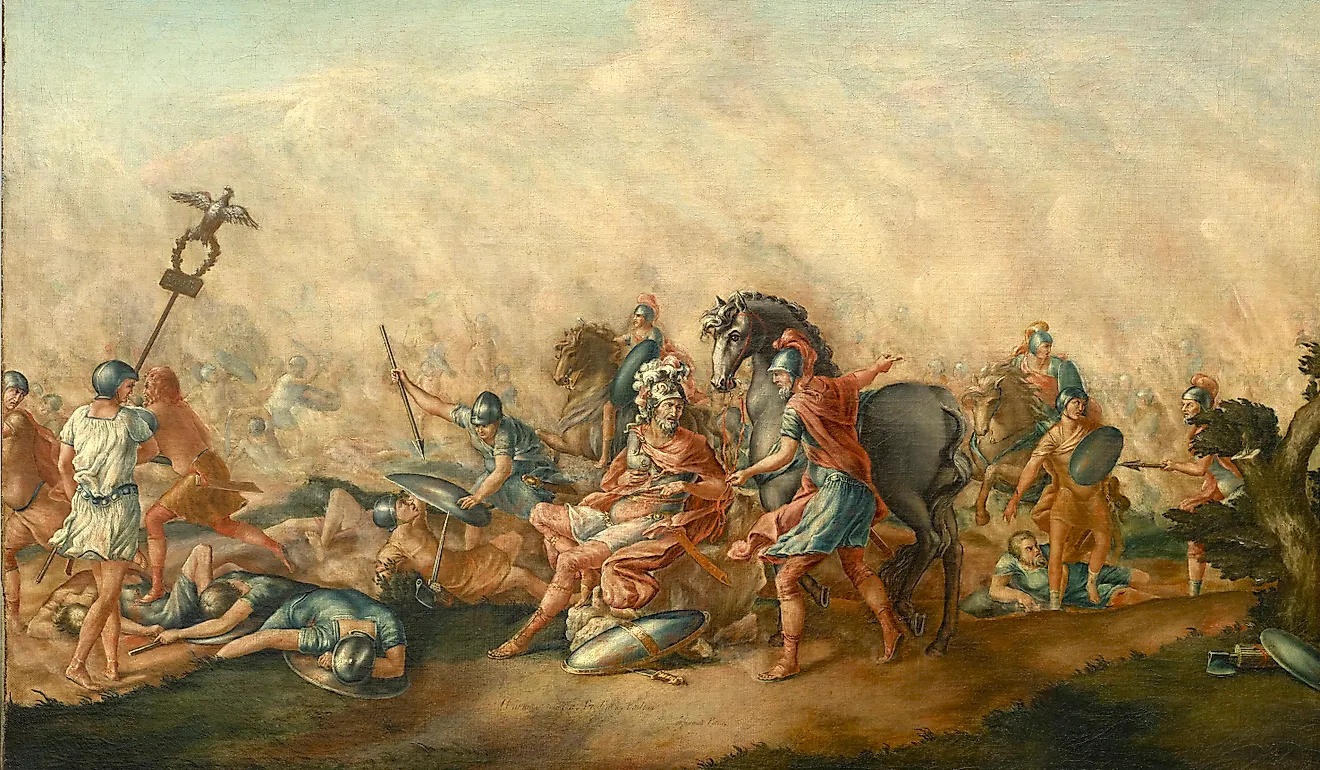
The climactic engagement came in 394 with the Battle of the Frigidus. The first day went badly for Theodosius as he attacked Arbogast's heavily defended forces and suffered enormous losses. Then, the tide (supposedly) turned with the weather. Ancient sources describe a massive windstorm that began blowing against Arbogast's troops. It's unclear whether this actually happened, but Theodosius eventually gained the upper hand and won the battle. Arbogast survived but fled and committed suicide two days later.
Despite losing his final and most important battle, Arbogast deserves to be discussed alongside the great late Roman generals for his impact on the empire's history. His successes on the Rhine and Danube Rivers were so great that he became the de facto leader of the Western Roman Empire. His Frankish background also reflects how non-Romans were increasingly gaining influence during this period. Finally, the civil war between him and Theodosius precipitated Rome's permanent split into an Eastern and Western Empire in 395.
Flavius Stilicho (359 to 408)

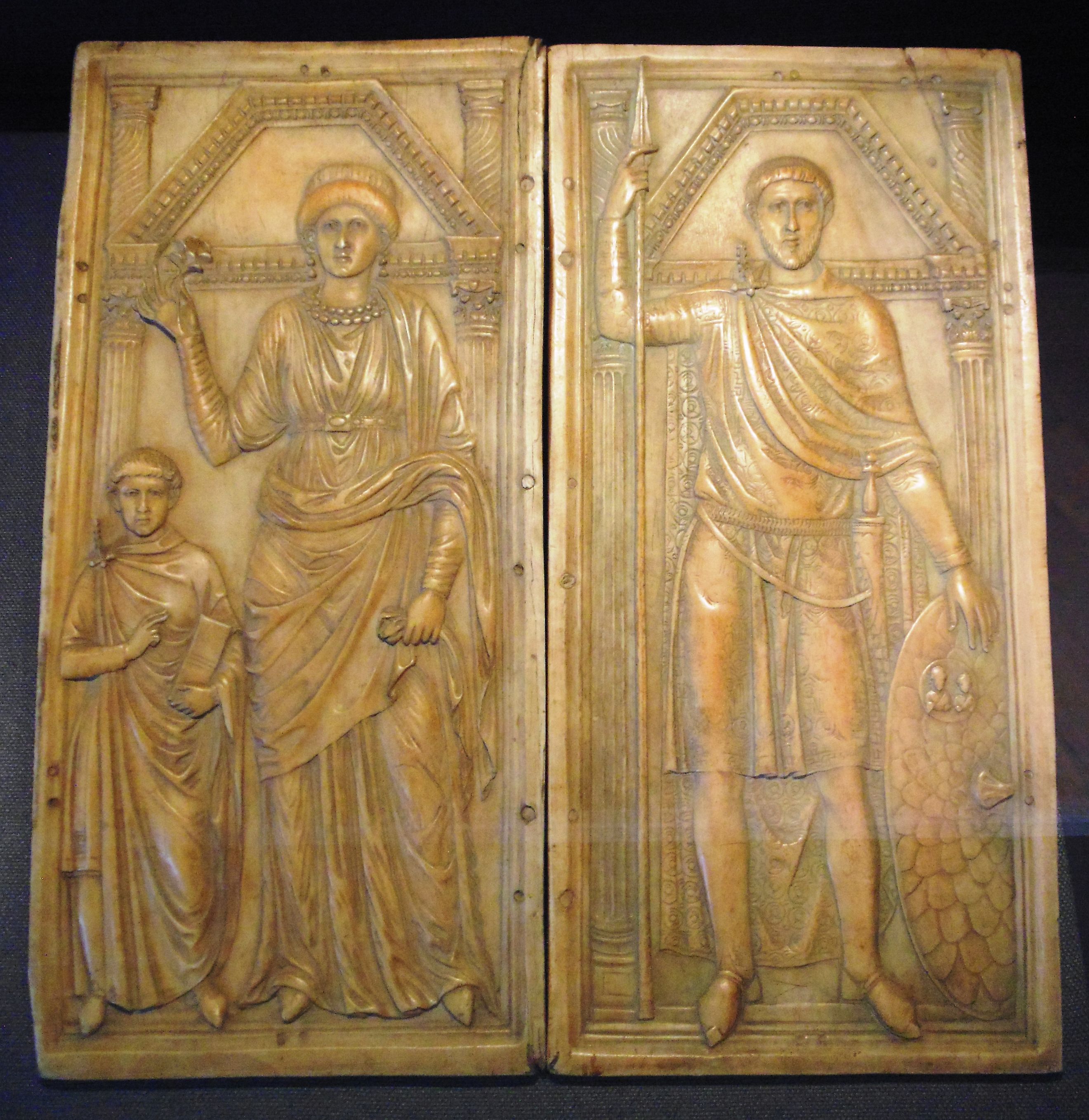
Stilicho is a contender for the best late Roman general. Born in 359 to a Vandal father and a Roman mother, he spent the early part of his career moving up the ranks of the military. Stilicho eventually became an important officer under Theodosius and married his adopted niece, Serena. Now part of the imperial family, he was well positioned to become one of the most powerful men in the empire.
When Theodosius died in 395, he left the Eastern Roman Empire to his son Arcadius and the Western Empire to his son Honorius. Since Honorius was only ten years old, Stilicho became the de facto ruler of the Western Roman Empire. While dealing with imperial court politics, he also had to combat seemingly impossible external threats, the most significant of which was the Visigoths. United under King Alaric, they invaded the Balkans in 395 and Italy in 401. Stilicho nevertheless managed to defeat them at the Battle of Verona and even formed a tenuous alliance with Alaric.

The sheer amount of foreign and domestic strife eventually proved to be too much for Stilicho. He was unable to adequately defend against Germanic incursions on the Rhine in 405 and 406, having been forced to divert troops from there to defend against other invasions. Gaul subsequently became destabilized and was settled by groups like the Vandals, Alans, and Suebi. At the same time, Stilicho's enemies used his relationship with Alaric to portray him as being too friendly with barbarians. When combined with his immense political power and a deteriorating relationship with the Eastern Empire, this made him increasingly unpopular.
Stilicho was executed in 408 after being accused of trying to make his son emperor. Relations with the Visigoths quickly broke down, and they ended up sacking Rome in 410. More broadly, the empire had lost one of its most accomplished military commanders at a time when it was besieged by all sides. While Stilicho still likely couldn't have saved Rome, his being gone did it no favors.
Flavius Aetius (390 or 391 to 454)

Flavius Aetius is the other main contender for the title of best general of the late Western Roman Empire. Born in 390 or 391, he spent much of his early life in Visigothic and Hunnic captivity. This experience helped him learn about barbarian military and political practices. After Emperor Honorius died in 423, Aetius emerged as one of the most important commanders in the Western Empire.
Aetius' main source of strength was his pragmatism. He understood that Romans alone could no longer defend the empire and therefore established relationships with the Huns, Visigoths, Franks, Burgundians, and Alans, among other groups. Aetius' best work occurred in Gaul. Even though many different barbarian tribes had settled in the province, he played them against each other and ensured that no one group gained too much power. In doing so, he maintained a moderate level of Roman influence in the region.

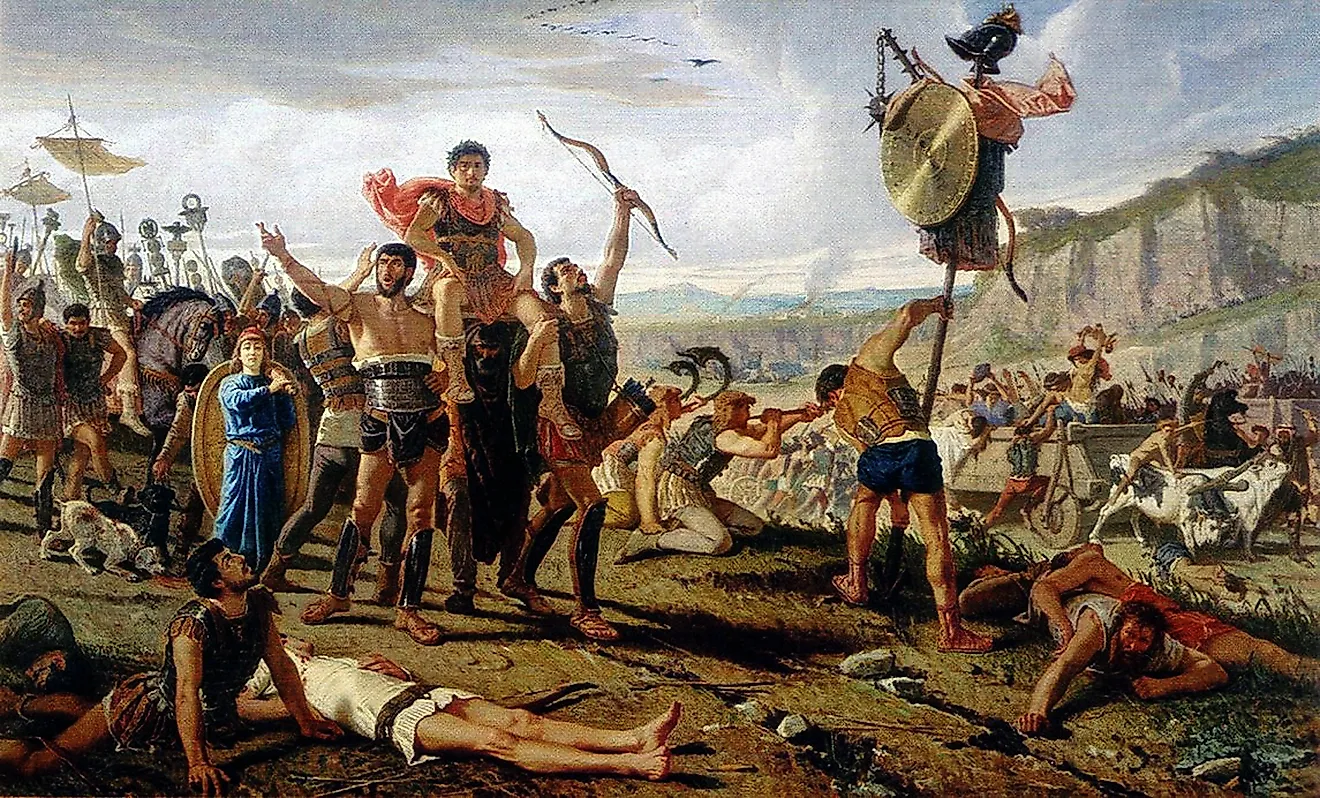
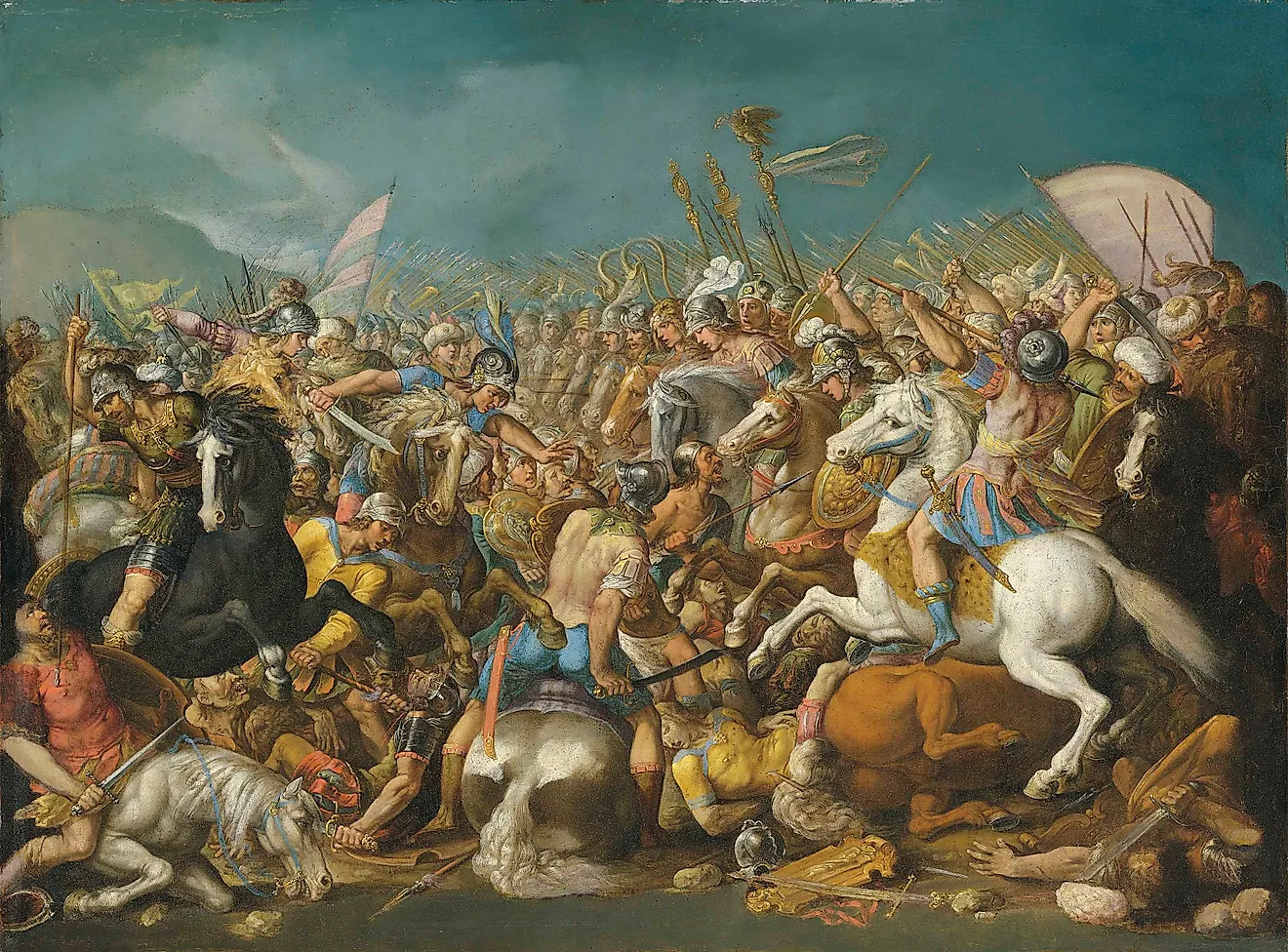
Aetius' biggest challenge came with the rise of Attila the Hun. Attila became joint ruler of the Huns alongside his brother Bleda in 434 and sole ruler in 445, by which point Hunnic power stretched across much of Central and Eastern Europe. He then invaded Gaul in 451. To defend the province, Aetius amassed a coalition of Roman and barbarian tribes. The two sides met in the Battle of the Catalaunian Plains. Arguably the most famous battle of late antiquity, it wasn't an overwhelming defeat or victory for anyone. Regardless, the coalition forces successfully prevented Attila from conquering Gaul.
Aetius again repelled Attila in 452 when he invaded Italy. However, problems were emerging. The failure to defend North Africa from the Vandals left a permanent mark on Aetius' military record, and Emperor Valentinian III was growing paranoid about the general's growing power. This culminated in Valentinian suddenly killing Aetius during a meeting in September 454. Aetius' death marked the effective end of the Western Roman Empire, since its best general was now gone. It officially collapsed a little over twenty years later in 476.
Command In A Collapsing Empire
None of these three commanders died of old age, and each held more real authority than the emperor he served. Their careers mark how much the Western Empire had changed by the fifth century. Two of the three were of barbarian descent; all three governed under a nominal emperor rather than as emperors themselves; and all three relied on Germanic or Hunnic troops to hold territory that Roman armies had once held alone. Aetius held Gaul against Attila at the Catalaunian Plains in 451, but he never recovered North Africa from the Vandals, and after Valentinian III killed him in 454, no commander of comparable weight emerged. The empire that fell in 476 had already outlasted the men who knew how to defend it.