The Least Developed Countries In The World
An underdeveloped nation is one that lags economically behind most of the world, with limited industrial infrastructure and minimal public spending on essentials such as education and healthcare. A larger share of the population lives below the poverty line, unable to afford basic necessities. That disparity tends to show up most starkly in health, where impoverished regions struggle to provide adequate care and nutrition, which drives higher infant and child mortality.
The United Nations' Human Development Index (HDI) is the most widely used measure of a country's level of development. Rather than weighing economic output alone, it combines four indicators across three dimensions: life expectancy at birth, expected and mean years of schooling, and gross national income per capita. Each country receives a score between 0.000 and 1.000, where higher values reflect stronger human development. The UNDP sorts countries into four tiers: low (below 0.550), medium (0.550 to 0.699), high (0.700 to 0.799), and very high (0.800 and above). The ten countries below sit at the very bottom of that scale, according to the 2025 Human Development Report, which draws on 2023 data.
1. South Sudan - HDI 0.388

One of the key factors behind underdevelopment in this East-Central African country is persistent conflict and political instability. Despite gaining independence from Sudan in 2011, it plunged into civil war in 2013 when a political dispute between the president and his vice president escalated into violence. The prolonged conflict claimed many lives and displaced a substantial share of the population, disrupting economic and social progress. Another drag on development in South Sudan is the fragility of its institutions. The country has struggled to build a stable, effective government, which has hindered the rollout of vital development programs.
With an HDI of 0.388, the lowest of any country in the world, South Sudan also carries one of the heaviest child-mortality burdens. Around 99 of every 1,000 children born do not reach their fifth birthday, a rate that has barely shifted in years even as many of its peers have recorded gains.
2. Somalia - HDI 0.404
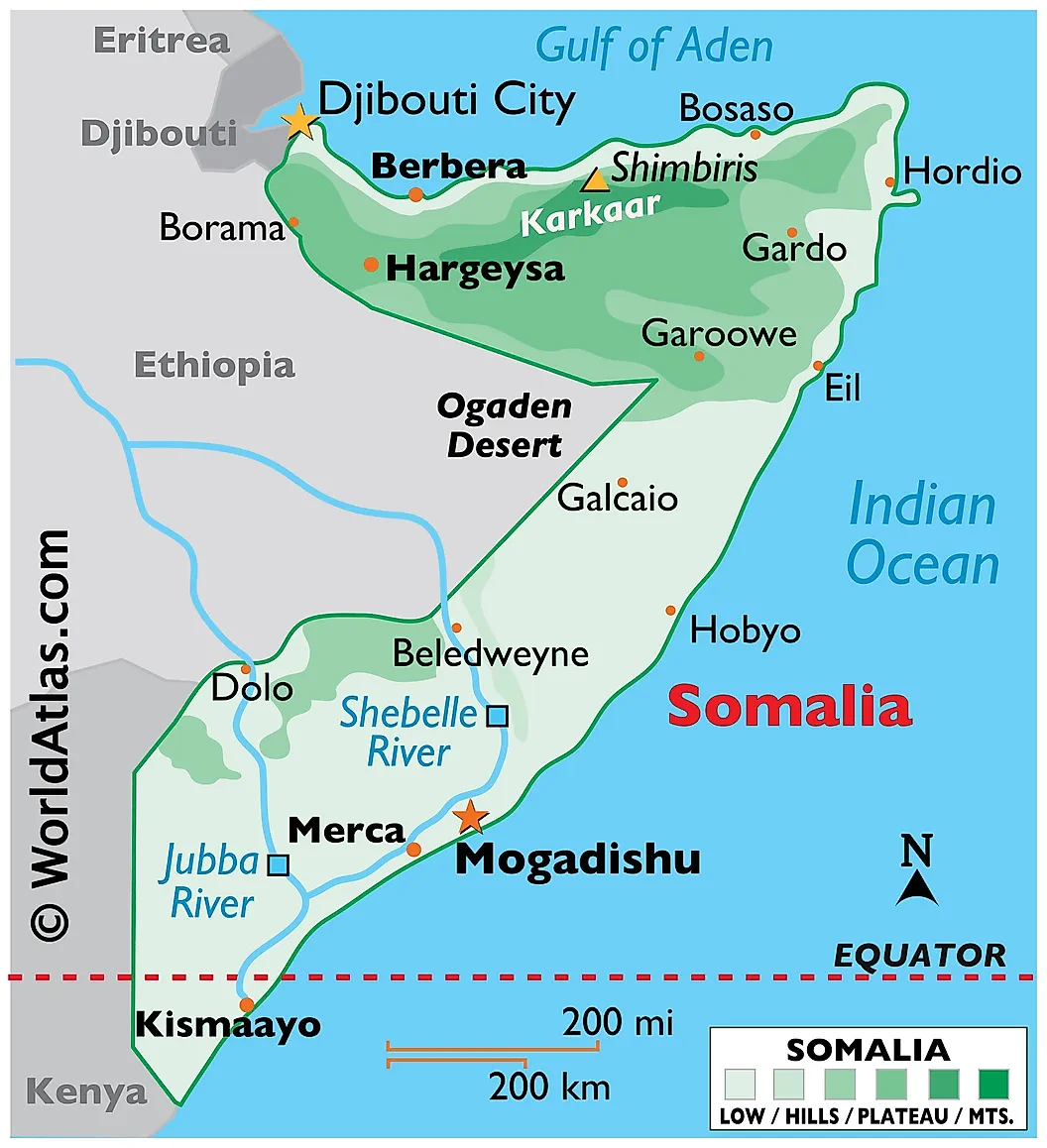
Just above South Sudan sits Somalia, with an HDI of 0.404, the second lowest in the world. The country has gone without a fully functioning central government for much of the period since the collapse of Siad Barre's regime in 1991. Authority today is contested among the federal government, the al-Shabaab insurgency, an Islamic State faction, and semi-autonomous regional administrations, leaving the state with little capacity to deliver basic services.
Decades of conflict have been compounded by repeated climate shocks. Successive failed rains pushed the country toward famine again in 2022, when an estimated 43,000 excess deaths were recorded, roughly half of them children under five. More than half the population lives in poverty, and the government depends heavily on foreign aid, with domestic tax revenue equal to only a few percent of GDP.
3. Central African Republic - HDI 0.414

Since gaining independence from France in 1960, the Central African Republic (CAR), a landlocked country in Central Africa, has contended with persistent instability. Despite its wealth in diamonds, gold, oil, and uranium, it remains one of the world's least developed nations.
In 2013, the Seleka, a coalition of mainly Muslim rebels, seized power and triggered a violent response from predominantly Christian militias known as the anti-Balaka. Under international pressure, the Seleka handed power to a transitional government in 2014, but turmoil has continued to weigh on the country. Against that backdrop, it is little surprise that life expectancy at birth is only about 56 years, and that around 37% of the population over age 15 can read and write.
4. Chad - HDI 0.416

Chad is a landlocked country in north-central Africa, colonized by France from 1900 to 1960. Its post-independence history has been marked by instability and violence, stemming largely from tensions between the mostly Arab-Muslim north and the predominantly Christian and animist south.
Though Chad holds significant reserves of gold and uranium and has become an oil exporter, ongoing internal conflict continues to hold back development. Roughly 42% of the population lives in poverty, and the healthcare system is severely under-resourced, with only around 0.06 physicians per 1,000 people. With so little medical support, the population remains highly exposed to infectious diseases such as malaria and dengue.
5. Mali - HDI 0.419

Mali is a landlocked country in West Africa, and the lack of direct sea access has long complicated its development. It was under French colonial rule from 1892 to 1960. After independence, Mali endured droughts, rebellions, and a prolonged military dictatorship until democratic elections in 1992, and in recent years it has faced escalating insurgencies in its northern and central regions.
Two coups in 2020 and 2021 removed the civilian government and led to the withdrawal of French troops, after which Mali deepened its ties with Russia and hosted Wagner Group mercenaries. In January 2025, Mali joined Niger and Burkina Faso in formally leaving the Economic Community of West African States (ECOWAS), the three having banded together as the Alliance of Sahel States. As in much of the region, the economy is largely agricultural, with roughly 80% of the workforce engaged in farming.
6. Niger - HDI 0.419

Niger's underdevelopment is rooted in enduring political instability, marked by recurrent military coups since independence from France in 1960. The 2023 coup that ousted President Mohamed Bazoum disrupted the stability needed for long-term development and strained the country's international partnerships. The junta cut military cooperation with France and expelled Western forces, and in January 2025 it joined Mali and Burkina Faso in quitting ECOWAS to consolidate the Alliance of Sahel States. The nation continues to grapple with poverty and frequent droughts despite its uranium wealth and efforts in oil and gold extraction.
7. Burundi - HDI 0.439

The East African country of Burundi faces challenges rooted in a complex web of historical and sociopolitical factors. Early disputes over the roles and relationships among its three main ethnic groups, the Twa, Hutu, and Tutsi, shaped the nation's troubled trajectory.
Since independence from Belgium in 1962, Burundi has experienced intermittent and often violent internal conflict, driven largely by power struggles between the Tutsi minority and the Hutu majority. The civil war that broke out in 1993 deepened these problems and became one of Africa's most protracted conflicts, leaving lasting damage on the economy and society.
Roughly 80% of Burundians live off small farms, often around an acre, which leaves the economy acutely vulnerable to climate shocks, and only about one in ten people has access to electricity. Even so, Burundi has held its under-five mortality lower than several countries higher on this list, at about 53 deaths per 1,000 births, helped by targeted interventions in child nutrition, handwashing, and pneumonia treatment.
8. Burkina Faso - HDI 0.459

The absence of direct sea access has weighed on this West African country's progress, cutting it off from maritime resources such as fishing and from the trade that drives much economic growth. Recurring droughts and repeated military coups have compounded the problem, deepening its place among the region's least developed economies.
From 2022, Burkina Faso faced a jihadist insurgency that spilled over from neighboring Mali, with thousands killed and around two million people displaced. The military seized power in two coups that year, and the country was suspended by the African Union and ECOWAS. In January 2025, it left ECOWAS altogether alongside Mali and Niger. More than 40% of the population lives in poverty, and child mortality remains high, with about 82 of every 1,000 children not reaching their fifth birthday.
9. Sierra Leone - HDI 0.467
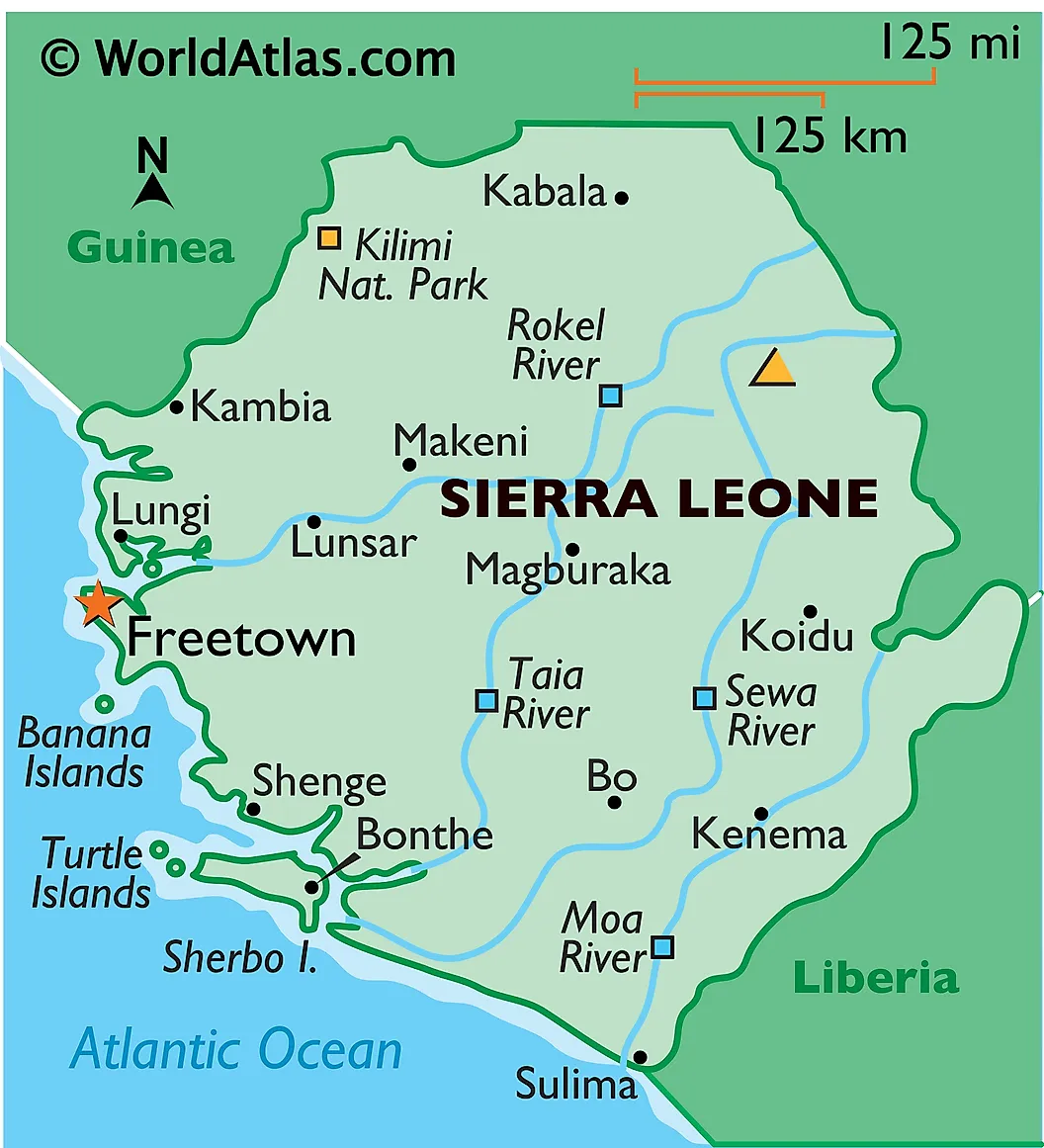
Sierra Leone's HDI of 0.467 places it among the ten lowest-ranked countries on Earth. The West African nation is still recovering from a brutal civil war that ran from 1991 to 2002 and killed roughly 50,000 people, gutting its infrastructure and institutions. Barely a decade later, the 2014 to 2015 Ebola epidemic killed about 4,000 people and shrank the economy by around a fifth, a blow soon followed by the COVID-19 pandemic.
The economy leans heavily on mineral exports, especially diamonds, iron ore, and rutile, while most people rely on subsistence farming. That narrow base leaves the country exposed to commodity-price swings and climate shocks. More than a quarter of Sierra Leoneans live below the international poverty line, and by broader multidimensional measures close to 60% are poor. President Julius Maada Bio won re-election in 2023, though the result was disputed and an attempted coup followed late that year.
10. Yemen - HDI 0.470

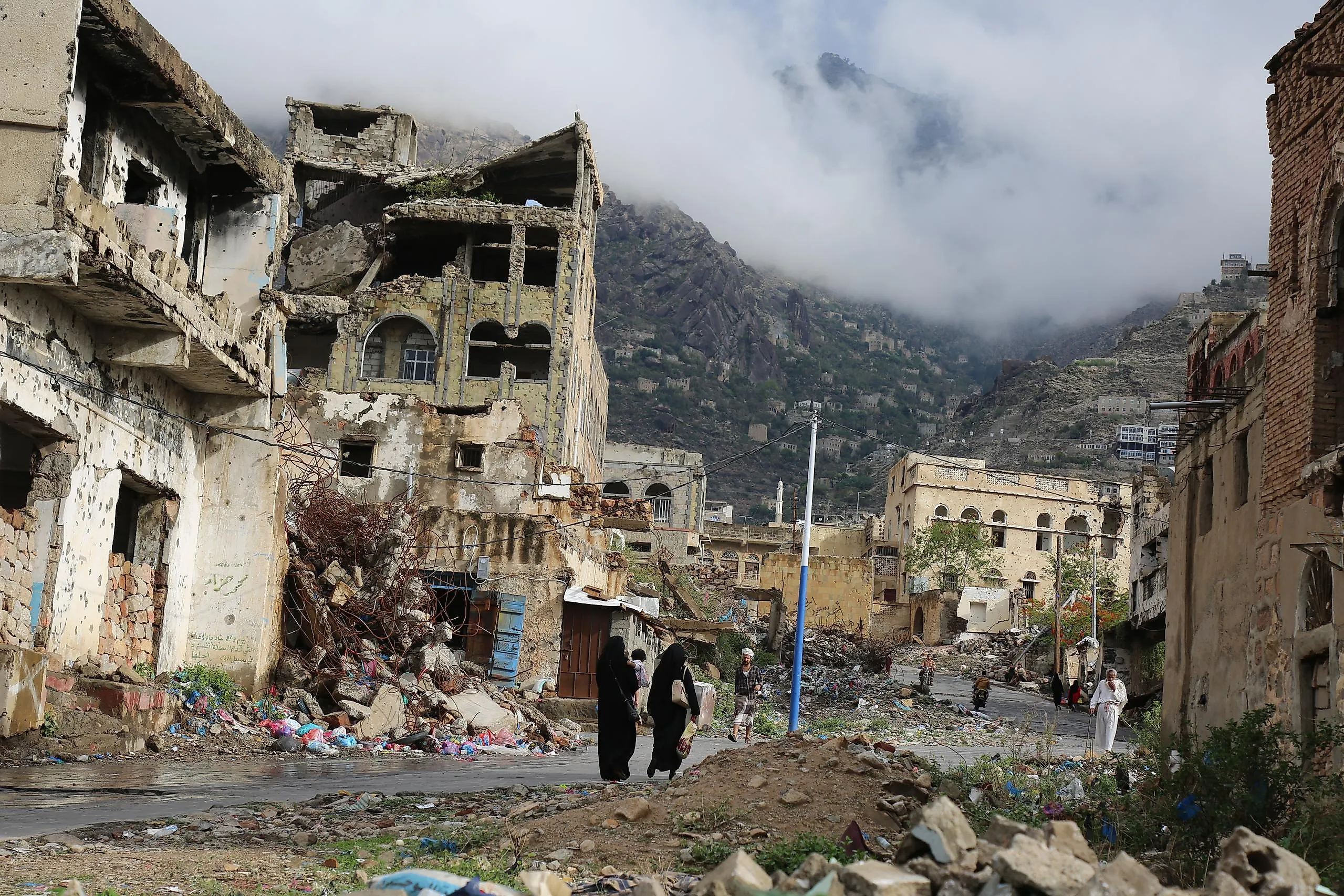
Yemen sits in the southwestern corner of the Arabian Peninsula, beside the Red Sea and the Gulf of Aden. It became a single country in 1990 through the merger of North and South Yemen. Since 2011, it has been gripped by political crisis and violence. Houthi forces control much of the north and west, while a Saudi-led coalition backs the internationally recognized government, some of whose institutions operate from the Saudi capital, Riyadh. In 2018, the Southern Transitional Council seized the port city of Aden, deepening the country's political fragmentation. The civil war has killed more than 150,000 people in the fighting and triggered one of the world's most severe humanitarian crises, leaving more than half the population reliant on aid.
The Lowest-HDI Countries In The World (2023 Data)
| Rank | Country | HDI Score |
|---|---|---|
|
1 |
0.388 |
|
|
2 |
0.404 |
|
|
3 |
0.414 |
|
|
4 |
0.416 |
|
|
5 |
0.419 |
|
|
6 |
0.419 |
|
|
7 |
0.439 |
|
|
8 |
0.459 |
|
|
9 |
0.467 |
|
|
10 |
0.470 |
|
|
11 |
0.487 |
|
|
12 |
0.493 |
|
|
13 |
0.496 |
|
|
14 |
0.497 |
|
|
15 |
0.500 |
|
|
16 |
0.503 |
|
|
17 |
0.510 |
|
|
18 |
0.511 |
|
|
19 |
0.513 |
|
|
20 |
0.514 |
What The Rankings Reveal
Every country at the bottom of the index is in sub-Saharan Africa except Yemen and Afghanistan, and the same forces surface in country after country: armed conflict, weak or contested institutions, landlocked geography or a narrow dependence on a single export, and the long shadow of colonialism, including arbitrary borders and extractive economies. The HDI's structure helps explain why these countries climb so slowly. Because the score is a geometric mean of health, education, and income, a severe shortfall in any one dimension drags the whole figure down, and most of these nations carry their deepest deficit in education, where progress takes a generation to register. Resource wealth and recent democratic openings offer some room for gains, but the distance to close remains substantial.