The World's Top Tea-Producing Countries
- China produces the most tea in the world.
- India produces 1.2 million tons of a tea, and over half of it remains in the country to be consumed by its citizens.
- Kenya produces 432,400 tons of tea, making it one of the most tea producing countries and the top exporter of black tea.
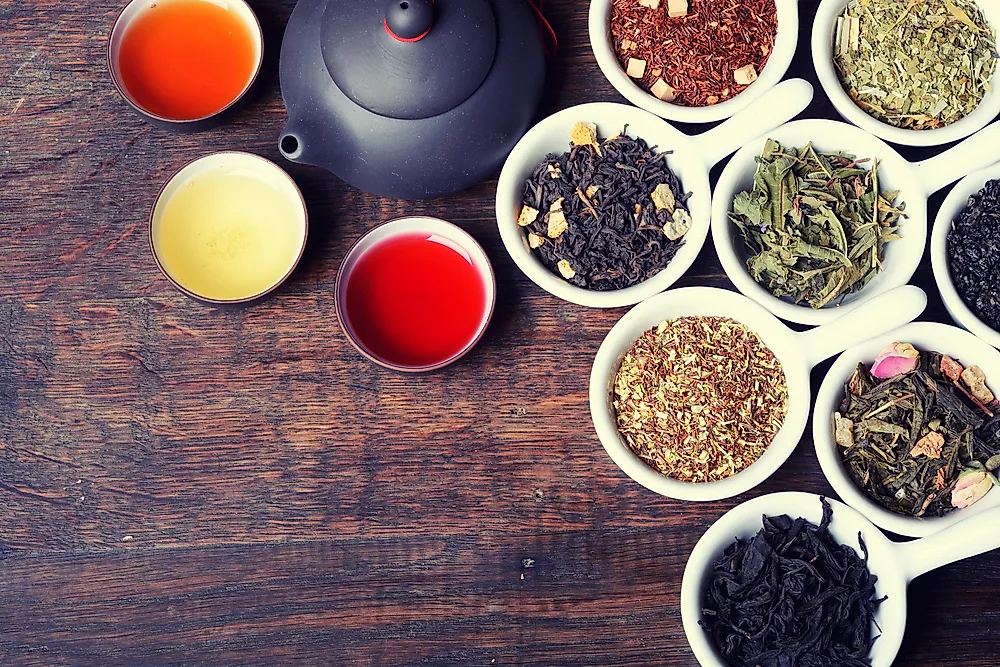
After plain water, tea is the most-consumed drink on Earth, and the race to grow it is not close. Tea began in China, where the Camellia sinensis plant grows wild in the southwestern hills, and from there it rode trade routes into nearly every culture on the planet. Today a handful of countries grow the overwhelming majority of the world's supply, and a few of them hold opinions about tea that border on the fanatical. Here are the biggest tea-producing countries, ranked by how much they make each year.
1. China

China grows close to half of all the tea on Earth, somewhere around 3.2 million tonnes a year, which is more than the rest of this list put together. The plant has been part of Chinese life for so long that its origin is a myth: in 2737 BCE, the legend goes, Emperor Shennong was boiling water when a few leaves drifted into his pot. He had ordered his subjects to boil their drinking water for hygiene, so the story casts him as a scientist sipping the accidental brew out of sheer curiosity. Whether or not a Bronze Age ruler really invented tea by accident, it stuck.
China grows the full spectrum, green, black, oolong, white, and aged pu-erh, and it treats the how of tea with as much care as the what. Brewing method, water, cup, and setting all matter, and centuries of writing tie the ritual to philosophy and ethics. Very little of it ever leaves: China drinks the overwhelming majority of what it grows.
2. India

India produces about 1.37 million tonnes of tea a year, second only to China, and it keeps nearly all of it at home. Roughly 80% of India's tea never crosses the border, which is what happens when you pair well over a billion people with a national habit of milky, spiced chai. The industry the British built to break China's grip on the tea trade now serves mostly Indians.
Tea reached India centuries ago along the caravan routes out of China, but it stayed a curiosity until the British planted it at scale in the 1800s, gambling that the climate of Assam could rival China's. It could. Today the country's tea gardens number in the tens of thousands, and names like Assam and Darjeeling have become shorthand for quality the world over.
3. Kenya

Here is the tea world's quiet twist: the single largest exporter of black tea on the planet is not in Asia at all. It is Kenya, which grows roughly 570,000 tonnes a year and ships most of it abroad, into the teabags of Britain, Egypt, and Pakistan. If you have ever drunk a generic "breakfast" blend, the odds are good it started on the Kenyan highlands.
More than 500,000 smallholders grow the crop, many on plots of less than an acre, and the equatorial highlands hand them sunshine and elevation in near-perfect balance. Not bad for a country whose first tea bush went into the ground only in the early 1900s.
4. Sri Lanka

Sri Lanka's tea industry exists because of a disaster in its coffee industry. In the 1800s the island, then the British colony of Ceylon, was coffee country, until a fungus called coffee leaf rust tore through the plantations in the 1870s and wiped them out. Growers replanted with tea, and the word "Ceylon" has meant tea ever since. The country now produces around 256,000 tonnes a year and remains one of the world's great suppliers of orthodox, whole-leaf tea.
That figure comes with an asterisk. In 2021 the government abruptly banned chemical fertilizer, tea yields fell sharply, and the shortfall became part of a wider economic crisis the country is still working through. Even so, tea remains one of Sri Lanka's largest export earners and supports around a million people.
5. Turkey

No one drinks more tea than the Turks, full stop. The average person in Turkey gets through something like a thousand glasses a year, roughly four a day, served scalding hot and deep red in little tulip-shaped glasses. To keep all those glasses full, Turkey grows about 246,000 tonnes of tea a year, almost entirely along the rainy Black Sea coast around the province of Rize.
The obsession is relatively recent. Turkey took up tea in earnest only after the First World War and the collapse of the Ottoman Empire, when coffee, grown in territories the empire no longer held, turned expensive. Tea was cheaper and could be grown at home, and the state put its full weight behind it. It worked almost too well. Turkey now charges a tariff of roughly 145% on imported tea to shield its own growers, and a few Black Sea towns have quietly renamed themselves after the crop, among them Çayeli, which translates more or less as "tea land."
Beyond a drink: a set of traditions
Five countries, five completely different relationships with the same leaf. One treats it as philosophy, another drinks almost everything it grows, a third quietly supplies the world's teabags, a fourth rebuilt an entire industry after a fungus, and a fifth turned it into a national identity strong enough to rename towns. What they share is scale, and there is no sign of the world's thirst easing off. The kettle, in other words, is not going off the boil any time soon.
The World's Top Tea-Producing Countries
Annual made-tea production for the leading producers, based on the most recent FAO and International Tea Committee figures for 2022 and 2023. Totals are approximate.
| Rank | Country | Annual production (metric tonnes) |
|---|---|---|
| 1 | China | ~3,200,000 |
| 2 | India | ~1,370,000 |
| 3 | Kenya | ~570,000 |
| 4 | Sri Lanka | ~256,000 |
| 5 | Turkey | ~246,000 |
| 6 | Vietnam | ~175,000 |
| 7 | Indonesia | ~123,000 |