Which US States Trade The Most With China?
California traded $137.8 billion in goods with China in 2024, more than the next two states combined. No other state comes close, but the rest of the top ten map onto the US economy in ways that cut against the usual trade-war talking points: an inland logistics hub, a Southern manufacturing corridor, a Pacific port state that sells almost as much as it buys.
That split is the real story. Texas ships energy and chemicals to China while Illinois sends soybeans and pulls in electronics, so a tariff that helps one state's ledger can hurt another's. Reading the numbers state by state shows where the exposure actually sits.
These rankings use ITA trade data. The figures track where trade is reported in the supply chain, not always where a product was finally made or consumed.
10 US States That Trade the Most With China
| Rank | State | Total Trade With China |
|---|---|---|
| 1 | California | $137.8B |
| 2 | Texas | $58.3B |
| 3 | Illinois | $46.7B |
| 4 | Tennessee | $24.5B |
| 5 | Washington | $23.1B |
| 6 | New York | $21.6B |
| 7 | Georgia | $20.4B |
| 8 | Pennsylvania | $20.0B |
| 9 | New Jersey | $16.4B |
| 10 | Indiana | $14.3B |
California Leads by a Wide Margin

California's $137.8 billion in two-way trade with China puts it far ahead of every other state. Its trade with China is more than double Texas's total. It is also nearly three times Illinois's total.
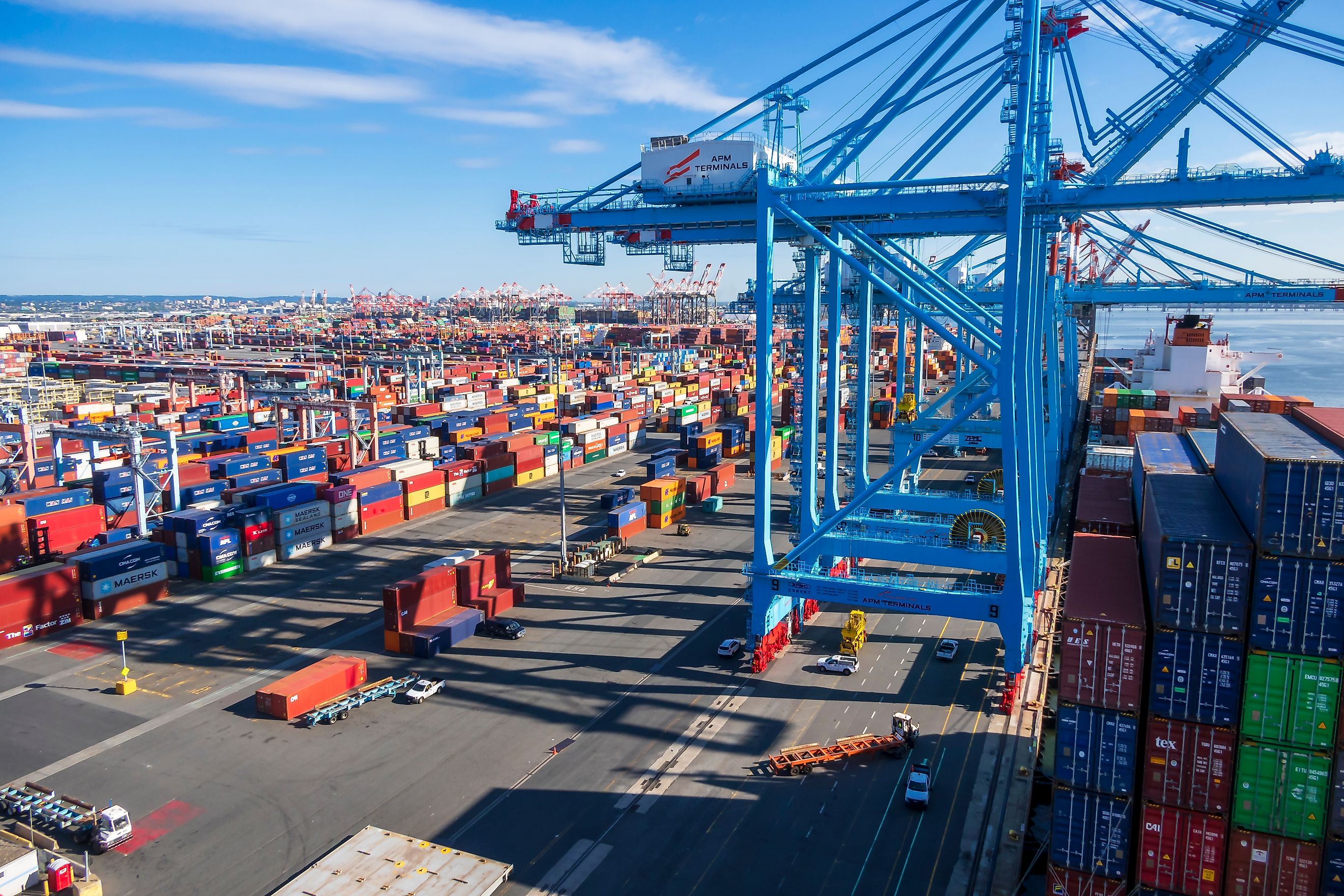
The reason is not hard to see. California has a huge consumer market, deep technology supply chains, and major Pacific-facing ports. Its China trade is dominated by imports, with $122.8 billion coming from China and $15.0 billion going to China.
The goods themselves tell the tech story. Computers, electronic components, and electrical equipment lead the imports, followed by consumer staples like apparel and toys. The state's exports back to China run to computer and electronic products, industrial machinery, chemicals, and farm goods such as tree nuts. California is not just buying finished goods from China. It is tied to a technology ecosystem that depends on components, assembly, distribution, and consumer demand across the Pacific.
Texas Is the Export Heavyweight

Texas ranks second overall, but its trade profile is very different from California's. It exported about $22.5 billion to China in 2024. That made it the largest state exporter to China in the country.
Oil and natural gas carry the load, accounting for roughly $12 billion of those sales. Basic chemicals, resins and synthetic fibers, industrial machinery, and semiconductors make up most of the rest. Coming back the other way, Texas imported $35.8 billion from China, much of it electronics and machinery, though the gap between imports and exports is far smaller than California's.
This gives Texas a different kind of exposure. The state is not only a buyer of Chinese goods. It is also a major seller of energy, chemicals, and industrial products. That makes Texas one of the most important state-level players in the US-China trade relationship.
Illinois Shows China Trade Runs Inland

Illinois ranked third with $46.7 billion in trade with China. Most of that came from imports, which reached $42.0 billion, the second-highest of any state. Exports to China were $4.7 billion.
The import side is heavily tied to electronics, with phones and other communications equipment leading the way into the state's warehouses and retail distribution networks. On the export side, soybeans and other oilseeds dominate, the product of one of the country's largest farm economies.
That mix places Illinois between two major trade debates at once, one about supply chains and consumer electronics, the other about Chinese demand for American crops. It is the clearest example of how China trade reaches far beyond coastal ports and runs straight through the Midwest.
Tennessee Is a Quiet Supply Chain Power

Tennessee ranked fourth with $24.5 billion in total trade with China. Imports made up most of that figure, reaching about $21.0 billion. Exports were much smaller at $3.6 billion.
The imports are concentrated in electronics such as TVs and phones, worth about $7.1 billion in 2024, along with machinery, pharmaceutical products, and vehicle parts. Those goods feed the state's warehouses, factories, and distribution networks, including the air-cargo operations around Memphis. Exports going the other way are led by soybeans, cotton, and other crops.
This ranking may surprise readers who think China trade is mostly a coastal issue. Tennessee proves otherwise. Tariffs or supply disruptions can quickly affect business costs, retail prices, and production inputs, a reminder that the China trade map runs straight through the American interior.
Washington Has the Most Balanced Trade Profile

Washington ranked fifth with $23.1 billion in trade with China. Unlike most states on this list, its trade was nearly balanced. It exported $11.9 billion to China and imported $11.2 billion from China.
Aerospace dominates the export side, with aircraft and parts built around the Puget Sound leading the way, alongside farm goods such as soybeans and wheat that move through the state's Pacific ports. Imports lean toward consumer goods, including toys, sporting goods, and other manufactured items.
That balance gives Washington a different political position. Its companies rely on Chinese demand while its consumers and firms rely on imports, so a sharp break in trade would hit both outbound sales and inbound supply. That makes the state one of the most exposed in a two-sided way.
New York Remains a Major Goods Market

New York ranked sixth with $21.6 billion in two-way goods trade with China. Imports accounted for most of the total, reaching $18.6 billion. Exports were about $3.0 billion.
The inbound goods are largely the consumer products that dominate the national ledger, phones, computers, apparel, furniture, and toys, flowing through the region's ports to retailers and wholesalers. New York's exports to China are distinctive: jewelry and other miscellaneous manufactured goods lead, followed by precision instruments, scrap materials, nonferrous metals, and pharmaceuticals.
New York is often described through finance, media, real estate, and services. But its China trade shows that goods still matter deeply to the state economy, with the impact felt mostly through prices, retailers, ports, and consumers.
Georgia Reflects the Rise of Southern Logistics

Georgia ranked seventh with $20.4 billion in trade with China. Its imports from China reached $17.3 billion. Its exports to China were about $3.1 billion.
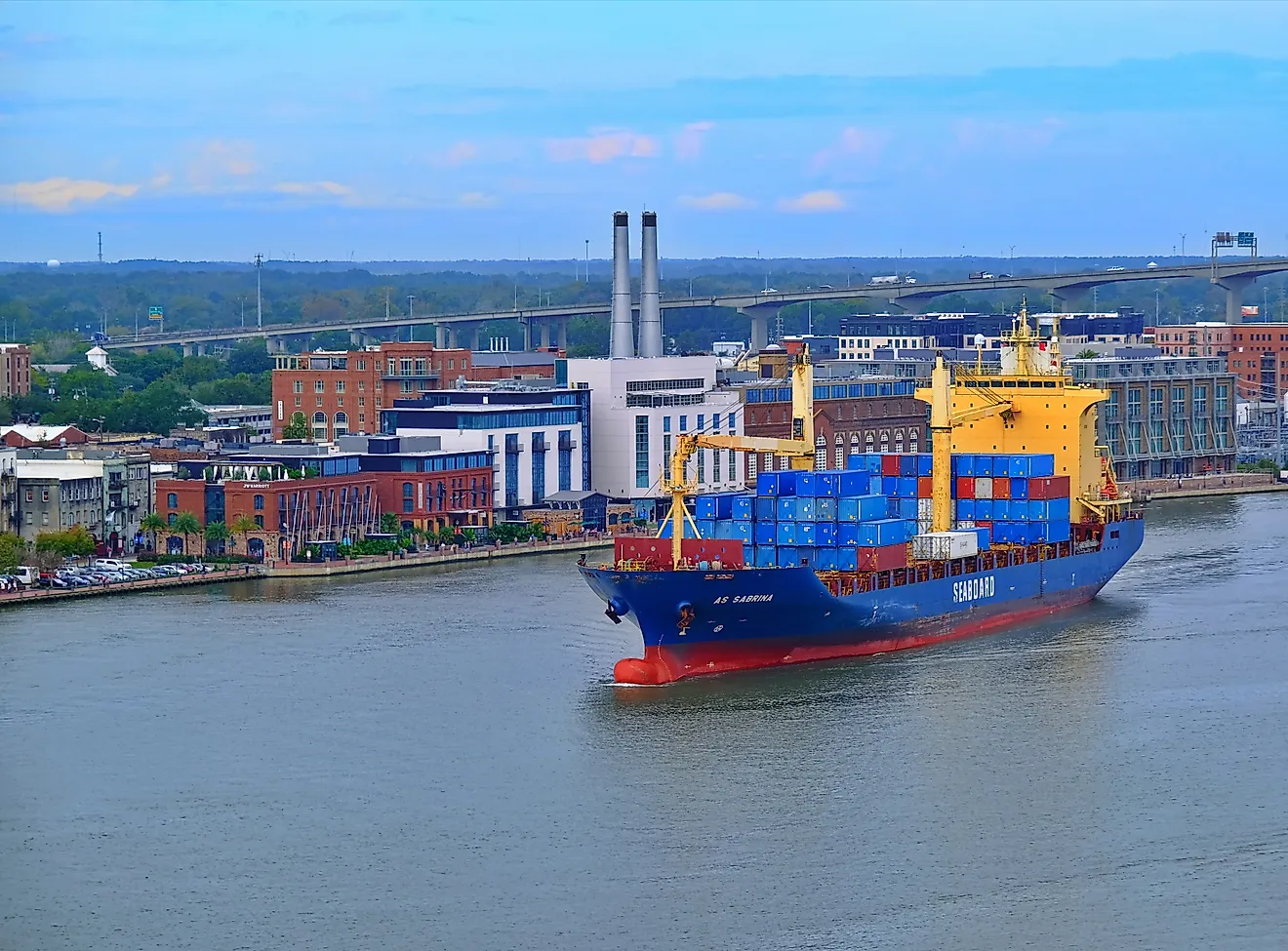
Much of the import flow moves through the Port of Savannah, one of the busiest container ports in the country, carrying consumer goods such as toys, sporting equipment, and other manufactured items into Southern distribution networks. Georgia's sales to China draw on its industrial and agricultural base: pulp and paperboard products lead, followed by meat products, motor vehicles, and aerospace parts.
Georgia's place in the top ten reflects the growth of the Southeast as a logistics and manufacturing region. Its import-heavy profile exposes Georgia businesses to changes in import prices, freight costs, and tariff policy, and shows that China trade is now embedded in the fast-growing Sun Belt economy.
Pennsylvania Faces Both Competition and Dependence

Pennsylvania ranked eighth with $20.0 billion in trade with China. Imports reached $16.6 billion. Exports were $3.5 billion.
The imports are led by communications equipment, the phones and network gear that stock the state's stores and offices. The exports reflect Pennsylvania's energy and industrial base: coal and petroleum gases, pharmaceuticals and medicines, oil and gas, nonferrous metals, and sawmill and wood products.
This makes Pennsylvania an important case. It is a state where trade politics are often framed around manufacturing loss and industrial competition, but the numbers show a more complicated reality. Pennsylvania is exposed to China as both competitor and supplier, and factories, retailers, hospitals, and households can all be affected by Chinese goods and components. That makes trade policy especially difficult for the state.
New Jersey Has a Large Trade Footprint

New Jersey ranked ninth with $16.4 billion in trade with China. Imports made up most of the total, reaching $14.3 billion. Exports were about $2.2 billion.
The inbound side is dominated by consumer goods, jewelry, toys, and other manufactured items that arrive through the New York metro area's ports and move out through the state's dense distribution networks. New Jersey's exports to China lean on its chemical and industrial economy: nonferrous metal products, soaps and toiletries, basic chemicals, precision instruments, and medical equipment.
The state's ranking shows that geographic size is not the same as trade weight. Like New York, New Jersey's China exposure is mostly about inbound goods, which makes it vulnerable to port disruptions, tariff changes, and price increases that move through supply chains.
Indiana Brings Manufacturing Muscle

Indiana ranked tenth with $14.3 billion in trade with China. It exported $5.1 billion to China and imported $9.3 billion from China.
Pharmaceuticals and medicines drive the export side, where Indiana ranks among the national leaders, along with semiconductors and components, the category behind most of the state's export growth to China over the past decade. Imports are led by communications equipment and other electronics that feed the state's factories and retailers.
That makes Indiana more balanced than many states in the top ten. It is still import-heavy, but the state both buys from China and sells into China. For Indiana, the trade debate is not only about reducing dependence. It is also about keeping export access for firms that compete globally.
China Trade Is National, but Exposure Is Local
The top ten states complicate the usual trade debate. California dominates because of scale. Texas stands out because of exports. Illinois shows how China trade runs through inland logistics and agriculture.
Tennessee and Georgia reveal the Southeast's supply chain exposure. Washington shows the risk of being tied to China on both imports and exports. New York and New Jersey show how wealthy consumer markets shape trade flows.
Pennsylvania and Indiana show how industrial states are both challenged by and connected to China. That is the central lesson. China trade is not one story. It is ten different state stories, and many more beyond them.
US-China trade policy may be debated in Washington, DC. But the consequences land in California ports, Texas energy markets, Illinois warehouses, Tennessee factories, Georgia logistics hubs, and Indiana manufacturers. The politics are national. The exposure is local.