The Roman Empire’s Deadliest Political Purge
Ancient Rome was notorious for its scheming and political violence. However, one period stood above all others as particularly brutal. After Julius Caesar died in 44 BCE, his allies purged Rome's political elite. These proscriptions altered the course of Roman history. Indeed, they paved the way for Rome's transition from a republic to an empire.
Caesar's Civil War

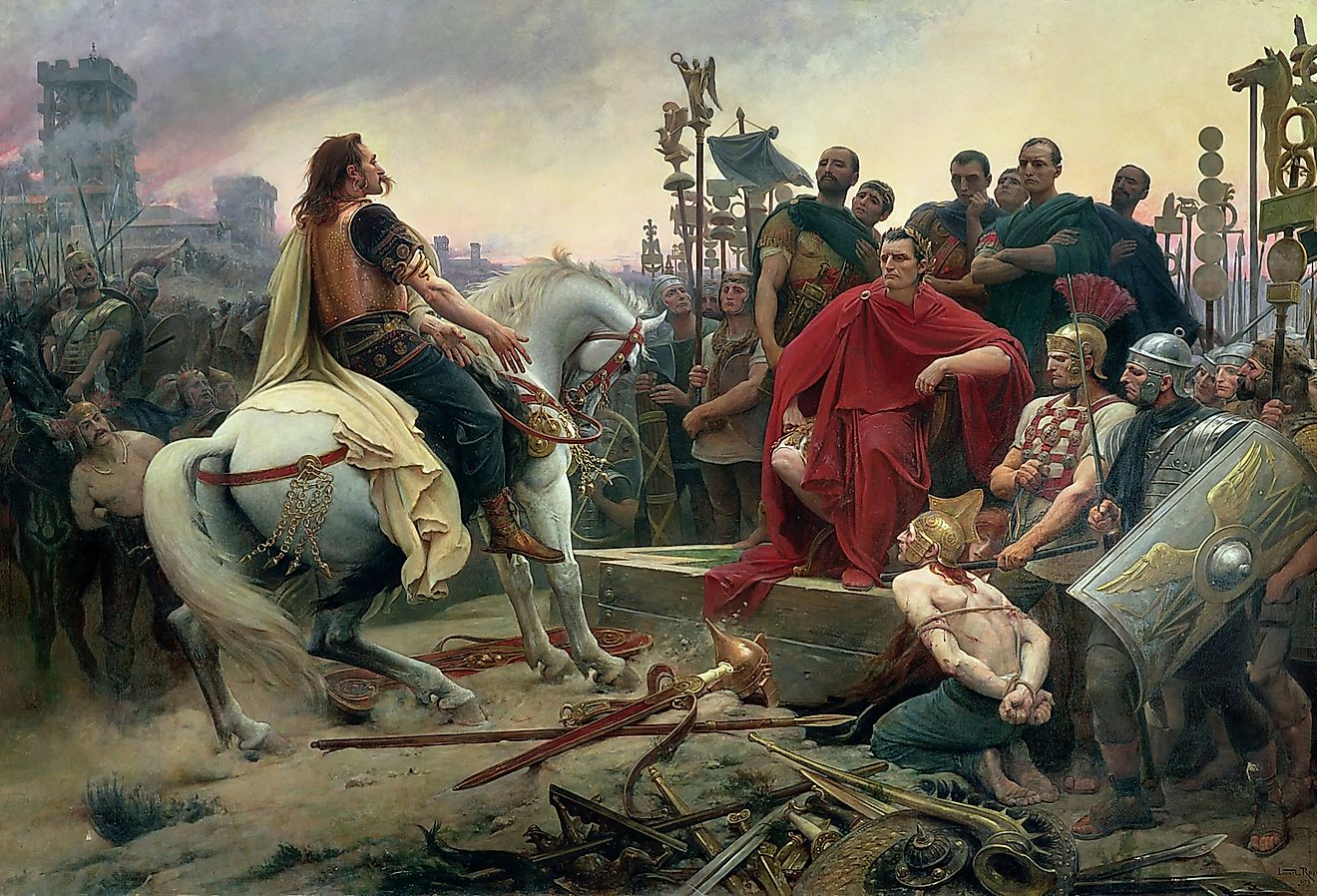
During the 50s BCE, Julius Caesar became the most powerful man in Rome. His campaign to capture Gaul (modern-day France and Belgium, plus Luxembourg and the land west of the Rhine) resulted in him amassing immense wealth and personal popularity. This made the Senate anxious, so it demanded that Caesar give up control of his army and return to life as a private citizen. Caesar refused. In 49 BCE, he crossed the Rubicon River with his army, an act that began a civil war against the Senate and his former ally, Pompey the Great.
The war was fairly one-sided. After quickly taking Italy, Caesar secured Spain and pursued Pompey into Greece. After being defeated at the Battle of Pharsalus in 48 BCE, Pompey fled to Egypt. There, he was assassinated on the orders of Ptolemy XIII. The pharaoh wanted to win Caesar's favor, hoping he would help him fight his own civil war against his sister and wife, Cleopatra. This didn't work, and Caesar actually entered into a political and romantic relationship with Cleopatra. Ptolemy XIII was defeated, and Caesar spent the next few years fighting Pompey's remaining forces.
Caesar's Assassination

In 45 BCE, Caesar won the civil war. He made this victory official in early 44 BCE, when he was named dictator of Rome for life. Doing so made many anxious. The Roman Republic was built on power-sharing and a hatred of kings. Even though Caesar wasn't calling himself a king, he was now a monarch in all but name. Therefore, a group of senators launched a plot to kill Caesar. The plan came to fruition on March 15, 44 BCE, when Caesar arrived for a Senate meeting at the Curia of Pompey, a hall attached to the Theater of Pompey. Roughly 60 men joined the conspiracy, and those present cornered Caesar and stabbed him 23 times.
The Second Triumvirate Emerges

All hell broke loose following the assassination. Two main sides emerged. The first, the assassins, were led by Marcus Junius Brutus and Gaius Cassius Longinus. The second side was made up of Caesar's allies. Mark Antony was one of Caesar's generals and was serving as consul when the dictator was killed. Octavian was Caesar's great-nephew, named as his adopted son and heir in the will. Marcus Aemilius Lepidus had served as Caesar's master of the horse, the deputy post attached to the dictatorship. Together, they formed the Second Triumvirate. Unlike the First Triumvirate (of which Caesar was a member), this was an officially recognized alliance, established by the Lex Titia in November 43 BCE and granted extraordinary powers. This allowed the three men to do whatever was necessary to prepare for the looming conflict with the assassins.
The Proscriptions

The Second Triumvirate needed two main things: political security and money. Therefore, in 43 BCE, they launched sweeping proscriptions. A proscription was a public death sentence. The triumvirs produced lists of people who had been declared enemies of the state. Once someone appeared on the list, they could legally be killed and have their property confiscated. This last part was crucial. The Second Triumvirate needed money and resources to maintain their armies, so wealthy Romans were often targeted.
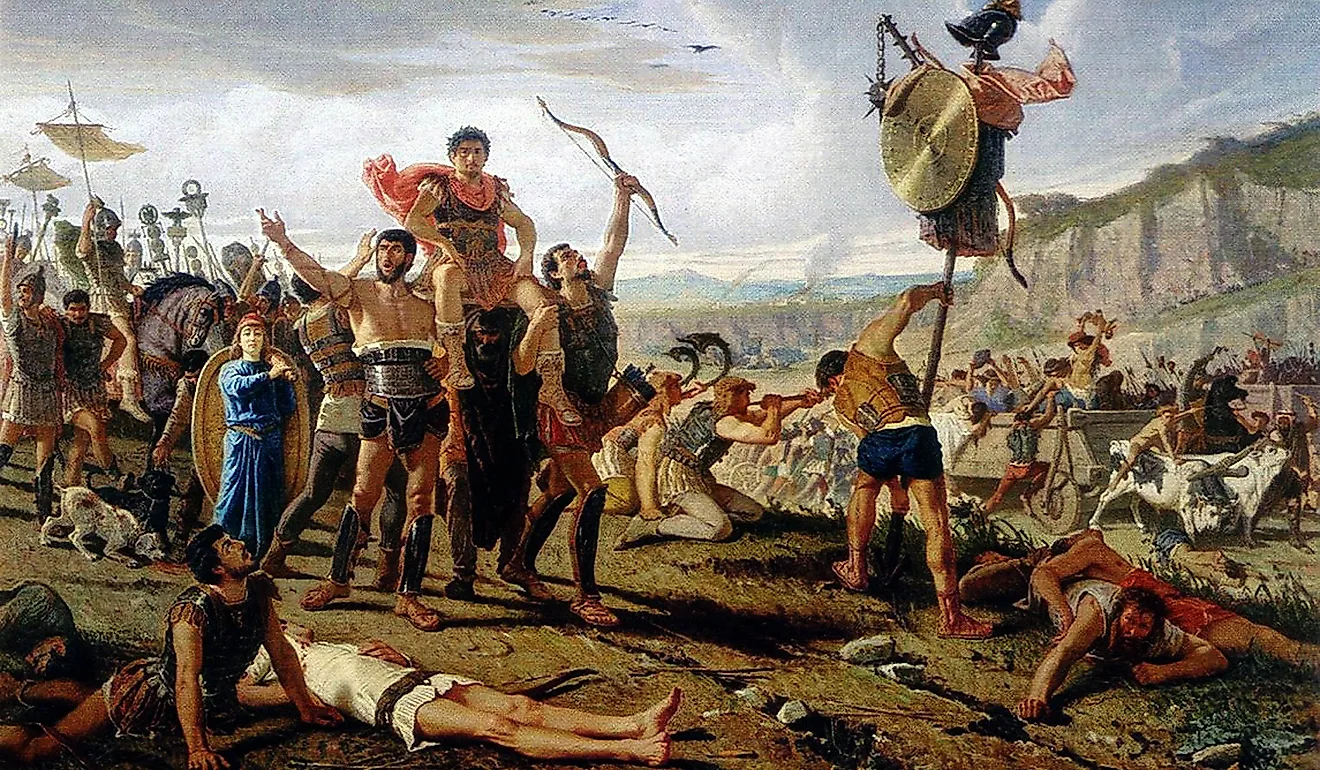
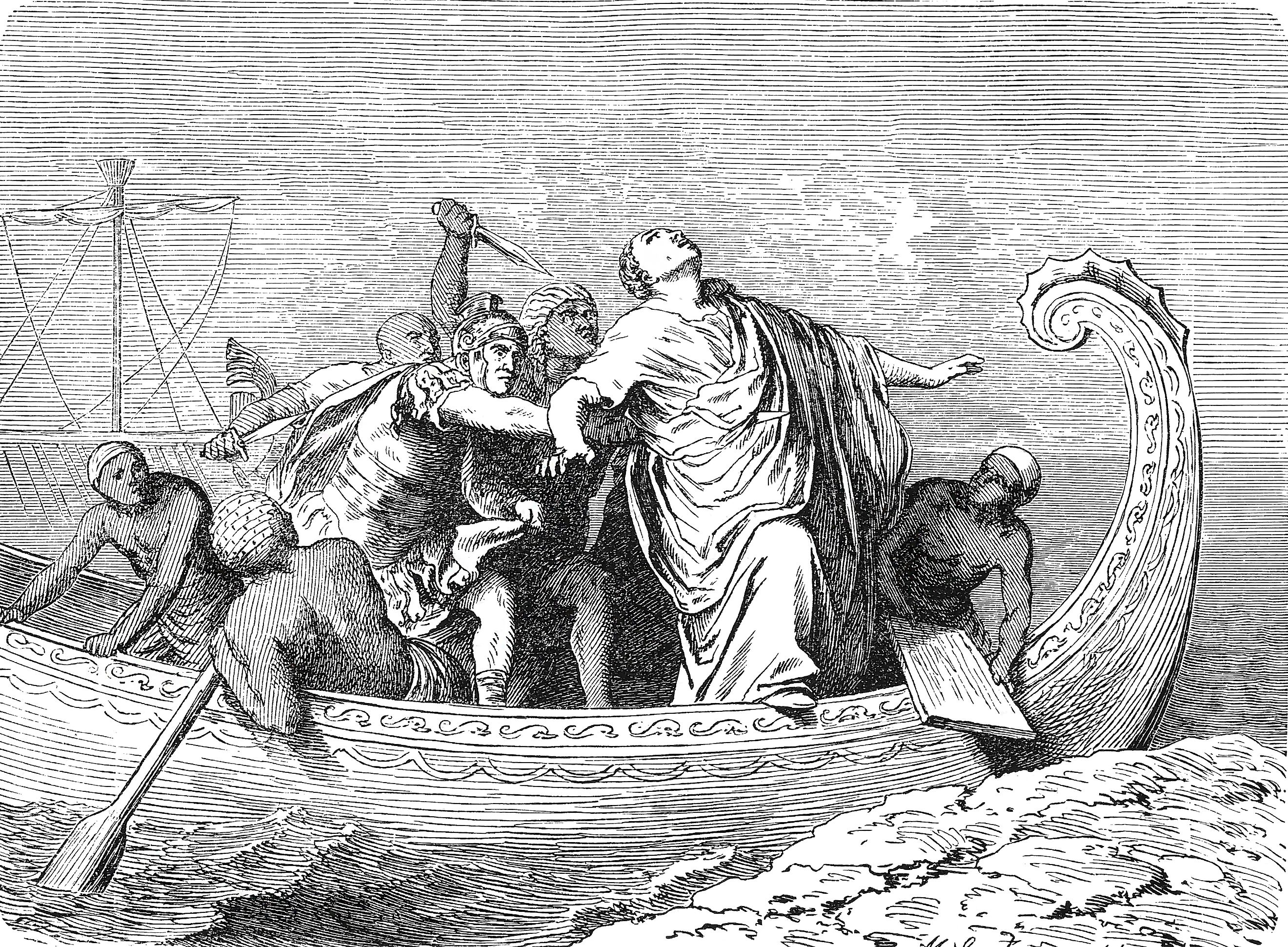
The triumvirs aimed first at their own political opponents. Perhaps the most famous victim was Cicero. A statesman and senator, Cicero is remembered as one of the greatest orators of all time. He was also a vicious critic of Mark Antony after Caesar's assassination. Cicero's convincing public speaking ability made him a threat, so Antony had his name added to a proscription list. Cicero tried to flee Italy, but was caught in December 43 BCE. He was killed on the spot and beheaded. His head and hands were carried back to Rome, where Antony reportedly had them displayed on the Rostra, the city's most famous public speaking platform. The message this sent was clear: submit to the Second Triumvirate, or die.
The Death Of The Assassins

Ancient sources assert that about 300 senators and 2,000 equestrians (the wealthy middle-to-upper class) were killed in the proscriptions. While modern historians dispute these numbers, the higher echelons of Roman society were disproportionately targeted. Indeed, the ultimate purpose of the purge was to eliminate supporters of the assassins in positions of power. With this goal now accomplished, the Second Triumvirate turned to the assassins themselves.
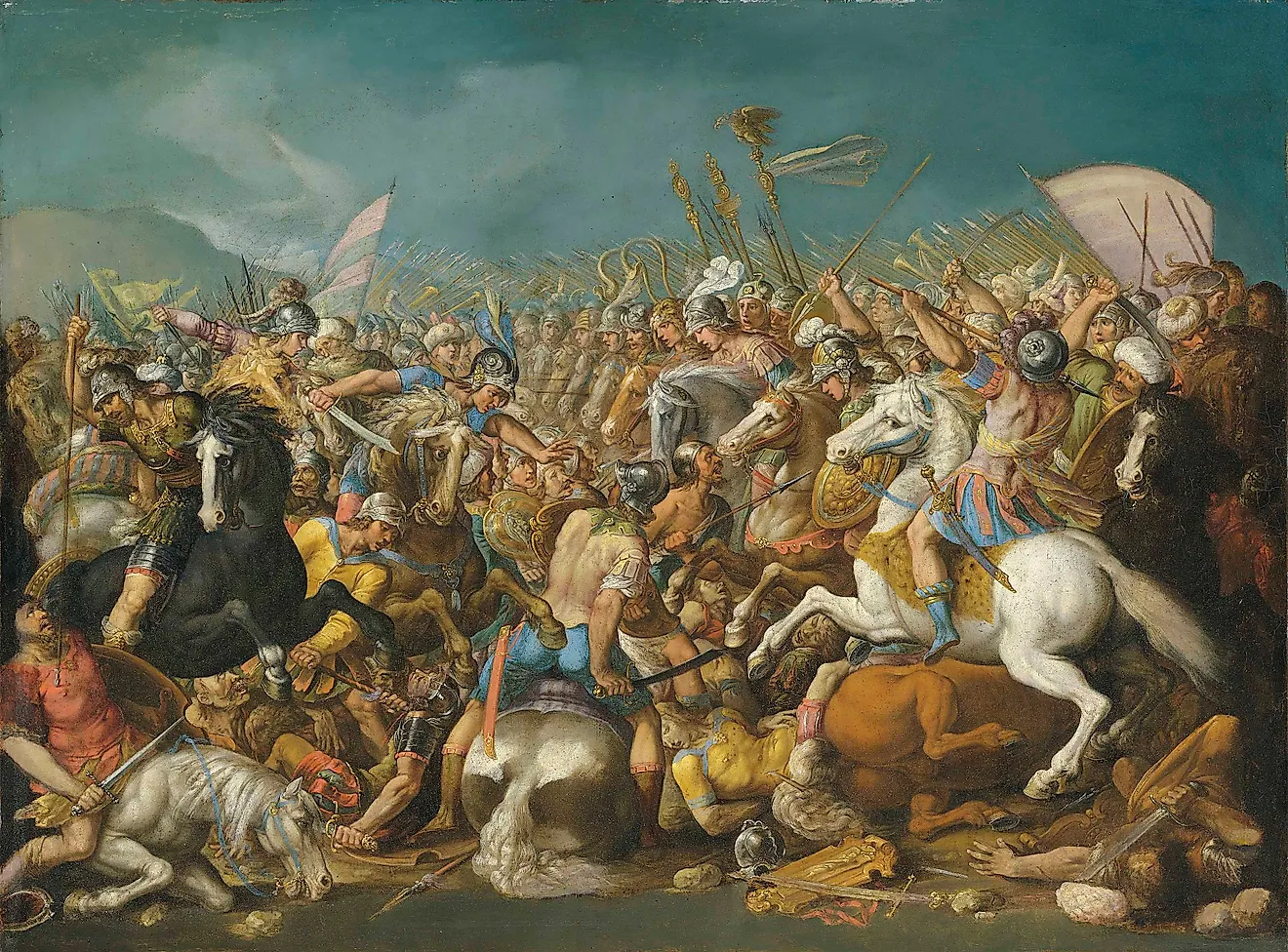
The decisive engagements came in October 42 BCE near the town of Philippi, in the Roman province of Macedonia, in what is now northeastern Greece. The first engagement was actually two separate fights. Brutus defeated Octavian's forces, but Antony defeated Cassius. Falsely believing that Brutus had been defeated, Cassius committed suicide. Now, without his main ally, a dejected and cornered Brutus was forced into another battle about three weeks later. His army was soundly defeated, and he killed himself.
The Rise Of The Roman Empire

With the assassins gone, the Second Triumvirate had seemingly accomplished its goal. However, without a common enemy, tensions between the three men emerged. Octavian and Antony in particular didn't like each other. This dislike only grew when Antony began a romantic and political relationship with Cleopatra, in a similar vein to Caesar. Octavian argued that this meant that Antony was no longer loyal to Rome and had been corrupted by the "foreign queen". The Senate was convinced by this accusation and declared war on Cleopatra (and effectively Antony). Eventually, Antony and Cleopatra were defeated by Octavian at the Battle of Actium in 31 BCE. They fled to Egypt, where both took their own lives the following year as Octavian closed on Alexandria. With no one left to oppose him, Octavian became Rome's first emperor in 27 BCE.
Why This Still Matters

The proscriptions of 43 BCE are one of the darkest but most important events in Roman history. Occurring in the aftermath of Julius Caesar's assassination, they resulted in the purging of the Second Triumvirate's political opponents. They also helped Rome's new rulers raise money to pay their armies. The proscriptions thus proved instrumental in the Second Triumvirate's defeat of Caesar's assassins at the Battle of Philippi. Nevertheless, with Republican norms shattered and no more common enemy, the stage was set for conflict between Octavian and Antony. Ultimately, the bloodshed ended with Antony's death and Octavian emerging as the undisputed ruler of the newly formed Roman Empire.