The Bloodiest Battles In Ancient History
Ancient battles frequently left thousands dead in a single day. They also often changed the course of entire civilizations. Exploring the bloodiest battles in ancient history, therefore, helps shed light on people, cultures, and societies that existed thousands of years ago. From the Battle of Gaugamela, which saw Alexander the Great defeat the Achaemenid Empire, to the Battle of the Catalaunian Plains, which represented the Western Roman Empire’s last major military victory, all these engagements led to unfathomable numbers of deaths.
The Battle of Gaugamela (331 BCE)

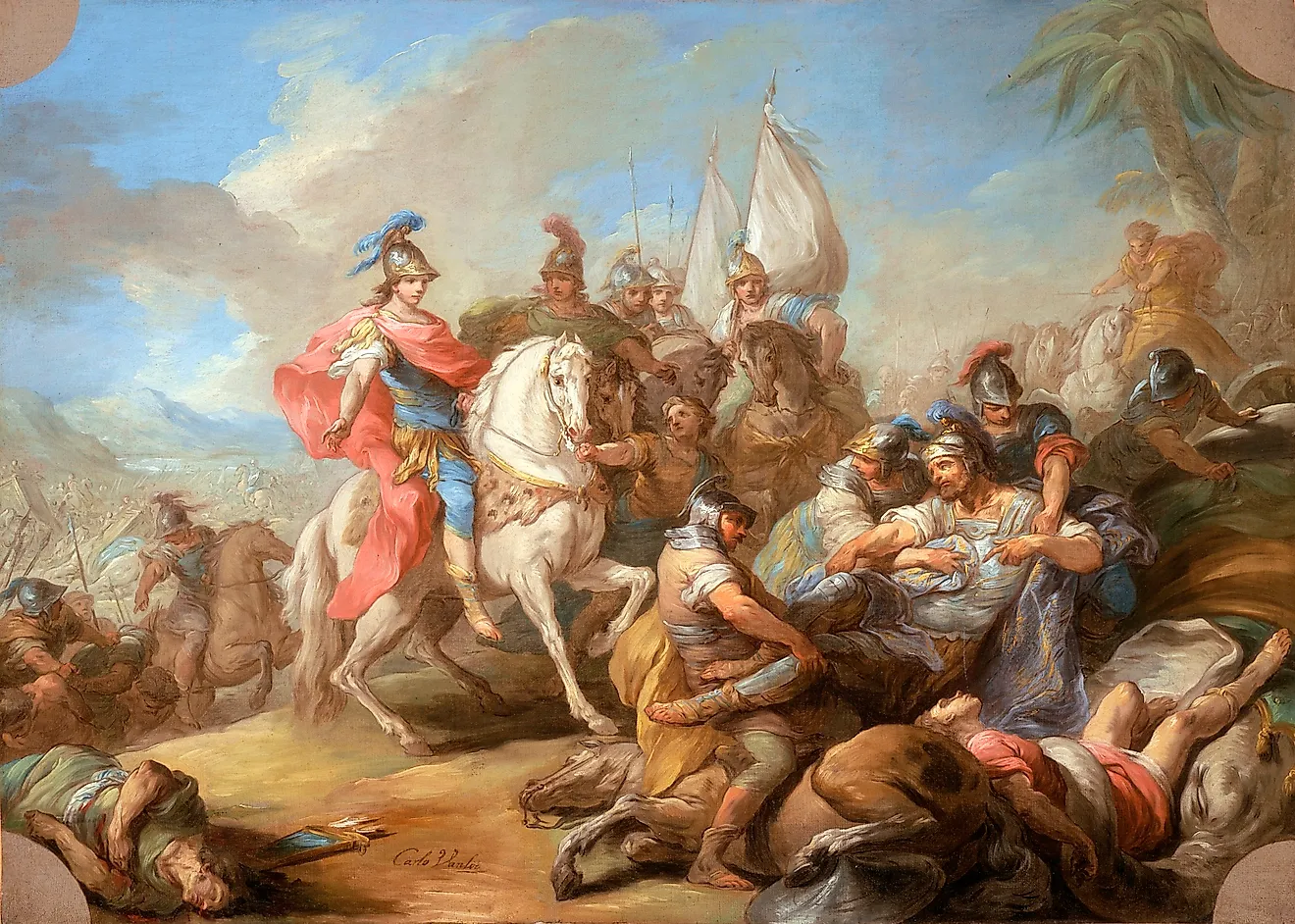
In 334 BCE, Alexander the Great invaded Persia. For the next three years, the Macedonian king worked his way through Anatolia and the Levant. After reaching Egypt and founding the city of Alexandria, Alexander turned his attention back to the Persian heartland. This set the stage for the decisive engagement of his campaign, the Battle of Gaugamela.
Fought on the plains of Gaugamela (near modern-day Erbil in northern Iraq) in 331 BCE, the battle saw Alexander face off against Persian King Darius III. Darius had a larger army, but Alexander's was more flexible. This allowed the Macedonian king to lead a cavalry charge directly at Darius when a gap appeared in the Persian defenses. Doing so forced Darius to flee. While fighting continued afterward, much of the Persian army collapsed upon realizing that it had no leader. Ultimately, between 40,000 and 90,000 Persians were killed in the Battle of Gaugamela, though the ancient sources vary so widely that no figure can be treated as firm. The Macedonian victory also paved the way for Alexander to take Babylon and Susa within months, and Persepolis by the following spring.
The Battle of Cannae (216 BCE)

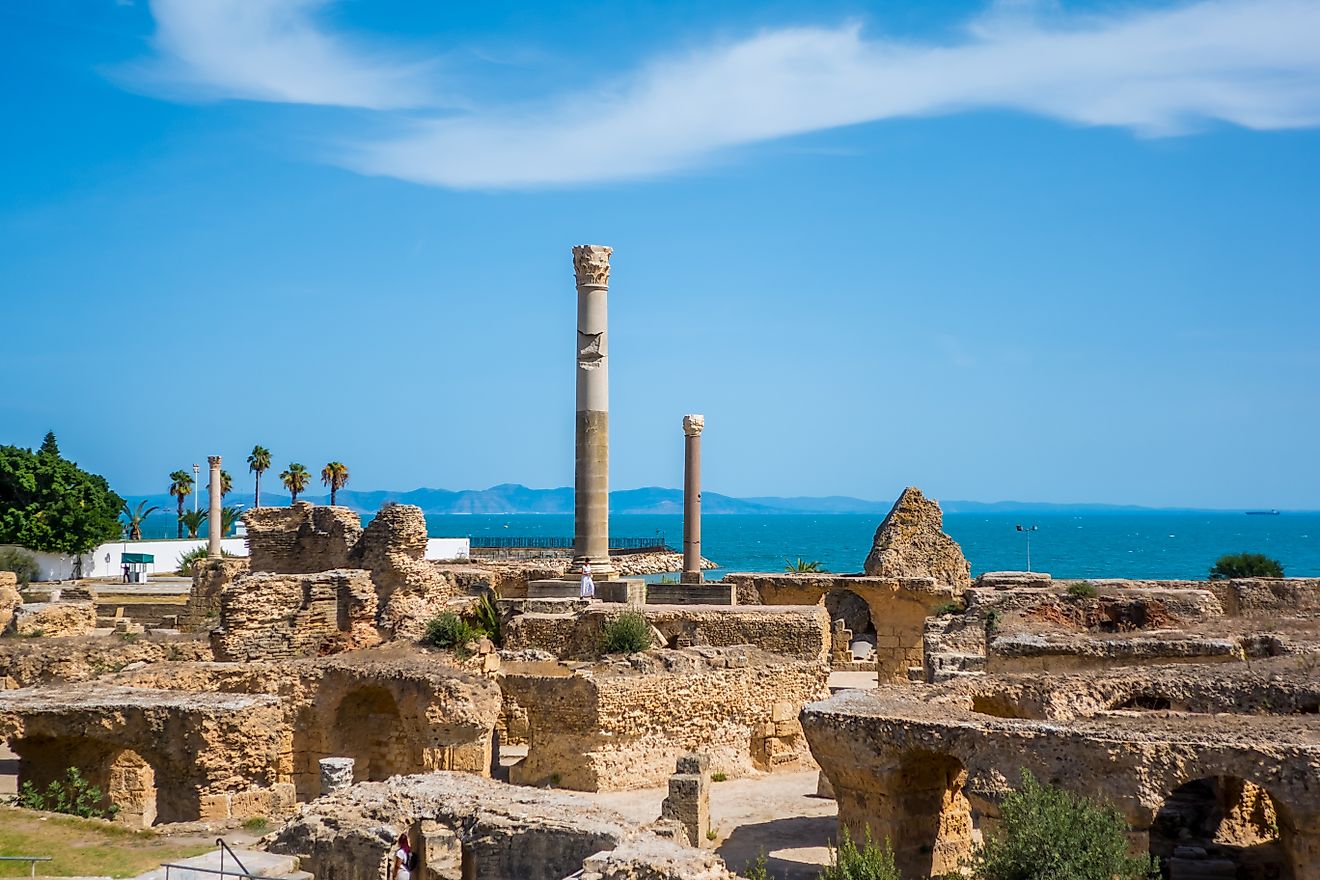
The empire of Carthage sat on the North African coast, in what is now Tunisia. From 264 to 241 BCE, it fought the Roman Republic for control over Sicily. Known as the First Punic War, this conflict ended in a Roman victory. Humiliated, the Carthaginians spent the next decades plotting their revenge. It eventually came in 218 BCE when, under the leadership of famed general Hannibal Barca, Carthage invaded Italy. Rather than doing so via the sea, Hannibal led his army over the Alps and attacked the Romans from the north. His column included war elephants. This left the Romans completely unprepared, and they suffered defeat after defeat for the first two years of the war.
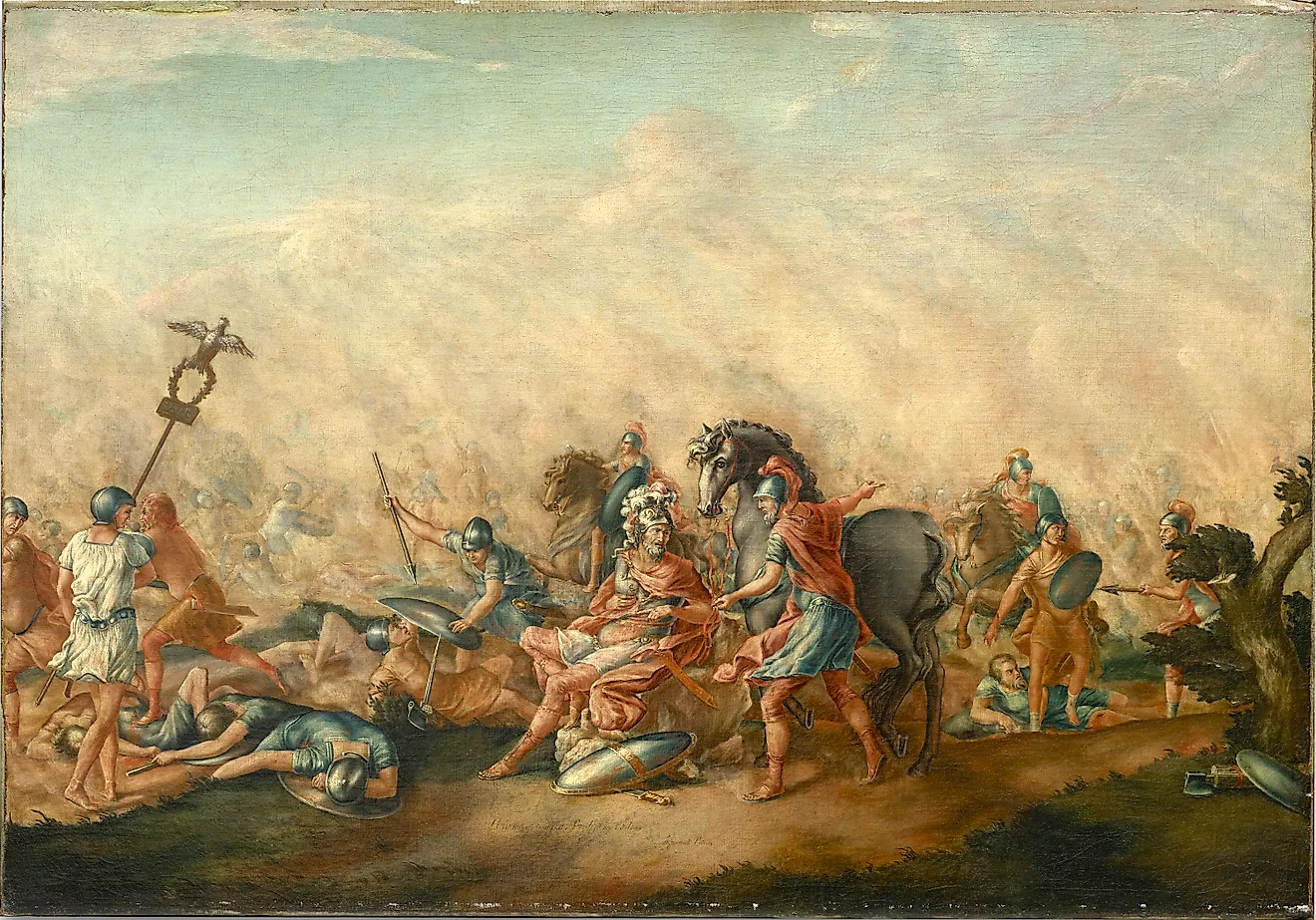
Frustrated, the Roman Senate ordered the raising of the biggest army yet to push out Carthage. Roughly 86,000 Roman troops thus gathered near the village of Cannae to accomplish this task. Despite being outnumbered by more than 35,000 men (the Carthaginians fielded about 50,000 soldiers), Hannibal devised a cunning trap. He deliberately positioned his weakest troops in the middle, so that they gave ground while his stronger soldiers held the flanks. Doing so allowed the Carthaginians to surround the Romans and then slaughter them. Between 50,000 and 70,000 Romans were killed in a single day, and it nearly knocked the Republic out of the war entirely. Only through the adoption of the Fabian Strategy, which emphasized winning via attrition rather than a decisive combat victory, did Rome eventually manage to recover.
The Siege of Carthage (149 to 146 BCE)

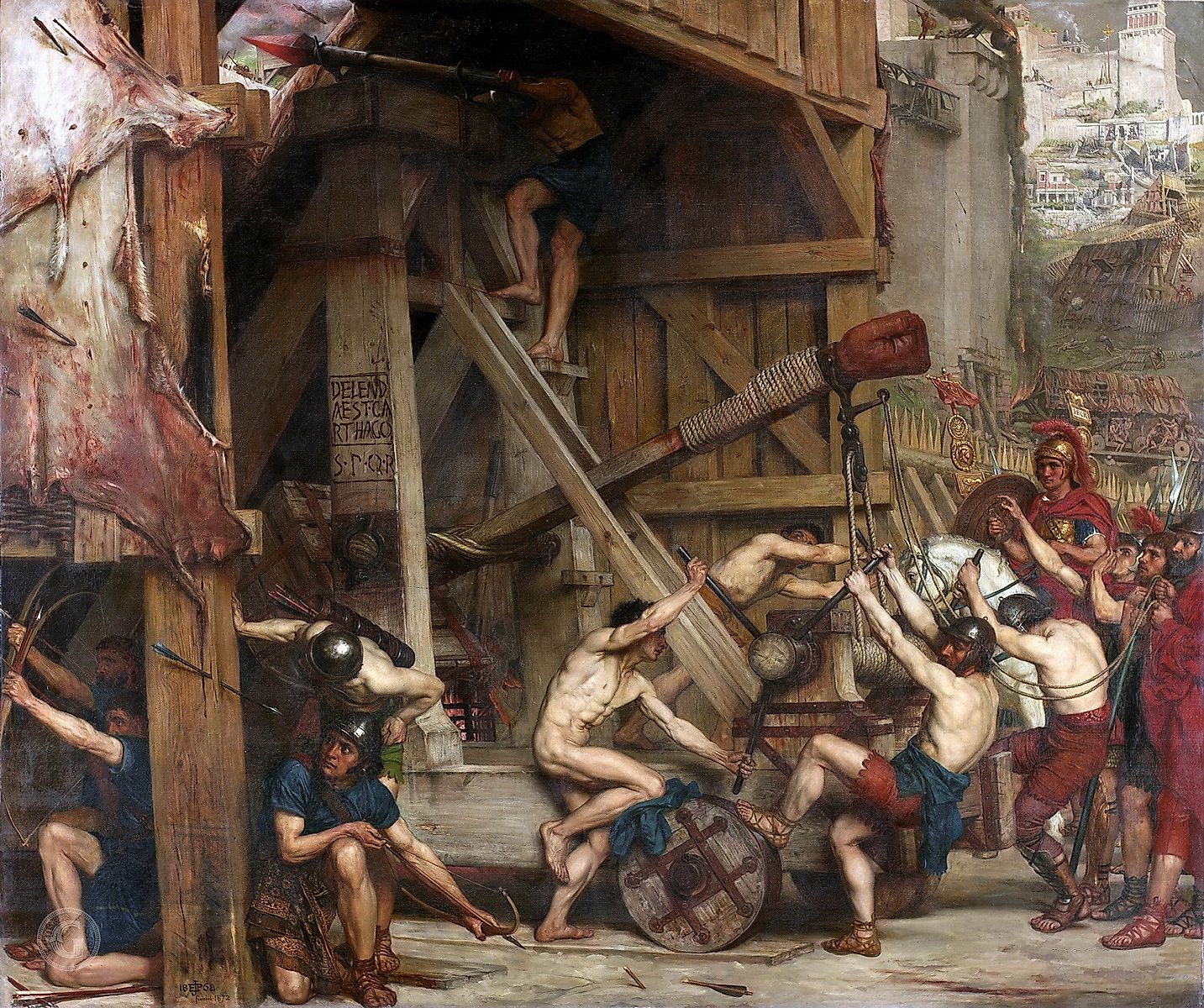
By the Third Punic War, the roles were completely flipped. Carthage's defeat in the Second Punic War had left it a shell of its former self and no real threat. Nevertheless, in 149 BCE, the Romans landed in North Africa to defeat Carthage once and for all. The Carthaginians tried everything to avoid conflict, including giving up hundreds of hostages, weapons, and large quantities of military equipment. This wasn't enough. The Romans instead wanted the entire population to move ten miles (16 kilometers) inland so that they could destroy the city. Viewing these demands as unacceptable, the Carthaginians chose to fight, and the Romans besieged the city.
Carthage proved difficult to attack. It was surrounded by massive walls that sometimes reached nearly 40 feet (12 meters). Nearly every member of Carthaginian society also contributed to the city's defense. Blacksmiths worked all hours of the day to forge weapons, women cut their hair to make ropes for catapults and siege engines, and slaves were freed to help defend the city. All these measures meant that for the first two years of the siege, the Romans made little progress.
The tide began to turn when Scipio Aemilianus took command of the Roman army. He ordered the city to be completely isolated. Massive siege works were thus built around the city, along with a wall to prevent supplies from entering. The Romans also blockaded the harbor, stopping Carthage from being resupplied by sea. As disease and famine devastated the defenders, the Romans finally breached the city walls in 146 BCE. Estimates for the Carthaginian dead across the siege and the final battle for the city run between 62,000 and 150,000. The surviving 50,000 were sold into slavery, and almost the entire city was demolished.
The Battle of the Catalaunian Plains (451 CE)

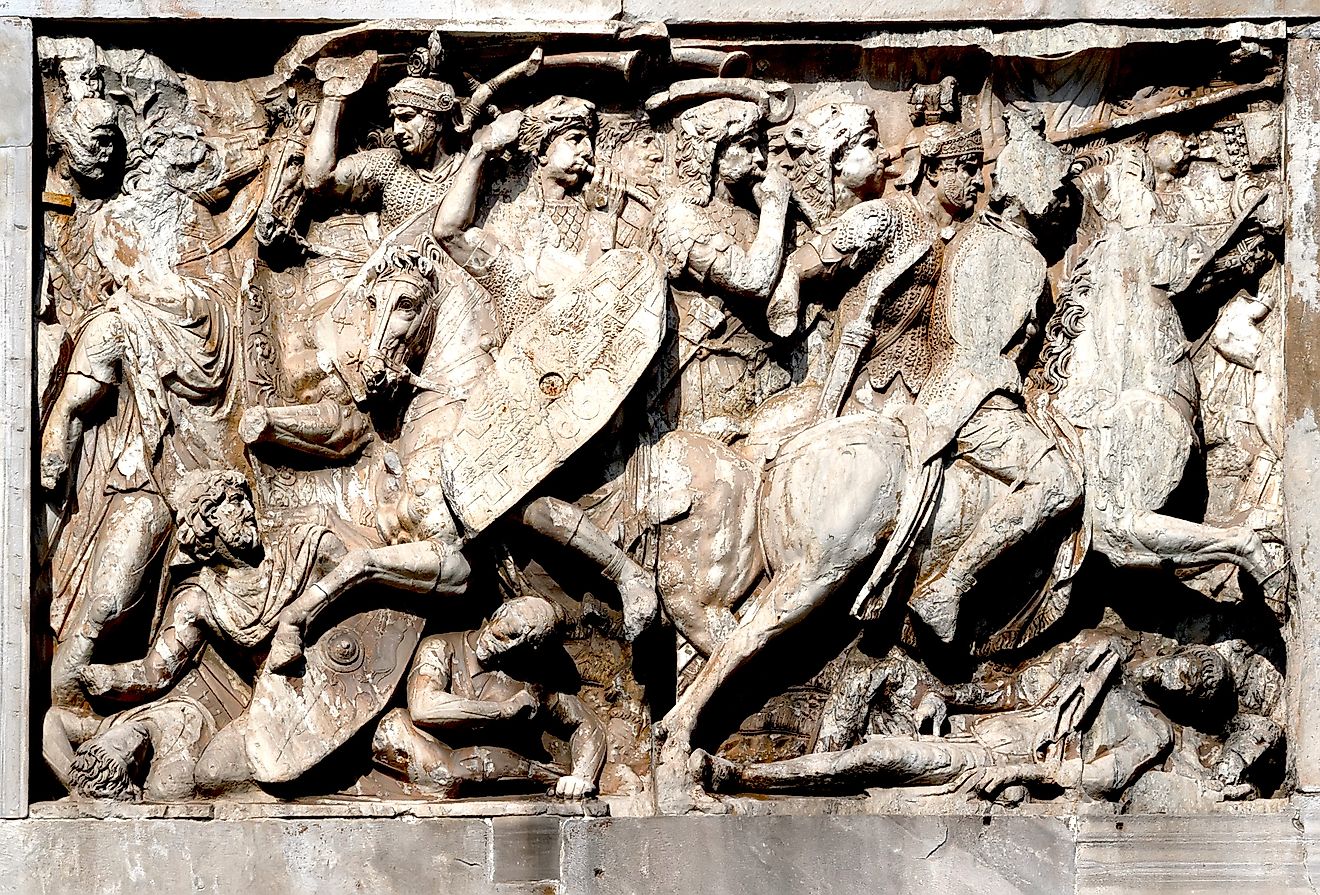
The Western Roman Empire was in trouble in the 5th century CE. Economic problems, territorial overreach, and barbarian invasions had left it in a precarious position. A particularly dangerous threat was Attila the Hun. He led a confederation of steppe peoples whose migration west out of Central Asia had carried them into Europe. In doing so, they posed a threat to the Romans, as well as the various Germanic tribes in the region. Attila then became an existential problem when he invaded the Roman province of Gaul in 451 CE. The Romans responded under General Flavius Aetius, who assembled an alliance of Visigoths, Franks, and other Germanic tribes to push out the Huns.
The subsequent battle, known as the Battle of the Catalaunian Plains, occurred in northern Gaul. Almost every detail is heavily contested due to the limited number of ancient sources that provide conflicting accounts. However, it is generally agreed that the battle was an incredibly bloody affair. Theodoric I, King of the Visigoths, was killed during the fighting. The sources also concur that the engagement ended with Attila's withdrawal from Gaul. Between 100,000 and 165,000 people possibly died, though these numbers are impossible to verify. The Battle of the Catalaunian Plains was arguably the last major victory for the Western Roman Empire before it fell in 476 CE.
What the Bloodiest Battles Reveal
Reliable casualty figures are difficult to come by for any of these engagements. Ancient writers had every reason to exaggerate, and most of them composed their accounts long after the fighting ended. The consequences, however, are far easier to establish. Gaugamela ended Achaemenid rule within a year, while Cannae killed tens of thousands of Romans in a single afternoon and still left the Republic standing. Carthage suffered something rarer than a battlefield defeat, since the Romans demolished the city and enslaved everyone left in it. The victory over Attila, meanwhile, came only twenty-five years before the Western Roman Empire collapsed entirely. Studying the bloodiest battles in ancient history, therefore, shows how quickly the ancient world could be remade, and how much of what we know about it rests on a handful of surviving accounts.