How Roman Generals Were Promoted
Rome had no military academy. No peacetime officer corps. No separation between military and political careers. A Roman general was a politician handed an army for the year, as part of a longer political career that ran through both civilian and military offices in a strict sequence. Becoming a general meant climbing the political ladder, winning elections to the magistracies that came with command attached, and surviving long enough to be assigned a province or a war. Wealth, family name, battlefield reputation, and connections all mattered. Military ability mattered too, but it rarely got anyone anywhere on its own.

The Cursus Honorum: The Path Of Honors

The career ladder had a name. Romans called it the cursus honorum, the "path of honors," and starting in 180 BC it ran on a fixed schedule. The Lex Villia Annalis, sponsored that year by the tribune of the plebs Lucius Villius Annalis, set minimum ages: 30 for quaestor, 36 for aedile, 39 for praetor, 42 for consul, with a two-year gap required between curule offices. It also required ten years of prior military service at the equestrian level (or sixteen as an infantryman) before a candidate could even stand for the quaestorship. Sulla tightened the rules in 81 BC after Marius had broken every age limit on the books across seven consulships. Power lived in two offices: praetor (six per year in the middle Republic, eight after Sulla) and consul (two per year). Both got armies during their elected year and afterward as propraetors and proconsuls in the provinces. That is where the famous Roman commands started.
Military Service Came First
Every aspiring senator had worn a uniform before he ran for office. The entry-level role was tribunus militum (military tribune), a junior officer in a legion. Each legion had six. They shared command duties under the senior commander, drew good staff assignments, and learned how an army worked from the inside. A young aristocrat of 18 to 22 might spend several years in that role, often attached to a senior relative or family ally governing a province. Not glamorous, but standard. Pompey began under his father in the Social War (91 to 87 BC) at age 17, which is partly why his career later moved so much faster than anyone else's.
The Triumph And The Acceleration Of Careers

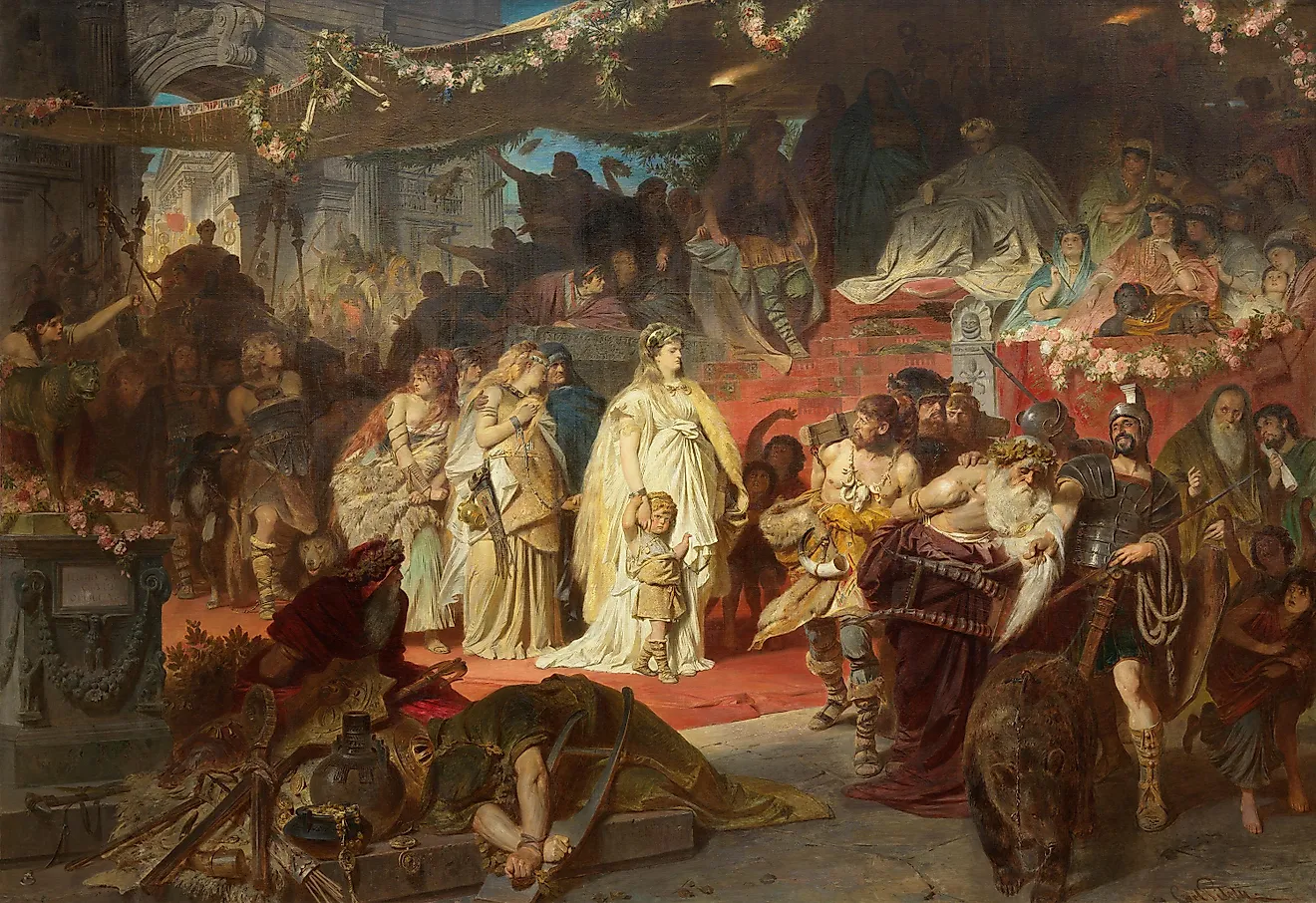
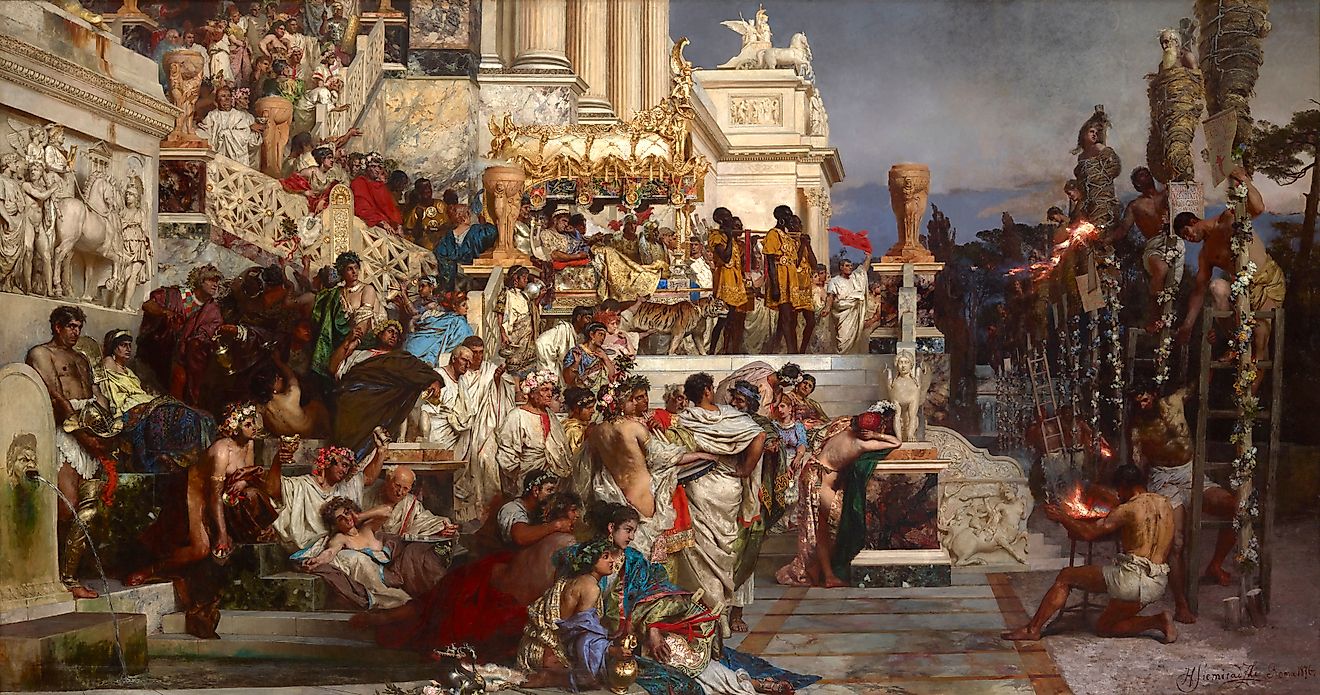
The triumph was the highest honor an army commander could get, and the format was specific. A parade through Rome ended at the Temple of Jupiter Optimus Maximus on the Capitoline Hill. The victorious commander rode a four-horse chariot at the head of the procession, face painted red in imitation of Jupiter, wearing the toga picta (purple embroidered with gold). His soldiers marched behind him, displaying captured treasure and chained prisoners. Tradition held that a slave rode in the chariot whispering "memento mori" (remember you are mortal) into his ear, in case the commander started to believe his own publicity. The Senate had to authorize a triumph, and the victory had to meet specific criteria. Triumphs were rare, expensive, and politically explosive. Pompey demanded one from the dictator Sulla in March 81 BC, for victories in Sicily and Africa during Sulla's civil war. Pompey was 25, had never held a magistracy, and was still technically a Roman knight rather than a senator. Nobody at his age and rank had ever received a triumph. Sulla refused. Pompey, who had not yet disbanded his army, appeared at the gates of Rome. Sulla relented. The episode set the template for the next century: a victorious commander camped outside the city with loyal troops generally got what he wanted.
Family, Wealth, And The "New Men"
The Republic ran on inherited names. Most senators came from families that had produced senators for generations, and a man whose ancestors had never held office was a novus homo ("new man"), a label that followed him through his entire career. Cicero, consul in 63 BC, was a famous one; he described his own election as "almost the first in living memory" of someone from outside the noble families. The harder-edged military example is Gaius Marius. He held the consulship seven times (107, 104, 103, 102, 101, 100, and 86 BC), defeated the Cimbri and Teutones at Aquae Sextiae in 102 and Vercellae in 101, and came from a non-senatorial family in the small Italian town of Arpinum, the same town that would later produce Cicero. He got there on patronage (early backing from the powerful Caecilii Metelli family) plus a string of victories big enough to override the Republic's preferences. One scholarly count finds only about five to seven novi homines who reached the consulship across the 167-year span between 300 and 133 BC. The aristocracy kept its doors mostly closed.
The Marian Reforms And The Loyalty Problem

What Marius did with his consulships mattered more than the consulships themselves. In 107 BC he reformed Roman military recruitment. Before Marius, the legions drew only from property-owning citizens who served for fixed campaigns and returned to their farms when the war ended. Marius opened recruitment to the capite censi, the urban poor without property, with sixteen-year service terms (later twenty), no farms to return to, and a strong personal dependence on their general for a land settlement in a conquered province at the end. The army stopped being a citizen militia. It became a long-service professional force whose practical loyalty ran to whoever commanded it, not to the Roman state in the abstract. The consequence showed up almost immediately. Sulla led a Roman army against Rome itself in 88 BC, the first general ever to do so. Pompey, Caesar, Mark Antony, and Octavian all used the same dynamic over the next sixty years. The civil wars of the late Republic happened because successful generals had armies that would march on Rome for them.
How Augustus Tried To Fix It

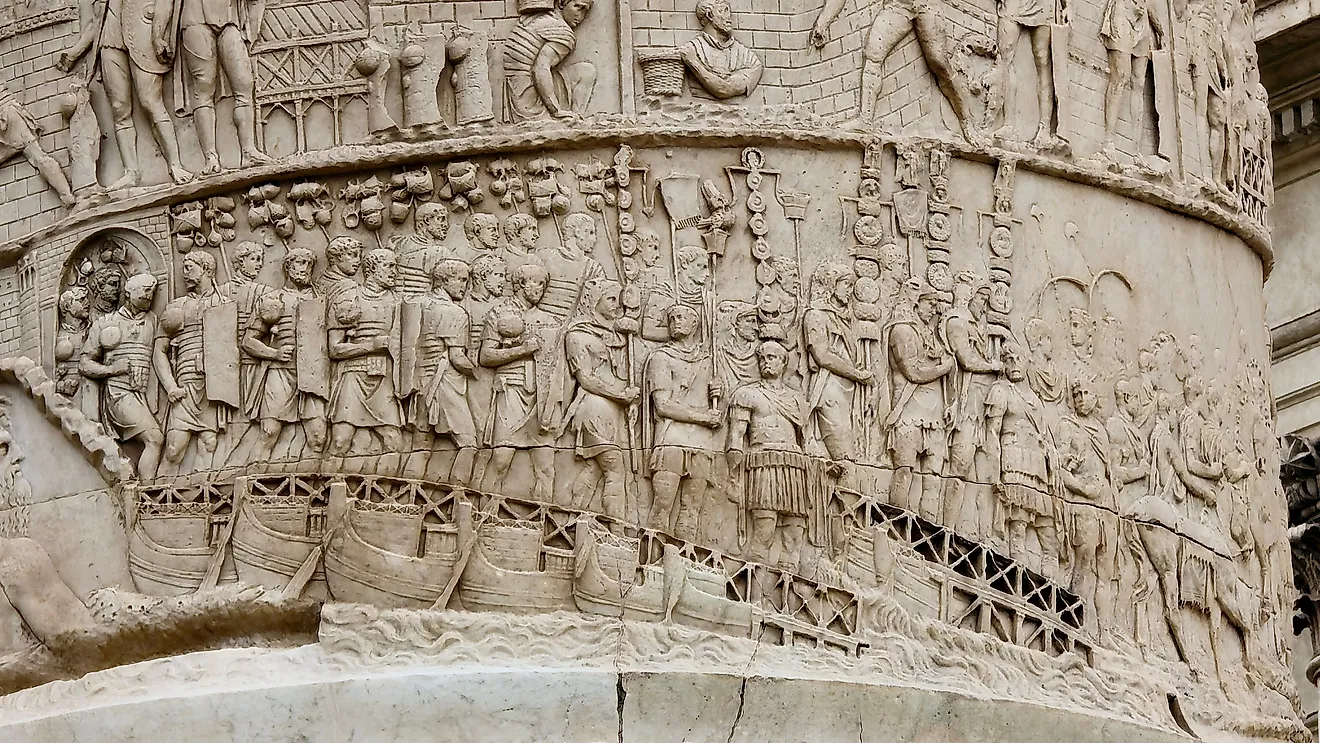
Augustus had a problem, and he knew it. He had taken supreme power exactly the way Sulla, Pompey, and Caesar had: as a victorious general at the head of personally loyal legions. After Actium in 31 BC and the Senate's grant of the title Augustus in 27 BC, he restructured the command system to make sure nobody else could do the same thing to him. Each legion would now be commanded by a legatus legionis (legate), a senator appointed personally by the emperor, normally a former praetor in his late thirties to mid-forties. The legate's official deputy was the tribunus laticlavius, a broad-stripe tribune who was usually a young senator at the start of his career and rarely the real military authority. The real professional in the legion's senior staff was the praefectus castrorum (camp prefect), a long-serving veteran promoted from the centurionate into the equestrian class, often after years as primus pilus. Five tribuni angusticlavii (narrow-stripe equestrian tribunes) filled out the staff. Pay, terms of service, and pension were standardized. Soldiers swore a personal oath of loyalty to the emperor on enlistment and each anniversary. Service was a fixed 25-year term with a known retirement settlement. The whole structure was designed to point loyalty at the throne rather than at the local commander.
The Career Officer Track
While senators commanded legions and governed provinces, the people actually running the army had come up through the ranks. Each imperial legion of roughly 5,000 men contained 59 or 60 centurions, each commanding a century of about 80 soldiers (Roman centuries were 80 men despite the name; the original 100-man unit had been replaced centuries earlier). The centurions of the first cohort outranked the others, in a strict pecking order topped by the primus pilus, the senior centurion of the legion, who commanded the first century of the first cohort. A career started as a legionary, moved up to optio (deputy centurion), then centurion of a rear cohort, then up the cohort ranks, and eventually to primus pilus over twenty or twenty-five years. A primus pilus who survived to retirement was automatically promoted into the equestrian class, social privileges included, and often went on to serve as praefectus castrorum in another legion. A handful of equestrian career officers eventually became praetorian prefects or governors of non-senatorial provinces. The top legionary commands remained senatorial throughout the early Empire, but the centurionate was one of the few real avenues of social mobility in the Roman world.
When Generals Became Emperors Anyway

Augustus's system was designed to keep ambitious generals away from the throne, and for most of the first century it worked. The underlying problem (a successful general at the head of an army that personally owed him everything) did not go away. It came back hard in AD 69, the Year of the Four Emperors, when the legions made and unmade Galba, Otho, Vitellius, and finally Vespasian inside twelve months. Vespasian had risen through the standard senatorial cursus before being given the command in the Jewish War; on July 1, 69, his eastern legions proclaimed him emperor at Alexandria, and he won the resulting civil war. Septimius Severus took the throne the same way in 193. The Crisis of the Third Century (235 to 284) produced a sequence of soldier-emperors raised by their troops and killed off by them in turn, with around 50 official and unofficial claimants in 49 years. Diocletian's tetrarchic reforms of 293 split imperial command across four co-emperors specifically to dilute the temptation for any single general to march on the capital. By the late Empire, successful commanders such as Constantine (proclaimed emperor by his troops at York in 306 after his father Constantius's death) had effectively replaced the Republican magistracies as the standard path to supreme authority. The Roman experiment with separating military command from supreme political power, never quite clean even in the Republic, was over.