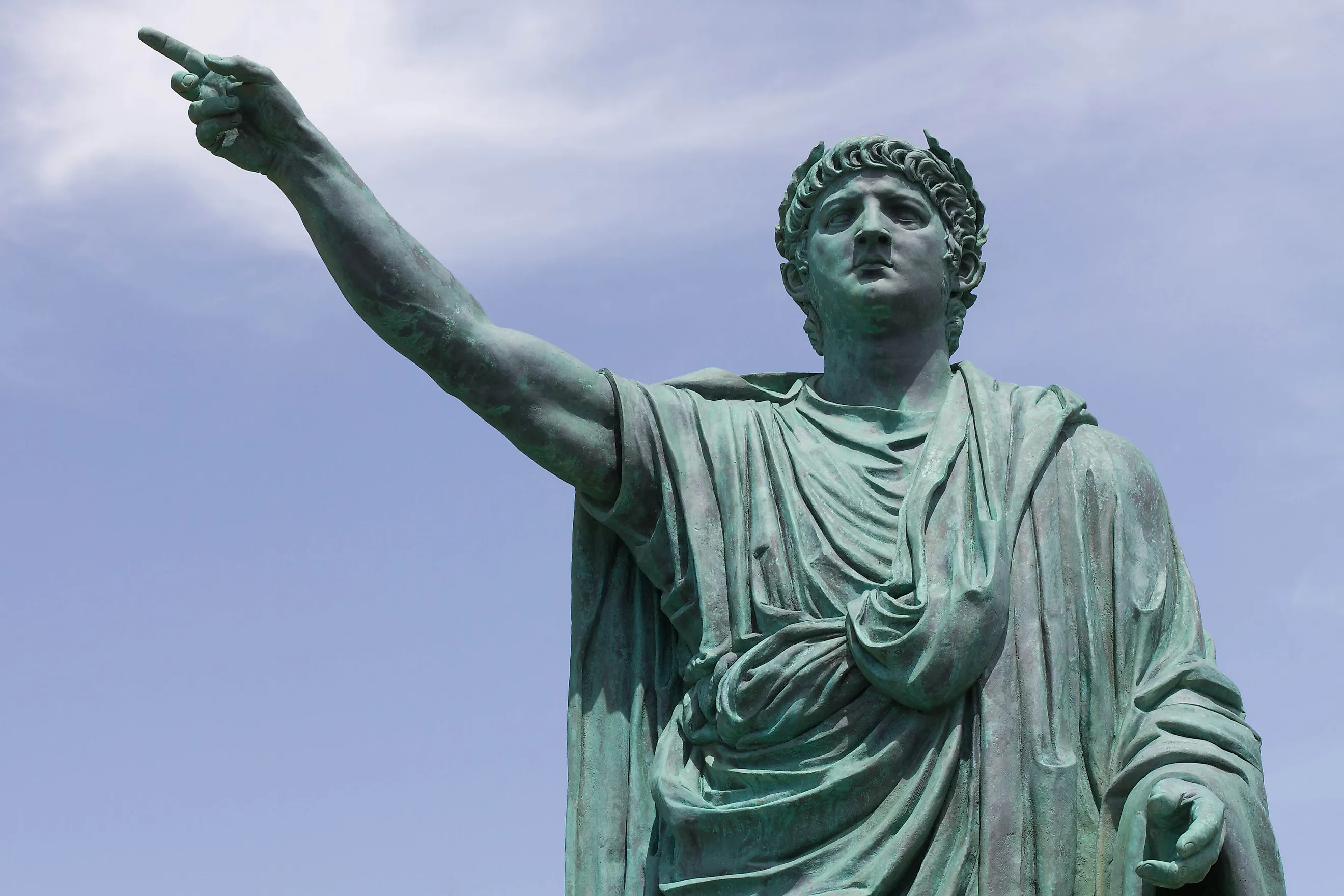
How Nero Became One Of Rome’s Most Infamous Emperors
The Roman Empire’s fortunes rose and fell with its leaders, and the infamous Nero's reign illustrates both the opportunities and dangers of imperial rule. Nero began his reign in 54 CE with several popular reforms and a period of relatively effective government. The tides soon turned, however, as political rivalries, executions, and controversies damaged his reputation. The Great Fire of Rome in 64 CE unleashed a wave of tyranny that exposed how out of touch he truly was. A series of revolts ultimately led to his suicide in 68 CE, ending the Julio-Claudian dynasty and plunging Rome into a year of civil war and in far worse shape than it had been a decade prior.
Early Life

Nero was born Lucius Domitius Ahenobarbus on December 15th, 37 CE. From the beginning, he appeared destined for greatness. His mother, Agrippina, was one of the most ambitious women in Roman history. The sister of Emperor Caligula and the great-granddaughter of Rome’s first emperor, Augustus, she belonged to one of Rome's most influential families and sought the emperorship for Nero.
Problems arose when Caligula, himself one of Rome’s most unpopular emperors, was assassinated in 41 CE. As the family fell out of political favor, Agrippina took drastic measures to rebuild their position. In 49 CE, she married her uncle, Emperor Claudius, and successfully secured Nero's adoption as his heir. When Claudius died under mysterious circumstances that remain debated by historians in 54 CE, the 16-year-old Nero became emperor.
Nero Becomes Emperor

Initially, Nero’s tenure looked promising. Young and impressionable, he generally listened to advisors like Seneca the Younger and Sextus Afranius Burrus. During the first five years of his reign, taxes were reduced, corruption was limited, and the empire was relatively peaceful. In line with his personal interests, Nero also expanded public entertainment. While his focus on the arts would later prove problematic, these early measures were popular with everyday Romans. These fruitful years of Nero's reign came to be known as the Quinquennium Neronis, or Five Good Years of Nero.
Securing Power

As Nero grew older and more assertive, however, he became less willing to listen to his advisors and even saw them as a threat. The most significant conflict emerged with his mother. While Nero had sought Agrippina’s advice for most of his life, he increasingly resented her influence. Tensions reached a boiling point when Nero entered into a relationship with Poppaea Sabina. Agrippina disliked Poppaea’s influence over her son and feared that she was going to lose her own political power.
Deciding that Agrippina was a threat, Nero ordered her assassination in 59 CE. This murder shocked Roman society. While violent struggles were common amongst Roman elites, killing one’s own mother was still considered beyond the pale. When combined with the mysterious death of Britannicus in 55 CE, Claudius’ son and another rival to Nero, the young emperor developed a reputation for being ruthless.
Artistic Distractions

Nero's fascination with the arts and public performance further strained his relationship with Rome's traditional elite. In Roman society, public performance was stigmatized and considered undignified for members of the upper class, particularly an emperor. Nero sought to end these taboos and frequently sang, acted, and recited poetry before audiences. He also dedicated huge portions of the imperial treasury to cultural patronage. The elites, particularly the Senate, criticized his behavior and viewed it as embarrassing. However, it did help him connect with the common people. Over time, however, growing political tensions would erode that support.
The Great Fire Of Rome

In July 64 CE, a devastating fire swept through Rome and destroyed much of the city. There are several misconceptions about this event. Legend claims that “Nero fiddled while Rome burned," but this was impossible since violins had not been invented yet. Many Romans also suspected that Nero caused the fire. Nero’s response to the tragedy was nevertheless disastrous. Now that the fire had made room in the center of Rome, he built the opulent Domus Aurea, or Golden House. Containing artificial lakes, gardens, and a statue of Nero himself, many Romans believed that he was exploiting the event for personal luxury.
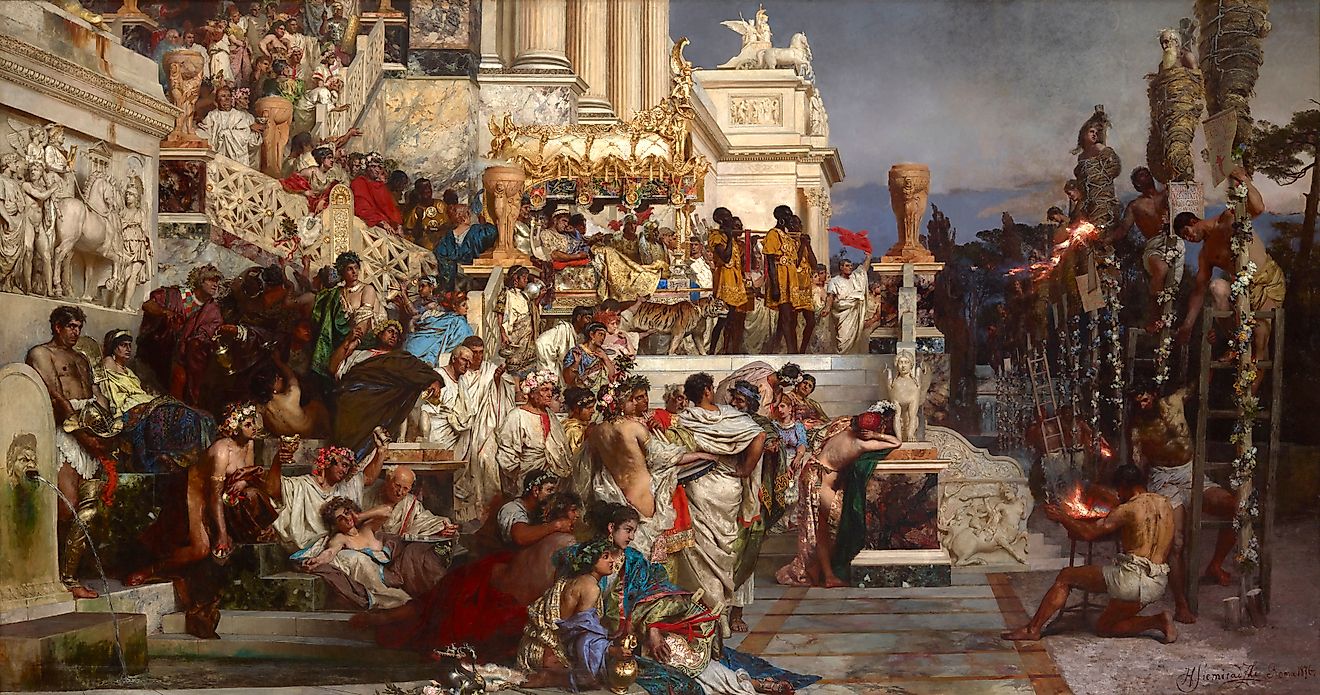
Nero also blamed the fire on Christians. At the time, Christianity was a small, misunderstood, and often unpopular religion, making its followers an ideal scapegoat. Christians were crucified, mauled by animals, and even burned alive as punishment for their supposed responsibility.
The persecution appears to have backfired. According to the historian Tacitus, many Romans came to view the punishments as excessively cruel and began to sympathize with the victims, even if they did not support Christianity itself. Rather than silencing criticism, the episode further damaged Nero's reputation.
Growing Tyranny, Suicide, And Legacy

The years following the fire only saw Nero’s despotic tendencies and paranoia grow. For instance, a failed assassination attempt in 65 CE, known as the Pisonian Conspiracy, resulted in Nero ordering a wave of executions and forced suicides. As the emperor became increasingly isolated, taxation and spending problems reached a breaking point. All this culminated in a rebellion in 68 CE. The provinces of Gaul, Spain, and Africa revolted, and Servius Sulpicius Galba declared himself a rival emperor.
With enemies closing in from all sides, Nero fled Rome. He then committed suicide on June 9th, 68 CE. Nero’s death triggered a civil war known as the “Year of the Four Emperors." During 69 CE, four emperors rose and fell as Rome descended into conflict. While Vespasian eventually restored stability, this political upheaval was a testament to the dysfunctional state in which Nero left the empire.