The Roman Army's Worst Defeats
Contrary to popular belief, the Roman Army wasn't unbeatable. Despite arguably being one of the most powerful military forces of the ancient world, it experienced many devastating and sometimes humiliating defeats. Consider the Battle of Cannae (216 BCE), which nearly resulted in the collapse of the entire Roman Republic, or the Battle of the Teutoburg Forest (9 AD), which ended Roman plans to expand into Germania. Exploring such defeats helps paint a more holistic picture of the Roman Army and Ancient Rome in general.
The Battle Of Cannae (216 BCE)

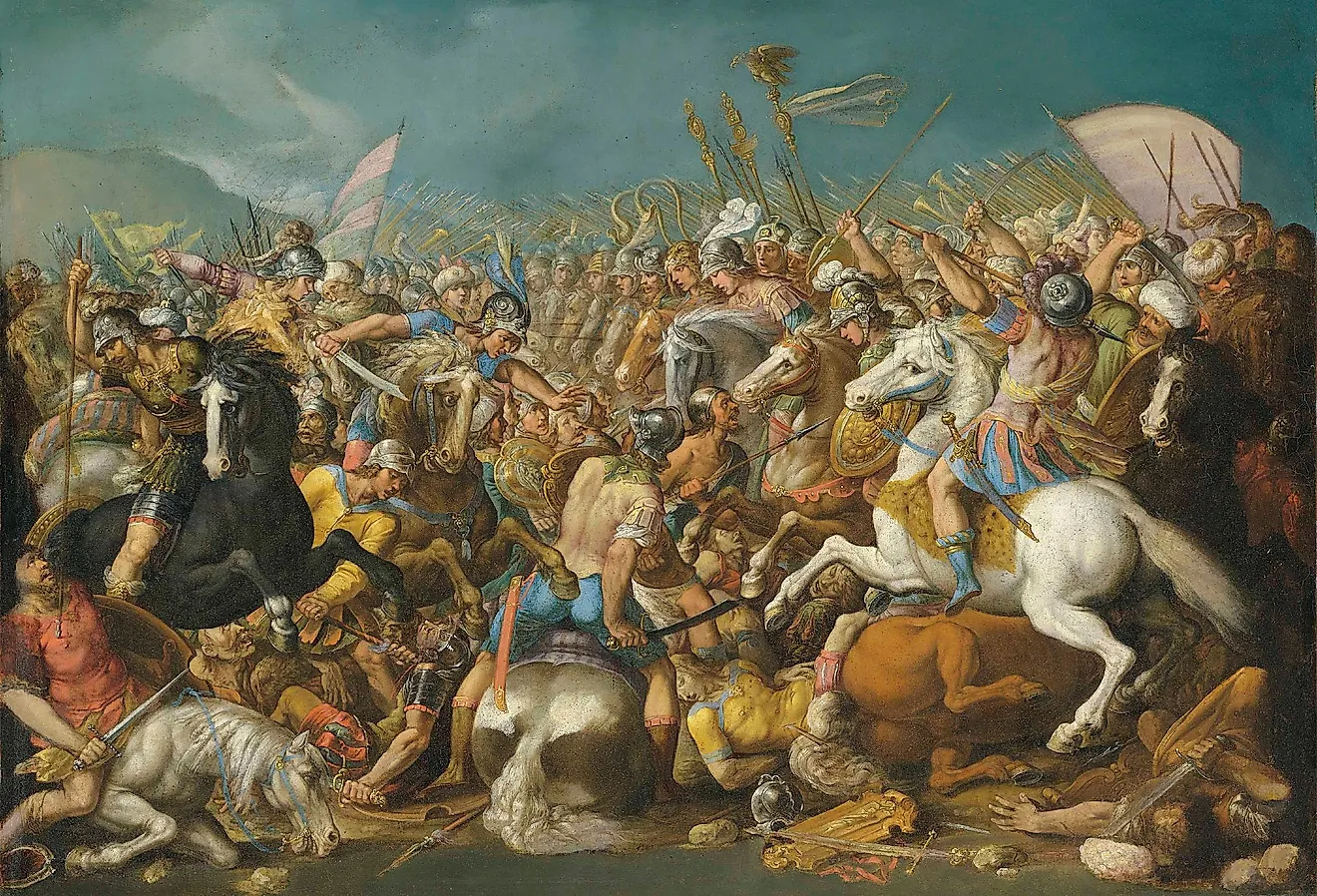
Following their defeat in the First Punic War (264 to 241 BCE), the Carthaginians plotted revenge. These plans came to fruition in 218 BCE when General Hannibal Barca marched over the Alps with his army and invaded Italy. Hannibal's invasion stunned Rome, but Roman armies confronted him repeatedly before assembling an exceptionally large force for the campaign of 216 BCE. The Roman army assembled was between 80,000 and 86,000 soldiers to push the Carthaginians out. The two sides met near the small village of Cannae. Despite being outnumbered, Hannibal had a plan and attempted to use the Roman numerical advantage against them. Hannibal placed part of his infantry in a projecting center that gradually gave ground under the Roman advance, drawing the tightly packed Roman formation deeper into his line. This allowed Hannibal's stronger troops, stationed on the edges, to move in and surround the Romans. With nowhere to run, the battle quickly turned into a massacre, and it is generally reported that between 50,000 and 70,000 Romans were killed. The scale of the defeat was so devastating that it prompted a rethinking of Roman military strategy. Rome increasingly avoided risking another massive army in a decisive pitched battle with Hannibal, instead relying on a longer war of attrition.
The Battle Of Arausio (105 BCE)

While the Battle of Cannae is often considered the worst military defeat in Roman history, it may have been surpassed by the Battle of Arausio. Fought against two migrating Cimbri and Teutones tribes in 105 BCE, the Battle of Arausio became one of Rome's most catastrophic military defeats. Their army was actually two military forces split between generals Quintus Servilius Caepio and Gnaeus Mallius Maximus. Their rivalry prevented effective cooperation between the two Roman forces, allowing their opponents to defeat them in succession. They first crushed Caepio's troops, after which they defeated Maximus' army. Approximately 80,000 Romans were killed in total, and around 40,000 non-Roman auxiliary troops also died.
The Battle Of Carrhae (53 BCE)

During the 50s BCE, the Roman Republic was ruled by three men: Julius Caesar, Pompey the Great, and Marcus Licinius Crassus. Known as the First Triumvirate, they used their combined wealth and military influence to bypass Republican institutions and enact the policies they wanted. However, the alliance was unstable. One reason for this was Crassus's insecurity about his military accomplishments. As Caesar won battle after battle in his Gallic Campaign, Crassus wanted to achieve similar levels of glory. Crassus left Rome for his eastern command in late 55 BCE and invaded Parthian territory the following year.
For the first year, things went relatively smoothly. The tide eventually turned with the Battle of Carrhae. Rather than fighting on advantageous terrain, Crassus engaged the Parthians on wide-open plains. Doing so allowed them to take advantage of their horse archers and superior cavalry. About 20,000 Romans were killed in the battle, and another 10,000 were captured. Crassus himself was killed during failed negotiations in the aftermath. Without his moderating presence, the First Triumvirate crumbled, and Rome descended into civil war.
The Battle Of The Teutoburg Forest (9 AD)

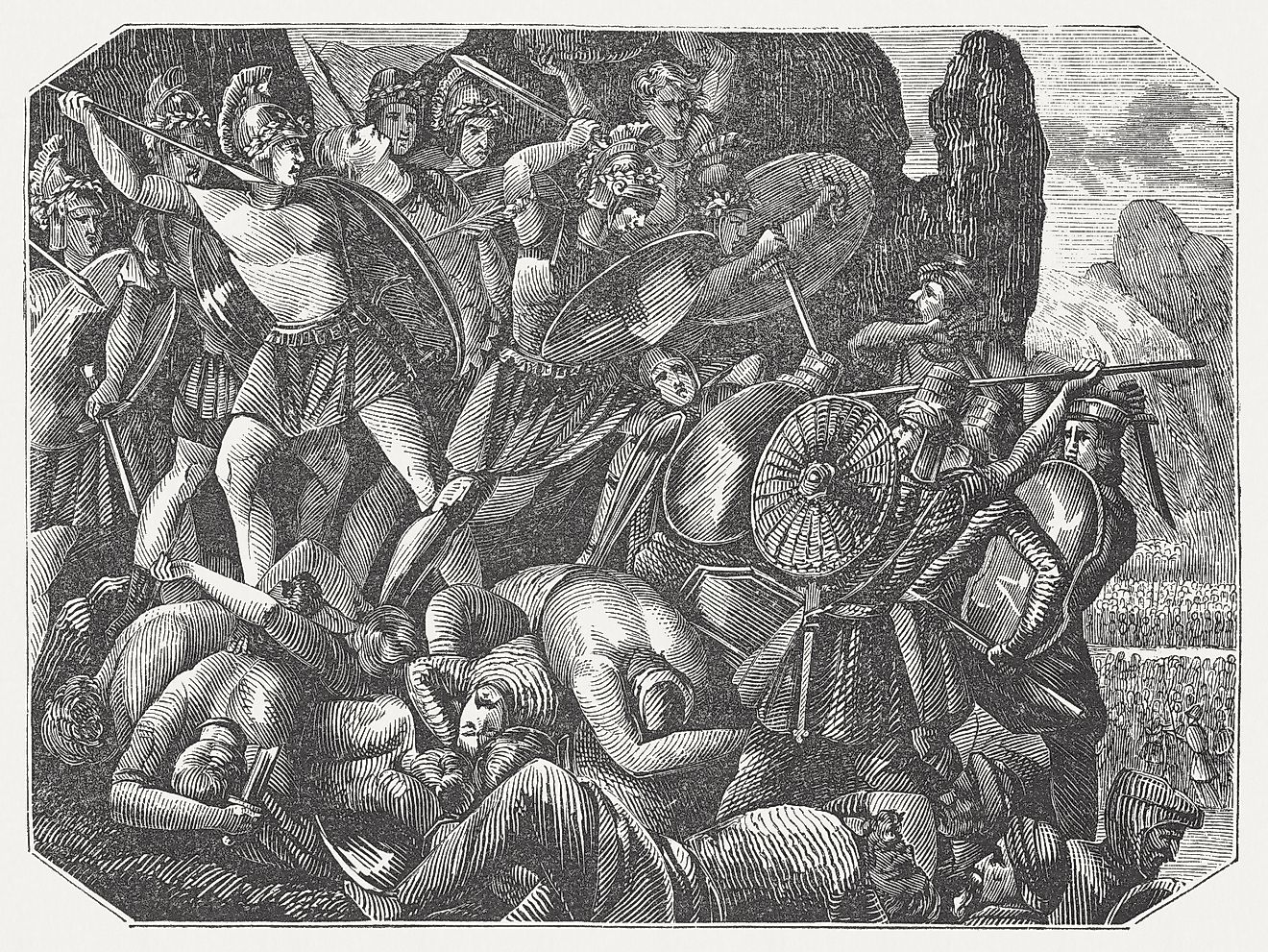
Ever since Julius Caesar made incursions into Germania in the 50s BCE, the Romans aimed to permanently settle the region. They finally began to do so in 12 BCE, building settlements and infrastructure along the Rhine River. Settling Germania also required building alliances with local tribes. This seemed to be going well until 9 AD, when a Germanic chieftain, Arminius, lured three Roman legions, commanded by Publius Quinctilius Varus, into the Teutoburg Forest. Heavy rain had turned the forest tracks into mud, making it nearly impossible to move. With the Romans incapacitated, a coalition of Germanic tribes ambushed them. Over the next several days, between 15,000 and 20,000 Romans were killed. Varus reportedly committed suicide. The defeat was a severe blow to Roman ambitions east of the Rhine, although Roman armies returned in force under Germanicus before the empire ultimately consolidated the Rhine as its principal frontier.
The Battle Of Edessa (260 AD)

During the mid-200s AD, the Roman Empire was in trouble. From 235 to 284 AD, it faced the Crisis of the Third Century, a period marked by constant civil war, barbarian invasions, and economic collapse. At the same time, a new power was growing in the southeast: the Persia-based Sasanian Empire. Under King Shapur I, they invaded Rome several times and even captured important cities like Antioch. By the late 250s AD, the situation was so severe that Emperor Valerian personally intervened.
In 260 AD, Valerian marched east with a large Roman army to confront Shapur I, whose forces were threatening the Roman-held cities of Carrhae and Edessa. Valerian's army appears to have been weakened by disease before confronting Shapur, but the precise circumstances of the Roman defeat remain uncertain; Shapur's own inscription places the decisive encounter between Carrhae and Edessa. The ancient sources don't say what happened during the final battle for the city, but we do know it ended with Valerian's capture. He spent the rest of his life in Sasanian captivity. The first Roman Emperor ever to be captured alive in battle, this humiliation precipitated even more instability within the Empire.
Why These Defeats Matter
The Roman Army's worst defeats altered the historical trajectory of Rome itself. The Battle of Cannae led to a shift toward a more defensive and attrition-focused military strategy. After the Battle of Arausio, the army underwent a series of professionalization-based reforms. Following the Battle of Carrhae, the First Triumvirate fell apart, setting off a chain reaction that ended with the rise of the Roman Empire. The Battle of the Teutoburg Forest severely undermined Rome's ambitions in Germania, although major campaigns east of the Rhine continued for several years afterward. Finally, the Battle of Edessa was arguably the most humiliating defeat in Roman military history, culminating in the capture of Emperor Valerian.