The American Rivers With The Most Alligator Gar
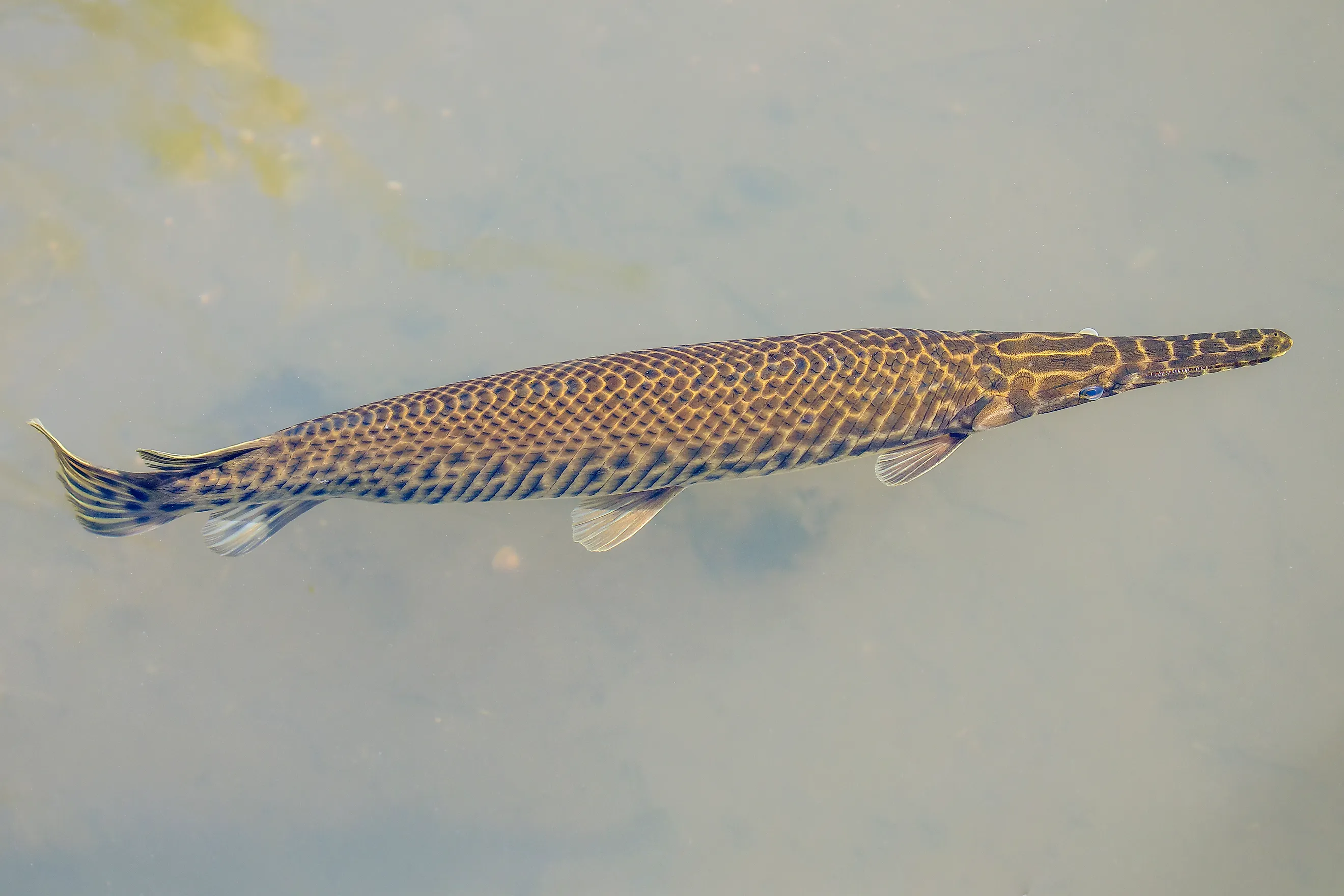
On February 14, 2011, a commercial fisherman from Vicksburg, Mississippi, pulled up his last net of the morning and found a 327-pound alligator gar inside. It stretched more than eight feet. Fish like that are why anglers call the alligator gar a river monster. Only the white sturgeon grows bigger in North American fresh water, and a seven-foot trophy, according to Texas Parks and Wildlife, can be 40 years old.
Alligator gar once ranged as far north as the lower Ohio and Missouri rivers. Today the biggest fish hold on in the slow rivers of the Gulf Coast states, and state records and agency surveys show where. These seven rivers, from Texas to Alabama, are where the giants still live.
Trinity River, Texas

If one river can lay claim to the most alligator gar, it is the Trinity. A Texas Parks and Wildlife Department study of more than 850 fish caught between 2007 and 2014 found that the middle Trinity River supports one of the premier trophy alligator gar fisheries in the world. Studies of other river systems reported about ½ the density found in the Trinity. Biologists estimated roughly 8,000 gar longer than about three and a half feet, and more than 23 percent of the fish sampled were trophy-sized, longer than about six feet.
The Trinity rises near Dallas and is the longest river with both its source and mouth in Texas. Its record book matches its Texas-sized reputation. Marty McClellan arrowed a 290-pound, eight-foot gar from the Trinity in July 2001, which remains the Texas bowfishing record. Below the dam at Lake Livingston, TPWD researchers tracked tagged gar along the 112-mile stretch to Trinity Bay, passing the bottomland forests of the Trinity River National Wildlife Refuge. The fishery is popular enough that Texas now limits harvest of big gar from the Trinity through a permit drawing, so most trophy fish here are photographed and released.
Mississippi River, Mississippi

That record fish came from the Mississippi River floodplain. Commercial fisherman Kenny Williams was surprised to find the giant tangled in his gill net on Chotard Lake, an oxbow lake of the Mississippi in Issaquena County. Biologists with the Mississippi Department of Wildlife, Fisheries and Parks (MDWFP) verified the fish at 327 pounds and 8 feet, 5¼ inches long. Museum staff estimated it was between 50 and 70 years old.
Unfortunately, because the fish was netted, it does not count as an official angling record. Williams donated it to the state, and its skin mount went to the Mississippi Museum of Natural Science in Jackson to be preserved for display.
The main river holds its own record, too. Earl Stafford caught a 215-pound alligator gar on rod and reel from the Mississippi near Natchez in May 2003, and it remains the state's rod-and-reel record. MDWFP notes that alligator gar have declined across much of their range but are most common in south Mississippi. They typically live in large river systems but also use oxbow lakes, bayous, and estuaries, which is exactly the kind of backwater where the record fish was found.
Rio Grande, Texas
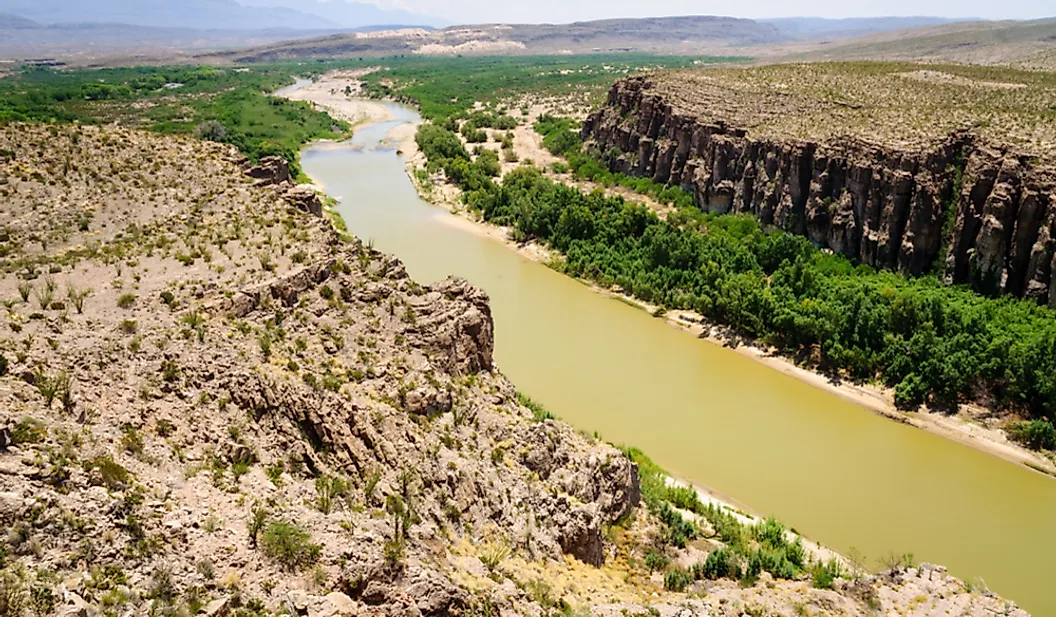
For more than 70 years, the most famous alligator gar in the world came from the Rio Grande. In 1951, World War II veteran Bill Valverde was fishing for catfish from the riverbank when a giant gar took his bait. The fish measured 93 inches and weighed 279 pounds on a local meat market's scale. Valverde reportedly drove the prize home tied to his spare tire with its tail dragging on the road. The International Game Fish Association listed it as the all-tackle world record.
That record finally fell in September 2023, when Kentucky angler Art Weston landed an incredible 283-pound gar on six-pound line at Sam Rayburn Reservoir in East Texas. It's Valverde's fish, however, that still stands as one of the most celebrated catches in Texas fishing history.
Today, big gar still roam the river. Falcon Reservoir was built on the Rio Grande in 1954 and straddles the border with Mexico. TPWD surveys have rated its alligator gar population excellent for size and age structure. Gar meat is popular along the border, and that tradition is part of why Falcon is the only Texas water where anglers may keep five alligator gar a day instead of the statewide limit of one.
Red River, Louisiana, Arkansas, And Oklahoma

The Red River has produced record alligator gar in three different states along its course. The Louisiana state record still belongs to Jimmy L. Thompson, who caught a 179-pound gar on rod and reel in the Red River in May 1997. Same month, same river: James Strickland pulled in a 134-pounder, which still ranks third in the state's record book.
Upstream in Arkansas, the Arkansas Game and Fish Commission (AGFC) says the largest fish ever caught in the state was a hefty 241-pound alligator gar from the Red River. That monster outweighs the next-largest Arkansas catch, a 116-pound blue catfish, by more than 100 pounds. AGFC biologists netting the Red River in a single six-hour session captured 67 alligator gar, the biggest measuring 7.5 feet.
Finally, in Oklahoma, the Red River set back-to-back state records in 2006 and 2011, the second a 192-pound fish from Love County. Today's Oklahoma record, a 254-pound gar caught in 2015, came from Lake Texoma, the reservoir the Red River forms behind Denison Dam. Visitors can take in the lake from Eisenhower State Park on the Texas shore.
White River, Arkansas

In the late 1930s and early 1940s, anglers came to Arkansas from all over the world to catch giant alligator gar on the White River, according to AGFC. The river's lower stretch still holds big fish in the 21st century. According to the book Fishes of Arkansas, in 2004, a commercial fisherman's hoop net pulled an 8-foot, 2-inch gar weighing 240 pounds from the lower White River at St. Charles. St. Charles is also home to the visitor center for Dale Bumpers White River National Wildlife Refuge, which protects roughly 160,000 acres of bottomland forest along the lower White before it meets the Mississippi River. Its lakes, sloughs, and bayous are classic gar water.
These fish may also be behind one of the White River's best-known legends. Since 1915, people near Newport have reported spotting a huge gray creature rolling on the surface. In 1973, the Arkansas General Assembly created the White River Monster Refuge, making it illegal to harm the beast inside its boundaries. Many observers believe large, breaching alligator gar could explain at least some of the strange sightings. Today, AGFC requires a free Alligator Gar Permit to fish for the species and a trophy tag, awarded by drawing, to keep one longer than 36 inches.
Yazoo River, Mississippi

The Yazoo River drains the Mississippi Delta for about 190 miles before joining the Mississippi at Vicksburg. It's the site that produced the heaviest alligator gar in Mississippi's record book. On June 24, 2011, Vicksburg firefighters Robert Belk and Randy Rippy were bowfishing below the Highway 465 bridge, downstream of the Steele Bayou Control Structure, when an enormous gar surfaced. Belk's young son, Talor, took the first shot, but the arrow bounced off the fish's armored scales. When the gar resurfaced, both men fired. Their arrows struck at the same time, and the pair eventually hauled it aboard.
It weighed in at 234 pounds, measured 7 feet, 2 inches long, and had a girth of 43½ inches. It easily beat the old 175-pound trophy record, which came from the Pearl River in 1993. MDWFP's trophy division recognizes fish taken with sport gear other than rod and reel, including bows, jugs, and trotlines.
MDWFP's Dennis Riecke said it was good to see that fish that size still live in the lower Mississippi River and Yazoo River basin. Visitors near the confluence can also explore Vicksburg National Military Park, where the bluffs above the river made Vicksburg the strategic key to the Mississippi during the Civil War and helped shape Mississippi history.
Tensaw River, Alabama

Alabama's alligator gar live mostly in the Mobile-Tensaw Delta, a roughly 250,000-acre maze of rivers, swamps, and marsh above Mobile Bay. The Tensaw River, a 41-mile distributary of the Mobile River, is one of the delta's main channels and the source of Alabama's two previous record gar. For years, Alabama's state record was held by two nearly identical fish of about 151 pounds, caught in 2004 and 2009.
That changed on Thanksgiving morning 2022. Keith Dees and his 15-year-old son, Huntley, were bass fishing in the Raft River, a channel of the same delta, when a huge gar rose to gulp air. After a grueling fight of roughly two hours, they landed a 162-pound, 84½-inch alligator gar. The Alabama Department of Conservation and Natural Resources certified it as the state record in January 2023, making it the largest freshwater fish in Alabama's record book.
Visitors can see the delta up close at Historic Blakeley State Park, where a boardwalk leads to a viewing deck over the Tensaw and delta boat tours explore the backwaters. Alabama allows anglers to keep one alligator gar per day.
Meet A Living Fossil

From the Trinity's trophy-rich bends to the quiet oxbows of the Mississippi, these seven rivers prove that true giants still swim in American waters. They also show how fragile those giants are. Alligator gar can take decades to reach trophy size, and several states now limit harvest to protect the biggest fish, so catch-and-release has become the norm for many gar anglers. Rules differ from river to river, so check the current regulations with each state's wildlife agency before you go. Then find a slow, muddy stretch of river, watch for a long, dark shape rolling at the surface, and get ready for the fight of your life.