How Many Great Lakes It Would Take To Fill The Mariana Trench
Somewhere between 19 and 62, and the reason for that embarrassing range is that nobody has ever agreed where the Mariana Trench starts. The five Great Lakes hold 22,684 cubic kilometers of water between them, a figure so well established you can look up each lake individually. The trench has a published length, a published width and a published depth, and no published volume at all, because the moment you try to calculate one you have to decide what counts as trench and what counts as ordinary seafloor. Pick the strict answer and you need 19 Great Lakes. Pick the generous one and you need 62. Both are defensible, which is a deeply unsatisfying thing to discover.
The Lakes Are The Easy Half
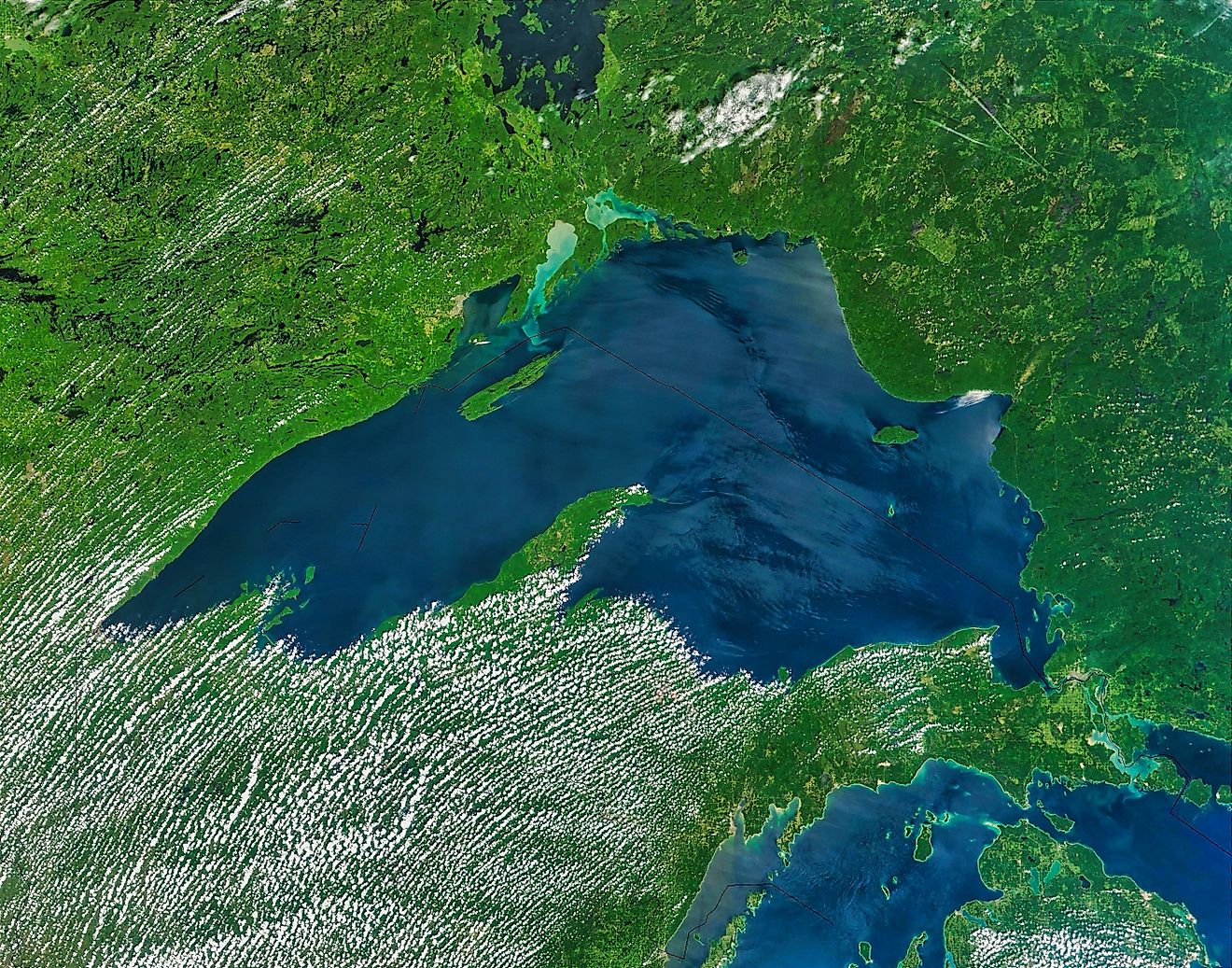
Start with the number nobody argues about, because it is the only solid ground in this entire article. Lake Superior holds 12,100 cubic kilometers, Michigan 4,920, Huron 3,540, Ontario 1,640 and Erie 484. Add them up and the Great Lakes contain 22,684 cubic kilometers of fresh water, roughly six quadrillion gallons and about a fifth of all the surface fresh water on the planet.
Superior alone accounts for over half of it, which is worth remembering whenever anybody treats the five as equals.
The Trench Has No Official Volume

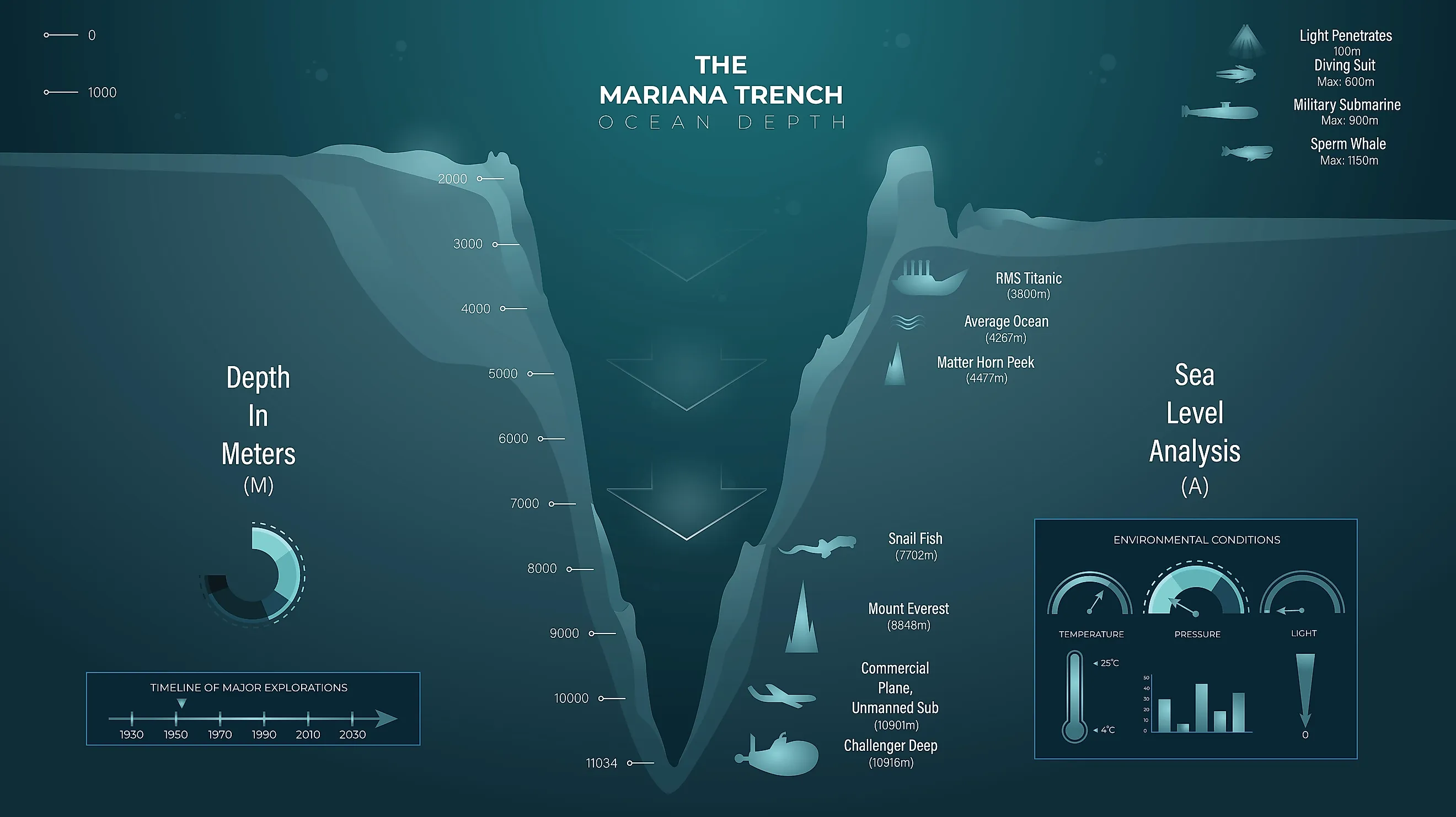
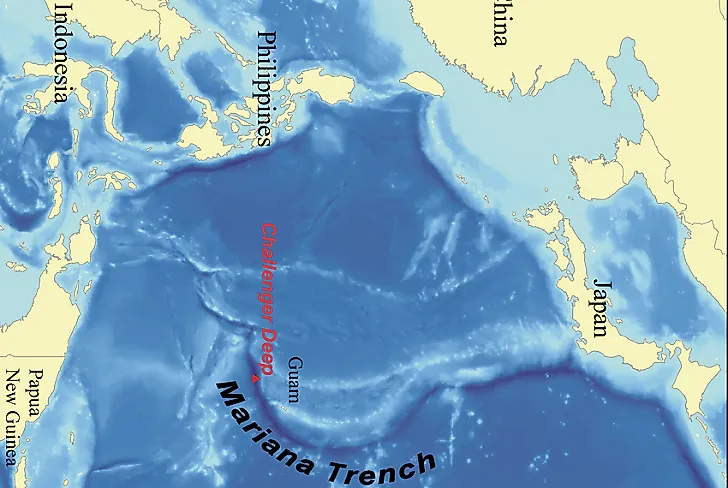
Here is the problem, and it is the same one that ruins most questions shaped like this. The Mariana Trench is crescent-shaped, about 2,550 kilometers long and 69 kilometers wide on average, reaching 10,935 meters at the Challenger Deep according to a 2021 revision. Those three numbers are solid. Multiply them together and you have made an enormous assumption, because a trench is not a box.
It is a V-shaped gash with sloping walls, and more awkwardly it has no lid. Where does the trench stop and the Pacific begin? There is no line on the seafloor, and your answer determines your arithmetic.
Answer One: Nineteen

The strictest reading treats the trench as the notch cut below the surrounding seafloor, which is what a geologist means by the word.
The abyssal plain around the trench sits roughly 6,000 meters down. The Challenger Deep reaches 10,935, so the trench proper is about 4.9 kilometers deep relative to the ground it is cut into. Treat the cross-section as a triangle, which approximates the V-shape, and you get roughly 434,000 cubic kilometers.
Divide that by the Great Lakes and the answer is 19.1. Nineteen Great Lakes systems, or about 36 Lake Superiors, to fill the notch.
Answer Two: Thirty-Eight

Lose the taper and treat the trench as a rectangular trough, which is wrong but instructive. The same length, width and depth without the triangular cross-section gives about 868,000 cubic kilometers, or 38.3 Great Lakes. That is double the first answer purely because of a decision about shape.
The real trench sits somewhere between these two, since the walls slope but not perfectly. Nobody should quote this figure as fact, and it is here to show how much the shape assumption matters.
Answer Three: Sixty-Two

Now the generous reading, which is what most people actually picture when they imagine filling a trench. If you mean emptying all the water above the trench from the sea surface down, the footprint is 175,950 square kilometers with an average water column of around eight kilometers. That comes to roughly 1.4 million cubic kilometers, or about 62 Great Lakes.
This version is the one that matches the mental image of a drained trench being refilled, and it is more than three times the geological answer. Same trench, same lakes, different question.
Why Any Of Them Is A Guess
This caveat deserves a section of its own, because all three numbers above are estimates built on assumptions rather than measurements.
Nobody has mapped the trench floor at the resolution needed to integrate a true volume. The 69-kilometer width is an average across a crescent that varies along its length. The surrounding seafloor depth varies. The Challenger Deep is one slot at the southern end and the rest of the trench is shallower.
Anybody quoting a precise trench volume to three significant figures has multiplied three numbers together and rounded confidently.
The Ocean Does Not Care Either Way
Zoom out one step and the whole exercise collapses into perspective. The global ocean holds about 1.35 billion cubic kilometers of water. That is roughly 59,500 Great Lakes, which makes the deepest trench on Earth a rounding error in its own neighborhood.
Pouring every Great Lake into the Mariana Trench would be a significant event for North America and essentially invisible from the Pacific's point of view.
Everest Fits With Room To Spare
The standard comparison for trench depth is the one everybody reaches for, and it does hold up. Mount Everest stands 8,848 meters. The Challenger Deep reaches 10,935. Drop the mountain in summit-up and you would still have more than two kilometers of water above the peak, which is deeper than most of the world's lakes are long.
It is a better image than any volume calculation, which is probably why everybody uses it.
Why These Questions Are Hard
The pattern here recurs across geography, and naming it explains a great many disagreeing sources.
Length, width and depth are measurements. Volume is a calculation, and calculations need boundaries. A lake has a shoreline that tells you where it stops. A trench has sloping walls that merge imperceptibly into ordinary seafloor, so the boundary has to be chosen rather than observed.
The same issue produces competing figures for coastline length, continental area and reservoir capacity. Whenever two sources disagree wildly about a volume, somebody has drawn a different line.
The Short Answer
It would take about 19 Great Lakes to fill the Mariana Trench if you mean the geological notch below the surrounding seafloor, and about 62 if you mean all the water sitting above it. The 22,684 cubic kilometers in the lakes is the only figure in that sentence anybody can verify.
And either way, Lake Superior would be doing more than half the work, the Pacific would not notice, and the Great Lakes would be gone. Which is probably the strongest argument against attempting it.