How Salty The Ocean Really Is
An average batch of water from the ocean contains about 3.5% dissolved salts, which is 35 grams of salt per liter of water or about half a cup per gallon of water. However, the ocean's salinity isn't completely uniform. America's coastal waters, for example, can stray far from the average. Chesapeake Bay is progressively fresher toward its northern reaches, and the Laguna Madre behind Padre Island in Texas can be saltier than the open ocean. The difference comes down to where the water arrives, where it escapes, and which minerals it leaves behind.
How Much Salt Is In Ocean Water

The average ocean sample is approximately 3.5% salt by weight, or 35 parts per thousand. That means dissolved salts account for 35 grams of every 1,000 grams of water, and the remaining 965 grams are water. Scientists call this concentration of dissolved salt salinity. Imagine a sample of seawater weighing about 10 pounds. It would contain approximately 5.6 ounces of salt. Those minerals exist as dissolved ions, electrically charged particles distributed evenly throughout the water. Chloride and sodium account for more than 90% of the dissolved ions in seawater.
The average is a useful reference point, but it's not a fixed recipe for every beach. According to the National Oceanic and Atmospheric Administration, known as NOAA, typical seawater concentrations range from 33 to 37 parts per thousand. Coastal bays, river deltas, and strongly evaporating lagoons can fall outside of that normal range. A sample collected near a freshwater outlet may tell a different story than one taken farther offshore, even when they're found along the same stretch of coastline.
Where The Ocean's Salt Comes From
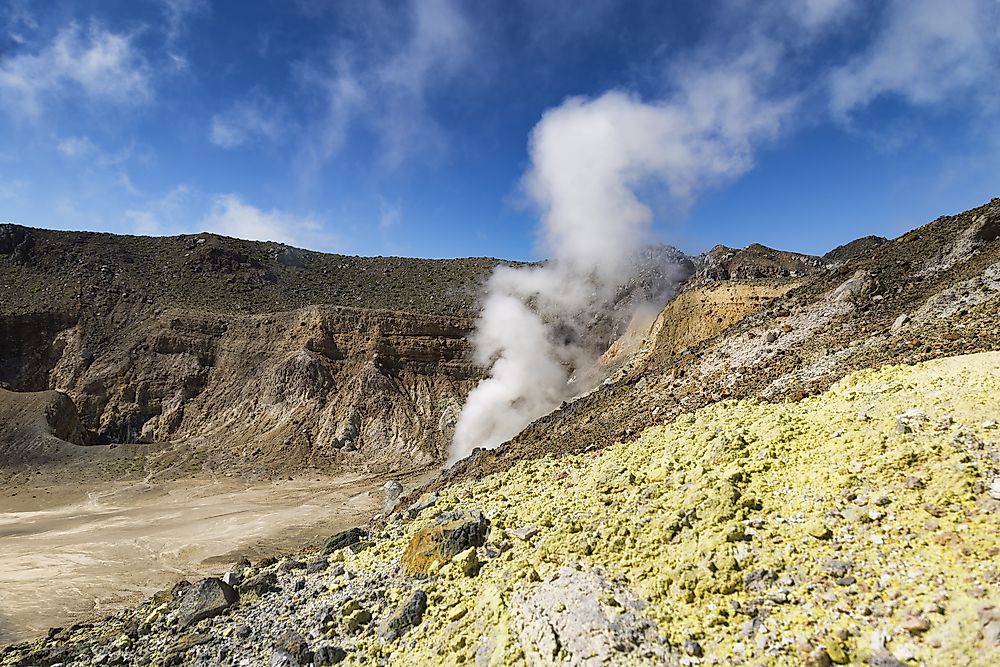
Much of the ocean's salt originally comes from rocks on land. First, rain absorbs carbon dioxide from the atmosphere, making it slightly acidic. The water cycle moves the water across the landscape, helping to break down rocks and release dissolved minerals. Runoff carries these ions into streams and rivers, which eventually transport them into the ocean. Repeated delivery from rivers, followed by the loss of water through evaporation, helps explain why the ocean is salty while the rain that replenishes rivers is comparatively fresh. The salt doesn't evaporate along with the water.
The seafloor contributes minerals, too. Seawater enters cracks in oceanic crust, heats up, reacts with surrounding rock, and returns through hydrothermal vents carrying dissolved substances. The circulating water can lose magnesium and sulfates while gaining metals such as iron, zinc, and copper. Underwater volcanic activity also releases minerals.
Why Some Ocean Waters Are Saltier Than Others

Ocean salinity varies depending on the amount of water relative to the amount of salt. High evaporation can remove water and raise the salt concentration. Rainfall, river discharge, and melting ice can add freshwater and lower the concentration. Ocean currents then redistribute these waters, carrying the salt or freshwater beyond the place it entered. This is why ocean salinity varies across the map rather than remaining uniform everywhere.
Some think that warm weather would guarantee evaporation and unusually salty water, but a warm region receiving substantial rainfall can have a relatively low surface salinity because of the freshwater diluting the sea. NOAA notes that salinity is generally lower near the equator and the poles, and it's higher in the middle latitudes. The balance between evaporation and freshwater matters more than temperature alone.
Conditions can also change beneath the water's surface. In estuaries such as the lower Columbia River on the Oregon-Washington border, fresher water tends to stay above denser, saltier water. A surface sample may therefore miss the saltier water below it. Seasonal rainfall and river flow can alter the layers, making any single reading a snapshot in time rather than a constant description. The saltiness of water on coastlines can change depending on depth and season.
Chesapeake Bay Shows How The Ocean Becomes Brackish

The Chesapeake Bay also demonstrates how Atlantic seawater changes as it enters a large estuary. At the bay's mouth, where ocean water enters, salinity averages about 25 to 30 parts per thousand. Farther north, at the head of the bay and its freshwater rivers, salinity falls below 0.5 parts per thousand. Between those points, the water is brackish, a mix of freshwater and saltwater. The lower bay is relatively salty, while the upper bay can be essentially fresh despite its tidal movement. Much of Chesapeake Bay occupies the middle ground rather than matching either a freshwater river or the open Atlantic.
The pattern also shifts with weather. Greater freshwater flow lowers salinity, while reduced rainfall and river discharge can allow saltier conditions to develop. Chesapeake Bay is not just an ocean inlet with diluted water. It's a changing system in which river flow and Atlantic water continually reshape the boundary between fresh and salty.
Texas Has A Lagoon Saltier Than The Ocean

The Laguna Madre, found on the western side of Padre Island in Texas, is the opposite of Chesapeake Bay. Instead of abundant freshwater steadily diluting seawater, this shallow lagoon loses more water to evaporation than freshwater flows into it. The National Park Service describes it as a hypersaline ecosystem, meaning its water is even saltier than the ocean.
The Upper Laguna Madre is known for its hypersaline waters, with Texas Parks and Wildlife reporting salinity levels commonly ranging from 50 to 70 parts per thousand, although concentrations fluctuate with rainfall, evaporation, and water exchange. The local landscape makes those levels possible. At Padre Island National Seashore, a barrier island separates Gulf-facing waters from the Laguna Madre on its western side. The lagoon's waters are only about 3.6 feet deep, so it's much easier for water to evaporate and leave salt behind in the shallow waters than in a deeper, wider ocean.
Salt Changes How Seawater Freezes And Moves

Salt lowers water's freezing temperature, which helps explain why ocean water behaves differently from freshwater in winter. According to NOAA, the average freezing point of seawater is about 28.4°F, compared to 32°F for freshwater. The precise freezing point changes with the salt concentration.
When sea ice forms, its crystal structure does not incorporate salt very easily. Newly formed sea ice can trap pockets of concentrated saltwater called brine, but much of that brine eventually drains or is expelled. As a result, the surrounding seawater becomes saltier. Sea ice formation therefore changes the chemistry of the water beneath it rather than merely turning the surface solid.
Salt also affects density. Under otherwise comparable conditions, saltier water is denser than fresher water. Cooling increases density as well, and these two influences help drive deep-ocean circulation. In polar regions, cold water made saltier by ice formation can sink, contributing to a vast circulation system known as thermohaline circulation or the Ocean Conveyor Belt. While winds drive much of the ocean's surface movement, density differences help move water below the waves.
Why Seawater Cannot Quench Thirst
A salt concentration of 3.5% might not sound like much, but it's far too high to serve as drinking water unless it's desalinated first. Drinking it would not only taste terrible, but it would introduce a salt load that the body would have to remove. This would dehydrate the body even more since human kidneys cannot produce urine as salty as seawater, so eliminating the excess salt would require losing more water than the seawater could supply. Someone drinking seawater can become thirstier even while swallowing liquid.
That physiological limit puts the ocean's saltiness into perspective. Its dissolved minerals are sparse enough to remain invisible in clear water, yet concentrated enough to change freezing temperatures, influence deep currents, and prevent people from drinking it safely. The taste is just the most immediate sign of a substance that helps shape how coastal waters and oceans work.