The Lakes With The Largest Sturgeon In North America
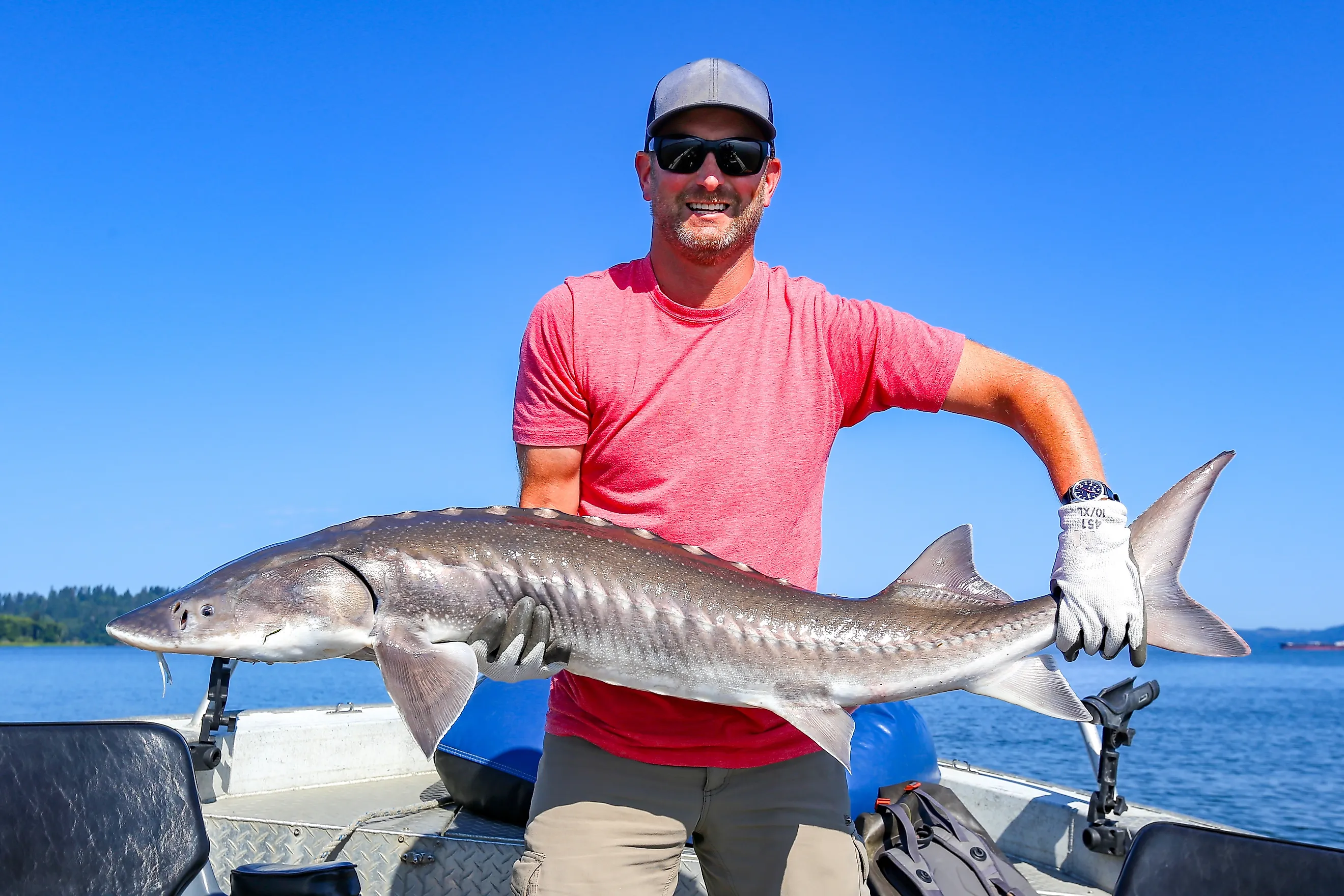
North America's largest sturgeon belong to two species. White sturgeon in the western United States and Canada can exceed 500 pounds, while lake sturgeon account for most of the records from the Great Lakes and central Canada. Some specimens were weighed during scientific surveys; others came from historic commercial catches, regulated harvests, or carcasses recovered from shore. This ranking uses the heaviest publicly documented individual directly tied to each lake or named reservoir.
1. Lake Washington, Washington

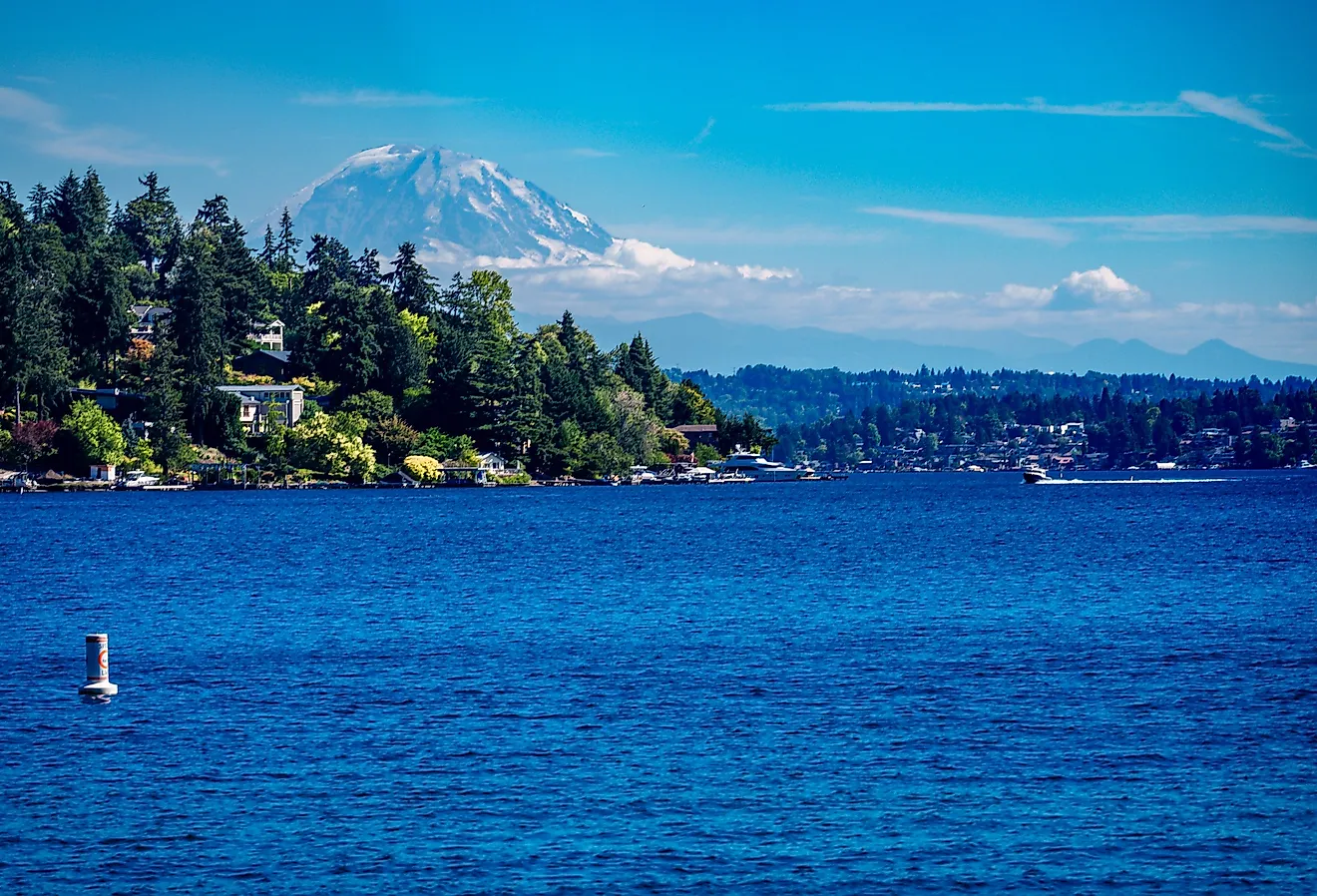
The largest lake-specific sturgeon found during this research was a 670-pound white sturgeon recovered near Kenmore at the northern end of Lake Washington on November 5, 1987. The female measured 11 feet in length, and biologists estimated her age at somewhere between 80 and 100 years. The fish had already died when it was retrieved, so it does not qualify as an angling record. Its body was physically measured and weighed, however, giving Lake Washington the strongest documented claim to the top position. White sturgeon are uncommon here, and the lake connects to Puget Sound through the Lake Washington Ship Canal and the Ballard Locks. Investigators never conclusively established where the giant spent most of its life or how long it had lived in the lake. The discovery remains an exceptional event rather than evidence of a regular trophy-sturgeon fishery.
2. Lake Roosevelt, Washington

Colville Confederated Tribes fisheries workers captured a 9-foot white sturgeon weighing 507 pounds near Northport in September 2014. The fish was estimated to be between 60 and 80 years old and was released after researchers completed their examination. Northport lies in the upper portion of the Lake Roosevelt and Upper Columbia sturgeon management area above Grand Coulee Dam. Fisheries agencies have closely studied this population because naturally produced juveniles have experienced extremely poor survival. The 507-pound specimen may not be the largest sturgeon remaining in the reservoir. Researchers previously reported handling an 11-foot fish that exceeded the capacity of their weighing equipment. Since no verified weight was published for that longer individual, it cannot be ranked here. The properly weighed 2014 fish still places Lake Roosevelt well above every lake except Lake Washington.
3. Kootenay Lake, British Columbia

A white sturgeon weighing 159 kilograms, or approximately 350 pounds, was captured in Kootenay Lake in September 1995. Researchers estimated that the fish was between 85 and 90 years old. It belonged to the Kootenai River white sturgeon population, a genetically distinct group separated from other Columbia Basin sturgeon by natural barriers for thousands of years. Adults move between Kootenay Lake and the Kootenay River, and some spend long periods in the lake's deep water before travelling upstream during the spawning season. The 350-pound individual is the largest widely documented specimen from this isolated population. Changes to river flow, sediment movement, and spawning habitat caused natural recruitment to collapse during the 20th century. The remaining large adults are therefore crucial to recovery programs that use conservation breeding and habitat work to keep the population from disappearing.
4. Arrow Lakes Reservoir, British Columbia

White sturgeon research in Arrow Lakes Reservoir documented adults weighing as much as 141 kilograms, equivalent to approximately 310.9 pounds. Fish examined between 1995 and 2003 ranged in weight between 18 and 141 kilograms. The longest specimen in the study measured 242 centimeters in fork length, or about 7 feet 11 inches, although the report does not confirm that the longest and heaviest measurements came from the same individual. Researchers estimated that only around 52 adult white sturgeon remained in the reservoir during that period. The population consisted largely of aging fish isolated above Hugh Keenleyside Dam, with no successful natural recruitment detected after approximately 1969. Sturgeon concentrated around areas such as the Narrows, Beaton Flats, and deep overwintering habitat near Galena Bay. The documented 141-kilogram maximum gives Arrow Lakes Reservoir a narrow lead over the heaviest historical lake sturgeon from the Great Lakes.
5. Lake Superior, Ontario, Michigan, Wisconsin, and Minnesota

A lake sturgeon caught in Batchawana Bay on the Canadian side of Lake Superior on June 29, 1922, weighed 310 pounds and measured 7 feet 11 inches. Fisheries references have repeatedly cited it as one of the largest reliably recorded examples of the species. Lake sturgeon do not reach the extreme maximum size of western white sturgeon, but they are the largest native freshwater fish across much of the Great Lakes region. The Batchawana Bay specimen came from the commercial-fishing era, when crews still pulled mature sturgeon from the Great Lakes in substantial numbers. The surviving populations in Lake Superior now cluster around particular bays, river mouths, and tributaries used for spawning. The exact age of the 1922 fish was not established, but a lake sturgeon approaching eight feet would have needed many decades of growth, since females mature late and can live for more than a century.
6. Lake Michigan, Illinois, Indiana, Wisconsin, and Michigan

The record from Lake Michigan is another 310-pound lake sturgeon, level with Lake Superior by documented weight. The fish was captured in Illinois waters in 1943 and measured approximately 241 centimeters, or just under eight feet. Illinois fisheries material identifies it as the largest fish ever taken from the state's waters. A federal review has also described it as the largest documented lake sturgeon, although the equally heavy Lake Superior specimen had been recorded 21 years earlier. Both records date from a period when commercial harvest, pollution, dams, and damage to spawning grounds had already reduced Great Lakes sturgeon populations. The Lake Michigan fish is particularly valuable to this ranking because its dimensions were recorded directly. Many stories about enormous historical sturgeon rely on photographs, estimated weights, or secondhand accounts, whereas this specimen has a documented weight and length tied to a specific Great Lake.
7. Lake Winnipeg, Manitoba

Manitoba's 2024 Lake Sturgeon Management Strategy identifies a 125-kilogram fish as the heaviest lake sturgeon reported from the Lake Winnipeg commercial fishery. That weight converts to approximately 275.6 pounds. The same provincial strategy records three Lake Winnipeg sturgeon longer than 190 centimeters. An enormous commercial sturgeon industry once operated on the lake, but intensive fishing removed mature adults at a rate the population could not withstand. Lake sturgeon grow slowly, mature late, and may not spawn every year, so decades can pass before a depleted population begins to recover. Several major tributaries also feed sturgeon into Lake Winnipeg, which makes it difficult to assign every historical commercial catch to a particular spawning population. Manitoba's fisheries agency still ties the 125-kilogram figure explicitly to the lake's fishery, giving it stronger support than many regional accounts of giant Canadian sturgeon that lack dates, measurements, or original documentation.
8. Lake Erie, New York, Pennsylvania, Ohio, Michigan, and Ontario

An enormous lake sturgeon measuring 88 inches washed ashore on Lake Erie in 1998. The New York State Department of Environmental Conservation has described the fish as weighing 250 pounds, while earlier agency material gave a figure of 240 pounds. The difference may result from rounding or a later correction, so its safest documented range is approximately 240 to 250 pounds. At 7 feet 4 inches, the fish was exceptionally long for a modern Great Lakes sturgeon. It was found dead rather than caught by an angler or commercial fisher, but the carcass allowed officials to record its size directly. Intensive harvest, degraded water quality, dams, and the loss of accessible spawning areas had devastated the sturgeon of Lake Erie. Finding such a large survivor in the late 1990s showed that at least a few exceptionally old fish had persisted through those pressures.
9. Lake Winnebago, Wisconsin

Ron Grishaber registered a 212.2-pound female lake sturgeon on the opening day of Wisconsin's 2010 spearing season. The fish measured 84.2 inches and remains the modern weight record for the Winnebago System. A slightly longer sturgeon measuring 84.5 inches was speared in 2018, but that fish weighed only 143.7 pounds. The contrast demonstrates why length alone cannot determine the ranking. Body condition, feeding success, sex, and reproductive condition can create enormous weight differences between fish of similar length. One of North America's largest and most closely monitored lake sturgeon populations lives in Lake Winnebago. Every fish taken during the winter spearing season must be registered, which lets biologists collect exact measurements, determine sex, and gather biological samples. Periodic abundance of prey such as gizzard shad can help produce unusually heavy adults when large quantities of food become available.
10. Lake of the Woods, Ontario, Manitoba, and Minnesota

A giant lake sturgeon taken from Lake of the Woods in 1953 measured 81 inches. New York's Department of Environmental Conservation reports that the fish weighed 208.5 pounds and was approximately 154 years old. Wisconsin's Department of Natural Resources gives slightly different figures of 215 pounds and 152 years. Both agencies appear to be referring to the same specimen, but the reason for the discrepancy is unclear. This ranking uses the more precise 208.5-pound figure, placing Lake of the Woods just below Lake Winnebago. Using the Wisconsin figure would reverse the order. Either measurement confirms one of the few documented lake sturgeon weighing more than 200 pounds. The remarkable estimated age also illustrates the species' longevity. The fish may have hatched before the American Civil War and survived generations of commercial exploitation before being caught in the mid-20th century.
Why the Weight-Based List Leaves Giants Out
A weight-based ranking excludes several exceptionally long fish whose masses were never publicly verified. Idaho Fish and Game documented a 131.5-inch white sturgeon from C.J. Strike Reservoir during research in 1993, and another fish measuring 124 inches established the reservoir's catch-and-release record in 2022. Neither specimen has a confirmed measured weight, so placing C.J. Strike Reservoir above lakes with properly weighed fish would require an estimate based on length or girth. Columbia River researchers have also recorded white sturgeon reaching 276 centimeters in Bonneville Reservoir and 253 centimeters in John Day Reservoir. Some of these fish may have outweighed the lower entries here, but their lengths alone cannot establish that result, because sturgeon of similar length can differ substantially in body condition. Restricting the list to directly recorded weights produces a more consistent comparison, even though it leaves several potential giants unranked.