The Worst Failures In Ottoman Military History
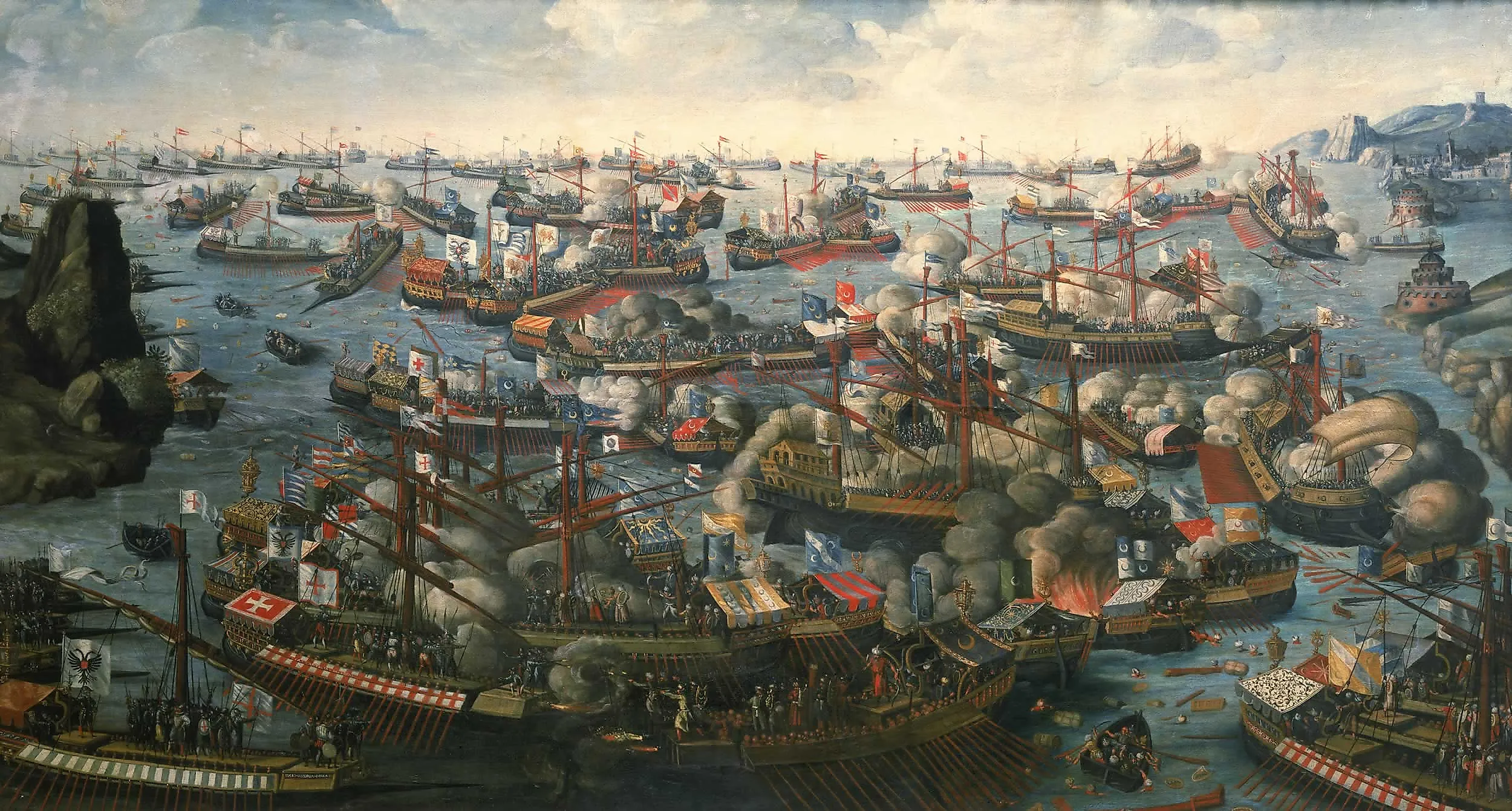
Sultan Bayezid I earned the nickname "the Thunderbolt" for the speed of his campaigns, yet in 1402 he ended his reign as a prisoner of Timur. His downfall shows that even the Ottoman Empire, one of the longest-lasting and largest states in world history, was far from unbeatable. Its army won numerous victories, but its worst defeats left deep scars. At Lepanto in 1571, the destruction of the Ottoman fleet shattered a long-standing myth of invincibility. Outside Vienna in 1683, a relief army led by Polish King John III Sobieski turned a promising siege into a rout. During World War I, many soldiers marching to Sarikamish died in the winter mountains before they even reached the battlefield. These failures, and others like them, had profound political, economic, and reputational consequences.
The Battle Of Ankara (1402)

During its first 150 years, the Ottoman Empire seemed nearly unbeatable. Divided and weakened neighbours, paired with its strong founding myth, made it an attractive ally. The Ottomans thus made rapid progress, gaining territory in Anatolia and the Balkans. There was one notable exception. Ottoman expansion into eastern Anatolia brought them in contact with the Central Asian conqueror Timur. This resulted in the two sides facing off. The battle occurred near Ankara (the future capital of Turkey) in 1402. Timur's army outnumbered the Ottomans, who arrived thirsty and tired. When paired with Timur's formidable cavalry and many Ottomans switching sides once the tide turned, the battle was an utter disaster. It ended with Ottoman Sultan Bayezid I being captured. He died the following year. Without a clear successor, his sons spent the next eleven years fighting for leadership of the Ottoman state. Known as the Ottoman Interregnum, it threatened to end the empire before it became a world power.
The Battle Of Lepanto (1571)

The years 1520 to 1566 is often considered the Ottoman golden age. Under the leadership of Suleiman the Magnificent, the empire reached new cultural, economic, military, and territorial heights. This threatened many European powers. The turning point came when the Ottomans captured the previously Venetian-controlled island of Cyprus. In response, a coalition of Catholic states called the Holy League, led by Pope Pius V, assembled a major fleet to drive them out of the region. This led to the Battle of Lepanto in 1571. The Ottoman fleet was destroyed, and thousands of sailors and other personnel were either killed or captured. Admittedly, the European victory was minor from a tactical standpoint. The Ottomans quickly rebuilt their fleet and even retained control of Cyprus. Regardless, the Battle of Lepanto shattered the myth of Ottoman invincibility and is often closely associated with the end of the aforementioned golden age.
The Siege Of Vienna (1683)

By the 1600s, the Ottoman Empire was trying to hold onto its reputation as one of the most powerful states in Europe and the Middle East. Domestic strife, economic problems, and military stagnation made some wonder if its best days were behind it. The Ottomans therefore launched a massive campaign to take Vienna and establish a meaningful foothold in Central Europe. They began assaulting the city in the summer of 1683. The siege went well, and it looked like Vienna might fall. However, in September, a relief army, led by Polish King John III Sobieski, arrived. Inadequate defenses, paired with attention being divided between the siege and the relief army, resulted in a catastrophic defeat for the Ottomans.
The loss at Vienna was just the beginning, since it initiated a conflict known as the Great Turkish War. It ended with the Treaty of Karlowitz in 1699, in which the Ottomans gave up extensive territories in Central Europe, including most of Hungary and Transylvania. From this point onwards, the empire gradually lost more and more ground in Europe.
The Balkan Wars (1912 to 1913)

By the 1900s, the Ottoman Empire was in dire straits. Nationalist movements, economic dysfunction, and political instability were some of its many problems. Moreover, during the previous century, it lost substantial swaths of territory. Greece, Serbia, Romania, Bosnia, Algeria, Egypt, and Tunisia all became independent or were occupied by another power. This made the rise of the Balkan League in the 1910s even more threatening. A coalition of four states, Serbia, Greece, Bulgaria, and Montenegro, it sought to permanently drive out the Ottomans from Europe and liberate ethnic populations in places like Macedonia.
The coalition attacked the Ottoman Empire in October 1912. Unprepared and rife with rivalries in its leadership, the Ottoman armies struggled to mobilize. This resulted in losses in Macedonia, Thrace, and Greece. By the end of the First Balkan War in May 1913, the Ottomans had given up almost all their European territory, except for a small area around Constantinople and Eastern Thrace. While they regained a bit of ground in the Second Balkan War later in 1913, including the city of Edirne (one of the first Ottoman capitals), this did little to restore the empire's influence and reputation.
The Battle Of Sarikamish (1914 to 1915)

World War I lasted from 1914 to 1918. Contrary to popular belief, the Ottoman Empire fought relatively well, particularly given its internal strife and loss of territory in previous decades and centuries. Consider the Battle of Gallipoli, where the Ottomans repelled the Allies, or in Mesopotamia, when they forced a mass surrender of British-Indian troops at Kut.
This isn't to say that the army was perfect. After all, the Ottomans lost the war and experienced several military catastrophes. One of the biggest failures occurred on the eastern front. War Minister Enver Pasha wanted to defeat the Russian Caucasus army by encircling it. However, doing so required the Ottomans to march through mountainous terrain during the winter of 1914 and 1915. Lacking proper clothing and logistical support, many died before they even reached the battlefield. When they did, the winter-hardened Russian army decimated them. Estimates put the Ottoman casualties at between 50,000 and 90,000.
Impact And Legacy
The Ottoman Empire experienced its share of military failures. Consider the Battle of Ankara in 1402, which resulted in a civil war that nearly ended the empire before it began. The Battle of Lepanto in 1571 then disrupted the myth of Ottoman invincibility, while the Siege of Vienna a hundred years later permanently halted expansion into Europe. The Balkan Wars in the 1910s effectively ended the Ottomans' European foothold. Finally, the Battle of Sarikamish in World War I resulted in the deaths of tens of thousands.