How Did Someone Become A Roman Emperor?
There was no fixed process for becoming a Roman emperor, but it often involved violence, betrayal, and scheming. Some inherited power through family connections, others were adopted as successors, and many secured the throne through military support. The Roman Senate also played a role, although its influence diminished over time. Prospective emperors usually needed several of these advantages to succeed, along with enough money to reward loyal soldiers. Unlike many other monarchies, Rome had no established law determining who would become emperor when the current ruler died. This uncertainty meant that even a seemingly obvious successor could face a challenge. Indeed, disagreements over succession caused some of the bloodiest civil wars in Roman history.
Hereditary Means

The Romans hated kings, a sentiment that can be traced back to the Roman Kingdom. According to Roman tradition, its final king, Lucius Tarquinius Superbus, was a brutal tyrant who abused his power and executed political opponents. This led to the abolition of the monarchy in 509 BCE and the establishment of a republic. The government was now based on power-sharing between different institutions, and political offices were not supposed to pass automatically from father to son.
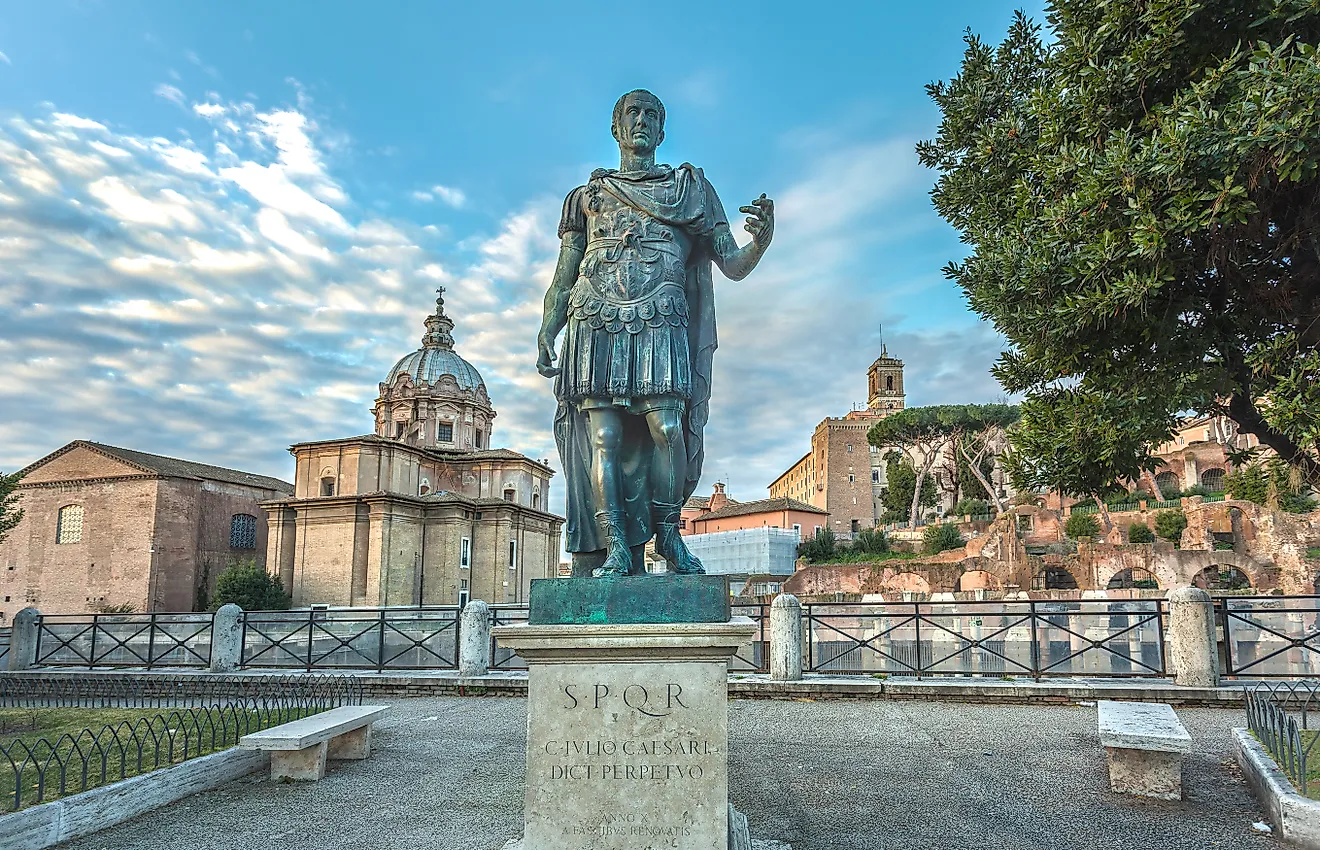
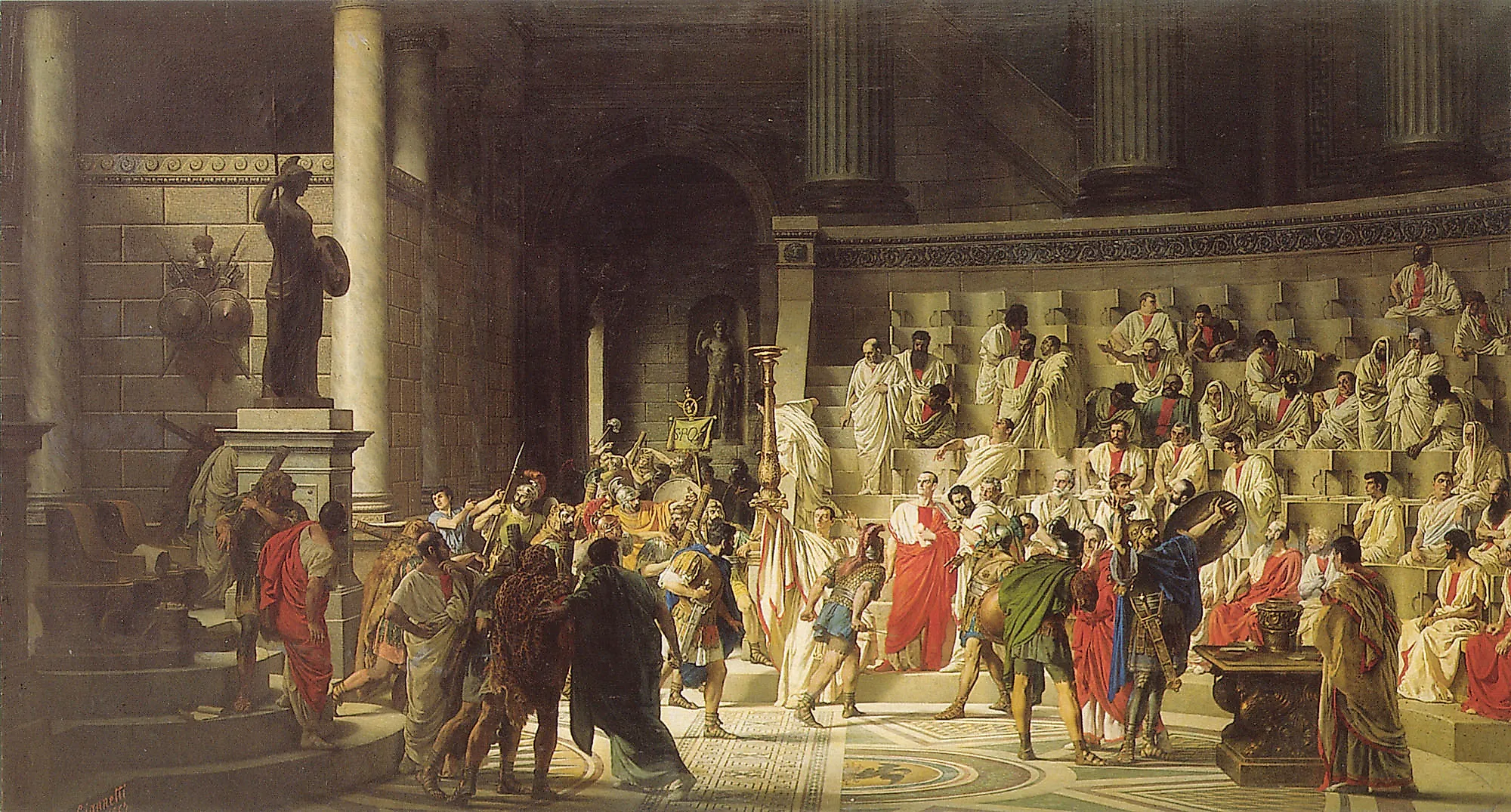
When Augustus became Rome's first emperor in 27 BCE, he had to walk a narrow tightrope. On top of the historical hatred of kings, Julius Caesar’s assassination in 44 BCE was a recent reminder of the dangers of accumulating too much power. Augustus addressed these concerns by showing respect to the Senate. In turn, this nominally republican institution granted him sweeping powers that effectively made him Rome's sole ruler. However, Augustus could not simply pass his position to a son as a king might. His authority consisted of several powers and titles, rather than a single hereditary office.
Augustus therefore spent years preparing a successor. He eventually adopted his stepson Tiberius, granted him important political powers, and made his intentions clear to the Roman elite. When Augustus died in 14 CE, Tiberius succeeded him with the Senate's recognition. This established an important precedent. While hereditary succession was never formally guaranteed, family connections became a powerful political advantage. Several notable families ruled the Roman Empire, including the Julio-Claudian Dynasty, the Flavian Dynasty, and the Severan Dynasty. Nevertheless, being related to an emperor did not guarantee that someone would inherit or retain power.
Adoptive Sons

Biology wasn't the only way to become emperor. Adoption was another method, particularly when a ruler lacked a suitable biological son. The process was relatively straightforward. An emperor selected a successor, legally adopted him, and introduced him to the Roman political establishment as his heir. The adopted son might receive military responsibilities, important titles, and some of the emperor's powers while his adoptive father was still alive. This made the eventual transition easier, although it did not eliminate the possibility of opposition.
This approach is most commonly associated with the period from 96 to 180 CE, during which Nerva, Trajan, Hadrian, Antoninus Pius, and Marcus Aurelius ruled the empire. These men are often called the "Five Good Emperors," a reputation partially attributable to the stability of their successions. Nerva adopted the respected general Trajan in 97 CE, helping secure the army's support for his government. Trajan succeeded him the following year. Hadrian later succeeded Trajan, although the circumstances of his reported adoption remain disputed. Hadrian subsequently adopted Antoninus Pius, requiring him to adopt Marcus Aurelius and Lucius Verus. The latter two eventually became joint emperors in 161 CE.
The system had limitations, however. Adoption was not always about choosing the most capable candidate. Family relationships and political considerations often influenced these decisions. Furthermore, Marcus Aurelius had a surviving biological son, Commodus, whom he elevated to co-emperor in 177 CE. Commodus became sole ruler after his father's death in 180 CE. His increasingly unpopular reign ended with his assassination in 192 CE. The contrast between Commodus and his predecessors helped popularize the idea that adopted emperors were better rulers. However, the real lesson was that neither adoption nor hereditary succession guaranteed competent leadership.
Gaining The Army’s Support

Prospective emperors also needed the army. Someone with strong political connections but no military support could find themselves defenseless against a rival general. Consider what happened after Nero died in 68 CE. The following period became known as the Year of the Four Emperors. Galba, Otho, and Vitellius all rose to power before being overthrown or killed. The chaos finally ended when Vespasian became emperor in 69 CE. His success largely depended on support from the armies in the eastern provinces, including Judea, Syria, and Egypt. Forces stationed along the Danube also joined his cause and helped defeat Vitellius. Vespasian subsequently ruled for ten years and established the Flavian Dynasty.
The Praetorian Guard was particularly influential. Originally established to protect the emperor, these elite soldiers were stationed near Rome, giving them considerable political power. Their proximity to the emperor also meant they could assassinate him if they turned against him. The case of Caligula is illustrative. During his relatively short reign, he alienated important members of the Guard. In 41 CE, Praetorian officers participated in his assassination, after which the Guard proclaimed his uncle, Claudius, emperor. The Senate ultimately accepted Claudius as the new ruler.
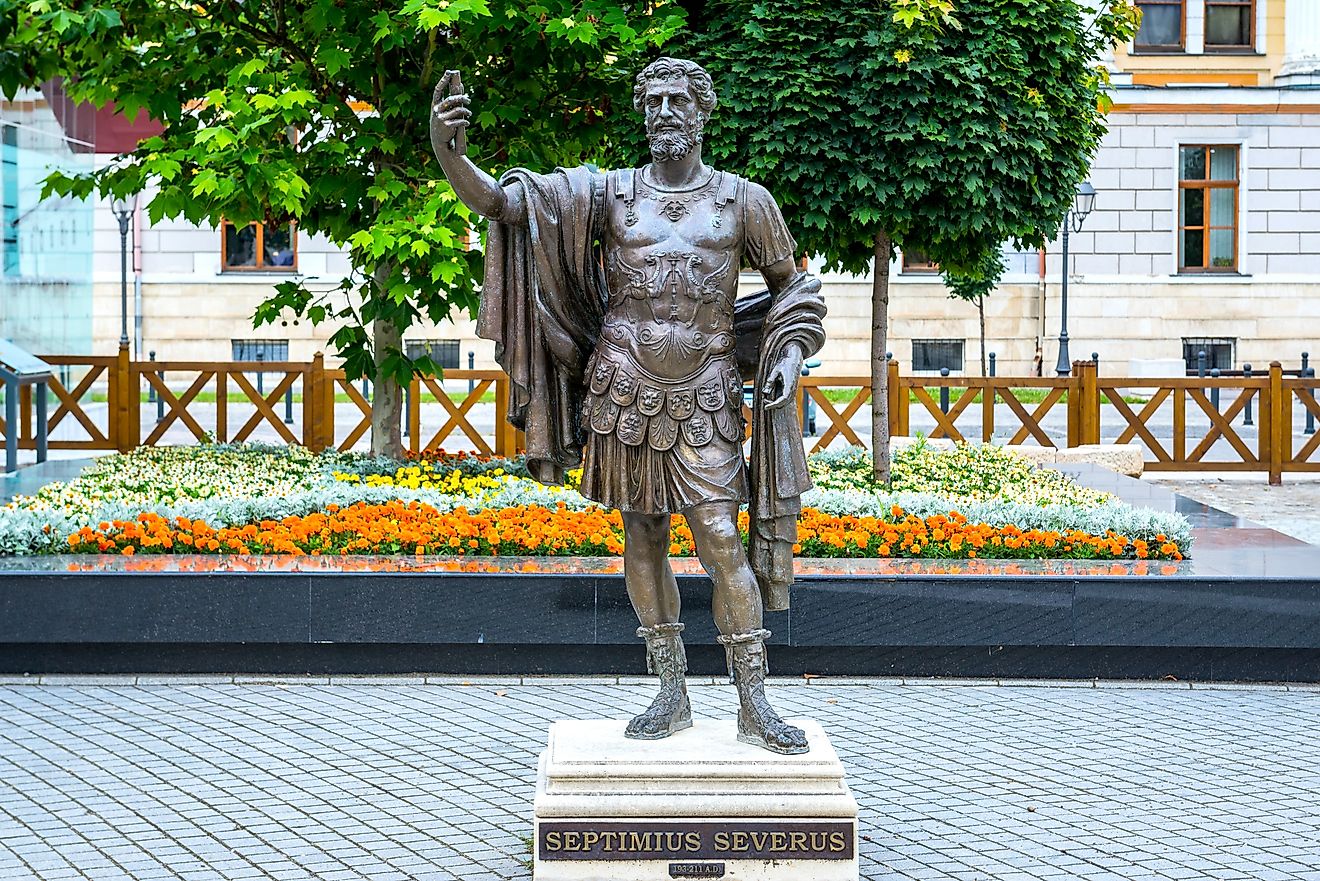
In 193 CE, Pertinax also discovered the dangers of displeasing the Praetorians when they assassinated him after less than three months in power. His attempts to enforce discipline and disagreements over financial rewards had made him unpopular. The Guard then supported Didius Julianus, who promised its members an enormous payment in return for the throne. Julianus' reign lasted only about two months before he was overthrown by forces supporting Septimius Severus. This demonstrated that the Praetorian Guard's power was not absolute. While it could influence events in Rome, frontier armies could still determine who ultimately controlled the empire. This became particularly apparent during the Crisis of the Third Century (235 to 284 CE), when military commanders frequently competed for imperial power.
The Role of the Senate and Money

Prospective emperors needed to consider several other factors. Support from the Senate was important, particularly during the early empire. As previously noted, Augustus' show of respect for the institution helped legitimize his authority. The Senate could recognize a new emperor and grant him powers associated with the position. However, its influence gradually declined as military support became increasingly decisive. By the third century, senators had little ability to resist a successful general backed by powerful armies. Even so, the Senate continued to provide political legitimacy and perform important administrative functions.
Financial incentives were equally important. Soldiers demanded steady wages, and new emperors were generally expected to grant a cash gift called a *donativum*. Rather than being a simple gesture of goodwill, this payment helped secure military loyalty. Claudius, for instance, promised substantial payments to the Praetorian Guard after becoming emperor in 41 CE. The incident involving Pertinax and Didius Julianus in 193 CE was perhaps the most blatant example of financial rewards influencing the selection of an emperor.
Attempts were eventually made to create a more predictable system. In 293 CE, Diocletian established the Tetrarchy, dividing imperial leadership between two senior emperors and two junior successors. The plan was for the junior emperors to take over when their seniors retired. Although the first planned transition occurred in 305 CE, the arrangement soon broke down into civil wars. Even this carefully designed system could not entirely solve Rome's succession problems.
Impact and Legacy
Becoming a Roman emperor was rarely straightforward. Family connections and adoption offered important advantages, but neither guaranteed the throne. Support from the army, financial rewards, and political recognition were also crucial. As the empire developed, military power increasingly overshadowed traditional institutions. Ultimately, the absence of clear succession rules was one of Rome's greatest political weaknesses. A peaceful transition could preserve stability for decades, while a disputed succession could plunge the empire into civil war.