The Story Of The Persian Empire
The Persian Empire underwent several forms and iterations. Founded by Cyrus the Great in the 550s BCE, it quickly expanded and became the largest empire of its time. This brought it into contact with the Greeks. After a series of seemingly endless wars, Alexander the Great conquered Persia in the 330s BCE. A self-styled cosmopolitan leader, the Macedonian king preserved Persian culture, paving the way for the Parthian and Sasanian Empires.
Cyrus The Great And The Rise Of Persia

Cyrus the Great became leader of Persia in 559 BCE. At that time, the broader region was home to numerous different peoples and civilizations. The Babylonians ruled Mesopotamia, Lydia controlled Western Anatolia, and native pharaohs ruled Egypt. However, the Median Kingdom, which controlled Western Iran, was the most important rival.

Around 550 BCE, Cyrus defeated Median king Astyages, thereby gaining control of the Median Kingdom. Rather than destroying the existing government, he incorporated its administrative structure, military resources, and personnel into the Persian state. This strategy would be used for future expansions. Around 547 to 546 BCE, he conquered the Lydian Kingdom in Western Anatolia, and in 439 BCE, Cyrus defeated the Neo-Babylonians. By the end of his reign in 530 BCE, the Persian Empire encompassed much of the Iranian Plateau, Mesopotamia, and surrounding territories in the east and west. Cyrus’s son, Cambyses II, continued this expansion and captured Egypt in 525 BCE.
Darius Consolidates Power

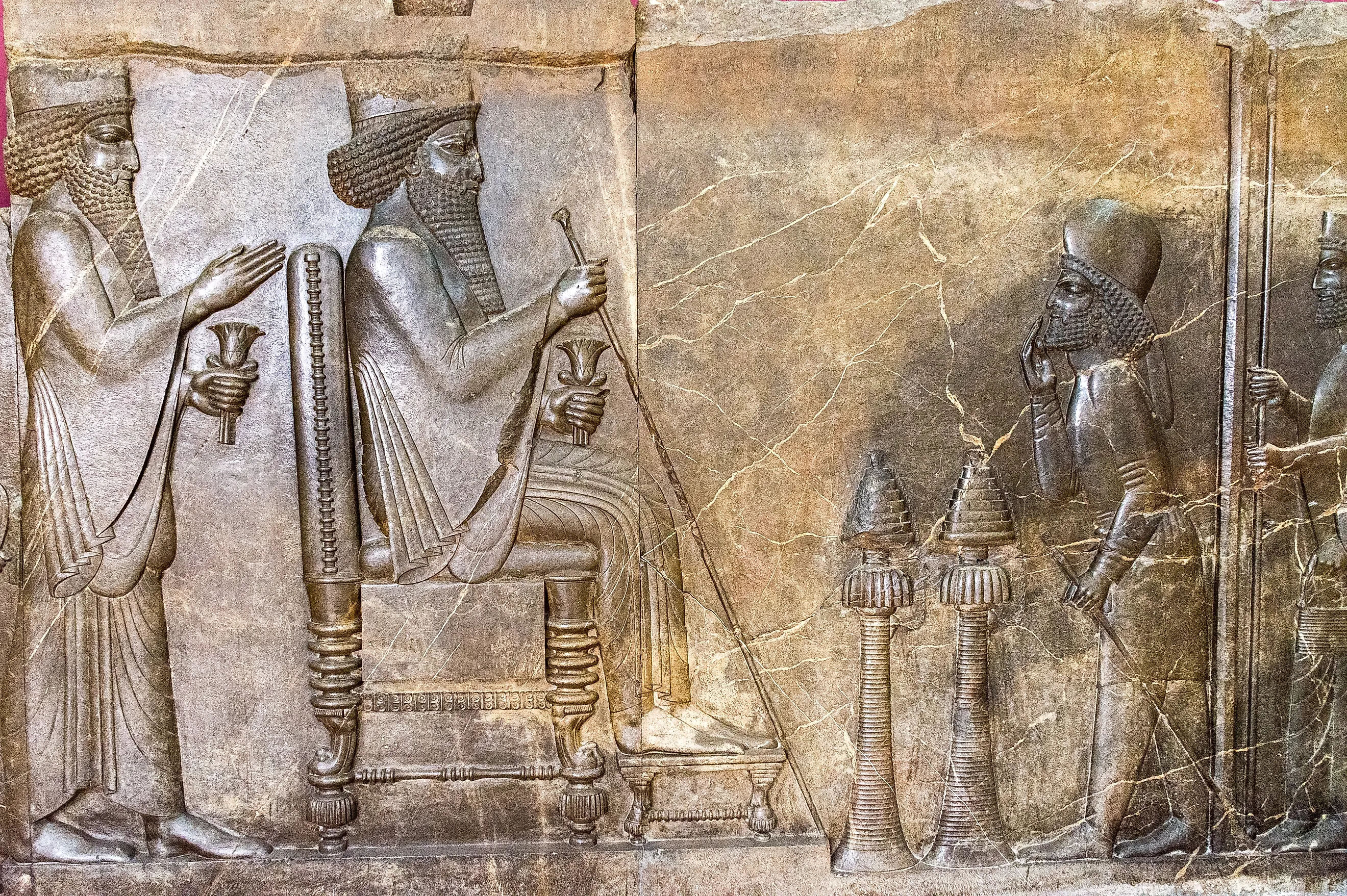
If Cyrus and his son built the Persian Empire, Darius consolidated it. He began his reign in 522 BCE by putting down rebellious regions and eliminating rival claimants. Afterwards, he built out the administrative system. He introduced satraps, provincial governors who collected taxes, maintained order, and enforced royal authority. This was instrumental in governing such a large swath of territory. Darius also standardized the tax system and built roads and other types of infrastructure. All these measures consolidated power and provided Persia with enormous quantities of money. This wealth helped fund the army, which proved instrumental in the centuries to come.
The Greco-Persian Wars

In 499 BCE, Greek cities in Western Anatolia rebelled, with the support of mainland Greek cities like Athens and Eretria. While the Persians eventually suppressed the uprising, Darius vowed revenge. This led to the First Persian invasion of Greece from 492 to 490 BCE. Despite possessing the numerically superior force, the Persians were defeated by the Athenians at the Battle of Marathon in 490 BCE, temporarily halting Persian military expeditions into Greece.

Darius’s son, Xerxes, recommenced the campaign in 480 BCE. He achieved some victories, including at the Battle of Thermopylae. However, these came at a cost, since the Persians lost thousands of men. They eventually reached Athens, only to find it evacuated. This led to the Battle of Salamis in 480 BCE, in which the Athenians decimated the Persian fleet via a surprise attack. Ships were crucial to supplying the land army, so Xerxes was forced to partially withdraw from Greece. The Greeks then completely pushed out the Persians after the Battle of Plataea in 479 BCE.
The Fall Of The Achaemenid Persian Empire

After fifty years of on-and-off hostilities, the Peace of Callias in 449 BCE ended the Greco-Persian Wars. Persia then faced several problems over the next hundred years. Egypt was constantly rebelling, and the lack of a clear succession system fostered violence and instability. This isn’t to say that the Persian Empire during this period was always weak. Rather, it indicates that it wasn’t invincible.
All this paved the way for Alexander the Great’s invasion of Persia in 334 BCE. The son of Philip II, the Macedonian king inherited one of the most formidable armies in world history. Alexander was also an adept military mind. These two factors, paired with the problems Persia faced over the previous century, meant that the empire fell quickly. The decisive engagement occurred in 331 BCE with the Battle of Gaugamela. Persian King Darius III was forced to flee to Central Asia, and Alexander took the Persian capitals the following year.
The Parthian Empire

Alexander’s victory didn't end Persian civilization. He retained many local administrators and even adopted aspects of Persian court ceremonies. After he died in 323 BCE, much of the former Persian territory came under the control of the Greek-based Seleucid Dynasty. However, another power, the Parthian Empire, was rising in the northeast. By the second century BCE, they ruled most of Persia and Mesopotamia and were major rivals to the Roman Republic. Perhaps the defining military moment came when they defeated and killed Marcus Licinius Crassus at the Battle of Carrhae in 53 BCE. This victory set off a chain reaction that ended with the rise of the Roman Empire.
The Sasanian Empire

By the early 3rd century CE, the Parthians faced external pressure from the Romans and internal pressure from rival Persian groups. This led to their collapse in 224 CE and the rise of a new power, the Sasanian Empire. More centralized and boasting more structured provincial authority, the Sasanians proved an even bigger threat to the Romans. The Sasanian period was also significant for Persian cultural development. Literature, architecture, and other forms of artistic expression flourished. Zoroastrianism, one of the world’s earliest monotheistic religions, also gained a privileged position under the Sasanians. Ultimately, years of fighting the Romans exhausted the Sasanian economy and military, making them more vulnerable to other threats. The Arab Muslim conquests in the 630s and 640s CE finally brought an end to an independent Persian civilization, at least for the time being.
Impact And Legacy
The story of the Persian Empire is one of several different powers. The Achaemenid Persian Empire emerged in the 550s BCE as one of the most formidable states in world history. Even though it fell to Alexander the Great in the 330s BCE, its cultural, administrative, and military legacy persisted. This paved the way for the Parthian Empire a hundred years later and the Sasanian Empire in the 200s CE.