Alexander The Great's Greatest Military Strategies
Alexander the Great was one of the best military leaders in world history. In less than ten years, he built an empire that reached across the Balkans, Egypt, and much of western Asia as far as India. His use of countless cunning military techniques is one of the major reasons why he was able to accomplish this feat. These included concrete tactics, such as the hammer-and-anvil approach, alongside more psychological measures, such as personally leading cavalry charges. Collectively, all these factors made Alexander unbeatable on the battlefield.
The Hammer-And-Anvil Technique

Alexander the Great's most famous military technique, the hammer-and-anvil, wouldn't have existed without his father. As King of Macedonia from 359 to 336 BCE, Philip II made vital reforms that made it possible. The most important change was to the Greek phalanx. Traditionally, it was a tight, rectangular military formation in which soldiers used shields and short spears. Philip introduced the sarissa, a much longer spear. This allowed the Macedonians to pin the enemy in place from a distance.

This system wasn't perfect. The Macedonian phalanx was still vulnerable on its flanks and rear. Therefore, Philip implemented a combined arms approach. This is where the term "hammer-and-anvil" originated. While the Macedonian phalanx (the anvil) held the enemy in place, the Companion Cavalry (the hammer) smashed through a vulnerable part of the defense. Philip used this technique to great effect during his campaign to conquer Greece. Alexander then made it world-famous and used it in most major battles during his Persian campaign.
The Oblique Attack

According to the ancient sources, Alexander frequently faced armies much larger than his own. While the numbers were likely exaggerated, it's reasonable to assume that he did in fact often have less firepower than his opponents. This necessitated an approach based on exploiting the enemy's weaknesses, rather than pure strength. One example was the oblique attack. Rather than spreading out his troops and fighting the enemy at all places at once, Alexander moved part of his army forward or advanced sideways at an angle. This forced his opponents to react and change their formation, which in turn caused weak points in their defenses to appear. Then, Alexander concentrated his firepower at these weak points.

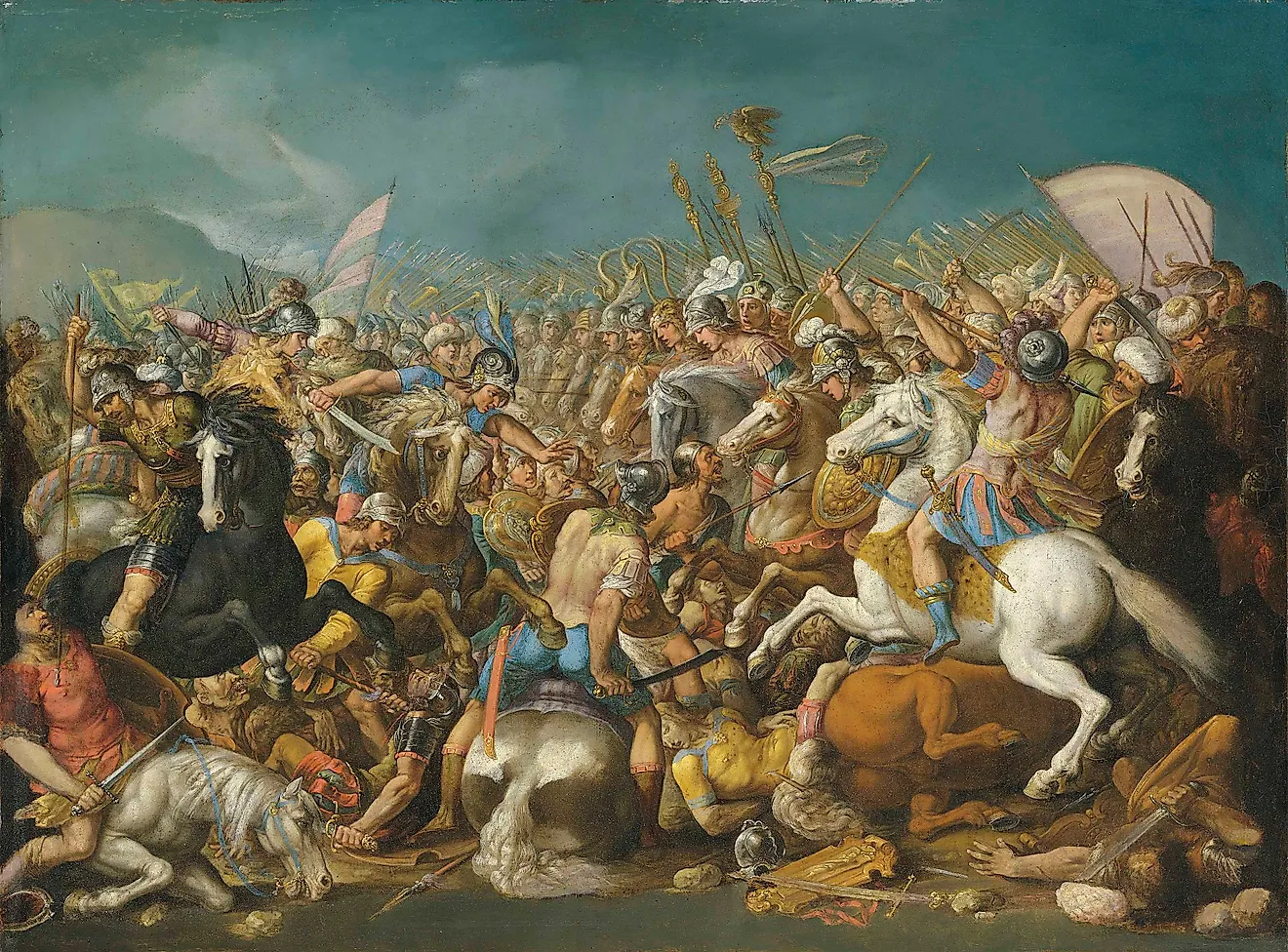
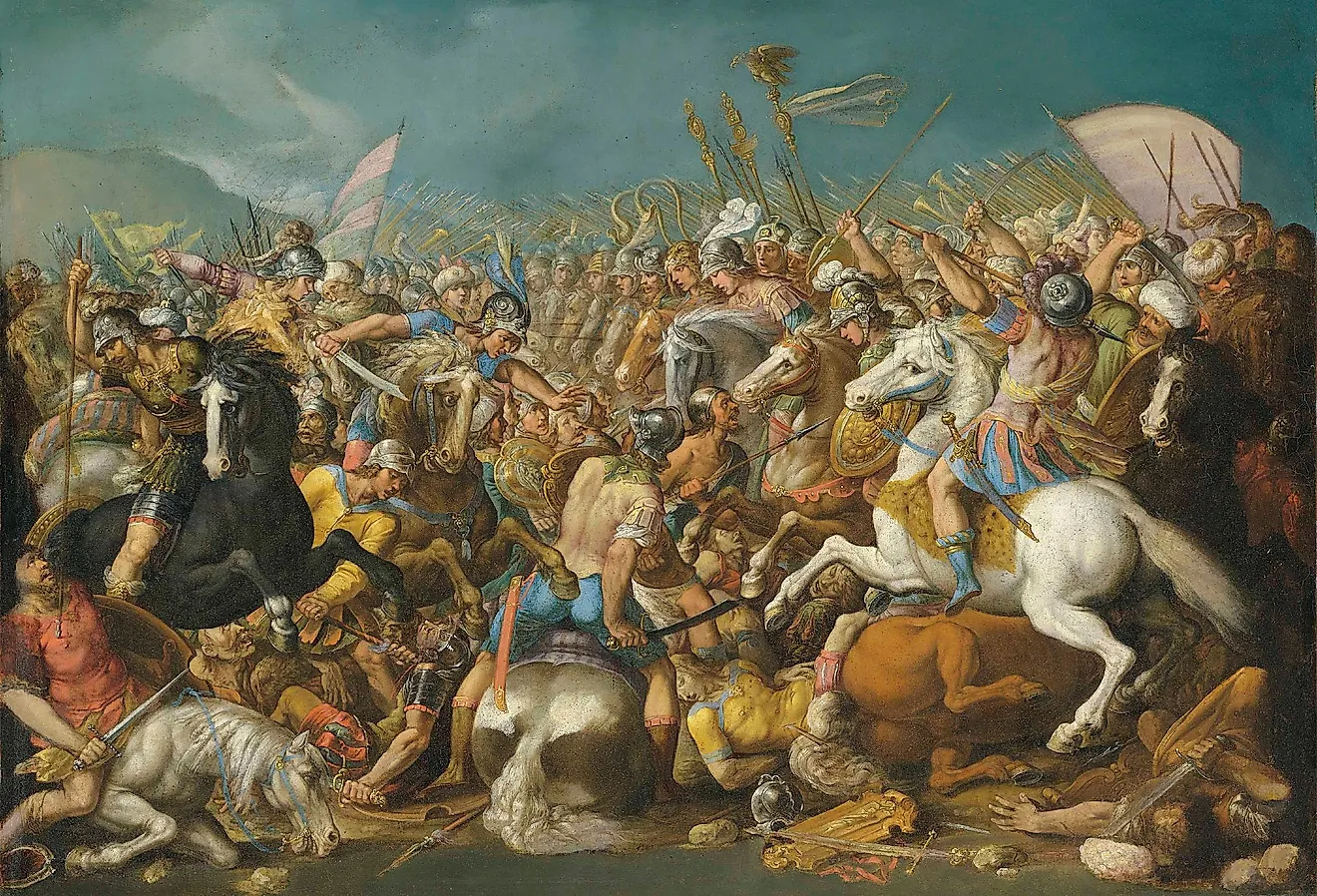
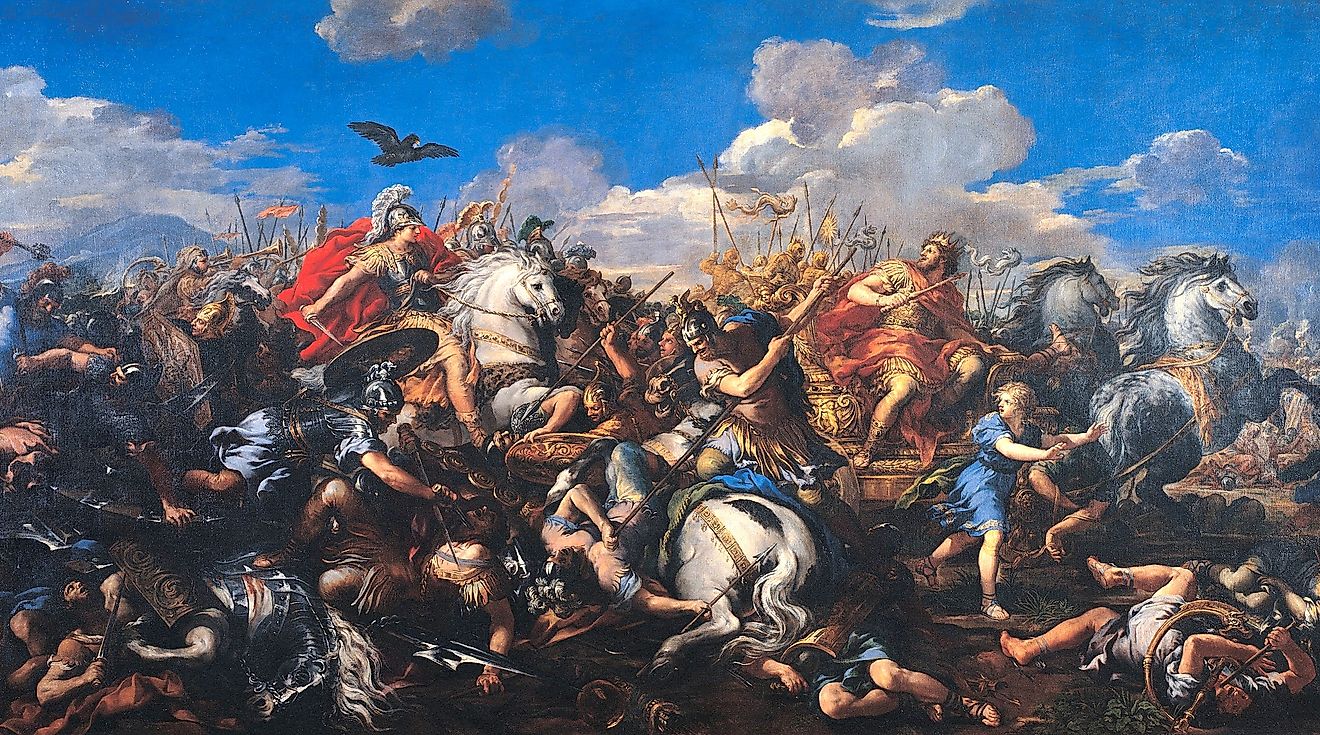
Perhaps the most famous instance of the oblique attack occurred at the Battle of Gaugamela in 331 BCE. The climactic engagement of Alexander's Persian campaign, it saw him face off against King Darius III. Instead of simply marching directly forward at the Persians, Alexander moved the right wing of his army diagonally towards the Persian left wing. This created an impossible situation for Darius. If the Persians stayed still, the Macedonians would get around their flank. If they reacted, a gap could form in their defenses. Darius chose to react, and his worst fears were realized. When a gap formed in the Persian center, Alexander suddenly changed directions and charged through, directly at Darius. This forced the Persian king to flee. With its leader gone, the Persian army quickly collapsed.
Using Terrain As A Weapon

Alexander also used terrain to compensate for his enemy's superior numbers. The Battle of Issus (333 BCE) is illustrative in this regard. The ancient sources assert that the Persians numbered up to 600,000, though modern estimates say it was likely between 50,000 and 100,000. On the other hand, the Macedonians likely had between 35,000 and 40,000 troops. Understanding that the Persians would decimate him if they were able to leverage their full strength, Alexander chose to fight on a small passageway between the mountains and the Mediterranean Sea. In doing so, he nullified the Persians' numerical advantage, since only a certain number of them could enter the passageway at any given time. This freed up Alexander to use the aforementioned hammer-and-anvil technique, allowing him to achieve a decisive victory.
Personally Leading The Attack

Most generals throughout history led their army from the back. Not Alexander. He participated directly in the Companion Cavalry charges. Alexander's favorite piece of literature was Homer's Iliad. He particularly admired Achilles, the famous warrior who defeated the Trojan prince Hector outside the walls of Troy. Achilles ultimately died in battle, but his achievements were so spectacular that they are still discussed by people thousands of years later. Alexander wanted to be remembered in a similar manner, and fighting on the front lines helped achieve this goal.
Personally leading the attack also had practical utility. At the beginning of his invasion of Persia, some in the Macedonian military were unsure about Alexander. He had successfully subdued rebellions in the Balkans and Greece, but many still doubted that he would live up to his father's legacy. After all, he was only 22 and several senior generals had known him since he was a child. How could he possibly defeat the historic enemy of the Greek world?

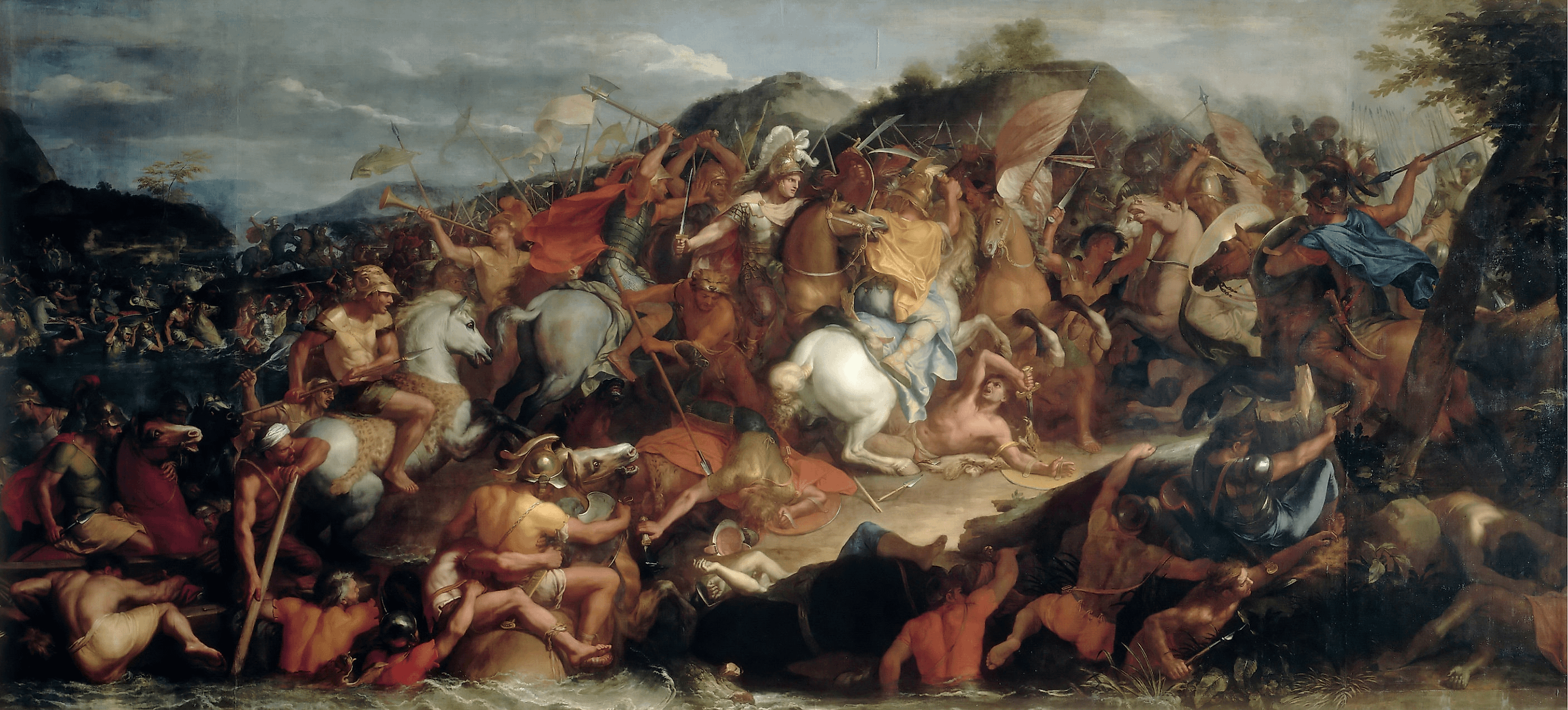
Alexander put all these concerns to rest with the first major engagement of the Persian campaign, the Battle of Granicus in 334 BCE. The Macedonians and Persians met on opposite sides of the Granicus River. Rather than waiting a day to begin the crossing, which is what most of his advisors suggested, Alexander immediately charged across with the Companion Cavalry. This completely caught the Persians off-guard, and they quickly fell apart once the center of their defenses collapsed.
While the victory itself was crucial, the manner in which it was achieved was even more important. By directly participating in the cavalry charge, Alexander showed that he was willing to die alongside his troops. This ensured that they were willing to do the same for him. Therefore, for the rest of the campaign, the Macedonian army fought with a ferocity unmatched by the Persians.
Impact And Legacy
Alexander the Great's military strategies encompassed a variety of approaches. The hammer-and-anvil technique built on what had been established by his father and was instrumental in most of Alexander's major victories. The oblique attack helped ensure that the Persians weren't able to leverage their superior numbers. Alexander's smart choice of battle location was also important in this regard. Finally, by personally leading cavalry charges, Alexander instilled a profound sense of loyalty and tenacity in his troops.