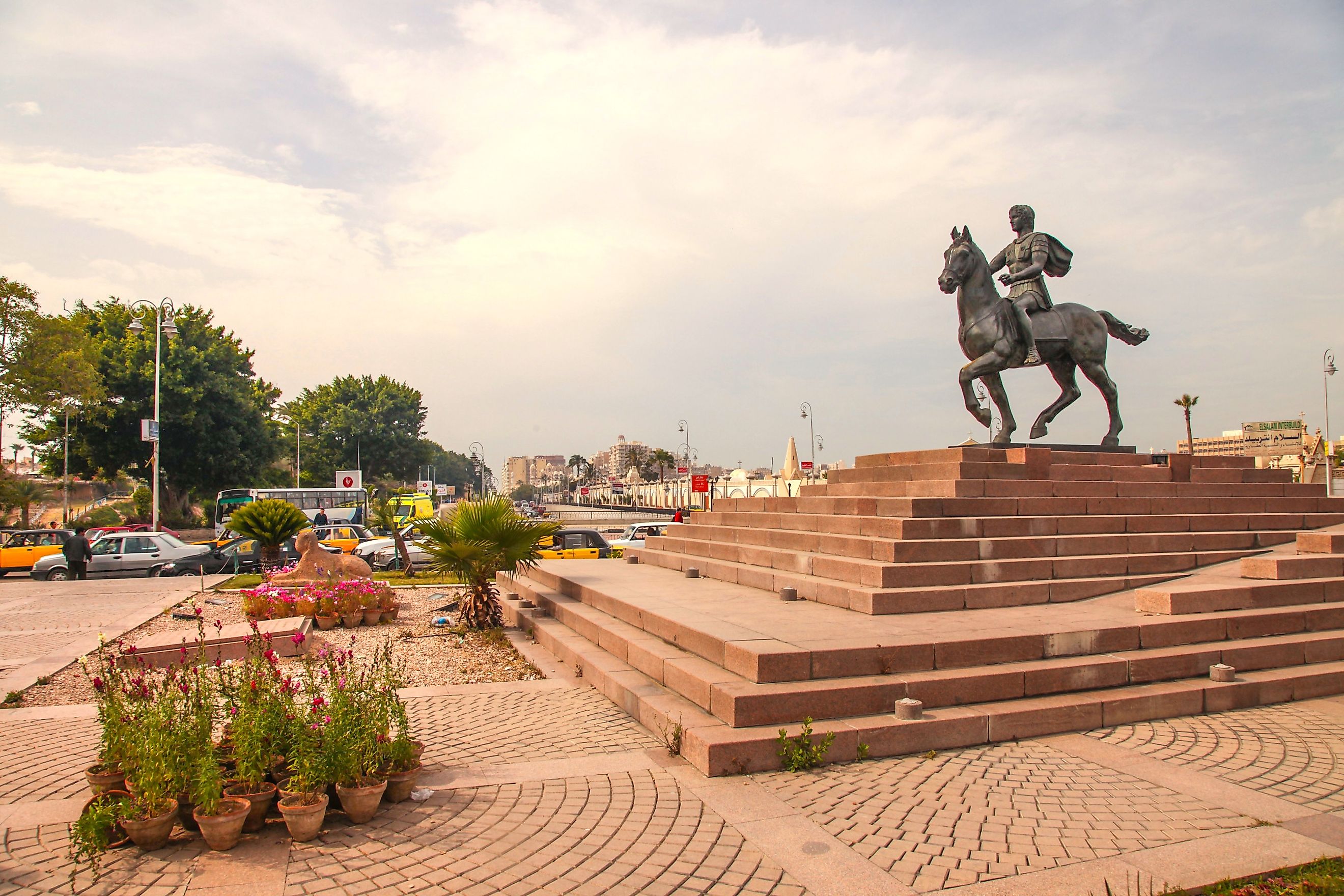
The Cities Founded By Alexander The Great
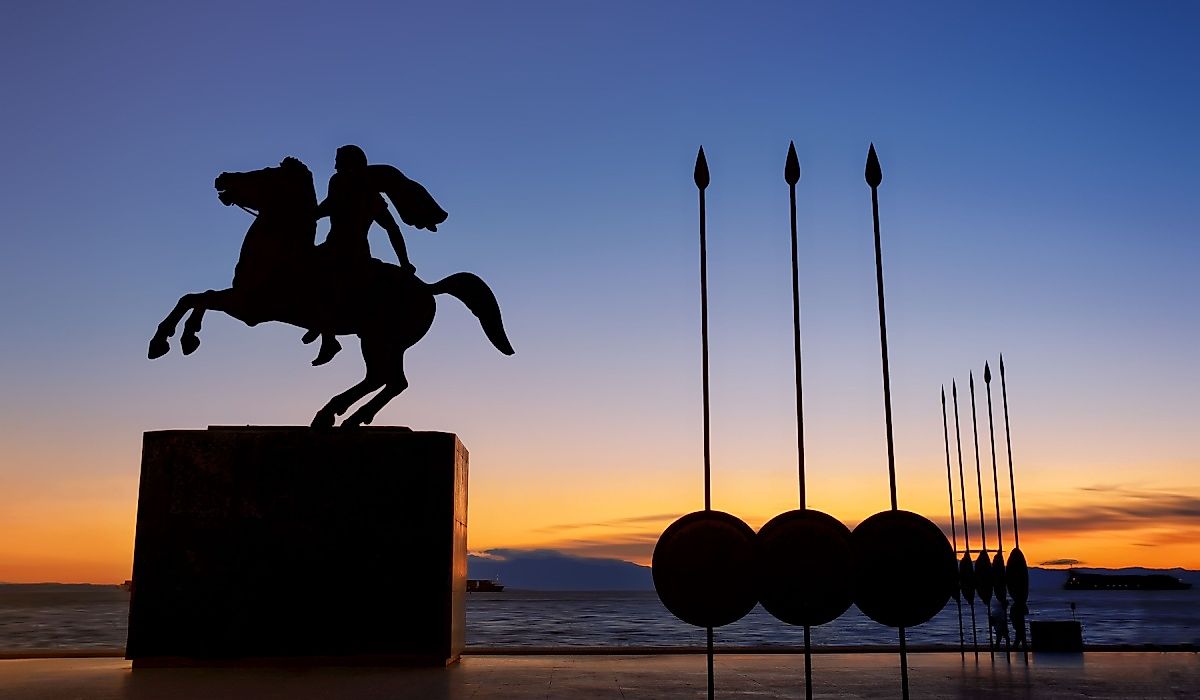
Alexander the Great was one of the most important figures in world history. As king of Macedonia, he created an empire stretching from Albania to India. He did so because of his adept military mind and superior army. Alexander was also a builder. While some ancient writers claim he founded as many as 70 cities, that number is likely exaggerated. Regardless, he still founded many cities, some of which still exist today.
Alexandria, Egypt

In 332 BCE, Alexander the Great entered Egypt as part of his campaign to conquer the Persian Empire. The country quickly surrendered and welcomed its new Macedonian Greek overlords. However, there was a problem. The traditional capital, Memphis, lay about 120 miles from the Mediterranean. Seeking easier access to the sea, Alexander chose to build a new city near the existing settlement of Rhakotis. He then left Egypt in 331 BCE, as Alexandria was being constructed, and never returned.
Alexander the Great died in 323 BCE under mysterious circumstances. Although his empire quickly fractured, his legacy endured. Alexandria was a major reason why. One of Alexander’s generals, Ptolemy I Soter, established a dynasty in Egypt and made Alexandria its capital. Its location on the Mediterranean gave it access to crucial trade routes, while its position on the western edge of the Nile basin allowed it to ship agricultural goods throughout the region. As wealth and people flooded into the city, it became a hub of culture and economic activity. This prosperity fueled the construction of buildings like the Library of Alexandria and the Lighthouse of Alexandria. Even though the Ptolemaic Dynasty ultimately fell to the Romans in 30 BCE, Alexandria retained its importance and remains an important global city.
Alexandria Eschate, Tajikistan

By 329 BCE, Alexander had defeated King Darius III and, in doing so, conquered most of the Persian Empire. However, a few holdouts remained. The empire’s Central Asian provinces were particularly difficult to subdue. Their rocky terrain, paired with fierce local resistance, meant that Alexander had to constantly contend with revolts and guerrilla warfare. Hence, he built many cities in the region that also served as military installations. One of the most important of these settlements was Alexandria Eschate.
Located on the Jaxartes River in modern-day Tajikistan, Alexandria Eschate (now known as Khujand) translates to “Alexandria the Furthest.” This name reflected its status as the most northerly outpost in Alexander’s empire. It supplied his troops and spread Greek culture throughout the region. Even after Alexander’s death, Alexandria Eschate remained a bastion of Greek culture in Central Asia. In this way, the city served as a crossroads between civilizations.
Herat, or Alexandria in Ariana, Afghanistan

Alexander’s conquest of the Persian Empire also brought him to Afghanistan. There, in the historical region known as Aria (which roughly corresponds to western Afghanistan), he founded Herat. Much like Alexandria Eschate, the city served a strategic purpose. Its location connected the Iranian plateau with Central Asia and lands further east. Whoever controlled it could therefore more easily move troops, administer agricultural districts, and communicate with distant provinces to the east and west.
Herat was ruled by numerous states after Alexander’s death. The Greek-based Seleucid dynasty first controlled it, followed by the Persian Parthian and Sasanian Empires. It then came under Arab Muslim control in the 7th century CE. Herat has since been ruled by even more different peoples and is currently part of Afghanistan. It would be inaccurate to say that the modern-day city is a direct continuation of the one founded by Alexander. We don’t know the exact location of ancient Herat, and it has undergone significant urban development over its 2,300-year history. Nevertheless, the city is a testament to the Macedonian king’s lasting influence.
Kandahar, Or Alexandria In Kandahar, Afghanistan

Herat wasn’t the only city Alexander founded in Afghanistan. Further south, he also established the city traditionally associated with modern-day Kandahar. Its location linked Central Asia with the Indian subcontinent. The city thus helped Alexander’s troops rest and resupply before they invaded India. After Alexander died, it was controlled by a vast array of empires and peoples, much like Herat. It also helped preserve Greek culture in the region. Perhaps most interestingly, Kandahar became associated with the spread of Buddhism. Around 258 BCE, Ashoka the Great, leader of the India-based Maurya Empire, had rock and pillar edicts inscribed around the city. Written in the local Greek and Aramaic languages, these edicts communicated Buddhist ideas.
Merv, Or Alexandria In Margiana, Turkmenistan

Deserts cover large swaths of Central Asia. Alexander knew this and founded oasis cities to supply vital agricultural resources. Merv was one such city. Although it was originally founded in the 3rd millennium BCE, Alexander’s legendary visit to it is often associated with its revitalization. Located in modern-day Turkmenistan, Merv also helped fortify the region and link trade routes between Persia and Central Asia.
The city transformed after Alexander’s death. Ancient sources assert that it was destroyed and rebuilt, but we can’t know for sure whether this happened. Regardless, it eventually grew into a major urban center. When the region came under Islamic rule, Merv’s importance grew even further, serving as a hub of trade, scholarship, and administration. During the 12th and 13th centuries CE, it may have even been the world’s largest city, with a population of about 500,000.
Impact And Legacy
Alexander the Great founded many cities. Alexandria is the most famous and important, serving as the capital of the Ptolemaic Dynasty and remaining a major global city to this day. Alexandria Eschate helped secure northern Central Asia and preserved Greek culture in the region after Alexander's death. Herat linked the Iranian plateau with Afghanistan, whereas Kandahar linked Afghanistan with India. Finally, Merv was a vital oasis settlement that grew into one of the most powerful and populous cities in world history.