The Most Important Battles Of The Roman Empire
Some of the most important moments in Roman history took place on the battlefield. The Battle of Cannae nearly broke Rome, Actium paved the way for the empire, and Adrianople revealed the vulnerabilities that would haunt it centuries later. While impossible to properly explain Rome's entire military history in a short article, focusing on a few important battles provides an understanding of its overall shape and trajectory. In its early centuries, several engagements, like the Battle of Cannae and the Battle of Actium, helped establish Rome as the dominant player in the Mediterranean. As time went on, more and more defeats, like the Battle of Adrianople, contributed to its decline.
The Battle Of Cannae (216 BCE)

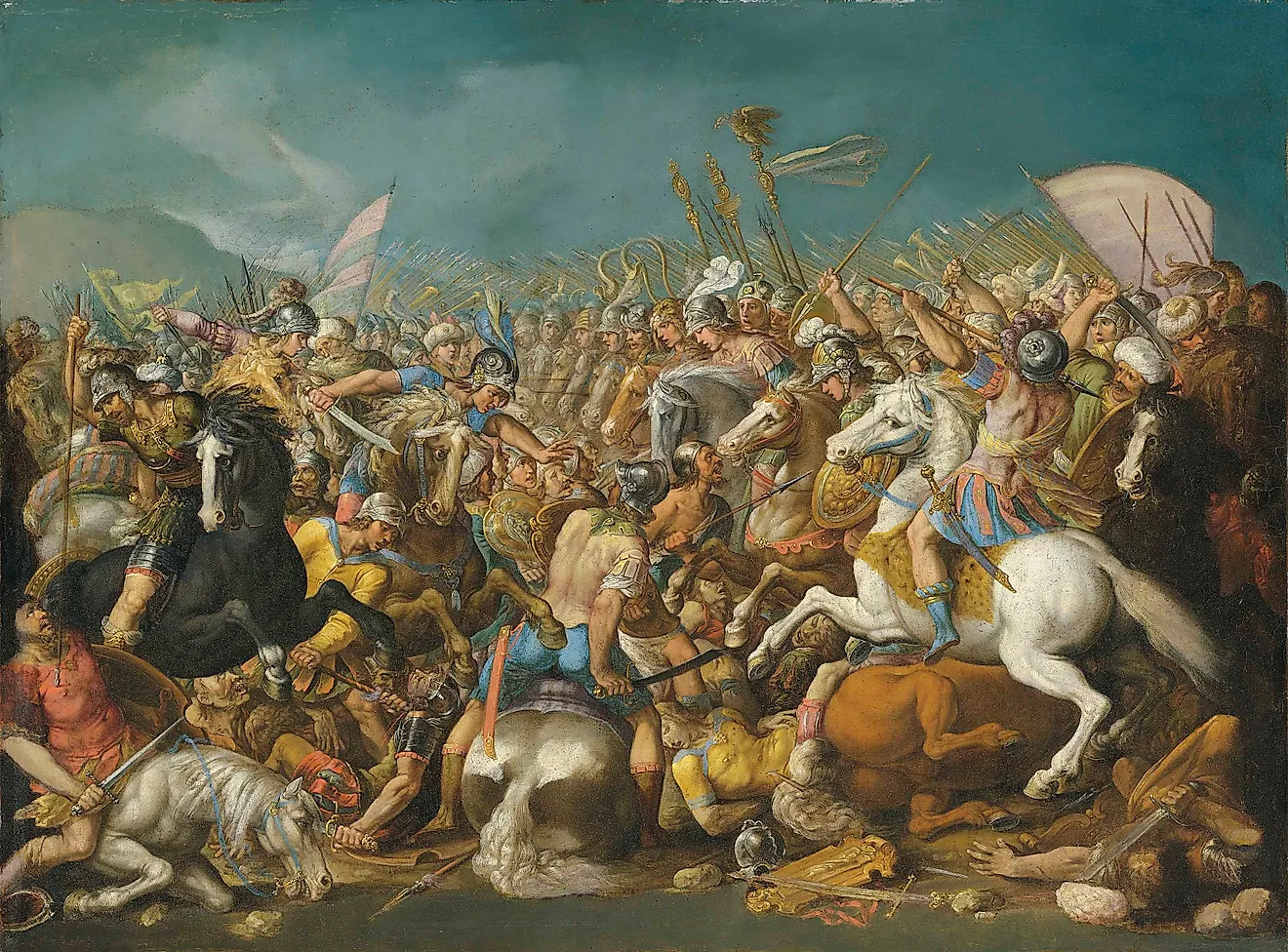
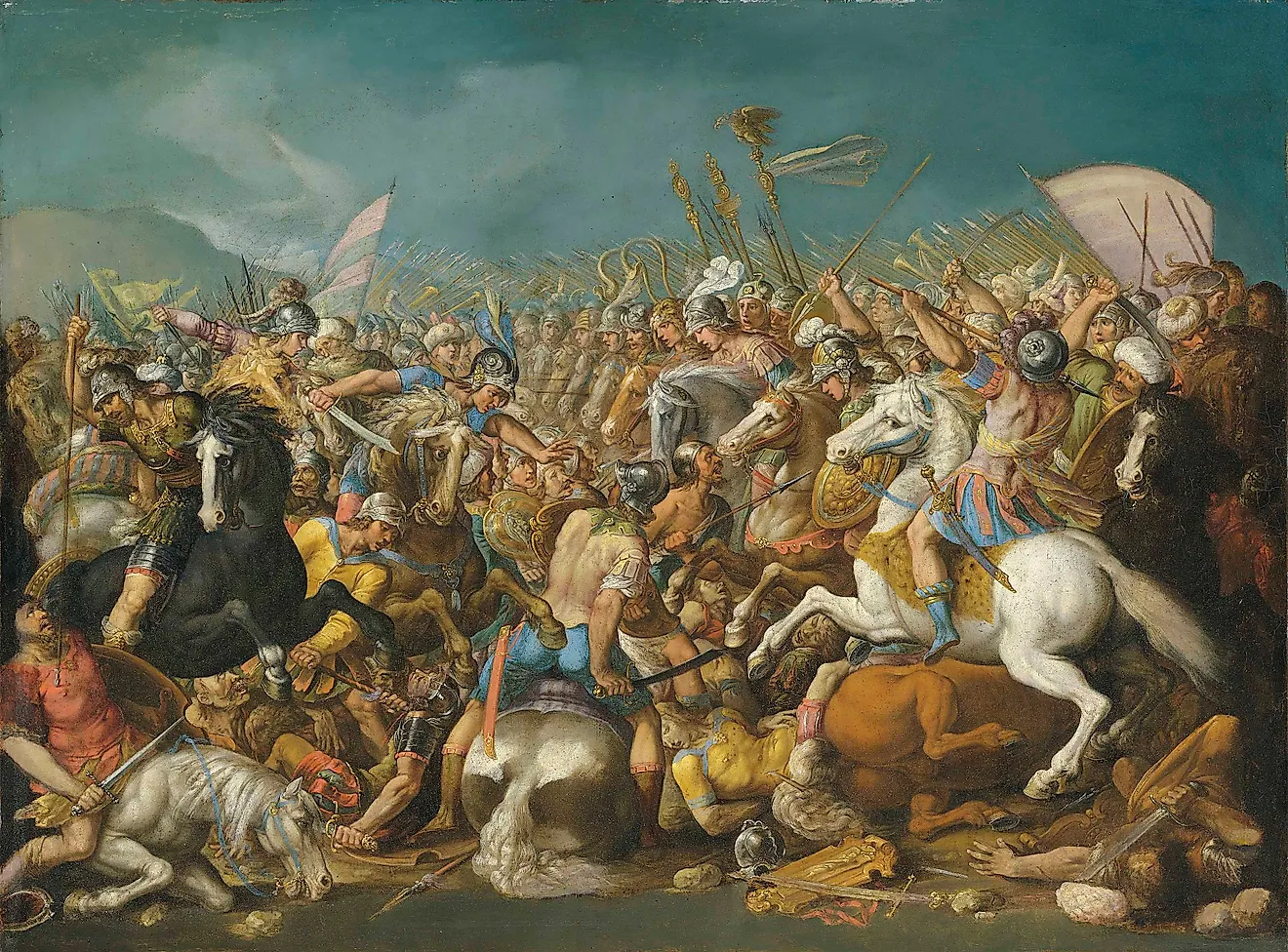
The Battle of Cannae was one of Rome’s first major disasters. Fought in southeastern Italy during the Second Punic War, the Romans faced off against Carthage, led by their famed general Hannibal. Despite being outnumbered nearly two to one, Hannibal’s superior tactics resulted in Carthage encircling the Romans. They were subsequently slaughtered, with estimates putting Roman casualties at between 50,000 and 70,000.

This defeat was good for Rome in the long run. It taught the government that, rather than stubbornly sticking to the same strategy, some flexibility was required. Therefore, under the leadership of dictator Quintus Fabius Maximus Verrucosus, the Romans adopted the Fabian Strategy. The purpose of this approach was to avoid major battles that could end in decisive defeat, and instead wait for Carthage to drain its resources. This eventually happened, and Rome won the war in 201 BCE.
The Battle Of Alesia (52 BCE)

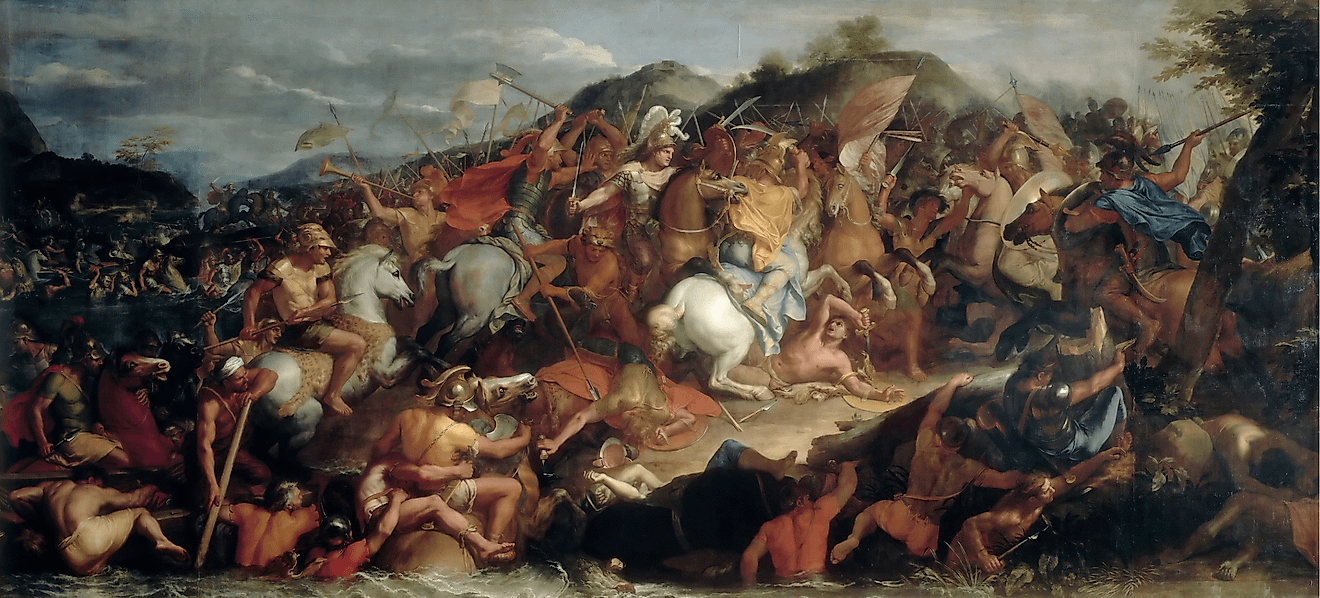
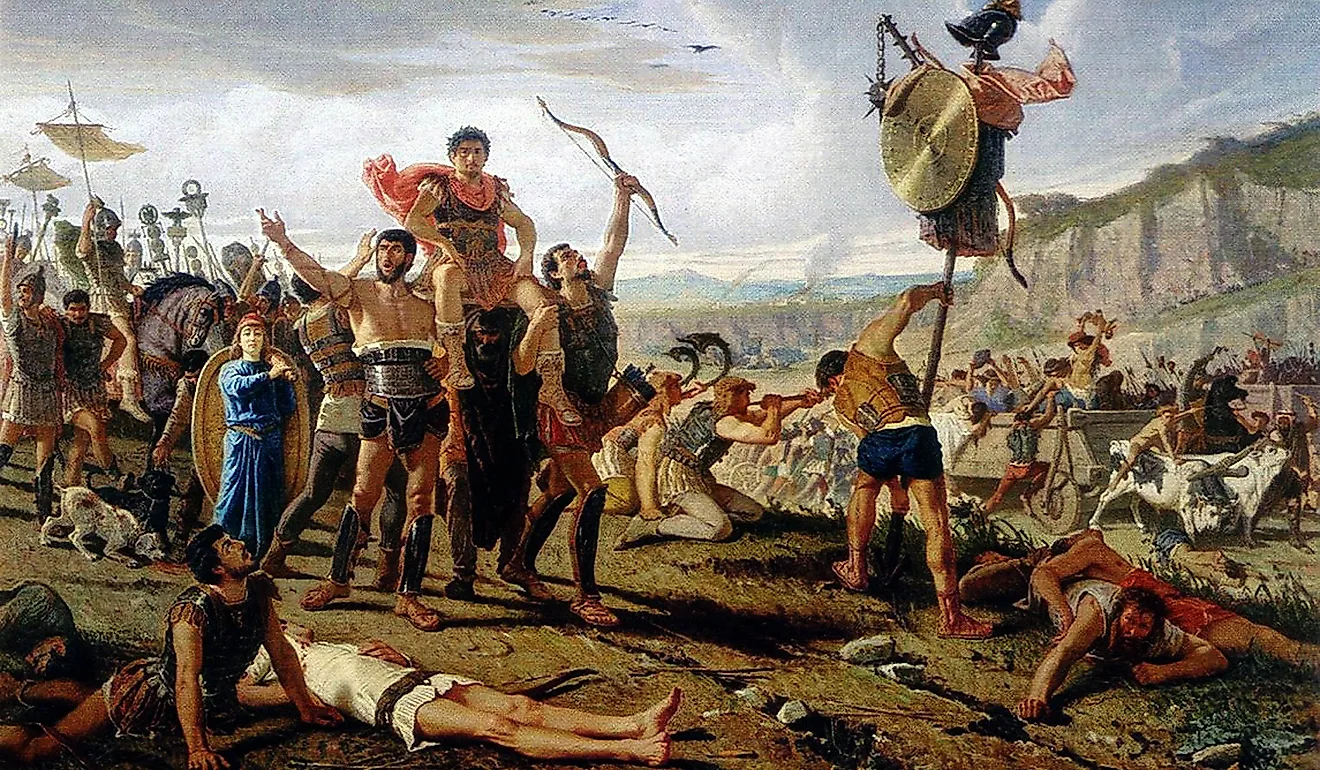
The Battle of Alesia was the decisive engagement of Julius Caesar's Gallic campaign. For the first five years, the campaign went smoothly, as Caesar used Rome’s superior tactics, technology, and divisions between the Gallic tribes to his advantage. This changed when the chieftain Vercingetorix united the Gauls in a rebellion against the Romans.
After causing him trouble for months, Caesar finally surrounded Vercingetorix in the town of Alesia and besieged it. One of the most famous and brutal siege battles in history, even a Gallic relief force of between 250,000 and 300,000 was unable to stop the Romans. It eventually ended in Vercingetorix’s surrender and Gaul being formally incorporated into the Roman Republic. The victory also made Caesar immensely popular, setting the stage for a power struggle that led to decades of civil war.
The Battle Of Actium (31 BCE)

In 44 BCE, Julius Caesar was assassinated by a group of senators concerned about his ever-growing power. As Rome again plunged into civil war, it was divided between Octavian in the west and Mark Antony in the east. Antony was also politically and romantically involved with the Egyptian leader Cleopatra. Octavian used this relationship to argue that Antony was disloyal to Rome, thereby turning the populace and political establishment against him.

The Battle of Actium in 31 BCE represented the climax of these tensions. A naval battle fought off the coast of western Greece, it saw Antony/Cleopatra’s forces clash against Octavian’s. After becoming clear that victory was next to impossible, Cleopatra fled to Egypt, and Antony followed. Their now leaderless and directionless fleet was quickly decimated. Without any meaningful military support, Antony and Cleopatra committed suicide the following year, making Octavian the undisputed leader of Rome. In 27 BCE, he (under the new name Augustus) declared himself emperor, marking Rome's transition from a republic to an empire.
The Battle Of Milvian Bridge (CE 312)

By the late 200s CE, Rome was too large to govern effectively under a single emperor. This prompted Emperor Diocletian to create the Tetrarchy in 293 CE. Four people now ruled Rome: two senior emperors, called Augusti, and two junior emperors, called Caesars. While a good idea on paper, the system didn’t work in practice as competing emperors vied for more and more power. The tetrarchy ultimately collapsed in 305 CE, and Rome descended into civil war.

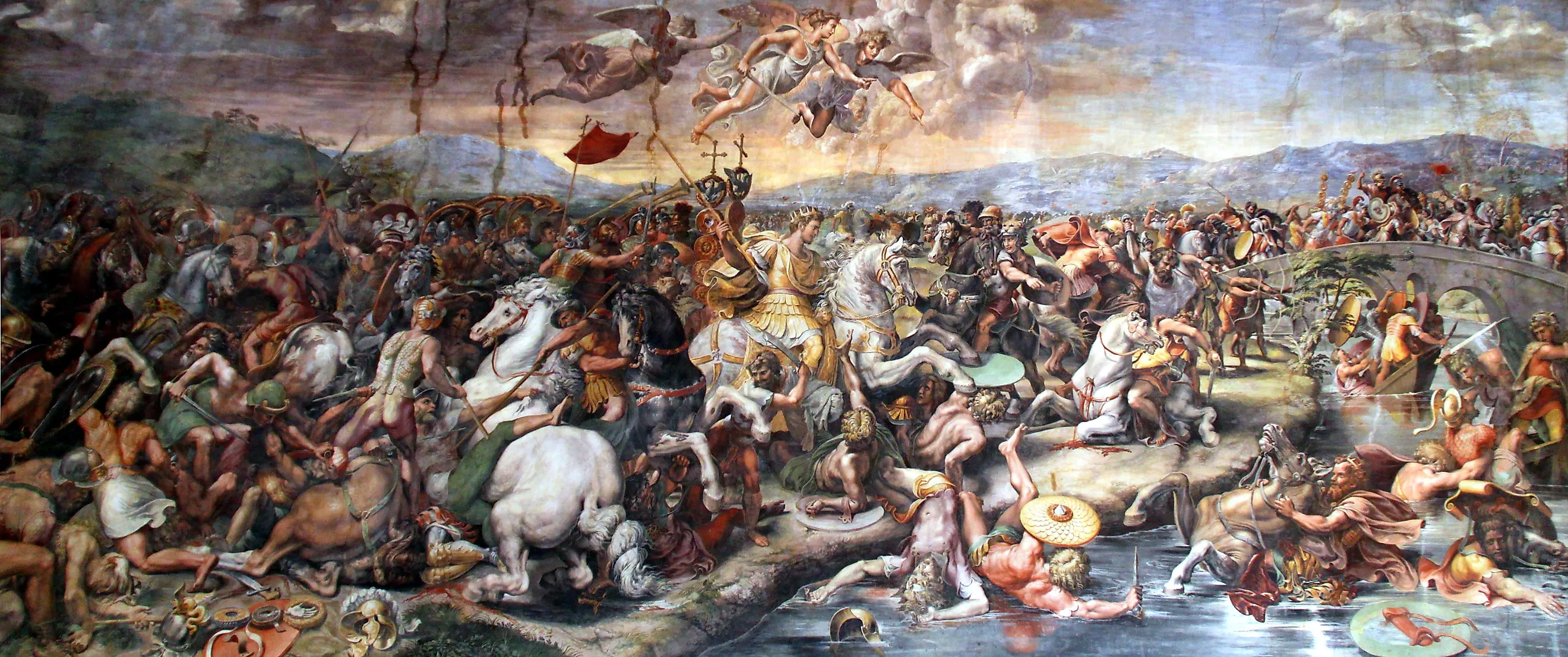
The Battle of Milvian Bridge was a crucial engagement in this conflict. Fought between Emperors Maxentius and Constantine near the Tiber River, winning meant becoming the sole ruler of Western Rome. The night before the battle, Constantine allegedly saw a cross of light superimposed over the sun alongside the phrase "In this sign, conquer". Inspired by this seemingly Christian vision, Constantine led his forces to victory the next day. By 324 CE, he had captured the entire empire. Constantine also converted to and legalized Christianity after the battle, paving the way for it to become the official state religion in 380 CE.
The Battle Of Adrianople (378 CE)

In the late 300 CE, the Huns (a group of people originating in Central Europe) began moving westward into Europe. Fearing for their lives, many Germanic tribes fled to Rome. One such group was the Visigoths (also known as “the Goths”), who received permission to cross the Danube River into Rome in 376 CE. Roman mismanagement quickly became problematic. The Goths were treated horribly and forced into starvation. Driven to desperation, they revolted, necessitating a military response by the Roman government.
Led by Emperor Valens, the Roman army met the Visigothic army outside the city of Adrianople on August 9th, 378 CE. The battle was an utter disaster. The Goths’ defenses proved too strong, and their cavalry completely overwhelmed the Roman cavalry. Emperor Valens was also killed. While not catastrophic strategically, the Battle of Adrianople did immeasurable damage to Roman morale and reputation. It shattered the myth of Roman invincibility and marked one of the most significant defeats ever suffered by the empire at the hands of a barbarian force. This paved the way for more barbarian invasions in the coming years, culminating in the collapse of the Western Roman Empire in 476 CE.
Ancient Rome’s Pivotal Battles
Taken together, these five battles tell the story of Rome's rise, transformation, and eventual decline. Cannae exposed Rome's weaknesses but helped shape the strategies that later secured victory. Alesia and Actium expanded Roman power and cleared the path for a new political order. Milvian Bridge changed the empire's religious future, while Adrianople revealed that even the strongest powers can falter. Separated by nearly 600 years, each battle left a lasting mark on Roman history and helped shape the ancient world.