How Big Was The Ottoman Empire At Its Peak?
The Ottoman Empire was one of the largest and most influential empires in world history. Beginning as a small Turkish frontier state in northwestern Anatolia during the late 13th century, it expanded across Europe, Asia, and Africa to become a global power that lasted for more than six centuries. At its greatest extent, the empire controlled approximately 5.2 million square kilometers (2 million square miles) of territory, stretching from Central Europe to the Arabian Peninsula and from the Caucasus to North Africa.
The size of the Ottoman Empire was remarkable not only for the land it controlled but also for its strategic position. The empire sat at the crossroads of continents, religions, and trade routes, allowing it to influence world events far beyond its borders. Understanding how large the Ottoman Empire became requires examining its origins, expansion, peak territorial extent, and eventual decline.
The Birth of the Ottoman Empire

The Ottoman Empire traces its origins to around 1299, when a Turkish leader named Osman I established an independent principality in northwestern Anatolia, in present-day Turkey. The region was undergoing significant political change. The once-powerful Byzantine Empire had weakened, while the Seljuk Sultanate of Rum had fragmented following Mongol invasions. Numerous Turkish principalities, known as beyliks, emerged across Anatolia. Among these was Osman's small state, located near the Byzantine frontier.
What distinguished Osman and his successors was their ability to expand steadily through military victories, strategic marriages, alliances, and the attraction of warriors seeking land and opportunity. Over time, the principality became known as the Ottoman state, derived from the Turkish form of Osman's name. Few observers at the time could have predicted that this modest frontier realm would eventually become one of history's greatest empires.
Expansion Into Europe

One of the most important developments in Ottoman history was the empire's movement into Europe during the 14th century.
The Ottomans crossed the Dardanelles and captured Gallipoli in 1354, when an earthquake had severely damaged the city's defenses. That victory gave them a permanent foothold in the Balkans. From there, they expanded rapidly into Southeastern Europe, defeating regional powers and incorporating large territories into the growing empire.
Major milestones included:
- Capture of Gallipoli (1354)
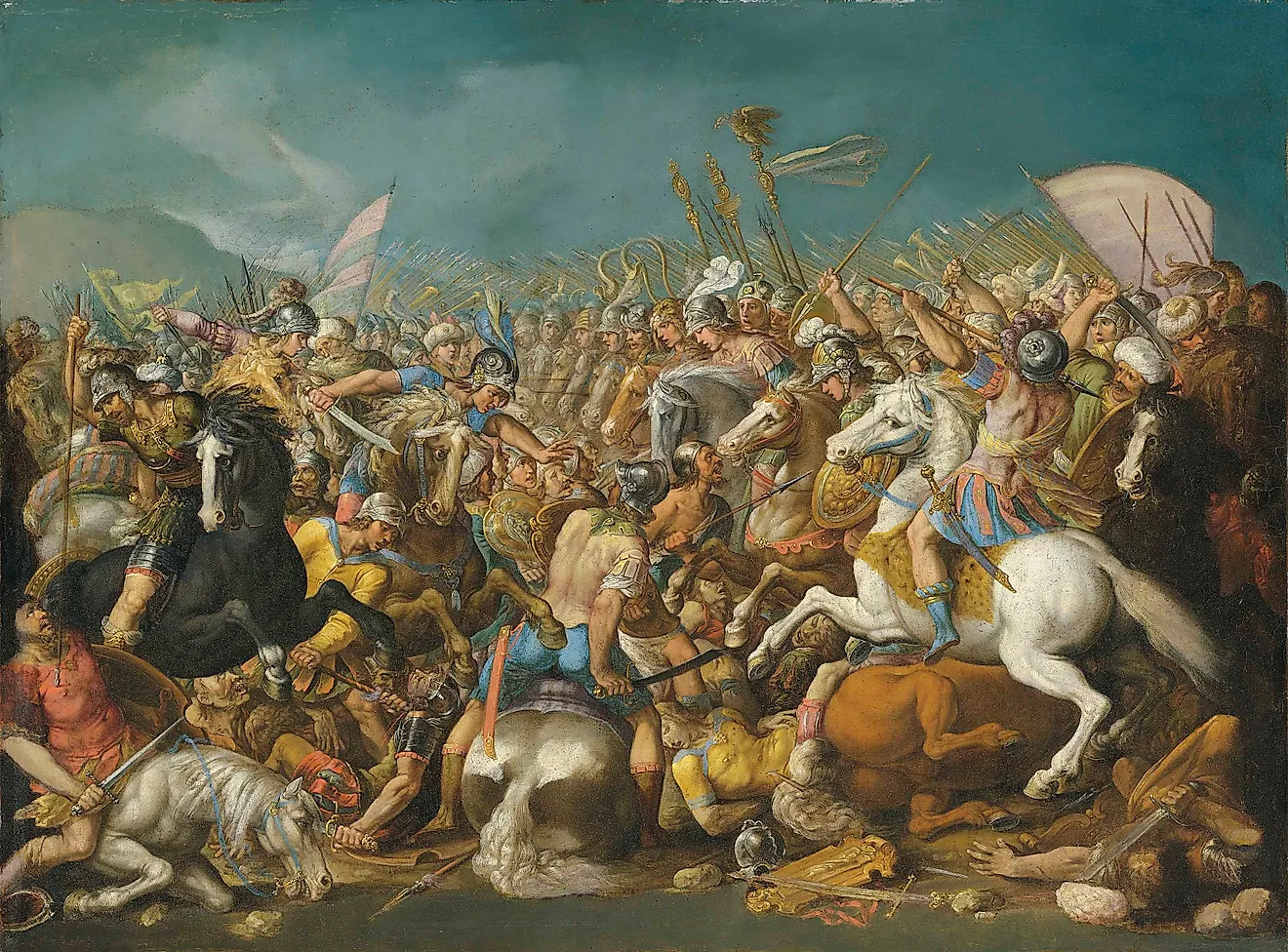
- Battle of Kosovo (1389)
- Conquest of Bulgaria
- Expansion into Serbia and Macedonia
- Consolidation of Ottoman rule throughout much of the Balkans
By the beginning of the 15th century, the Ottoman state had become a major regional power spanning both Europe and Asia.
The Fall of Constantinople

The single most significant turning point in Ottoman history occurred in 1453 when Sultan Mehmed II captured Constantinople. For more than a thousand years, Constantinople had served as the capital of the Byzantine Empire and one of the most important cities in the world. Its conquest brought the Byzantine Empire to an end and established the Ottomans as a major imperial power.
Mehmed transformed Constantinople into the Ottoman capital. The city became the administrative, economic, and cultural center of the empire. Although the city gradually became widely known as Istanbul during the Ottoman period, the name Constantinople remained in official use for centuries before the Republic of Turkey formally standardized Istanbul in 1930.
The conquest also strengthened Ottoman control over critical overland and maritime trade routes linking Europe, Asia, and the eastern Mediterranean, further increasing the empire's economic and strategic influence.
Building a Three-Continent Empire

The Ottoman Empire entered its golden age during the 16th century.
Under Sultan Selim I, the empire conquered the powerful Mamluk Sultanate, bringing Egypt, Syria, and Palestine under its rule, and the holy cities of Mecca and Medina acknowledged Ottoman suzerainty.
His successor, Suleiman the Magnificent, continued this expansion. Widely regarded as the empire's greatest ruler, Suleiman led successful military campaigns across Europe, North Africa, and the Middle East while overseeing legal reforms, economic growth, and cultural achievements.
During this period, Ottoman territory expanded across three continents.
Europe
The empire controlled or dominated:
- Greece
- Bulgaria
- Serbia
- Bosnia and Herzegovina
- Albania
- North Macedonia
- Montenegro
- Large portions of Hungary
- Parts of Croatia
- Tributary states in Romania
- Southern Ukraine/ territories around the northern Black Sea administered through the Ottoman vassal Crimean Khanate.
Asia
The empire ruled:
- Anatolia (modern Turkey)
- Syria
- Iraq
- Lebanon
- Israel and Palestine
- Jordan
- Western Arabia
- Yemen
- Portions of the Caucasus
Africa
Ottoman territories included:
- Egypt
- Libya
- Tunisia
- Algeria
- Strategic Red Sea coastal regions
By the late 16th century, the Ottoman Empire had become one of the world's dominant military and political powers.
How Big Was the Ottoman Empire at Its Peak?
The Ottoman Empire reached its maximum territorial extent around 1683, shortly before the Second Siege of Vienna.
At its peak, the empire covered approximately:
| Measurement | Size |
|---|---|
|
Total Area |
5.2 million sq km |
|
Total Area |
2 million sq miles |
|
Continents Controlled |
3 |
|
Estimated Population |
25-35 million |
|
Major Seas Controlled or Dominated |
Eastern Mediterranean, Black Sea, Red Sea, Adriatic Sea |
To appreciate the scale of this territory:
- It was larger than modern India.
- It was roughly 3 times the size of Alaska.
- It stretched roughly 2,500 miles (4,000 km) across, east to west.
- It encompassed dozens of ethnic groups, languages, and religious communities.
The empire's true strength was not simply its size but its strategic position.
A Crossroads of Continents

The Ottoman Empire controlled some of the world's most important geographic chokepoints, including the Bosporus and Dardanelles straits. These waterways linked the Black Sea to the Mediterranean and provided the empire with tremendous economic and military advantages. The Ottomans also controlled major trade routes connecting Europe with the Middle East, Central Asia, and North Africa.
The Northern Frontier
In Europe, Ottoman armies pushed deep into Central Europe. Following victories against Hungary and other regional powers, the empire advanced to the gates of Vienna. The Second Siege of Vienna in 1683 represented the high-water mark of Ottoman expansion in Europe. Although the siege ultimately failed, the empire remained one of the world's largest states.
The Southern Frontier
In Africa, Ottoman authority extended across much of the Mediterranean coast. Egypt became one of the empire's wealthiest and most important provinces, providing agricultural resources, tax revenue, and access to trade routes connecting the Mediterranean and Indian Ocean worlds.
The Eastern Frontier
To the east, Ottoman territory stretched across Mesopotamia, the Levant, and portions of Arabia. These lands included many of the Islamic world's most important cities and pilgrimage routes, thereby enhancing the empire's religious significance and political power.
Strategic Geography, Military Innovation, and Economic Power

The Ottoman heartland lay between Europe and Asia. This location enabled the empire to control trade routes, migration corridors, and access points for military operations. The empire thus governed a remarkably diverse population. Through systems that allowed local communities significant autonomy in religious and cultural matters, Ottoman rulers maintained stability across vast territories. Major cities such as Istanbul, Cairo, and Damascus became major centers of trade, administration, and learning. This economic strength helped support one of the largest military establishments of the early modern era. The Ottomans were indeed among the earliest states to effectively integrate gunpowder weapons and large siege artillery into military operations. Their use of advanced cannons played a critical role in the capture of Constantinople and numerous later victories.
The Decline of the Ottoman Empire

Although the Ottoman Empire remained powerful after 1683, the failed siege of Vienna marked the beginning of a gradual shift in the balance of power.
Over the next two centuries, the empire faced mounting challenges:
- Military defeats against European rivals
- Economic competition from Atlantic trade networks
- Nationalist movements within imperial territories
- Administrative inefficiencies
- Industrialization gaps compared to Western Europe
The empire steadily lost territory throughout the Balkans during the 18th and 19th centuries.

Around the 19th century, the Ottoman Empire had become known in Europe as the "Sick Man of Europe," reflecting its declining influence and shrinking territory. Its final collapse came after participation in World War I. Fighting alongside the Central Powers, the empire suffered defeat and faced partition by the victorious Allies.
Nationalist forces led by Mustafa Kemal Atatürk successfully resisted foreign occupation in Anatolia and established the foundations of modern Turkey. In 1922, the Ottoman Sultanate was abolished, ending more than 600 years of Ottoman rule.
The Legacy of a Giant Empire
At its peak, the Ottoman Empire covered approximately 5.2 million square kilometers (2 million square miles) across Europe, Asia, and Africa. It controlled strategic waterways, major trade routes, religious centers, and some of the world's most important cities.
Its influence continues to shape modern geopolitics, culture, architecture, cuisine, and national borders throughout the Balkans, the Middle East, and North Africa.
While many empires rose and fell throughout history, few matched the Ottoman Empire's combination of size, longevity, and strategic importance. For more than six centuries, it stood as one of the world's defining powers. At its height, it was among the largest and most influential empires ever to exist.