Was The Fall Of The Roman Empire Inevitable?
Conventional wisdom says that all empires rise and fall. The Roman Empire is often used as an example of this point. Despite being one of the most powerful states in the world for hundreds of years, it eventually collapsed due to a variety of seemingly inevitable factors. However, were they inevitable? Did the Roman Empire fall as a result of uncontrollable forces that would have toppled any power? Unsurprisingly, the answer to this question is complicated. Rome, particularly the Western Roman Empire, faced a series of systematic problems that made its end very likely. At the same time, the survival of the Eastern Roman Empire and past reforms suggest that these challenges could have been overcome.
Territorial Overreach

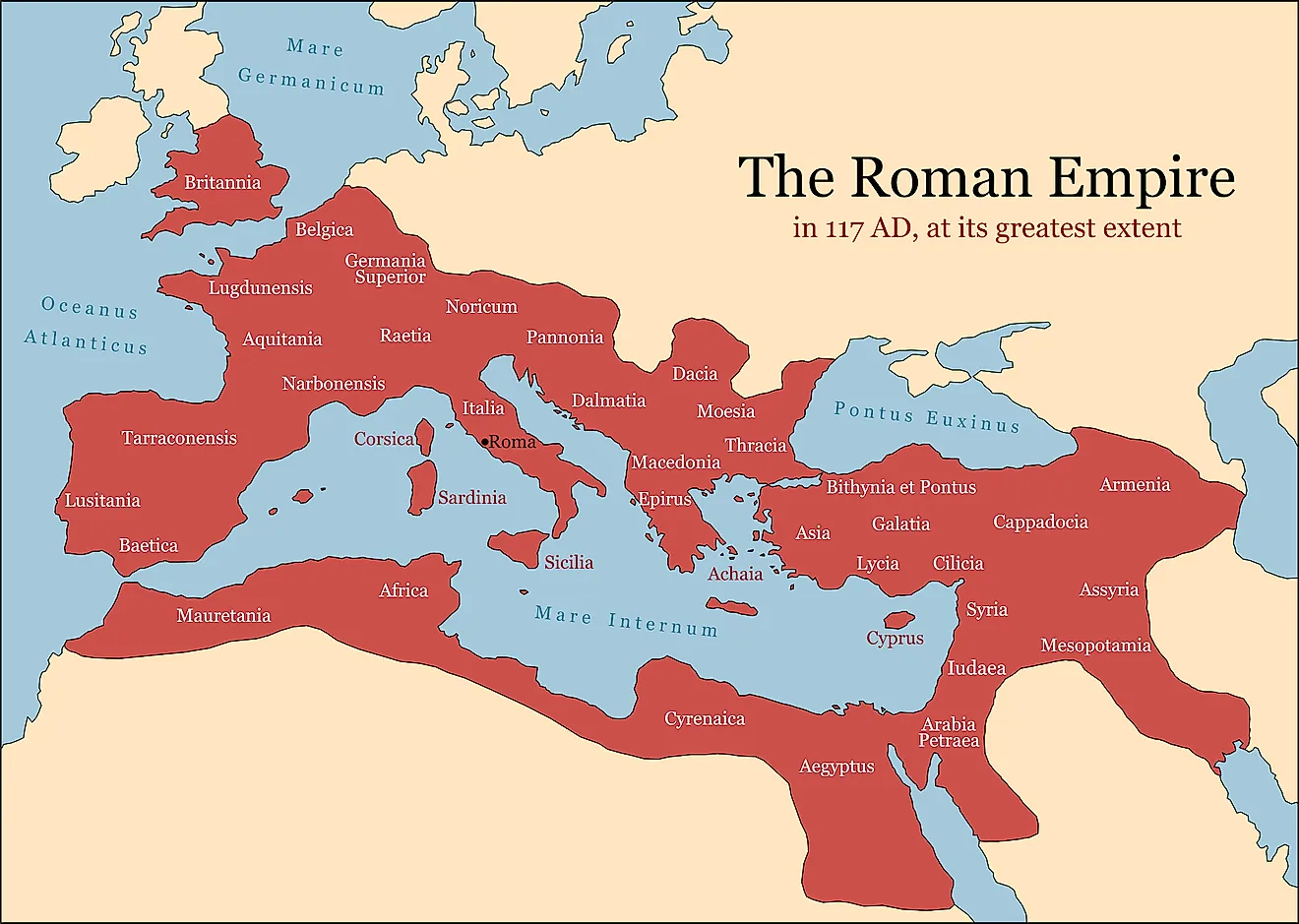
At its peak expansion in 117 CE, the Roman Empire stretched from Britain to Mesopotamia. While not quite as big by the 3rd, 4th, and 5th centuries, its size still posed major challenges. The military costs of defending a multicontinental empire were enormous and increasingly untenable. An inability to properly defend itself then made the empire more vulnerable to barbarian invasions. Slow communication from region to region also made it difficult for the government to understand specific local problems and adequately address them.

To combat these problems, Rome split into an Eastern and Western Empire in 395 CE. By having two emperors, two capitals, and two governments, the aim was to be better able to recognize foreign threats, understand local issues, and focus resources. While this goal was achieved in the east, the Western Empire’s problems were only exacerbated by this administrative split. With less economic and military aid to rely upon, it ultimately fell in 476 CE.
Systemic Economic Problems

Systemic economic problems are another reason why the fall of the Roman Empire was considered inevitable. Political instability resulted in civil wars that drained the state’s treasury. Barbarian invasions also made taxation difficult in places like Gaul, Spain, and North Africa. To compensate for the loss of revenue, the government increased taxes on the areas it could properly govern. This resulted in many people fleeing, since they were unable to handle the increased financial burden. When combined with less economic activity in the 3rd, 4th, and 5th centuries CE due to increasingly dangerous trade routes and severe inflation, the Roman economy was borderline catastrophic in the late stages of the empire’s existence.
Political Instability

Political instability contributed to these economic woes. Roman emperors were not chosen based on hereditary factors, nor was there a clear succession process. Emperors, therefore, frequently competed for power, which often spiraled into armed conflict. The clearest example of this occurred between 235 and 284 CE. Known as the Crisis of the Third Century, it began when Emperor Severus Alexander was assassinated in 235 AD. The next fifty years saw the rise and fall of over twenty emperors as Rome descended into civil war. The empire subsequently became more vulnerable to barbarian invasions, and its already struggling economy was put under more pressure. Even when the civil war was over, the authority of Roman emperors was greatly diminished, and regional actors (like barbarian generals) gained more influence.
The Eastern Empire Survived

While all the factors discussed so far certainly make it clear why the Roman Empire fell, they still don’t really answer the question of whether its fall was inevitable. The longevity of the Eastern Roman Empire (known retroactively as the Byzantine Empire) further complicates this question. While the Western Roman Empire fell in 476 CE, its Eastern counterpart survived and thrived for the next thousand years. It too eventually fell to the Ottoman Empire in 1453 CE; however, the sheer length of time between this and the end of the Western Roman Empire means that the two events don’t share a causal link.
Reforms Worked In The Past

A history of functional reforms further complicates the inevitability narrative. Rome began as a monarchy in the 700s BCE, but centuries of tyranny led to its replacement by a republic in 509 BCE. For a time, this system, built on checks and balances and power sharing, functioned well and oversaw Rome’s transformation from a small city-state into a Mediterranean-wide power. However, it also eventually faced challenges, since it was designed to govern a much smaller state than Rome had become. The government then again shifted and became an empire in 27 BCE, in which an emperor had absolute power to act quickly and decisively. This system led to 200 years of prosperity known as the Pax Romana.
Was The Fall Of The Roman Empire Inevitable?
The precedent of reforming to solve seemingly existential threats suggests that Rome did not fall because of unsolvable problems, but rather because the government did not come up with the right solutions. Maybe a cleaner succession process could have saved Rome. Maybe the split between East and West was necessary, but both empires should have provided each other with more economic and military aid. Or, maybe an entirely new political system was needed. It’s impossible to say that any of these measures would have prevented the fall of the Roman Empire. Nonetheless, the history of successful reforms suggests that they very likely could have.