How Spartan Warriors Were Really Trained
Ask most people to picture a young Spartan in training and they will describe a boy learning to fight. He is holding a spear before he can hold a spoon, running drills until he drops, hardening into a soldier one bruise at a time. The real program was stranger and far more interesting than that. Boys in ancient Sparta spent years learning to sing in tune, to move in step with a chorus, and to go hungry without complaint, and every one of those lessons was pointing at the same thing. The Spartans had decided that a soldier is made long before he ever picks up a weapon, and they built an entire childhood around that idea.
They called it the agoge, a word that meant something close to "a raising" or "a rearing." It was run by the state, and for a Spartan boy it was not one part of growing up but the whole of it. Sparta itself operated less like a city than like a permanent camp, where the work of every citizen fed back into the army in one form or another. What follows is how that machine actually shaped a child, and why so little of it looked like combat.
Leaving Childhood and Entering the Agoge

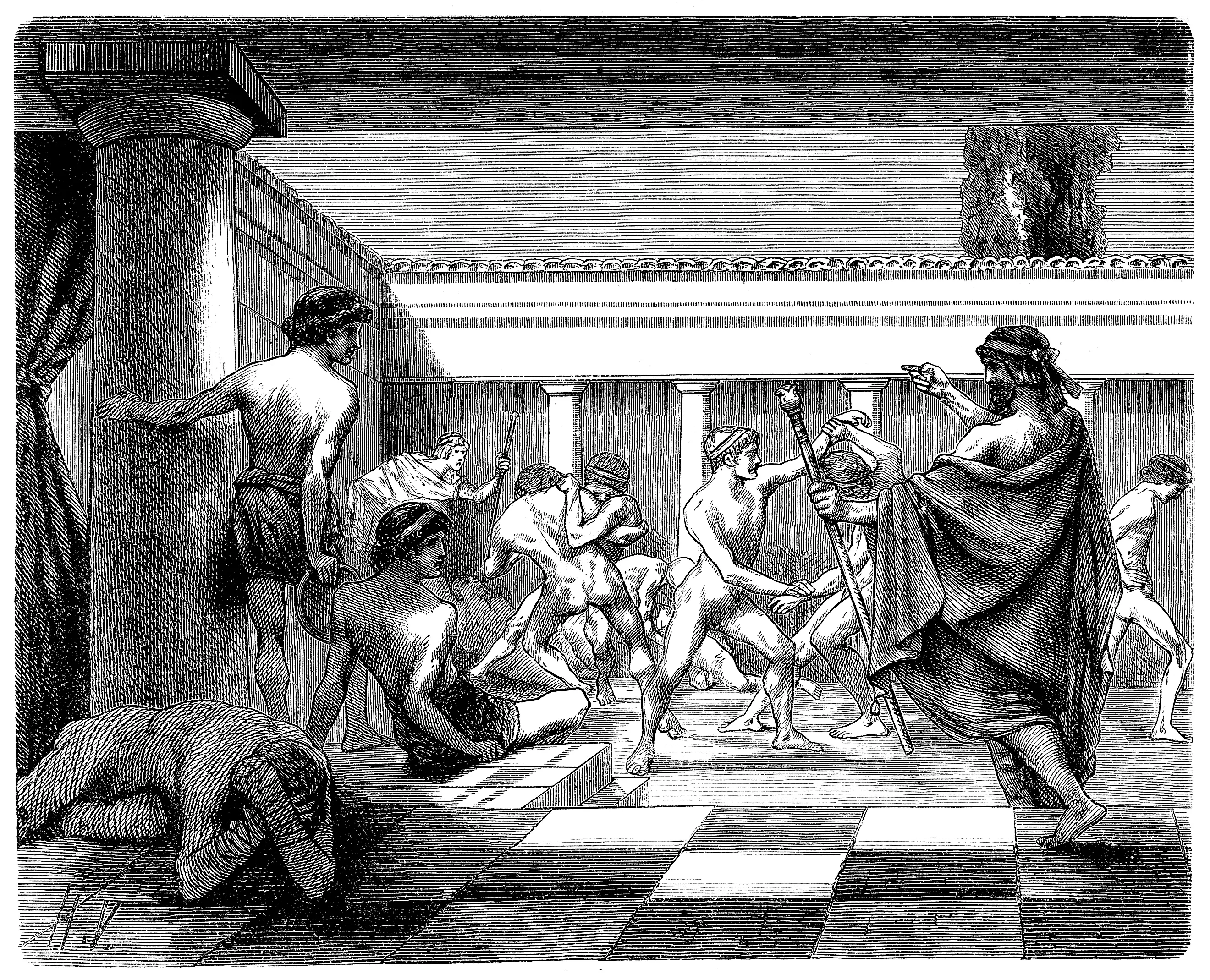
A Spartan boy's real life began at seven. That was the age his family handed him over, and from that day the state, not his parents, decided what he ate, where he slept, and who he answered to. The boys were sorted into packs under the eye of older Spartans and taught to treat every grown man of their father's generation as a kind of parent. The point was to loosen the pull of the family and replace it with loyalty to Sparta, and it started young enough that most boys would barely remember anything else.
Reading and writing were on the schedule, but only a little of it. The historian Plutarch, writing centuries later, noted that the boys learned just enough letters to get by, and that nearly everything else was aimed at teaching them to obey, to endure, and to win. Even the way they spoke was trained down to the bone. Where other Greeks admired a man who could hold a room with a speech, Spartans prized the opposite, and a boy learned to say what he meant in as few words as possible and then stop talking.
Hunger as a Teacher

The next lesson was discomfort, and it was deliberate. Comfort in the agoge was something a boy earned rather than received. The boys slept on beds they made themselves from river reeds they broke off by hand, and they were kept on rations thin enough to leave them genuinely hungry. That hunger was the assignment. Underfed on purpose, boys were expected to make up the difference by stealing food, and doing it well was treated as a skill worth having.
The twist is what happened when a boy was caught. Getting away with the theft earned nothing in particular, but getting spotted brought a beating, and the offense being punished was not the stealing. It was the clumsiness. A boy who could not lift a meal without being seen had failed at stealth, and stealth was the whole exercise. The hunger, the reeds, the risk all pushed toward one quiet outcome: a young Spartan who could feed himself in the dark and leave no trace, which is a useful habit for someone who will spend his adult life on campaign.
Foraging worked the same way. Boys were sent out to gather herbs and wild plants for the men above them, and they were expected to do it without a torch. Learning to find your way and fill your hands in complete darkness is tedious for a child and invaluable for a soldier, who may one day need to move at night across strange country without giving himself away. The pattern repeats all through the agoge. A task that looks like punishment turns out to be a rehearsal.
The Whip and the Altar

The harshest ritual grew straight out of the food lessons. At the sanctuary of Artemis Orthia, boys competed to snatch cheeses stacked on the altar while other boys stood guard with whips, and the contest, known as the diamastigosis, became a test of how much a young Spartan could take without flinching. Enduring the lash was understood as preparation for facing an enemy without fear of pain. Plutarch, who traveled to Sparta himself, wrote that the boys went at it proud and even cheerful, each one wanting to be the one who bore the most.
It is worth being careful about how deadly this was, because the popular version tends to exaggerate. Ancient writers do report boys dying under the whip, but the gruesome blood-spectacle that drew tourists from across the empire belongs mostly to the later Roman period, long after Sparta's fighting heyday, and modern historians who have studied the accounts conclude that deaths were rare rather than routine. The ritual was brutal. It was not the annual massacre it is sometimes made out to be.
Learning to Fight by Learning to Dance

Here is where the training turns genuinely surprising. The skill that made Spartan soldiers so hard to beat was not individual ferocity but coordination, the ability of a whole line of men to move as one body, and the Spartans taught that through music. Boys spent years singing in choruses and dancing in tight formation, and to Sparta this was not a break from soldiering. It was soldiering, practiced in a form that happened to have a tune. A boy who could hold his place shoulder to shoulder in a dance could hold his place shoulder to shoulder in a fight.
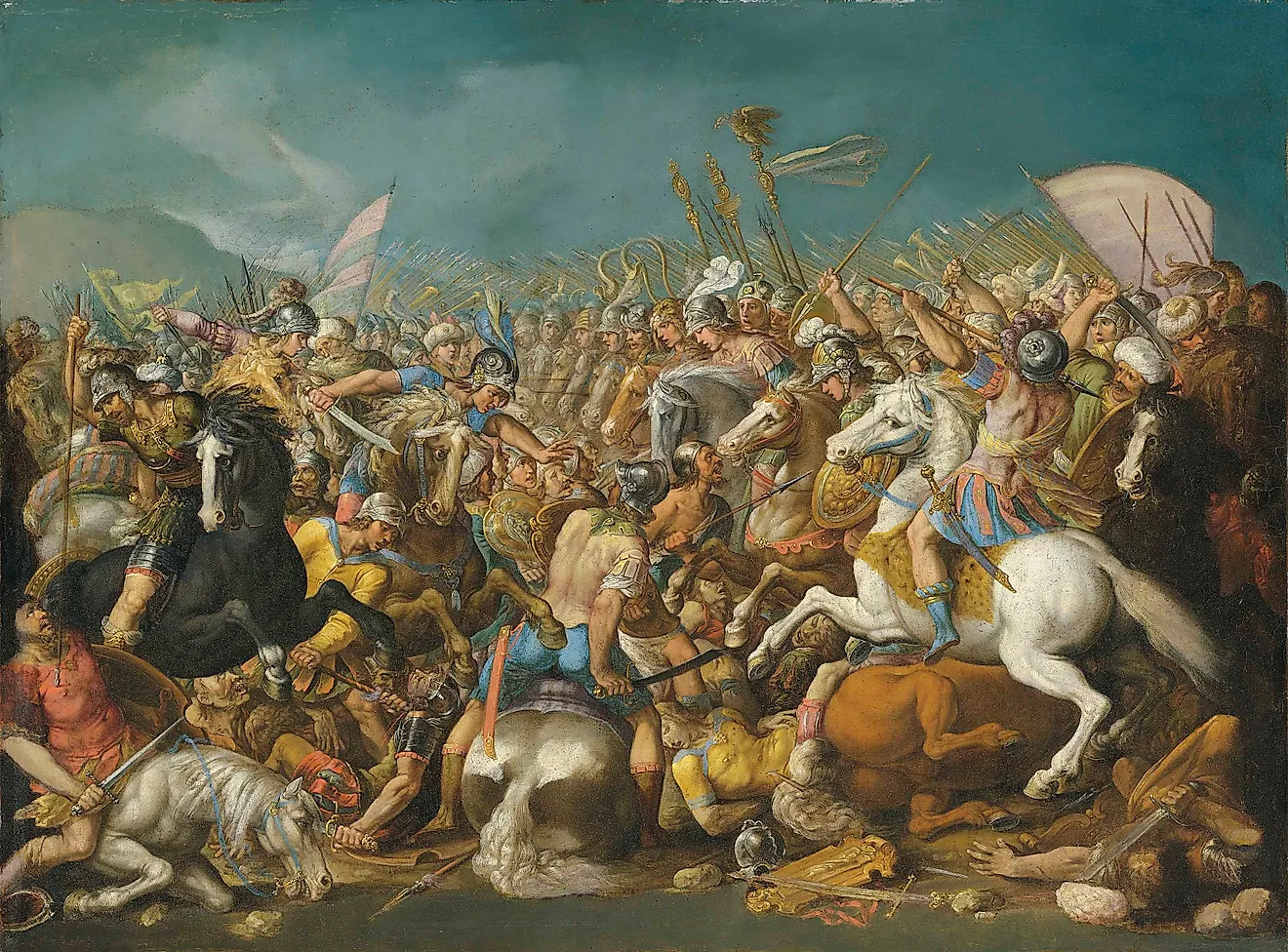
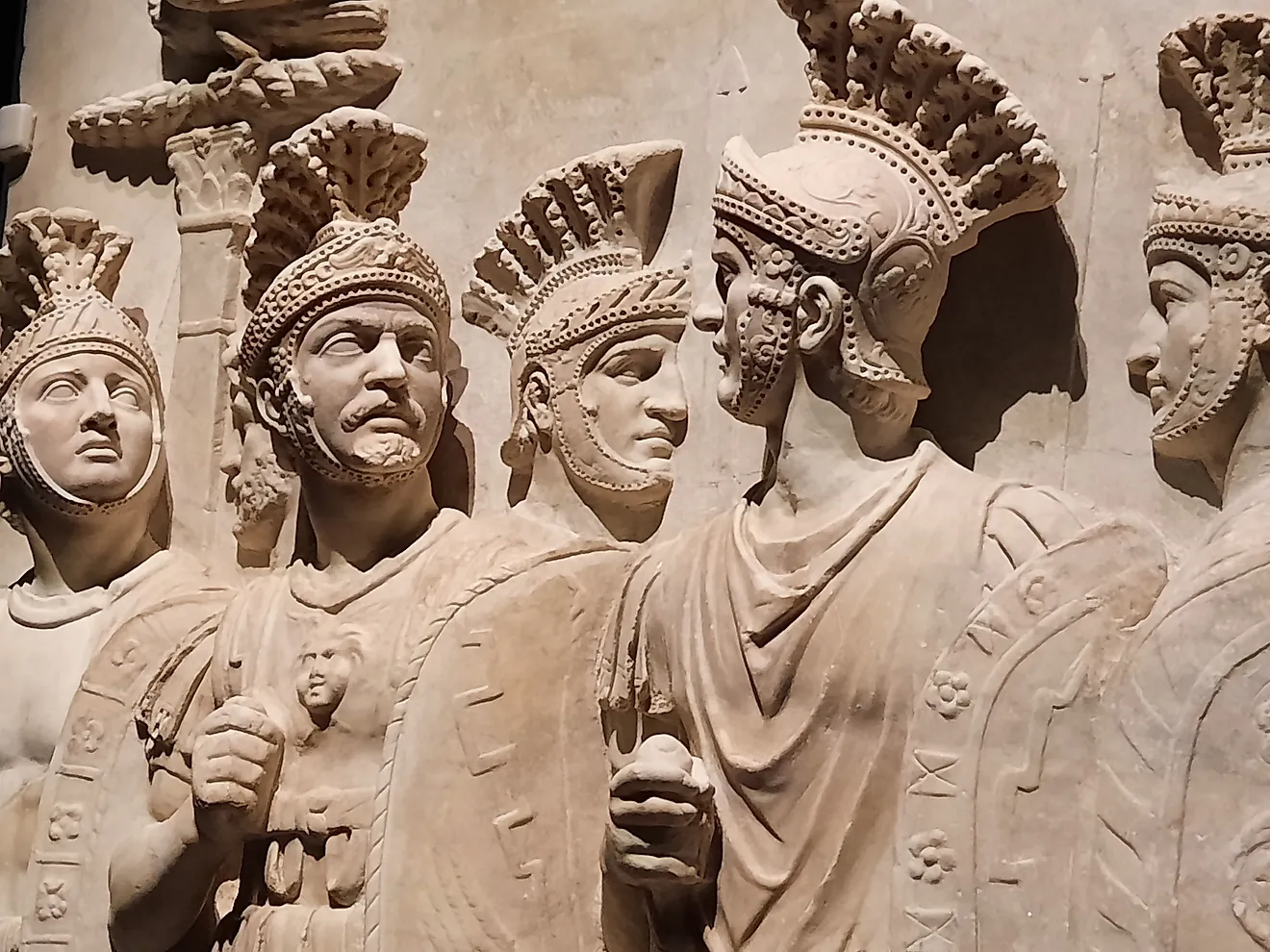
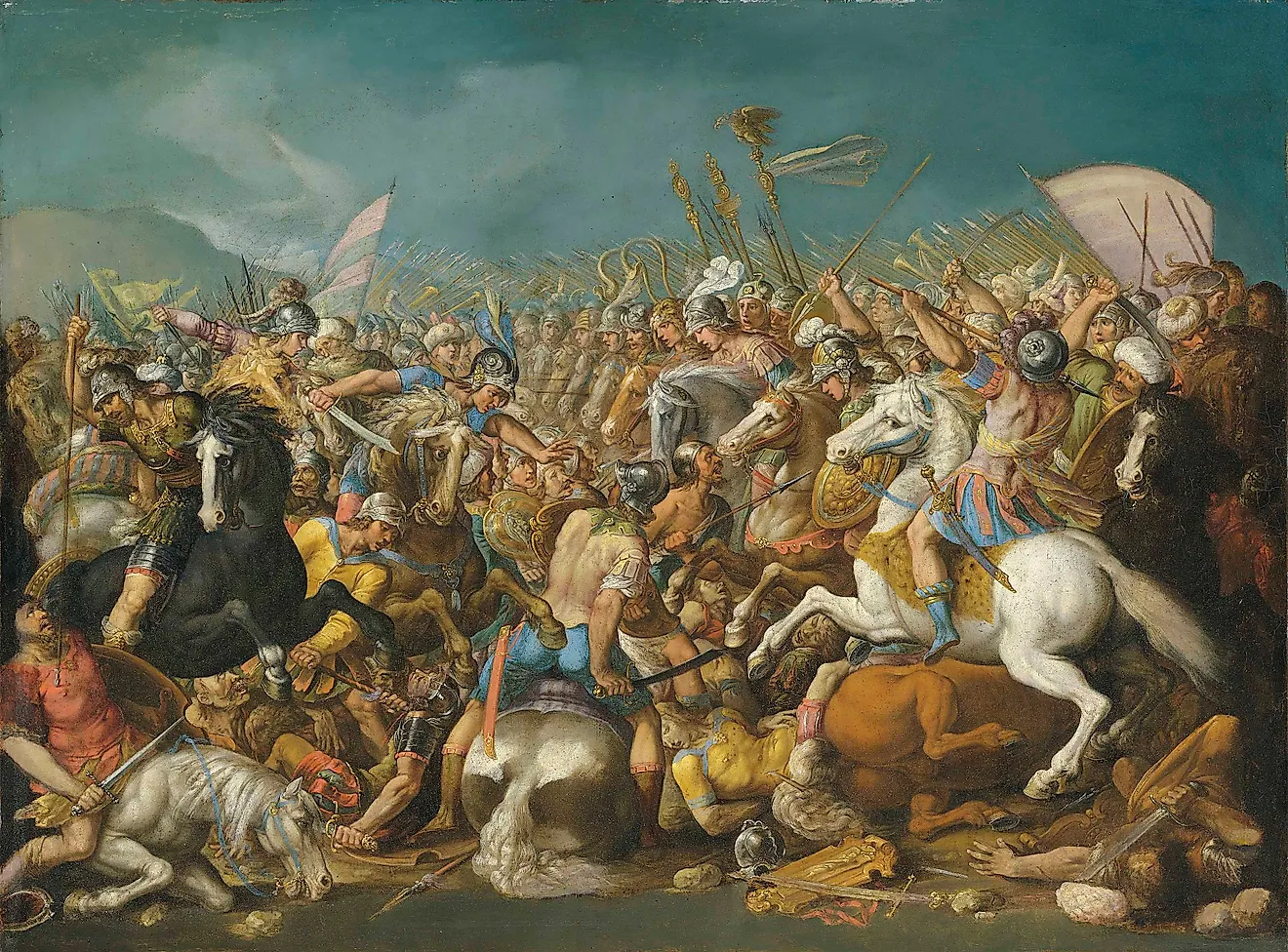
That fight took a specific shape: the phalanx, a block of men standing close together, each carrying a shield on one arm and a spear in the other. Because every shield partly covered the man to its owner's left, the formation only held if nobody broke ranks, which is exactly the discipline that years of chorus work had drilled in. The Spartans did not invent the phalanx, but they became its most feared practitioners, and the reason traces back to all those afternoons spent learning to move together to a beat.
The connection was not lost on the Spartans themselves. Lycurgus, the half-legendary lawgiver credited with designing their whole system, is remembered for binding music and warfare together on purpose, and a Spartan king would sometimes offer a sacrifice to the Muses before leading men into battle. The hope ran in two directions at once. The song was meant to carry the soldiers through the fight, and if things went well, the fight would become a song that outlived them.
A Soldier for Life

Growing up did not end a Spartan's obligations; it deepened them. A young man who came through the agoge had to be voted into a mess, a communal dining group whose members ate together every day and each contributed a share of food. A seat at the mess was the door to full standing, and being turned away from every one of them was close to social ruin, since it shut a man out not only of the shared table but of the citizen army the table represented. Belonging and soldiering were the same thing, and you signaled one by showing up for the other.
From there the commitment simply continued. Spartan men stayed bound to military service across their whole adult lives, and by custom they could finally step back from the army at sixty. The catch was grim and quietly telling: a great many never reached sixty at all, so for most Spartans the training that began at seven had no real endpoint short of death.
What the Spartans Understood About Making a Soldier
Strip away the myth and a clear philosophy shows through. The Spartans did not believe a warrior was built out of combat drills alone. They believed he was built out of everything, the hunger that taught patience, the darkness that taught stealth, the whip that taught composure, and above all the music that taught a hundred men to think and move as one. Ancient writers and modern historians agree on this shape even when they disagree about the details, and it upends the cartoon of the Spartan boy grinding through push-ups with a spear in his hands.
The deeper point is that Sparta was never really training individuals. It was training a group to hold together under pressure, and it used song and shared meals to do work that no amount of solitary toughening could. That is why the legend has outlasted the city that produced it by more than two thousand years, passing from the poets who first sang these men to the films and stages that carry them now. The story keeps its center wherever it travels. A Spartan's strength was never his alone. It came from the community that made him.