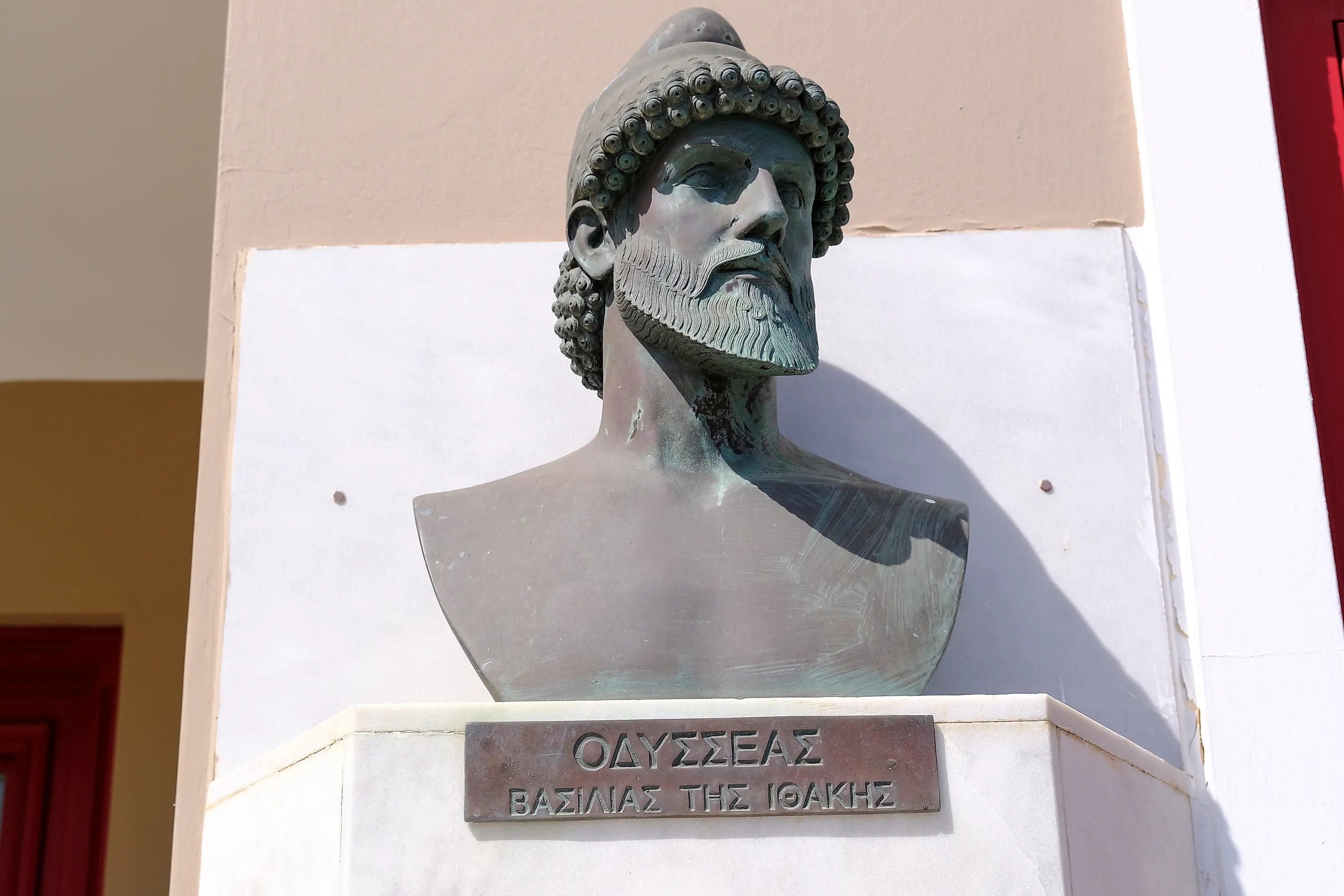
From Ithaca to IMAX, Here’s The Real Geography Behind Homer’s Odyssey
Hisarlik in Turkey, Djerba in Tunisia, Aci Trezza in Sicily, and the Greek island of Ithaca share an unusual distinction: each claims a chapter of Homer's Odyssey, the epic Greek poem. Christopher Nolan's film of the story, now doing gangbuster business on IMAX screens around the world, is the latest in a long line of adaptations to return to these same Mediterranean shores. From the excavated walls of ancient Troy to the pretty harbor towns of the Ionian Sea, here’s where the world's most famous fictional voyage meets the very real landscapes in which the adventure’s set.
Troy and the Ruins of Hisarlik, Turkey

The journey begins where the Trojan War ends after a ten-year siege of the city of Troy by an alliance of Greek kingdoms, something Homer recounted in the Iliad, the companion poem to the Odyssey. But it wasn’t until the 19th century that the mound of Hisarlik in northwestern Turkey, three miles from the southern entrance of the Dardanelles strait, was identified as Homer's Troy.
Heinrich Schliemann, a German businessman turned amateur archaeologist, began excavating here in 1870 at the behest of a friend. The excavations revealed nine different settlement layers spanning the years 3000 BC to 500 AD and are now considered of such historic significance that they were added to the UNESCO World Heritage List in 1998.
The best way to learn about the ruins and their history is to visit the Troy Museum in the village of Tevfikiye, near the archaeological site. Its galleries feature some 2,000 artifacts from the region’s Bronze Age settlements and also tell the story of the excavations. After exploring the ruins, head to the waterfront promenade in Çanakkale where you can still see the full-size wooden horse used in the 2004 movie, Troy.
Djerba and the Land of the Lotus-Eaters, Tunisia

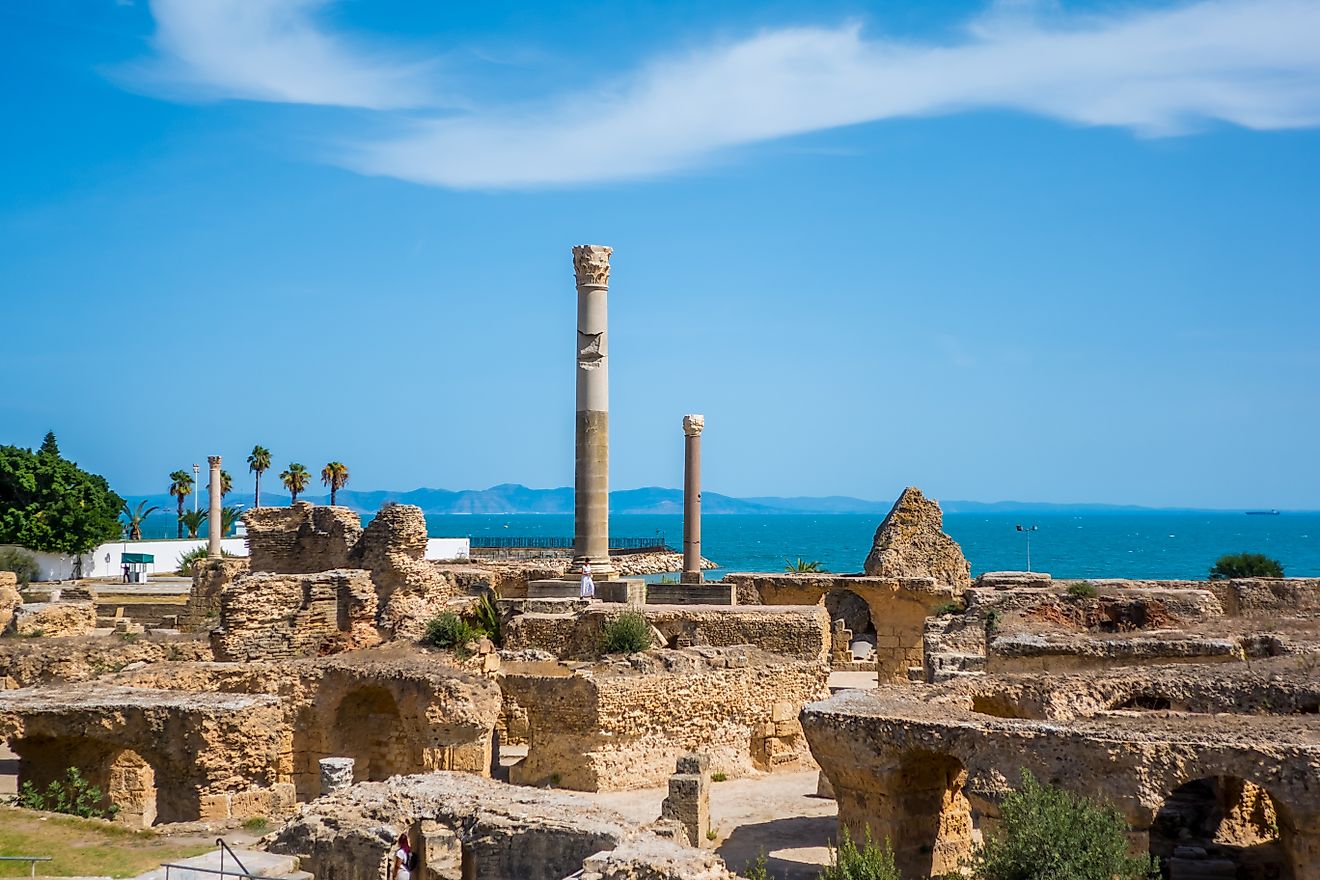
Nine days of storm-driven sailing after rounding Cape Malea, the southeastern tip of Greece's Peloponnese peninsula, Odysseus reached the land of the Lotus-Eaters. It was here that a honey-sweet fruit made his crew forget home entirely. Ancient writers placed the episode on Djerba, the largest island in North Africa, located in the Gulf of Gabès just off southern Tunisia.
Greek historian Polybius made the connection in the 2nd century BC. It was a claim that was later supported by Strabo, a Greek geographer. He noted that the island, known in antiquity as Meninx, even kept an altar dedicated to Odysseus. As for the lotus, the leading botanical candidate is the jujube, a date-like fruit that still grows along the North African coast.

Homer's island of forgetfulness is now one of Tunisia's top vacation destinations. Houmt Souk, the main town, runs traditional markets in the quaint, whitewashed squares around the covered souk, a roofed marketplace typical of North African towns.
In the village of Er Riadh, the Djerbahood project has transformed the alleyways into an open-air gallery of murals painted by international street artists. It’s also known for the nearby El Ghriba Synagogue, one of the oldest in Africa (it’s still an important place of pilgrimage).
Aci Trezza and the Rocks of the Cyclops, Sicily

The most frequently filmed episode of the poem belongs to the eastern coast of Sicily. It’s here that Odysseus blinds Polyphemus, a Cyclops who then hurls boulders at the escaping Greeks. Tradition places those boulders just offshore from Aci Trezza, a fishing village just north of Catania.
A cluster of black basalt sea stacks called the Faraglioni dei Ciclopi, the “Rocks of the Cyclops,” rises from the Ionian Sea. The largest, Isola Lachea, is now a protected nature reserve, with the surrounding waters forming the Isole Ciclopi Marine Protected Area. As for the rocks, they were in fact formed by lava from Mount Etna, the tallest active volcano in Europe.
The Cyclops has been a feature of pretty much every version of the Odyssey ever committed to film. Italian producers created Ulysses in 1954, the first major screen version of the poem, and even built a 35-foot mechanical Cyclops to battle Kirk Douglas in the title role. Much of the movie was filmed along the Mediterranean coastlines and islands described in the poem, giving audiences a sense of the real geography of Homer’s epic story.
Aeolus and the Aeolian Islands

After escaping the Cyclops, Odysseus winds up on the floating island of Aeolus, where the keeper of the winds sealed gusts into a leather bag as a parting gift. Within sight of home, the crew opened the bag, and the released winds blew them safely back to port.
The Aeolian Islands, a volcanic archipelago north of Sicily made up of Lipari, Vulcano, Salina, Stromboli, Filicudi, Alicudi, and Panarea, are named after the god of wind. It was Strabo who wrote that Stromboli was likely Aeolus’s home due to the island's continuously erupting volcano.
Christopher Nolan filmed on Lipari, on Vulcano with its steaming crater and mud baths, and on Basiluzzo, a tiny islet facing Stromboli's eruptions. Lipari is certainly worth a visit not just for its volcano, but for Museo Archeologico Regionale Eoliano, the regional archaeological museum. Among other things, its impressive collections document the island's Bronze Age trade in obsidian, a black volcanic glass once prized for cutting tools.
Circe and Monte Circeo

The poem's next enchantment occurs on the coast of Italy. Tradition identifies the island of the sorceress Circe, who transformed Odysseus' crew into pigs, with Monte Circeo, a limestone promontory on the Lazio coast 62 miles south of Rome.
Seen from the beaches near the town of San Felice Circeo, the headland does indeed resemble an island, a fact that has been used to explain the discrepancy in Homer's text for centuries. The promontory now forms part of Circeo National Park and is home to the Grotta della Maga Circe, a sea cave named for the sorceress that can only be reached by boat.
The Strait of Messina

The poem's most famous (and seemingly impossible) choice comes when Odysseus reaches the Strait of Messina. Here, he needs to steer between Scylla, a six-headed monster on one cliff, and Charybdis, a whirlpool that swallows the sea three times a day, on the other. A damned-if-you-do, damned-if-you-don’t choice, he opts for Scylla, but loses six men along the way.
Ancient writers set the scene in the Strait of Messina, the narrow channel separating Sicily from Calabria on the Italian mainland, a place where colliding currents and sudden winds were a very real threat to sailors. Whirlpools still form off the Faro beach at Messina's northern tip, and the phrase “between Scylla and Charybdis” is still used by many Europeans when faced with difficult choices.

The Calabrian side of the strait keeps the monster's name alive with the town of Scilla. Located on a stretch of coast known as the Costa Viola, it’s built around a rocky promontory topped by Ruffo Castle. It’s as pretty a scene as you’ll find anywhere in the region, with the fishermen's houses of the Chianalea quarter practically on the water. Across the strait in Messina, the Fountain of Neptune, carved in 1557, depicts the sea god alongside both monsters.
For filmmakers, the strait has always been an effects problem. The 1997 miniseries used puppets, hydraulic rigs, and controlled waves in a giant water tank in Malta. Nolan, though, took a more practical approach. He filmed his sea sequences on location across the Mediterranean using the latest IMAX camera technology.
Ithaca and the Long Way Home, Greece

Every version of Homer’s epic story ends (or hopes to end) on Ithaca in the Ionian Sea off the west coast of Greece. The island’s capital, Vathy, is centered around a deep, sheltered bay and is home to the Archaeological Museum of Ithaca. This must-visit attraction features artifacts and displays from the period of time when Homer’s Trojan War stories are set.
The Cave of the Nymphs (Marmarospilia) is where Odysseus hid the treasure given to him by the Phaeacians, the seafaring people who ferried him home. Near the village of Stavros, ruins known as the School of Homer have been linked to a Mycenaean-era palace complex. Interestingly, a cave at Polis Bay was found to contain bronze tripods matching the offerings described in the poem.

The history of the big screen’s portrayal of the island is equally fascinating. The Ulysses production scheduled filming on Ithaca itself, only to cancel it after an earthquake. As for Nolan, he filmed his Greek sequences on the mainland at Methoni Castle, a Venetian sea fortress in the southwestern Peloponnese.
The semicircular beach of Voidokilia and the hilltop fortifications of Acrocorinth near Corinth were perfect stand-ins. Interestingly, Nestor's Palace, the real Mycenaean site that Odysseus' son Telemachus visits in the poem, is just seven miles north of the town of Pylos and is a popular tourist spot.
A Story Still in The Making
As film adaptations of Homer’s Odyssey show, this epic tale has survived 2,800 years partly because it’s built around places that really exist. Whether it’s seeking out evidence of the Cyclops in a Sicilian fishing village or visiting the volcanic archipelago where some of the adventure occurs, Christopher Nolan's film will send a whole new wave of visitors toward fabled Mediterranean coastlines as they follow the route of the world's oldest travel story.