The Ancient Generals Who Won Battles But Lost The War
Several ancient generals won individual battles but lost the war. Hannibal Barca is perhaps the most famous example. He annihilated the Romans at the Battle of Cannae in 216 BCE but failed to leverage this victory into broader success in the Second Punic War. Vercingetorix also won battles against Julius Caesar and the Romans, yet he couldn’t stop them from conquering Gaul. Finally, Flavius Aetius repelled the Huns at the Battle of the Catalaunian Plains in 451 CE, only to be killed a few years later. The Western Roman Empire also collapsed in 476 CE.
Hannibal Barca

In 218 BCE, Hannibal Barca invaded Italy. He did so by marching his army over the Alps, thereby catching the Romans off guard and allowing the Carthaginians to rack up victory after victory to start the Second Punic War. The Battle of the Trebia (218 BCE) and the Battle of Lake Trasimene (217 BCE) were two such successes. However, Hannibal's biggest achievement was the Battle of Cannae (216 BCE). The Romans amassed an army of between 80,000 and 86,000, dwarfing the Carthaginian army of 50,000. Knowing that he couldn’t win with brute force, Hannibal devised a cunning strategy. He stationed his weaker troops in the center and his stronger troops on the sides. As the Romans moved forward, the center gave way, allowing the outside troops to gradually encircle them. With nowhere to run, the Romans were slaughtered. Between 50,000 and 75,000 were killed, whereas only 6,000 to 8,000 Carthaginians died.
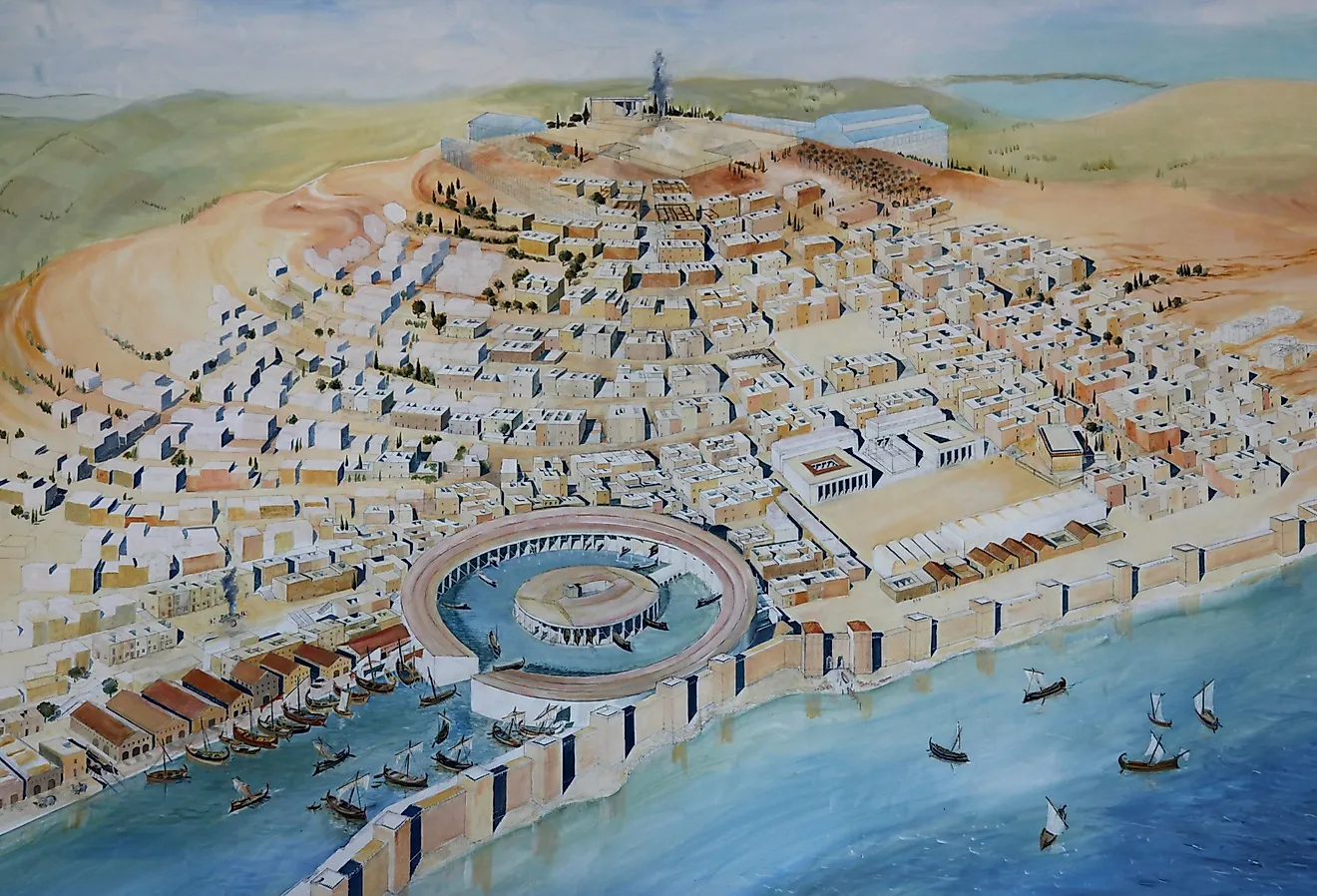
Despite this seemingly decisive victory, Hannibal didn’t destroy Rome’s ability to wage war. Realizing they couldn’t survive an endless string of defeats, the Romans now attempted to win via attrition and guerrilla tactics. Known as the Fabian strategy (since it was pioneered by general and dictator Quintus Fabius Maximus Verrucosus), it worked wonders. Hannibal struggled to supply his army so far from his North African home base for long periods of time, and the Romans even launched a counter-invasion of Carthage. This led to the Battle of Zama in 202 BCE, in which Hannibal was defeated.
Vercingetorix

In 58 BCE, Julius Caesar invaded Gaul (modern-day France, Belgium, Luxembourg, and parts of Switzerland and Italy). He aimed to secure the northern border, acquire Gaul’s resources, and achieve personal glory. The campaign went fairly smoothly for the first five or so years. The Gauls were divided, so Caesar played them against each other. He also used brutal and arguably genocidal tactics, wiping out entire tribes to discourage resistance.
The rise of Vercingetorix in 52 BCE was Caesar’s first true test. An Arverni aristocrat and chieftain, he united several Gallic tribes against the Romans and even achieved some victories. The most notable example was the Battle of Gergovia, in which the Romans possibly lost thousands of troops. The Gauls achieved this with a combination of guerrilla warfare tactics and a successful defense of a fortified hillside position.
Short Lived Victory

Ultimately, Vercingetorix’s resistance would be relatively short-lived. In 52 BCE, the Romans surrounded him on the hilltop fortress settlement of Alesia. Caesar then ordered a massive inner wall to be constructed to prevent supplies from reaching inside. The Romans also built an outer wall to protect themselves from an approaching Gallic relief force. These maneuvers were incredibly effective, and Vercingetorix was forced to surrender. With this, Caesar effectively defeated any organized resistance movements, and he took Gaul within the next two years.
Flavius Aetius

By the 5th century CE, the Western Roman Empire was in trouble. Its split from the Eastern Roman Empire in 395 CE deprived it of crucial agricultural resources from places like Egypt. The conquest of North Africa by the Vandals in the 430s CE further diminished its capacity to feed its citizens. However, the Huns were perhaps the biggest threat of all. A nomadic Central Asia-based confederation, they migrated to Eastern and Central Europe the previous century. By the 430s and 440s CE, they were invading the Balkans and forcing the Romans to invest even more heavily in defense.
The true turning point came when the Huns, led by Attila, invaded Gaul in 451 CE. The Romans knew that losing this region would be catastrophic, since it was an economic powerhouse and provided access to the Italian peninsula. Therefore, under the leadership of general Flavius Aetius, they assembled a massive coalition of Romans, Visigoths, Alans, and Franks to repel the Huns. The subsequent engagement, the Battle of the Catalaunian Plains, wasn’t decisive for either side. Theodoric I, the king of the Visigoths, was even killed. Regardless, the coalition prevented Attila from gaining further ground, and the Huns were forced to retreat. Their invasion of Italy the next year was also unsuccessful.
One Small Victory

Even though the Battle of the Catalaunian Plains saved the Western Roman Empire from the Huns, it didn’t solve its deeper problems. Flavius Aetius was assassinated in 454 CE by Emperor Valentinian III, who was concerned about his ever-growing power and influence. Valentinian himself was assassinated the next year. Now without one of the most capable military leaders in its history, the Western Roman Empire was even less likely to survive. This lack of expertise, combined with economic dysfunction, territorial overreach, and the ever-growing influence of Germanic tribes within its borders, ultimately led to the empire’s collapse in 476 CE.
Impact And Legacy
The ancient world was full of generals who won major battles but couldn’t leverage them into broader success. Consider Hannibal Barca. He won engagement after engagement to start the Second Punic War. This culminated in the Battle of Cannae, in which he annihilated a Roman army nearly twice the size of his own. Nevertheless, the Romans utilized their manpower and resource advantage to win the Second Punic War. Nearly 200 years later, Vercingetorix united the Gauls against Caesar and the Romans, only to be defeated at the Battle of Alesia. Finally, Flavius Aetius repelled the Huns at the Battle of the Catalaunian Plains, but this didn’t stop him from being killed a few years later or the collapse of the Western Roman Empire in 476 CE.