Where Did The Romans Come From And The Origins Of Rome
Ask where the Romans came from and the answer starts with a wolf and a murder. Both belong to legend. It also starts with muddy huts on a hilltop, and those are real enough to dig up. Rome began as a cluster of farming villages in central Italy, spread across low hills above a bend in the Tiber River. Those villages grew into a single city. That city grew into an empire of roughly 70 million people. The gap between the muddy huts and the marble forum is the whole story, and it is stranger than the legend.
The Villages On The Hills
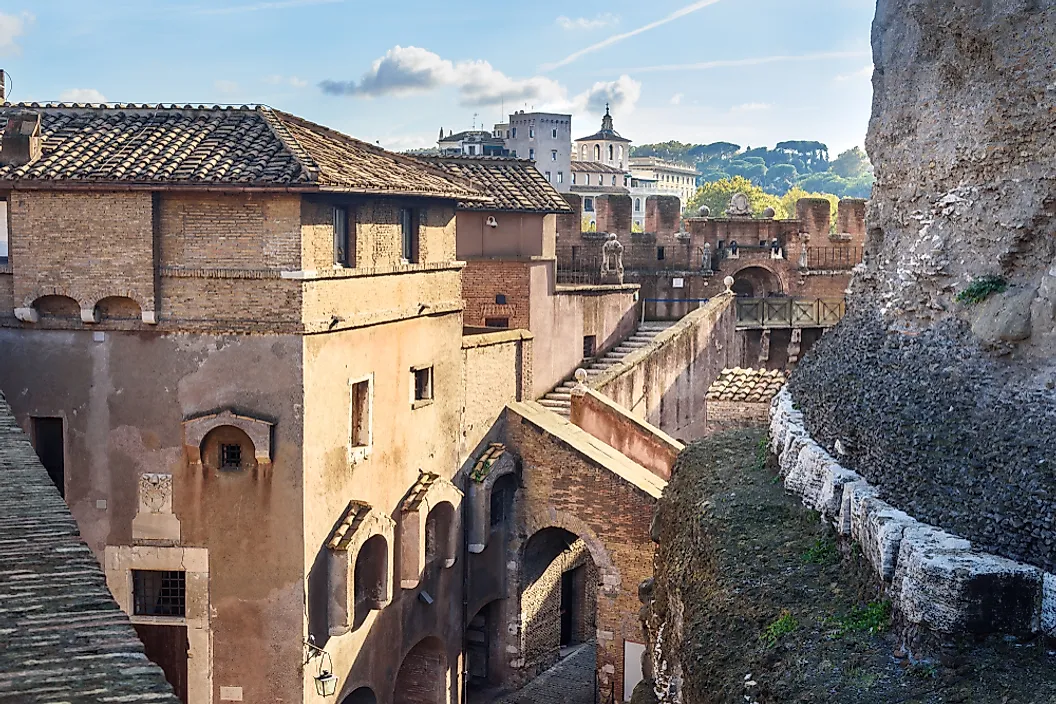
Long before anyone called it Rome, this was farmland. People planted crops and grazed animals on the hills above the Tiber River for centuries before the traditional founding date of 753 B.C. That date belongs to legend, not to the archaeological record. The record starts earlier and quieter, with families building huts on high ground.
Seven hills rise near the river here, and small communities settled the tops of several of them. The Palatine, the Capitoline, the Quirinal, and their neighbors each held their own little group of households. At first these groups had nothing to unite them beyond geography and the occasional shared problem. Over generations they began to cooperate, then to merge. What started as separate hilltop villages slowly became one town with common interests, a shared marketplace, and eventually a shared identity.
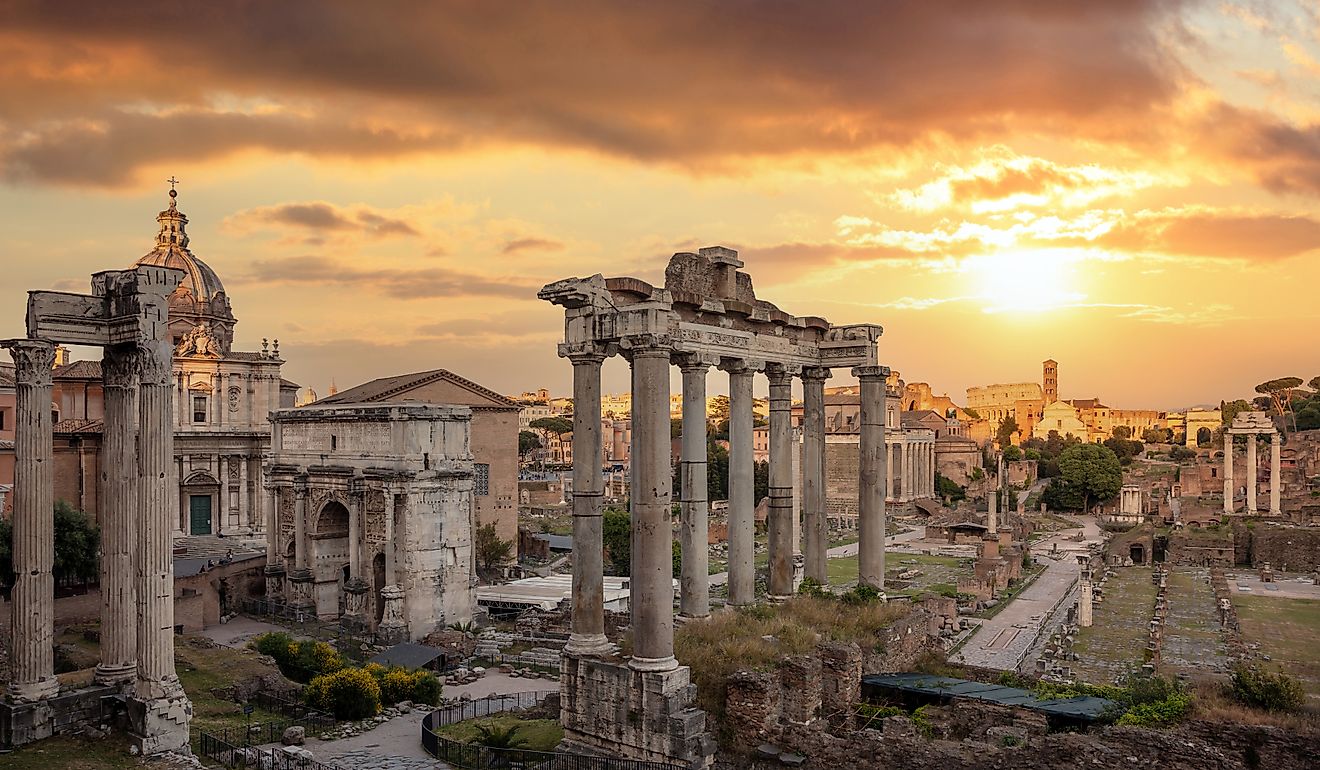
Excavations on the Palatine Hill put dates to this. Archaeologists have uncovered hut foundations, postholes cut into the rock, pottery, and traces of early fortifications reaching back to the eighth century B.C. Some evidence of settlement on the hill runs older still, into the ninth and tenth centuries B.C. The physical remains line up with the idea that several Latin settlements gradually knit themselves into a single city, which is exactly what the geography would predict.
Why This Spot And Not Another

Geography worked in early Rome's favor. Residents drew fresh water from the Tiber, floated boats on it, and traded down its length to the Mediterranean coast near Ostia. On the hills they held high ground that was easier to defend and safer from the river's floods. Sitting near the center of the Italian Peninsula, the town could reach neighbors in every direction without much effort.
Put those advantages together and a trading hub almost writes itself. Farmers brought goods down from the hills, merchants moved them along the river, and the settlement grew wealthier as more people passed through. Wealth and traffic built the foundation for something bigger. A town that controls water, defense, and a trade route is a town positioned to become a power, and Rome took full advantage.
The Legend Of Romulus And Remus
The Romans told a better origin story than "several villages merged," and it is worth knowing on its own terms. Twin brothers named Romulus and Remus were abandoned as infants and left to die near the Tiber. A she-wolf found them, nursed them, and kept them alive until a shepherd took them in. Grown, the brothers set out to build a city and quarreled bitterly over where to put it. Romulus killed Remus, founded the city on the Palatine Hill, and gave it his own name.
No historian treats this as fact. The earliest written version of the myth dates to only the late fourth or third century B.C., centuries after the events it describes. Yet the legend tells you something true about how the Romans saw themselves. They imagined their origins as violent, divinely favored, and rooted in the exact spot where archaeologists later found those eighth-century huts. The myth and the dig point to the same hilltop, which is a remarkable coincidence for a made-up story.
The Ideas Rome Borrowed From Its Neighbors

Rome grew up with sophisticated neighbors, and it paid attention. To the north lived the Etruscans, a people with skilled engineers, elaborate religious rituals, and a strong sense of political ceremony. Early Rome took its drainage and building techniques, several religious practices, and even some symbols of official authority from Etruscan example. When you picture a Roman magistrate carrying the fasces, you are looking at an Etruscan inheritance.
The Greeks shaped Rome too, mostly through the colonies scattered across southern Italy and Sicily. Roman art, temple architecture, and philosophy all carry heavy Greek fingerprints. The Romans borrowed Greek gods, retold Greek myths, and studied Greek thinkers for centuries. What made Rome distinctive was not invention from scratch. It was the habit of taking a good idea from someone else, refining it, and scaling it up far beyond the original. That habit would define the whole civilization.
A People Defined By More Than Blood

Recent science has made the question of Roman origins more interesting than ever. For generations, scholars relied on artifacts and ancient texts to reconstruct who the Romans were. DNA has now been added to the toolkit, and the results reshuffle old assumptions. A landmark 2019 study sequenced 127 genomes from 29 sites in and around Rome, spanning roughly 12,000 years.
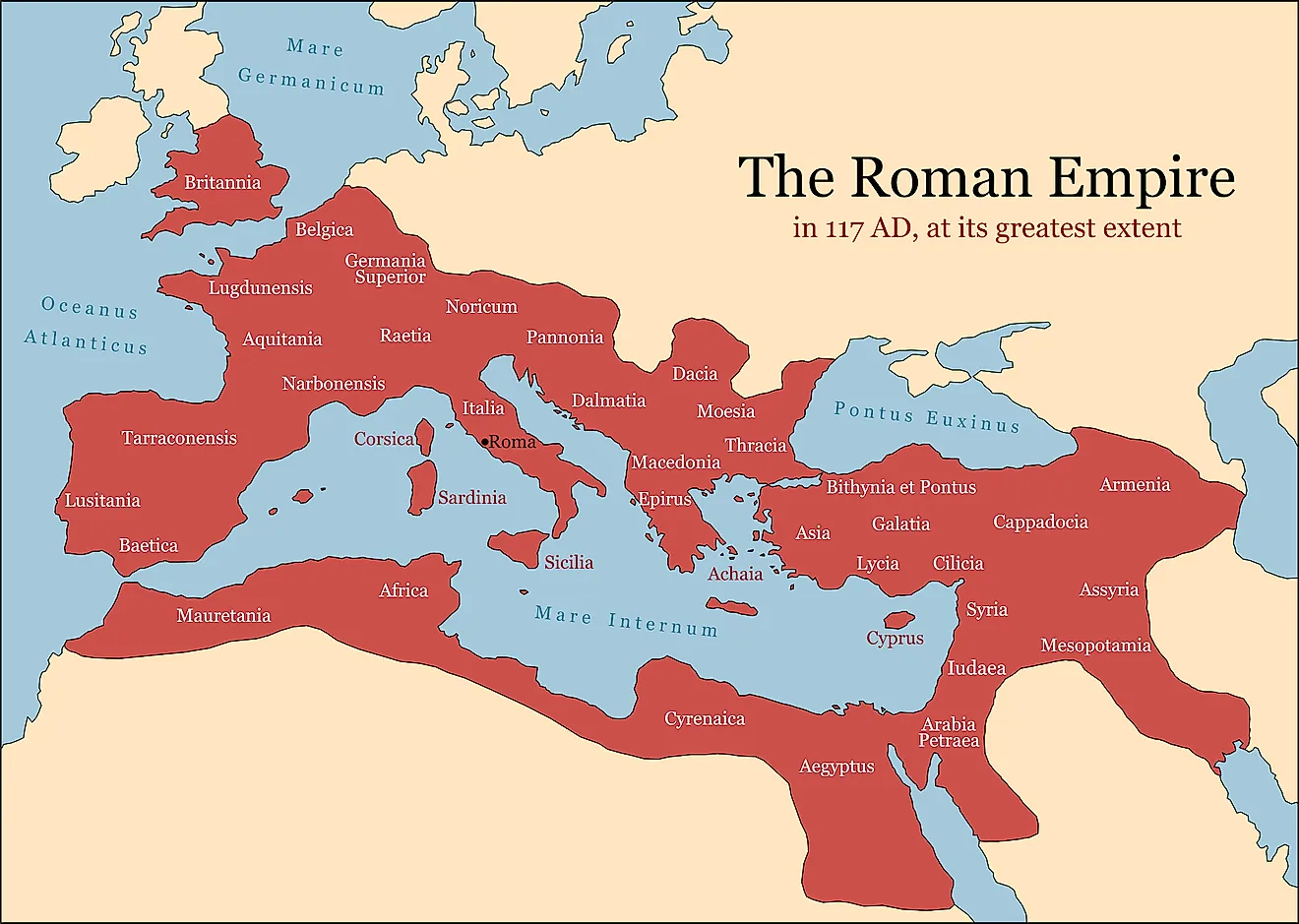
The earliest Romans, that study found, were closely related to other Italic peoples of central Italy. Then the picture changes fast. As the Republic and later the Empire spread around the Mediterranean, migrants arrived from the Near East, North Africa, and across Europe. Soldiers, traders, enslaved people, and immigrants poured into the capital. By the height of the Empire, the population of Rome looked genuinely cosmopolitan. One researcher on the project compared imperial Rome to New York City, a dense mix of people from everywhere.
That diversity undercuts any notion that the Romans were a single ethnic group. Historians now describe Rome as a society built by migration and cultural exchange. Becoming Roman had less to do with ancestry than with citizenship, the Latin language, and a shared body of law. People from conquered territories could earn citizenship, and many climbed to high political and military rank. The city absorbed newcomers and put them to work running the state.
That openness was a strategic asset, not just a demographic fact. Trade, conquest, enslavement, and migration funneled millions of people into Roman society and Rome turned them into taxpayers, soldiers, and citizens. Administrators conducted government in Latin, while dozens of local tongues survived across the provinces. Roman administrators rarely demanded that conquered peoples abandon their own customs. They layered Roman law, roads, and public buildings on top of local life and let the two coexist, which kept a vast and varied empire surprisingly stable.
Why Rome Still Turns Up In Your Day

Knowing where the Romans came from matters because they never fully left. Modern governments, courts, roads, and languages all carry ideas that trace back to that hilltop town in Italy. Rome's fingerprints are on the ordinary machinery of daily life, usually without anyone noticing.
Start with the roads. Roman engineers laid tens of thousands of miles of them across Europe, North Africa, and parts of Asia, and some modern European highways still follow those ancient routes. Roman aqueducts carried clean water into crowded cities and proved that large-scale infrastructure could support a growing population. The plumbing under a modern city owes a conceptual debt to those stone channels.
Roman law left an even deeper mark. The idea of written statutes, of legal representation, and of a right to a fair trial all took shape or gained ground under Rome. Roman legal principles run straight through the civil law systems of continental Europe and into legal traditions worldwide. Ideas first worked out during the Republic, then reshaped under the Empire, still guide how courts operate today.
Language may be the most personal reminder. Latin evolved into Spanish, French, Italian, Portuguese, and Romanian, the family we now call the Romance languages. English is not a Romance language, yet it borrowed thousands of Latin words, especially in science, medicine, and law. Say "video," "annual," or "radius" and you are speaking a little Latin without meaning to.
Interest in Rome has not cooled in the twenty-first century. Archaeologists keep excavating, museums keep filling galleries with Roman artifacts, and books and documentaries keep finding large audiences. New tools help too. Satellite imaging, 3D scanning, and DNA analysis now answer questions that earlier generations could only guess at. Each new dig and each new genome refines the picture a little more.
The Origin Story Behind The Origin Story
Rome also doubles as a case study that modern societies still find useful. Historians examine how the Romans managed breakneck growth, absorbed newcomers, maintained infrastructure, and weathered political crises. No ancient civilization maps neatly onto the present, but the triumphs and blunders of Rome keep feeding debates about leadership, citizenship, and identity. The empire is a mirror people keep returning to.
Where did the Romans come from? A handful of Latin villages on the hills above the Tiber, and then everywhere else. The city grew by borrowing from its neighbors, expanding across three continents, and folding in people from countless backgrounds. Fresh archaeological and genetic discoveries keep showing that Rome's beginnings were messier and more diverse than the old legends let on. The real origin story turns out to be about migration, exchange, and reinvention, the same forces that have shaped human societies ever since.