The Georgia Rivers Where Snakebites Happen Most Often
Georgia is home to 46 snake species, giving it one of the richest snake populations in the US. Six of these species are venomous, but only the cottonmouth, also known as the water moccasin (Agkistrodon piscivorus), is truly semi-aquatic. Most snakes found in the state's rivers and other aquatic habitats are harmless watersnakes. These include the eastern green watersnake (Nerodia floridana), brown watersnake (Nerodia taxispilota), red-bellied watersnake (Nerodia erythrogaster), banded watersnake (Nerodia fasciata), and northern watersnake (Nerodia sipedon).
Cottonmouths are not found throughout the entire state; they are rare in northern Georgia. Unlike the state's other venomous snakes, the water-loving cottonmouths inhabit swamps, marshes, streams, and riverbanks. Other venomous species, particularly copperheads (Agkistrodon contortrix) and timber rattlesnakes (Crotalus horridus), may occasionally be encountered in the surrounding riverine woodlands and wetlands. Unfortunately, people often mistake harmless watersnakes for cottonmouths and kill them. In particular, people often mistake brown watersnakes for cottonmouths because of their habitat, coloring, and slightly triangular head. Here are five of Georgia's most snake-populated rivers, where you may encounter anything from a northern watersnake to a venomous cottonmouth, along with a few tips for telling them apart.
Chattahoochee River

The Chattahoochee River starts in the southern Appalachian Mountains and flows through Atlanta along its 434-mile course before reaching Lake Seminole on Georgia's border with Florida. The river supplies 70 percent of metro Atlanta's drinking water, which is more than 300 million gallons per day. South of the state capital, past Columbus, the Chattahoochee becomes more rural as it winds along Georgia's western border with Alabama. The lower Chattahoochee is popular with outdoor enthusiasts who want to explore its quieter backwaters. It provides plenty of places to cast a line from the shore, kayak through its slower stretches, or spot some of the river's resident snakes.

Cottonmouths are associated with its swampy waterways, where they prefer slow-moving water, marshy banks, and vegetation-covered shorelines, while several watersnake species, like banded and brown watersnakes, also make their homes along the river. Both watersnake species are often confused with a cottonmouth, but the banded watersnake has jagged-edged bands that are wider at the top and thin dark bars along its lip scales, unlike the cottonmouth. The brown watersnake has a much more slender body and square blotches on its back rather than triangular bands.
Satilla River

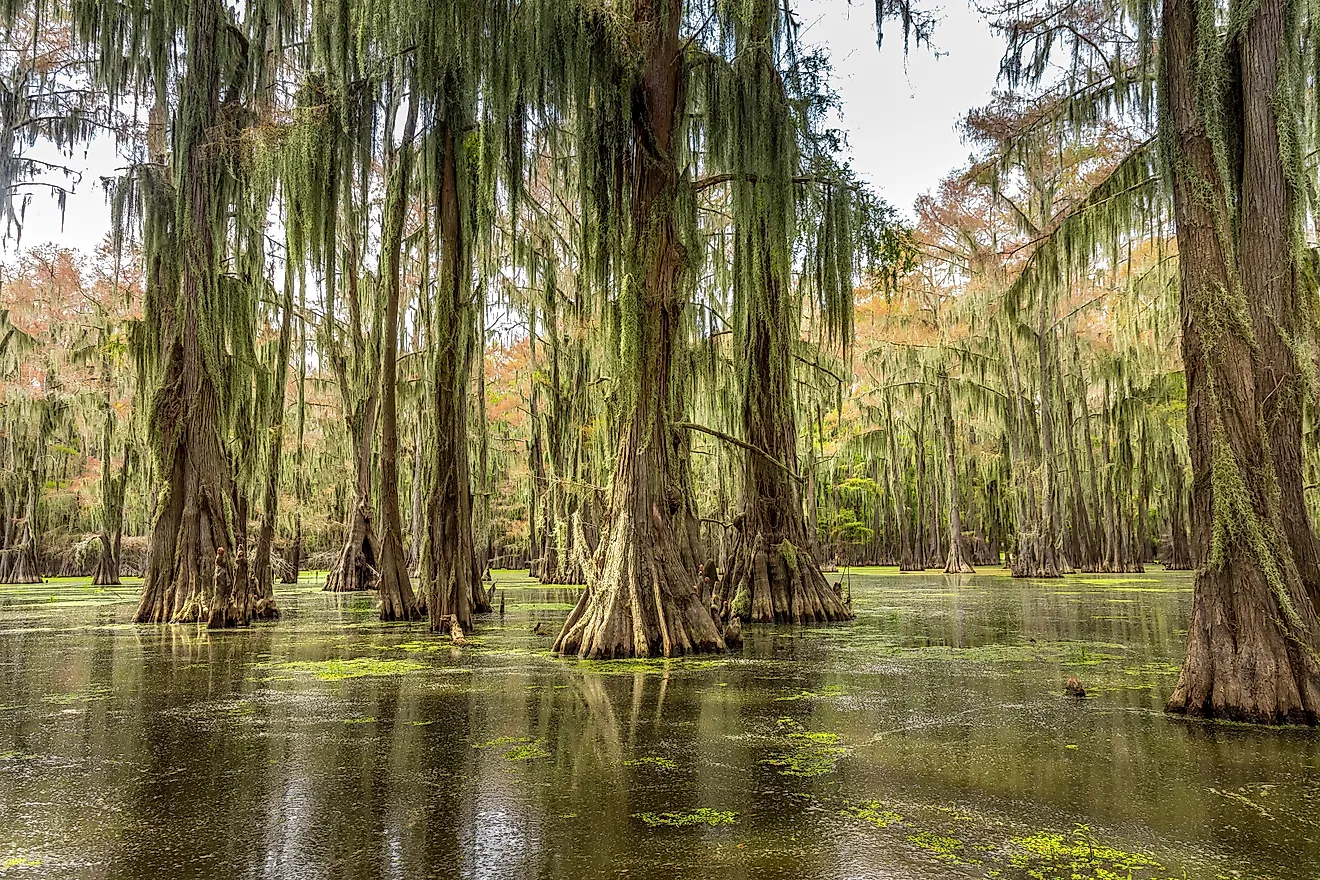
The Satilla River is one of Georgia's blackwater rivers (along with the Ogeechee, St. Marys, Suwannee, and Ochlockonee rivers), thanks to high tannin levels that give the water a dark and mysterious appearance. Rising near the small town of Fitzgerald in Georgia's Coastal Plain, the river flows for about 200 miles before draining into St. Andrews Sound and the Atlantic Ocean. Largely wild and untouched, the Satilla is a favorite among paddlers seeking a peaceful escape surrounded by nature.

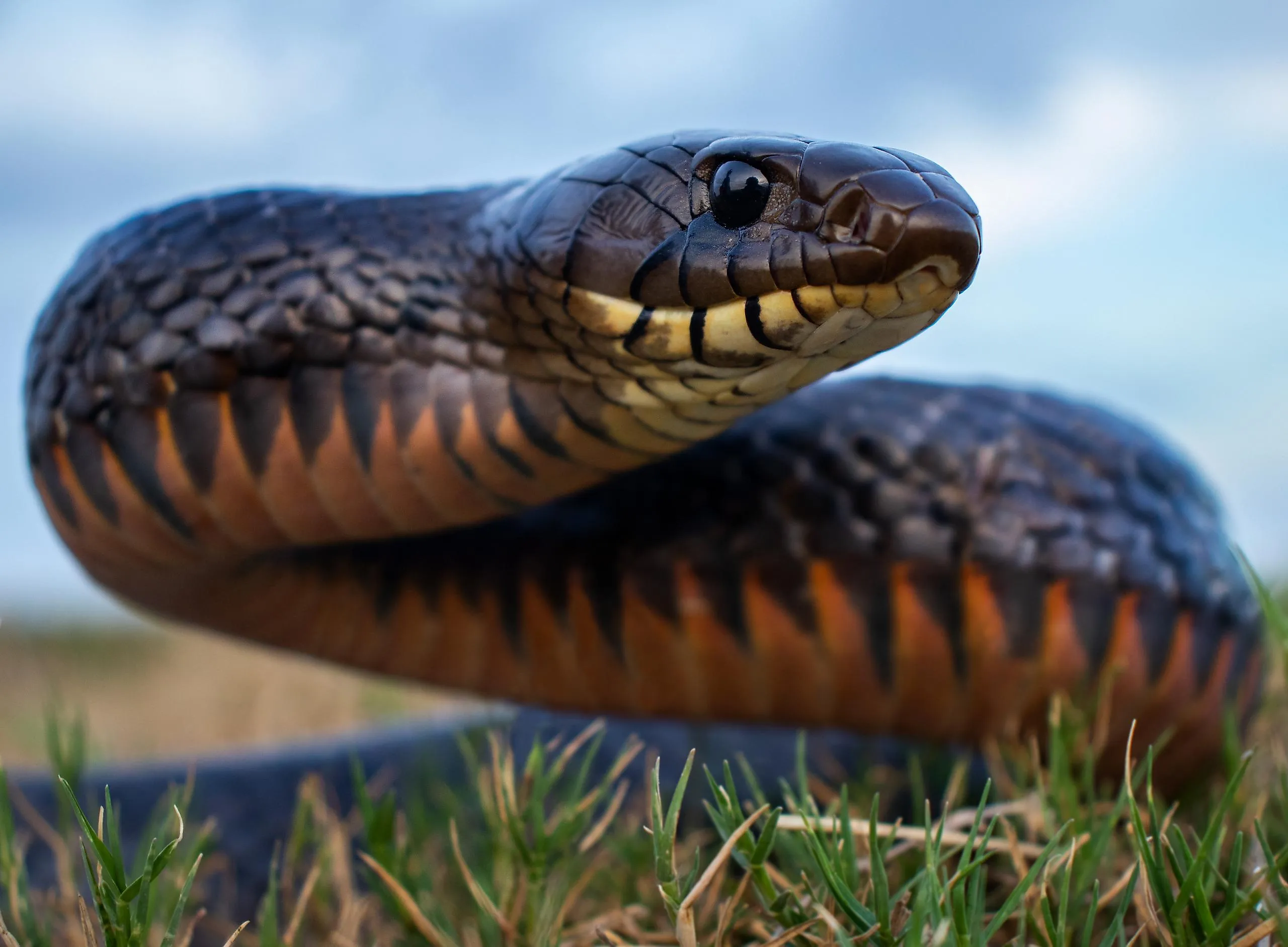
The Satilla River Water Trail offers about 140 miles of paddling through cypress-lined waterways, past forested shorelines where paddlers can spot several snake species along the sandy banks, including the threatened eastern indigo snake. The gunmetal-black snake is one of the largest snakes in North America, reaching a maximum total length of 8 feet, 7 inches. These carnivores overpower prey with their strong jaws and can even eat rattlesnakes and cottonmouths, which are highly resistant to venom. The Satilla Riverkeeper's website reminds paddlers to stay alert for venomous snakes when stopping along the river.
Altamaha River

At 137 miles long, the Altamaha River is Georgia's largest free-flowing river, running from central Georgia to the southeastern coast where it meets the Atlantic near Darien. The largely undisturbed river winds through vast wilderness, old cypress forests, oxbow lakes, sandy banks, and never-ending wetlands. Thought to be more than 20 million years old, the Altamaha is also one of Georgia's most remarkable natural waterways. The wild river draws paddlers, anglers, campers, and wildlife watchers to the Altamaha River Water Trail, a 137-mile paddling route that follows the river from the confluence of the Oconee and Ocmulgee rivers to the Atlantic coast.

Although cottonmouths occur throughout the Altamaha River basin, they are more commonly found in its surrounding swamps, backwaters, and smaller tributary creeks than in the river's main channel. The snakes come in a variety of colors and patterns. While many show a dark stripe from behind the eye to the corner of the jaw, banded watersnakes can share it, so surer signs are the cottonmouth's vertical pupils and the heat-sensing pit between its eye and nostril, both absent in watersnakes. Of course, the cottonmouth's most striking feature is the white inside of its mouth, which it displays when threatened, giving the snake its name.
Ogeechee River

The 294-mile-long Ogeechee River is another of Georgia's blackwater rivers, beginning at the confluence of the North and South Forks near Crawfordville and flowing across the Piedmont and Fall Line before reaching Ossabaw Sound near Savannah. The tea-colored water features bottomland hardwoods and cypress-tupelo swamps, providing ideal habitat for cottonmouth look-alikes, including brown watersnakes, which seldom travel far from the water's edge. Excellent climbers, they can be found basking up to 20 feet above water in the branches of bald cypress and tupelo trees. If startled, they may drop from a branch into the water, or even into a passing kayak.

Kayakers, anglers, and day-trippers on the river may encounter other species. In August 2026, a natural resource expert reported a rare sighting of a large eastern diamondback rattlesnake slithering down the bank and disappearing into the river in an article in the "Augusta Chronicle." Fort McAllister State Historic Park, located on the banks of the Ogeechee River, is home to about 30 snake species.
Savannah River

The Savannah River forms the border between Georgia and South Carolina. It flows 301 miles from the copperhead-rich Lake Hartwell in the Piedmont to a marine estuary near Tybee Island and the ocean. One of Georgia's longest waterways, the Savannah River attracts anglers and boaters to its banks, while the lower Savannah offers a quieter destination for paddling and wildlife watching. As the river approaches the Atlantic coast, it spreads into tidal marshes, where a variety of watersnakes can be spotted along the water's edge or among the vegetation.

Along the lower Savannah River, the Savannah National Wildlife Refuge lets paddlers explore freshwater marshes and waterways by kayak. Hikers on the refuge's trails may encounter year-round residents, including alligators, eastern diamondback rattlesnakes, and cottonmouths, as well as harmless brown and banded watersnakes basking on overhanging branches or swimming nearby during warmer months. An easy, but not foolproof, way to distinguish between the venomous snakes in the area is by habitat: cottonmouths are more associated with the lower river's backwaters and wetlands, whereas diamondback rattlesnakes prefer the drier uplands.
Five Rivers With Plenty of Snake Activity
Georgia's rivers are more than scenic waterways for fishing, paddling, and wildlife watching. Bordered by cypress swamps, slow-moving backwaters, and forested banks, these five rivers provide prime habitat for a surprising variety of snakes. Some, like the brown watersnake, which is protected in Georgia, are harmless, but people often mistake them for cottonmouths. Venomous snakes, like the cottonmouth and eastern diamondback rattlesnake, are sometimes seen near riverbanks or even swimming across the water. From the winding Altamaha to the swampy lower Savannah, these five rivers offer a closer look at which snakes you might encounter near Georgia's rivers.