How Fast Lake Ice Thickens In A Cold Snap
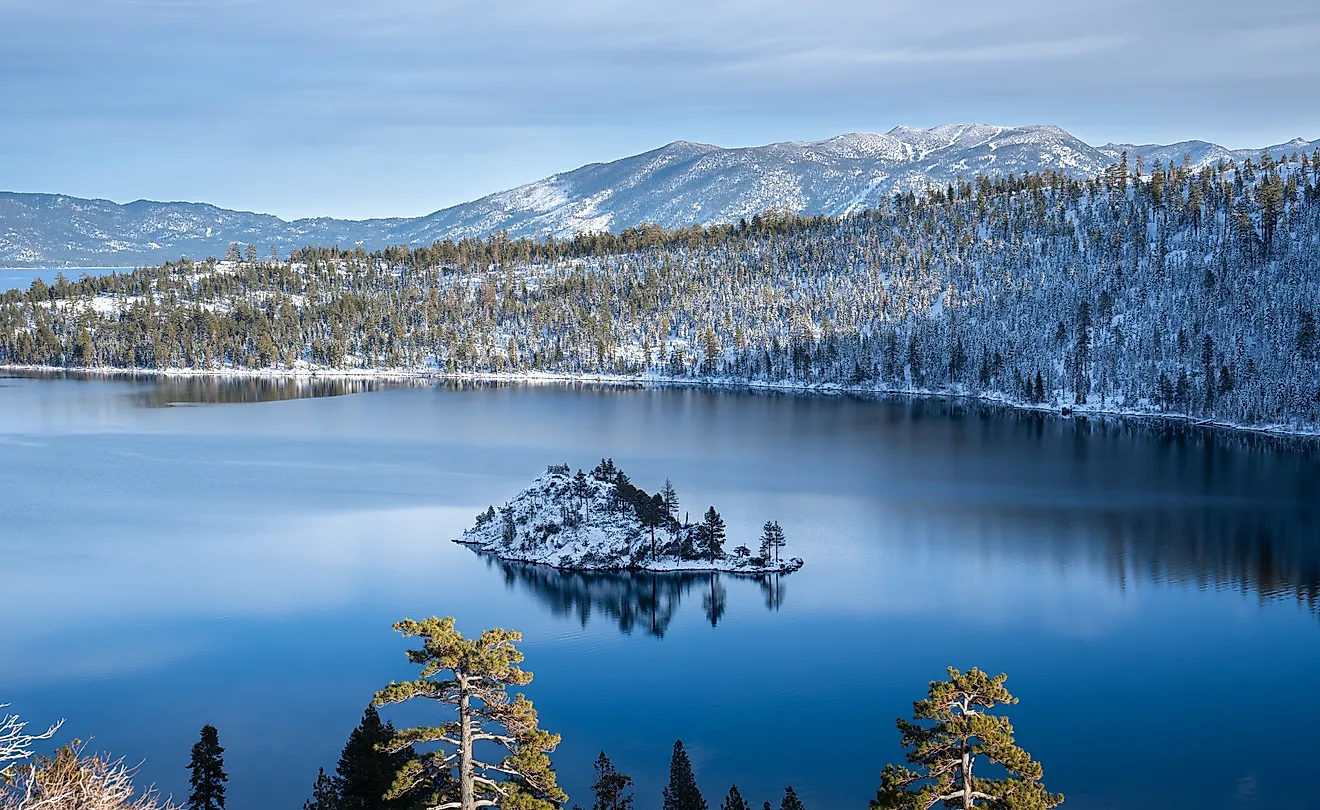
A still lake at zero degrees Fahrenheit can put down its first inch of ice overnight. Getting to the second inch takes about another three days at the same temperature, and the gap only widens from there.
That slowdown is the single most useful thing to understand about lake ice, because it is also the reason people misjudge it. A hard freeze feels decisive. The ice it produces does not keep pace with how cold it feels outside.
Ice Insulates Against Its Own Growth

Ice forms at the boundary between the sheet and the water below it. For the water there to freeze, its latent heat has to escape upward, and the only route is straight through the ice already in place.
Ice is a poor conductor, so every inch added makes the next one harder. The sheet is effectively building its own insulation as it goes, which is why a lake never freezes solid to the bottom no matter how long the cold lasts, and why anything living down there gets to carry on.
It is also why an overnight skim can appear on open water in hours while an established sheet barely moves during the same cold snap.
The Square Root Rule

The physics was worked out by the Slovenian physicist Josef Stefan in 1891, and the equation still carries his name. It says ice thickness grows with the square root of accumulated freezing degree days, not in step with them.
A freezing degree day is the gap between 32 degrees Fahrenheit and the day's average temperature. A day averaging 22 degrees banks 10 of them. A day averaging zero banks 32.
The square root is where the trouble starts. Doubling ice thickness requires four times the accumulated cold. Reaching 12 inches takes roughly 36 times the cold that got you to 2 inches, not six times. Progress feels linear when you are watching the thermometer and is nothing of the sort.
Running The Numbers

The US Army Corps of Engineers uses a modified version of Stefan's equation with a coefficient for local conditions. For a windy lake with no snow cover it runs near 0.8; for an average lake carrying snow, somewhere between 0.5 and 0.7; for sheltered flowing water, lower still.
A rougher field version circulates among ice anglers on the Great Lakes and elsewhere: about one inch per 15 freezing degree days, assuming some wind, clear skies, and no snow. A day averaging 25 degrees banks 7, which buys you roughly half an inch.
In practice lake ice typically gains somewhere between a tenth of an inch and a full inch per day. The upper end only happens early, on thin ice, in genuinely severe cold.
Snow Is The Brake

A few inches of snow on a young sheet will slow its growth dramatically. Snow traps far more heat than ice does for the same thickness, so a snowfall during a cold snap can stall thickening almost completely while the air temperature keeps plunging.
Worse, heavy snow pushes the sheet down, water floods up through cracks, and the resulting slush refreezes into white ice. White ice is full of trapped air and roughly half as strong as the clear ice beneath it, so a measurement that reads eight inches may only be carrying the load of four.
Wind does the opposite. It strips away the insulating layer of still air above the surface and speeds heat loss, which is why the fastest growth happens on exposed, snow-free lakes in a gale.
Why The Same Lake Is Never One Thickness

Stefan's equation assumes still water losing heat evenly, and no real lake does that. Inlets and outlets keep water moving. Springs feed in at a steady 45 degrees or so. Narrows accelerate current, bridges shade the surface, and aerators are often running on purpose.
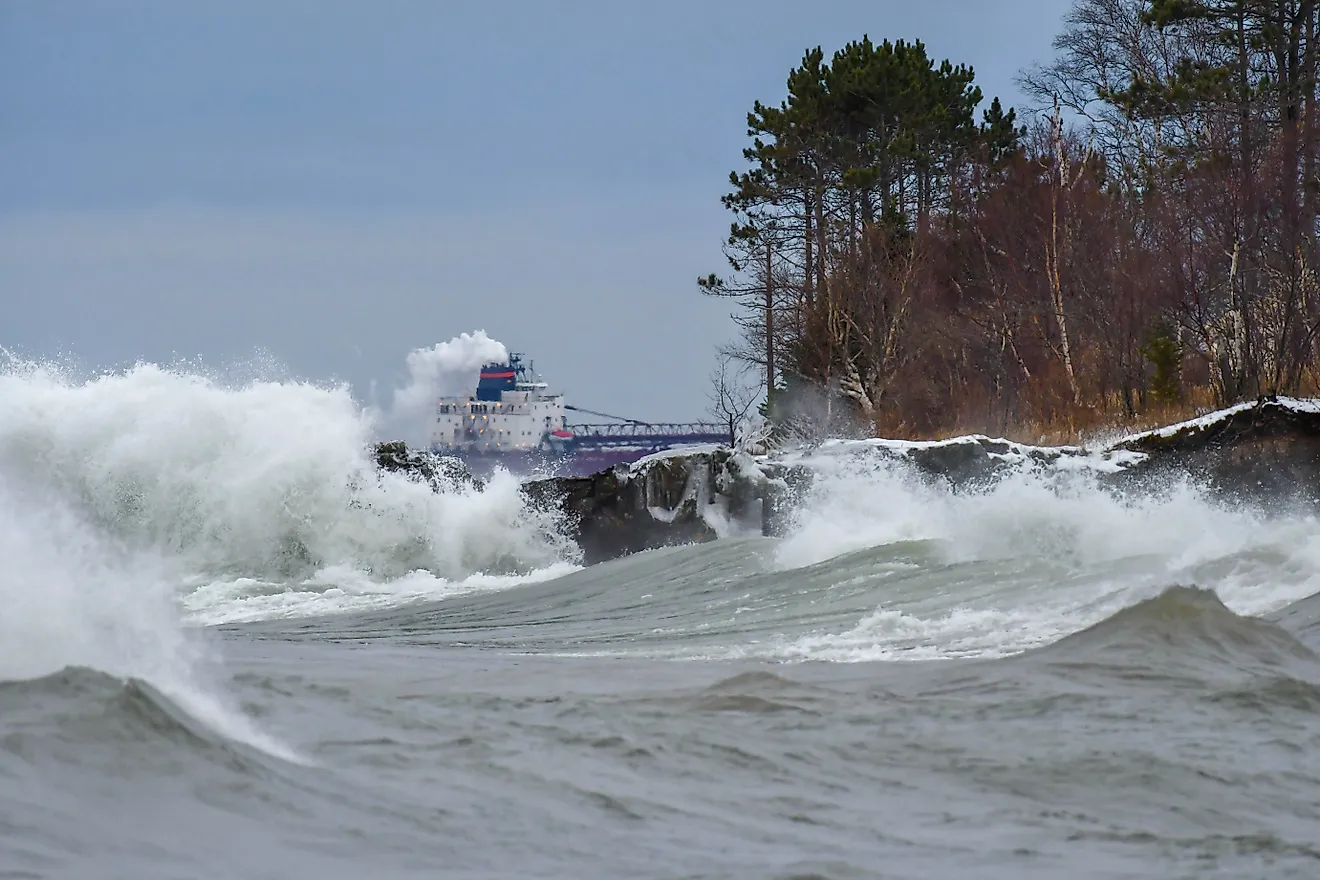
Depth matters too. Shallow bays give up their heat quickly and freeze first, while the deep middle of a large lake can stay open for weeks after the edges are solid. On Lake Superior it may never close at all in a mild winter.
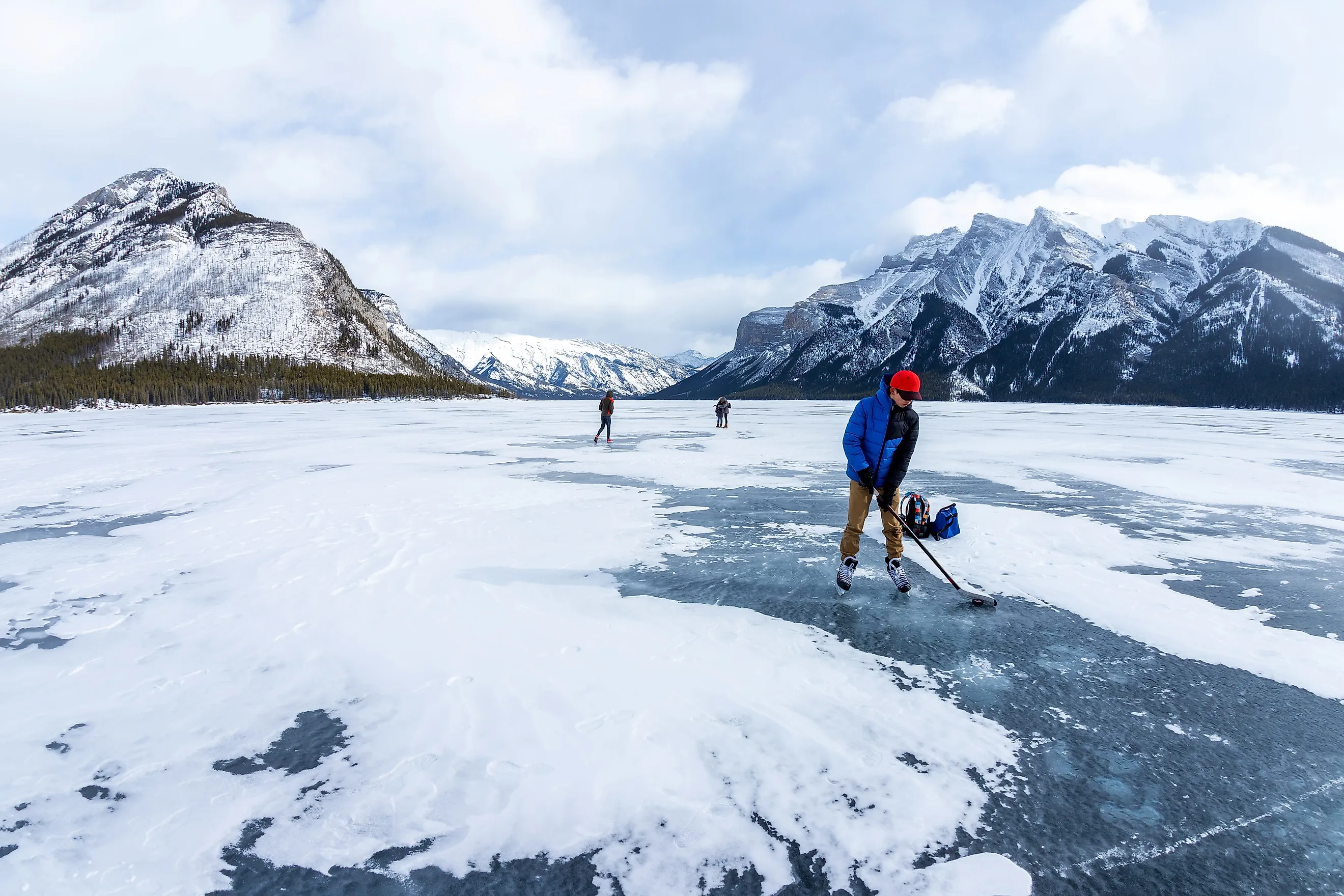
The practical consequence is that a reading taken at the shore says almost nothing about conditions 200 yards out. Thickness has to be checked repeatedly as you go, not once at the start.
Thawing Is Not The Reverse

Ice does not lose thickness the way it gained it. In spring, sunlight penetrates the sheet and works on the boundaries between crystals rather than melting it evenly from the top.
The result is candled ice, a sheet that still measures ten inches but has separated into vertical columns with very little holding them together sideways. Late-season ice at a given thickness is considerably weaker than the same measurement in January, and it fails without the warning noises people rely on.
Which brings the whole thing back to a single point. The cold snap tells you the ice is growing. The square root tells you how slowly. And the tape measure, used often and far from shore, is the only part of this that actually keeps anyone safe.