The Oldest Living Animal In The Ocean
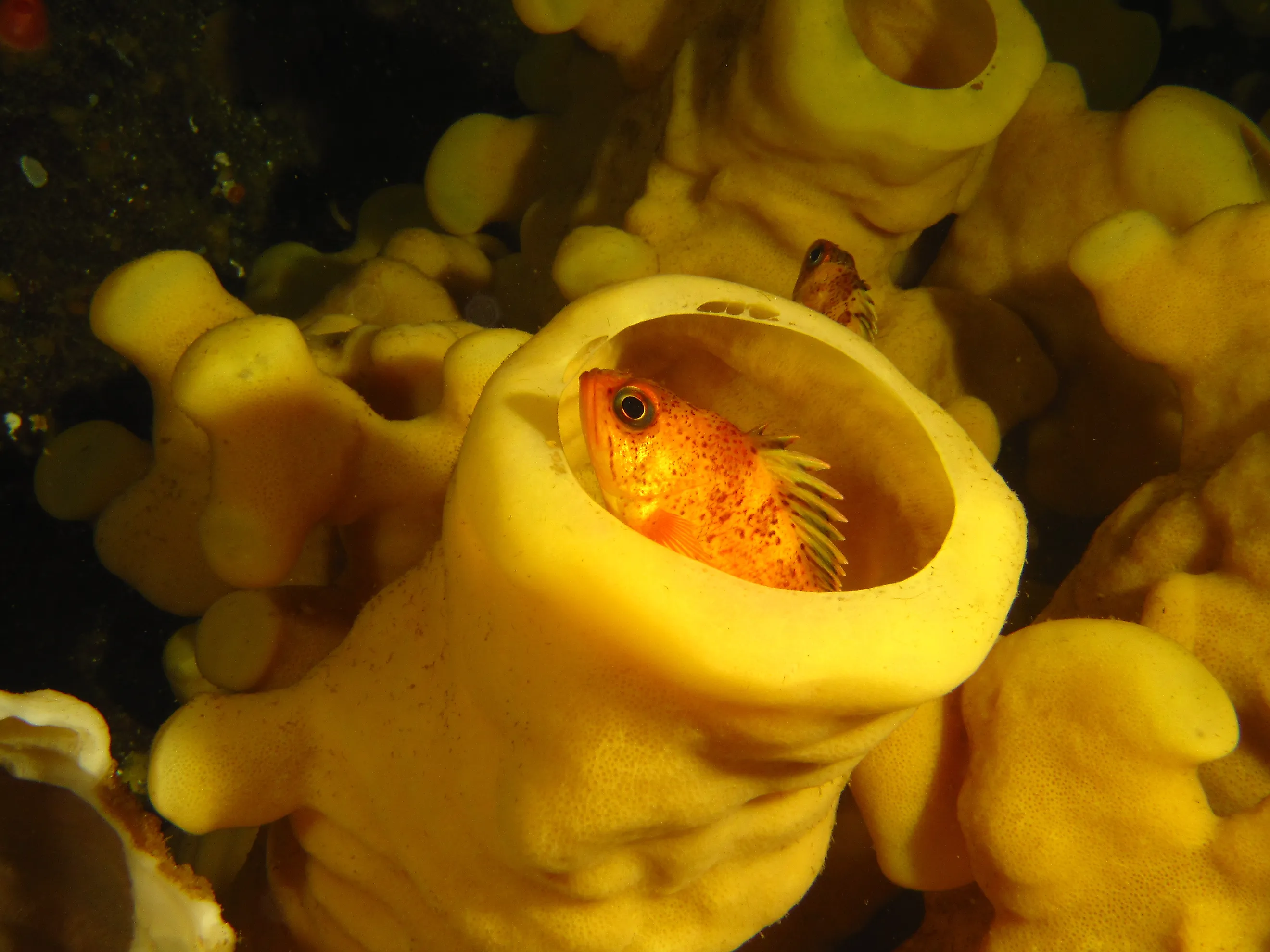
Deep beneath the ocean's surface, an extraordinary animal has been living and growing for thousands of years. Its skeleton is made of glass, it can grow to be several feet tall, and scientists estimate that one specimen survived for approximately 11,000 years. Known as a glass sponge, this remarkable creature is among the longest-lived animals ever documented.
Glass sponges also build some of the ocean's oldest living reef ecosystems, as successive generations leave behind their intricate glass skeletons. Some of these ancient reefs occur along North America's Pacific coast, including confirmed formations in US waters off Southern California. Although they have survived for millennia, the reefs are highly fragile, and fishing equipment and other human activities can destroy structures that took thousands of years to develop.
An Animal That Lives For 11,000 Years

Glass sponges belong to the class Hexactinellida, a group of marine animals named for their skeletons made from silica, the same material used in ordinary glass. Their longevity first drew scientific attention with Monorhaphis chuni, a deep-sea species from the East China Sea that produces a giant skeletal structure called a spicule, which can reach nearly 10 feet (3 meters) in length. Other glass sponges are also long-lived, with some species' estimated lifespans exceeding 200 years.
In a 2012 study published in Chemical Geology, researchers analyzed the chemical composition of a giant spicule, using changes in oxygen isotopes and other chemical indicators to estimate that the specimen had been growing for approximately 11,000 years, give or take 3,000 years. That would place its start near the end of the last Ice Age, although scientists inferred its lifespan from the growth record preserved in its skeleton rather than measuring its age directly.
How Individual Sponges Build Reefs

An individual sponge can live for centuries, but a reef can persist for millennia through successive generations. Three species are major reef builders: the cloud sponge (Aphrocallistes vastus), the goblet sponge (Heterochone calyx), and Farrea occa. In these species, the glass spicules form rigid skeletons that remain intact long after the animal dies, and new generations settle on them, gradually adding to the framework. Over time, this process creates massive underwater mounds, some reaching about 80 feet (25 meters) in height and spreading across extensive areas of the ocean floor.
Scientists estimate that some Pacific glass sponge reefs began forming about 9,000 years ago, following the retreat of glaciers at the end of the last Ice Age, making them among the oldest known living animal-built reef ecosystems. Unlike a coral reef, which is constructed from calcium carbonate, a glass sponge reef is built from silica.
Glass Sponge Reefs In American Waters

Although Canada's British Columbia coast contains some of the largest and best-studied glass sponge reefs, confirmed reef formations also occur in American waters. In the Southern California Bight, researchers have documented glass sponge reefs with Farrea occa as a principal reef-building species, and sponge mounds in the Channel Islands National Marine Sanctuary exhibit reef-like characteristics, although their classification requires further investigation.
Farther north, Washington state's Grays Canyon contains extensive aggregations of cloud and goblet sponges, but these sponges attach to hard surfaces on the ocean floor rather than forming true reefs. The canyon remains an ecologically significant habitat, where scientists documented eight rockfish species and strong associations between spot prawns and sponges. In Alaska, sponge gardens provide key habitat for marine life, and in the Gulf of Alaska, bigmouth sculpins have been observed depositing their eggs on large sponges.
How Do Glass Sponges Survive?

Despite their elaborate skeletons, glass sponges are relatively simple animals that remain attached to the ocean floor and feed by filtering seawater. Water enters through tiny pores and passes through internal chambers containing beating flagella, which generate currents that carry bacteria and other food particles through the sponge. Unlike most other sponges, glass sponges have much of their living tissue organized into a continuous, multinucleate network called a syncytium.
This continuous filtration makes glass sponges important participants in deep-sea nutrient cycling, helping move nutrients and carbon through marine ecosystems. However, the same glass frameworks that allow reefs to develop over many generations make them vulnerable to physical disturbance, and even relatively small impacts can break individual sponges or damage the reef.
Reefs Form Important Marine Habitat

Glass sponge reefs support entire marine communities. Their complex structures provide habitats for aquatic animals to shelter, feed, and reproduce. Juvenile fish benefit from the protected spaces, while larger animals can find prey among the sponge skeletons. Research in British Columbia has identified more than 120 aquatic species associated with glass sponge reefs, and some studies have found substantially greater biodiversity within the reefs than in surrounding areas.
The Human Threat To Glass Sponges

Despite their great age, glass sponge reefs can be damaged in a very short time. One of their greatest threats is bottom trawling, a fishing method that involves dragging heavy nets and equipment across the ocean floor. The gear can crush delicate sponge skeletons, destroy living animals, and disturb sediments that subsequently settle over surviving sponges.
Even when a sponge is not physically crushed, excessive sediment can interfere with filtration and restrict its growth. Reef-building glass sponges grow slowly, generally around 0.4 to 0.8 inches (one to two centimeters) annually, so damaged structures may require decades or even centuries to recover, provided the original reef remains sufficiently intact.
Protecting Glass Sponge Reefs

In American waters, deep-sea sponge habitats have received protection through fisheries management measures, including restrictions on bottom-contact fishing in designated areas, and through NOAA and regional fisheries management councils' surveys to identify vulnerable deep-sea ecosystems.
In Canada, Fisheries and Oceans Canada has established marine protected areas and marine refuges along British Columbia's Pacific coast, including the Hecate Strait and Queen Charlotte Sound Glass Sponge Reefs Marine Protected Area. However, much of the deep ocean remains poorly explored, and scientists are still discovering where glass sponge communities occur, so better mapping and monitoring will be vital for identifying vulnerable habitats before they suffer lasting damage.
Glass Sponges Are A Reminder Of Nature's Timeline
Glass sponges are among the ocean's longest-lived animals, and their reefs are the product of thousands of years of growth. Individual sponges can survive for centuries or millennia, while successive generations build structures that support diverse marine communities. Protecting these fragile ecosystems preserves both ancient animals and the habitats that depend on them.