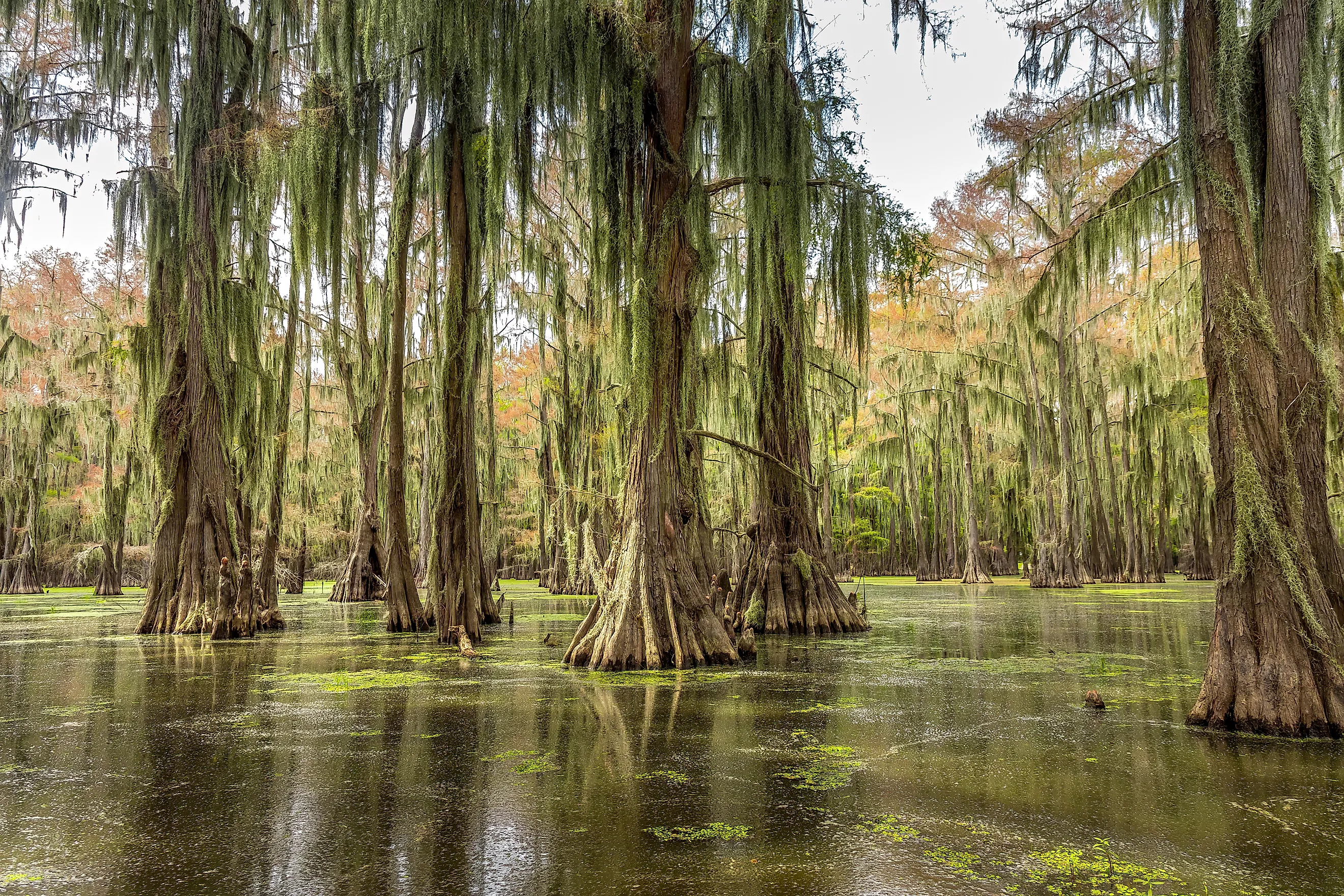
The Only Natural Lake In Texas
Caddo Lake is famously the only natural lake in Texas, and that claim has two problems. It is not the only one, because Texas has oxbow lakes formed by rivers abandoning their meanders. And the Caddo Lake that exists today is not natural, because the original drained away in 1873 and the current one was created by an earthen dam in 1914. What the state actually has is a lake that was natural, stopped being a lake, and was rebuilt in roughly the same place.
A Log Jam Built It
The origin story is one of the strangest pieces of American hydrology.

The Great Raft was a log jam on the Red River in Louisiana running about 165 miles. Cottonwoods toppled from the banks, piled up at the head and decayed at the tail, so the whole mass crept upstream over centuries, plugging the river as it went.
Water backed up behind it and spilled sideways. One large break in a bend flooded the Cypress Bayou valley, and that became Caddo Lake.
Nobody Agrees When
The date of formation is contested between science and oral history.

A timber survey conducted in 1913 and 1914 dated the lake to about 1770 to 1780 by examining the trees in it. Caddo legend holds that the lake was formed by the New Madrid earthquakes of 1811 and 1812.
Most geologists favor the Great Raft, either gradually or catastrophically. The raft itself may have begun forming in the twelfth century or earlier.
Then Somebody Removed The Dam
The lake lasted as a wholly natural feature until the federal government cleared the obstruction holding it up.

The Army Corps hired steamboat captain Henry Miller Shreve, who arrived at the toe of the raft in April 1833 with four snag boats and 159 men. A navigation channel was cleared by 1838, but the remnants along the banks meant the raft immediately began to reform.
The last of it was removed in 1873. With the plug gone from the Red River, Caddo Lake emptied.
A Dam Put It Back
What exists now is a deliberate reconstruction of what was lost.

In 1914 an earthen dam was built near Mooringsport on the Louisiana side of what remained, reflooding the swamp and creating the Caddo Lake people visit today.
Texas Monthly's assessment is blunt: to believe Caddo Lake is natural today you would have to ignore the dredged boat lanes, the striped bass introduced in the fifties and the oil wells on the Louisiana side.
It Is Smaller Than It Was
The rebuild did not restore the original dimensions.

At its natural extent behind the Great Raft the lake covered as much as 30,000 acres. Today's lake covers about 25,000, and the original water level sat as much as 10 feet higher than the current one.
The lake is roughly 23 miles long and straddles the Texas-Louisiana border between Marshall and Shreveport.
The Raft Made Steamboats Possible
The log jam that created the lake also created a shipping route, which is the detail that explains the local history.

The depth held behind the raft allowed three-story steamboats up to 160 feet long and 35 feet wide to reach Caddo Lake and the towns on it. Water levels ran five to ten feet higher than today.
Removing the raft ended that. The boat lanes that remain have to be dredged regularly to stay passable at all.
Texas Has Other Natural Lakes
The other half of the claim does not survive contact with the geography either.

Caddo is described as one of Texas's few non-oxbow natural lakes, which concedes the existence of oxbow lakes. Those form when a meandering river cuts across its own bend and abandons the loop.
The Brazos, Colorado and Red river floodplains carry them. They are small and unglamorous, which is why nobody writes about them.
The Cypress Is The Draw
Whatever its status, the lake looks like nothing else in the state.

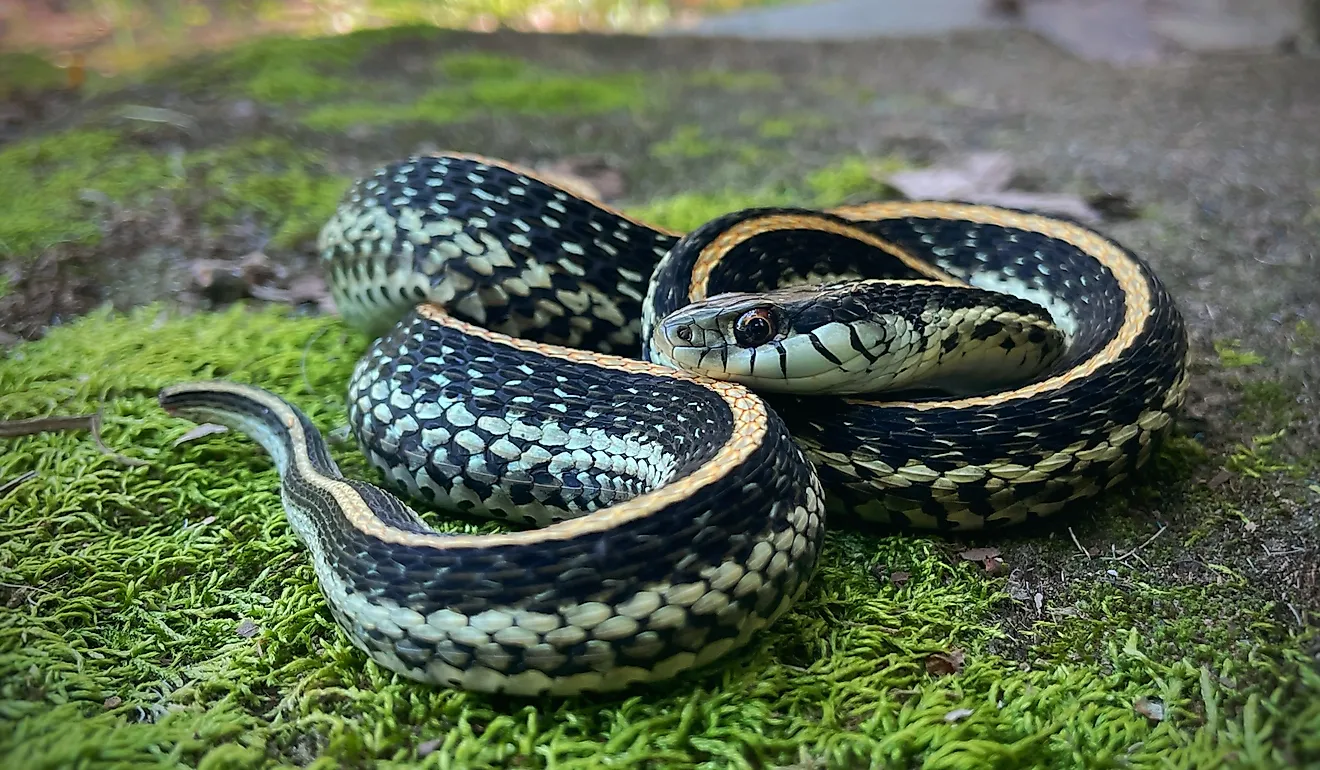
Bald cypress draped in Spanish moss stand in open water across a maze of bayous, sloughs and ponds. Wildlife includes owls, snakes, frogs, waterfowl, bobcats, river otters, beavers and eagles.
Some of those cypress were cut during the steamboat era to open a shortcut through the lake, shaving miles off the route to the landings.
It Is Protected Now
The modern arrangement involves several owners on both sides of a state line.
The Nature Conservancy purchased 7,000 acres of the Caddo Lake area and agreed to merge the property with the 483-acre Caddo Lake State Park. Texas Parks and Wildlife, Louisiana agencies, a conservation district and private landowners all hold pieces.
Residents fought a legal battle from 2001 to 2003 with a city seeking to draw water from it, which tells you how contested the supply is.
Giant Salvinia Is The Current Threat
The lake's biggest problem now is a floating fern from South America.
Giant salvinia forms dense mats across open water, blocking light and oxygen. The Texas Water Resources Institute runs a Caddo Lake Salvinia Eradication Project evaluating control methods.
A shallow, warm, slow-moving lake full of structure is close to ideal habitat for it. The same conditions that make Caddo beautiful make it hard to clear.
The Short Answer
Caddo Lake is the one Texans mean, and the claim behind it is shakier than the reputation. It formed naturally behind a 165-mile log jam on the Red River sometime around 1770, drained when the jam was finally cleared in 1873, and was recreated by an earthen dam in 1914 at roughly 25,000 acres against an original 30,000.
Texas also has oxbow lakes, which are natural by any definition. So the only natural lake in Texas is neither the only one nor, strictly, natural. It is still the most remarkable body of water in the state.