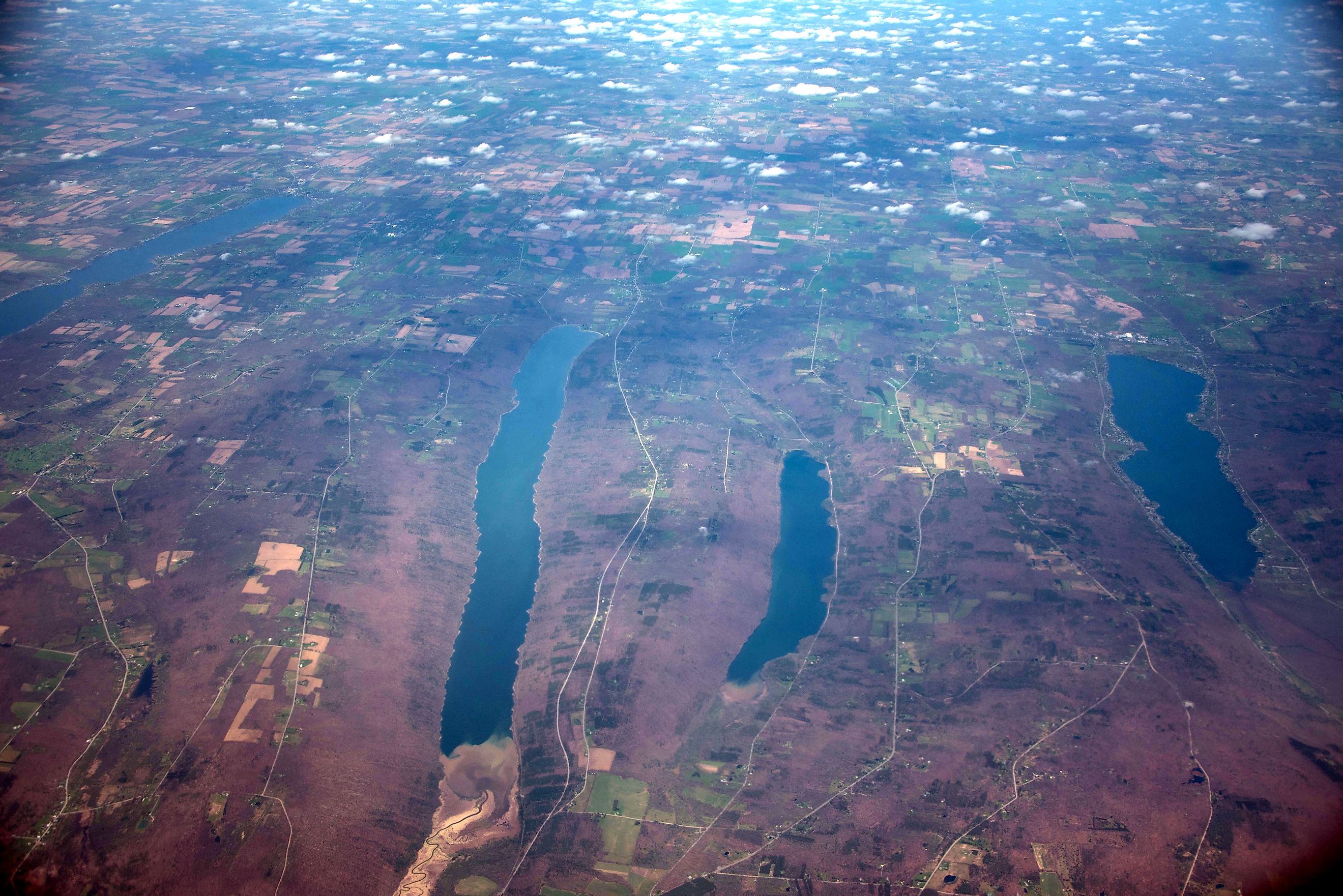
How The Eleven Finger Lakes Combined Compare To The Great Lakes
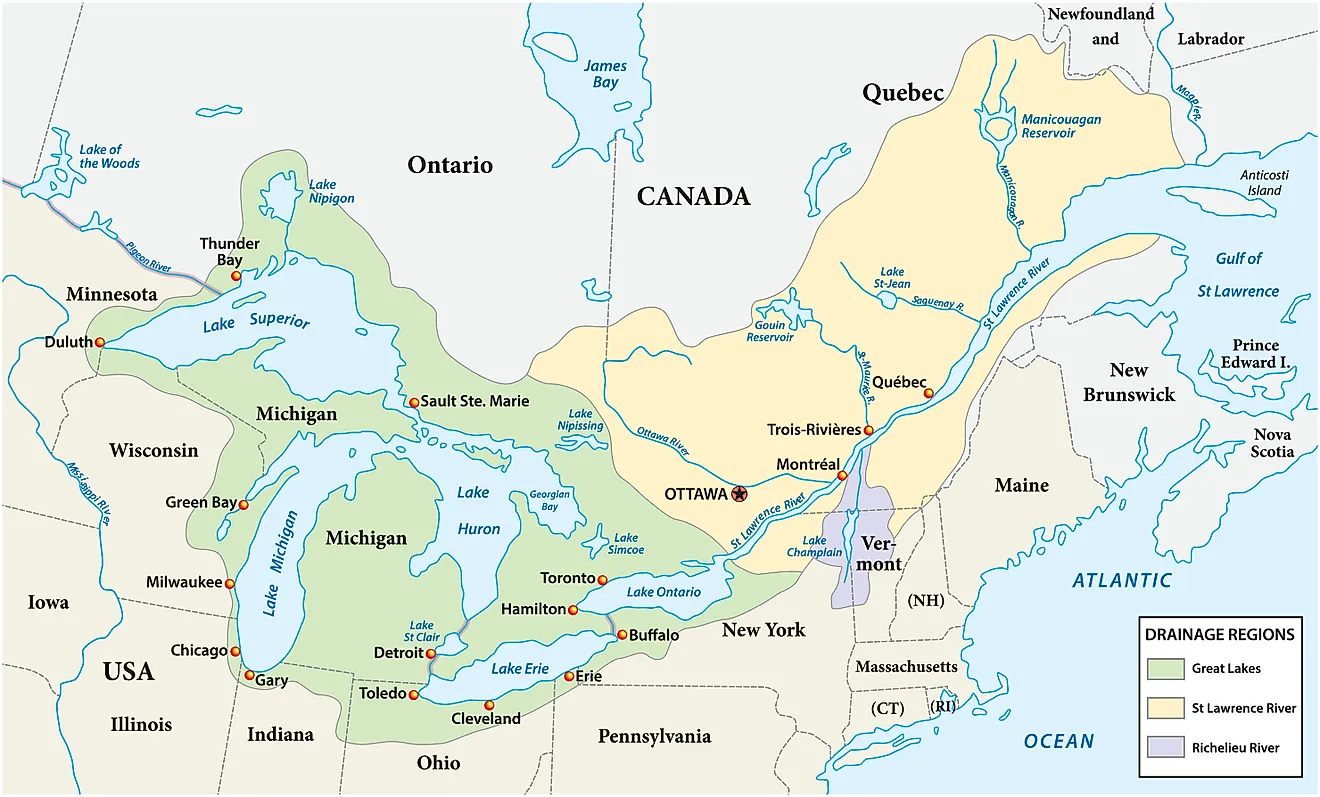
On paper, this is not a fair fight, and that is the fun of it. In one corner: the five Great Lakes, holding a fifth of the planet's fresh surface water, floating thousand-foot freighters, and employing 35 million people's worth of coastline. In the other: eleven skinny lakes in upstate New York that you could pour, all together, into Lake Ontario 35 times without Ontario noticing. And yet. Add up everything the Finger Lakes bring to the scale, a lake deeper than Erie with a floor below sea level, a waterfall taller than Niagara, America's Riesling capital, a salt mine running under a lake, and the launch pad of both American aviation and American women's rights, and the little lakes land enough punches that the giants should be grateful the judges score on tonnage. Here is how eleven fingers measure up to five seas.
Size: A Rounding Error With A Wine List

Start with the massacre, to get it over with. All eleven Finger Lakes, Conesus, Hemlock, Canadice, Honeoye, Canandaigua, Keuka, Seneca, Cayuga, Owasco, Skaneateles, and Otisco, combine to roughly 210 square miles of water. Lake Ontario, the runt of the Great Lakes litter, covers about 7,300 square miles, meaning the smallest Great Lake equals some 35 complete Finger Lakes systems, and Superior, at 31,700, could misplace the entire region in one of its bays and never file a report. Even mighty Seneca and Cayuga, the two giants of the eleven, run about 67 square miles apiece, which in Great Lakes terms is a puddle with ambitions.
The Finger Lakes' answer to this humiliation is the correct one: they never claimed to be seas. They are eleven parallel slashes in the map, most just a mile or two wide and up to 40 miles long, shaped, as the Haudenosaunee origin story has it, like the fingers of the Great Spirit's hands pressed into the land in blessing. The Great Lakes got the volume. The Fingers got the metaphor.
Depth: Where The Little Lakes Fight Back

Now the upset. Seneca Lake plunges to about 618 feet, which does not merely rival a Great Lake; it triples one. Lake Erie, 47 times the Finger Lakes' combined surface area, maxes out around 210 feet, meaning a lake you can swim across in an afternoon is three Eries deep. Cayuga reaches about 435 feet, Skaneateles and Canandaigua run hundreds of feet themselves, and the two big Fingers hide the region's best bar fact: their deepest floors lie below sea level, Seneca's by well over 100 feet, making them cryptodepressions, trenches gouged so deep that only the water keeps them from being below-sea-level canyons in the middle of New York State.
Depth per acre, the Fingers are the overachievers of American freshwater, skinny on the map and shockingly profound in cross-section, less like ponds than like fjords that moved inland and took up winemaking. Which, as it happens, is exactly what they are.
Same Sculptor, Different Commission
The resemblance is a family one, because the same artist made both. The Ice Age's continental glaciers scraped out the Great Lakes' basins, and the very same ice, grinding south across New York, rammed down a set of existing north-flowing river valleys and gouged them into deep, straight troughs that filled as the ice fell back, eleven glacial chisel marks running neatly north-south. The Great Lakes are the sculptor's monuments; the Finger Lakes are the signature.
The deeper human history runs the same parallel. This is the homeland of the Haudenosaunee Confederacy, and the lakes wear the nations' names, Seneca, Cayuga, among them, the way the Great Lakes wear Erie, Huron, and Ontario, so that both systems function as a map of Indigenous North America that no boundary change ever erased. Two water systems, one ice sheet, one layer of names older than the states around them.
The Waterfall Upset

The Great Lakes own the most famous waterfall on Earth, and the Finger Lakes own a taller one. Taughannock Falls, dropping into its gorge beside Cayuga Lake, plunges 215 feet in a single sheet, roughly 40 feet more than Niagara's Horseshoe, making it the tallest single-drop waterfall east of the Rockies and the punchline to the region's favorite trivia question. Niagara wins on water volume by a margin too embarrassing to print, but height is height, and the trophy lives in a quiet state park near Ithaca.

And Taughannock has a supporting cast the big lakes cannot match per square mile: the Finger Lakes region is slashed with glacially cut gorges, none more theatrical than Watkins Glen, where a two-mile trail threads 19 waterfalls between 200-foot stone walls at the tip of Seneca Lake. "Ithaca is Gorges," the local shirts insist, and for once the pun is underselling the inventory.
Wine: The Category Massacre

Here the eleven run up the score, and the weapon is that absurd depth. A 600-foot lake is a thermal flywheel, hoarding summer heat to fend off early frosts and exhaling cool air through spring to keep vines from budding into a freeze, and that microclimate lets true European wine grapes thrive at a latitude that should forbid them. The result is the Finger Lakes as America's premier cool-climate wine region, well over a hundred wineries ringing the big lakes, and a global reputation as the Riesling capital of the United States, with the tasting-room trail now the region's signature tourism.
The Great Lakes are not without a cellar, Niagara's icewine and Michigan's peninsulas do honorable work, but the shoreline's most famous grape remains the Concord, the sturdy juice-and-jelly berry of the Lake Erie grape belt. The comparison writes its own toast: the Great Lakes filled America's juice boxes, and the Finger Lakes filled its wine glasses, and only one of those shows up at dinner parties bragging about its minerality.
Freezing, Salt Mines, And Secret Plumbing

Depth buys the big Fingers one more Great Lakes-beating trick: Seneca essentially refuses to freeze, its enormous stored heat holding the surface open through winters that seal shallower neighbors like Keuka and Honeoye, while Lake Erie, the shallow giant, ices over with regularity. A lake a fraction of a percent of Erie's size wintering harder than Erie does is the kind of statistic the region should print on currency.

The oddities continue underground and under the hood. One of the deepest salt mines in North America operates beneath Cayuga Lake, crews working seams a half mile down while sailboats tack overhead, mining the beds of an ancient vanished sea. And the Fingers are secretly plumbed into their big cousins' system: the Cayuga-Seneca Canal ties the two largest lakes into the Erie Canal network, which means a determined boat can travel between a Finger Lakes winery dock and any Great Lakes port, or the Atlantic, without ever leaving the water. The little lakes have a service entrance to the big leagues.
People: Thirty-Five Million Versus Ithaca

The Great Lakes basin runs Chicago, Toronto, and Detroit; the Finger Lakes counter with a roster built entirely of outsized moments per capita. Seneca Falls hosted the 1848 convention that launched the American women's rights movement and cheerfully doubles as the claimed model for Bedford Falls of It's a Wonderful Life. Hammondsport, on Keuka, gave the country Glenn Curtiss and much of early American aviation. Corning built a glass empire, Cornell anchors Ithaca's gorge-and-genius economy, and Watkins Glen hosted the US Grand Prix for two decades, putting Formula 1 on a circuit in the hills above Seneca Lake, where big-league racing still thunders every summer.
It is the comparison's cleanest contrast: the Great Lakes made the megacities, and the Finger Lakes made a habit of hosting history in villages of a few thousand. Population per square mile favors the giants. Plot twists per square mile is not close.
The Verdict
Score it honestly: the Great Lakes take size, volume, shipping, cities, and every category measured in tons, while the eleven Fingers take depth-for-size, the taller waterfall, the wine, the unfreezable lake, the under-lake salt mine, and an entirely disproportionate share of American turning points, all while holding a canal pass into the winners' locker room. The fairest summary is that the Finger Lakes are the Great Lakes concentrated, same glacier, same fresh water, same Indigenous map, distilled to eleven deep slivers you can see across, with a tasting room on the far shore. The Great Lakes are what the ice built when it had room. The Finger Lakes are what it signed on the way out.