How Long It Takes To Fuel A Great Lakes Freighter
A Maritime Administration study puts a laker's bunker capacity at 200,000 gallons, which works out at roughly 640 metric tons of fuel oil. Bunker barges typically transfer at 20 to 200 tons an hour. Do the arithmetic and a full fill runs from about three hours at the fast end to more than thirty at the slow one, with six to thirteen hours the realistic middle. Almost none of that time is the fuel actually moving at full rate.
Two Hundred Thousand Gallons Is The Tank

The starting figure comes from a federal study comparing vessel types.
MARAD's bunkering analysis lists a laker at 200,000 gallons against a container vessel at 2 million and a tug at 25,000. A Great Lakes freighter sits an order of magnitude below an ocean container ship.
Real-world loads run lower. When a generator fire broke out aboard the Paul R. Tregurtha near Brimley, Michigan in June 2018, the ship was carrying 124,000 gallons.
Transfer Rate Decides Everything

The spread in published fueling times comes almost entirely from how fast the pump runs.
Typical ship-to-ship bunkering operations transfer at 20 to 200 metric tons per hour, with large barges reaching 800. At 100 tons an hour, 640 tons takes about six and a half hours. At 50 it takes thirteen.
The Tregurtha's 124,000-gallon load, around 400 tons, would take two hours at 200 tons an hour and eight at 50.
The Pumping Is The Short Part

Before any fuel moves there is a procedure, and it is not brief.
The crew calculates remaining oil on board, takes soundings of every tank with trim and heel corrections applied, and tests the high-level alarms. Hoses are connected and checked, and the emergency shutdown link is tested with the supplier.
Only then does transfer begin, and it begins slowly while both parties watch for leaks.
It Starts Slow And Ends Slower

The rate is not constant across the operation, which is why average figures mislead.
Transfer starts at a low rate to confirm there are no leaks, rises to the agreed bulk rate once that is established, then drops again for topping off as tanks approach their filling limit.
A ship taking 500 tons at 100 tons an hour needs roughly five hours of pumping plus additional time for mooring, hose connection and disconnection. The bookends add hours to the clock.
Barge, Pipe Or Truck

There are three ways to get fuel aboard and they differ enormously in speed.
Ship-to-ship transfer from a bunker barge is the standard method, with the barge mooring alongside. Pipe-to-ship from a shore facility is faster where the infrastructure exists. Truck-to-ship is the slowest.
A tank truck carries around 13,000 gallons and discharges in about an hour. Filling a 200,000-gallon laker that way would need roughly fifteen truckloads and most of a day.
It Happens About Once A Month

The frequency follows from capacity divided by consumption.
A laker averages about 1.9 million gallons of fuel across a season running from the Soo Locks opening in March to their closing in January. Against a 200,000-gallon capacity, that is roughly nine and a half full bunkers.
Across a 297-day season, a freighter takes on a full load about every thirty-one days. Partial top-ups happen more often than that.
They Fuel Where They Already Are

Bunkering is timed to fit a schedule rather than interrupt it.
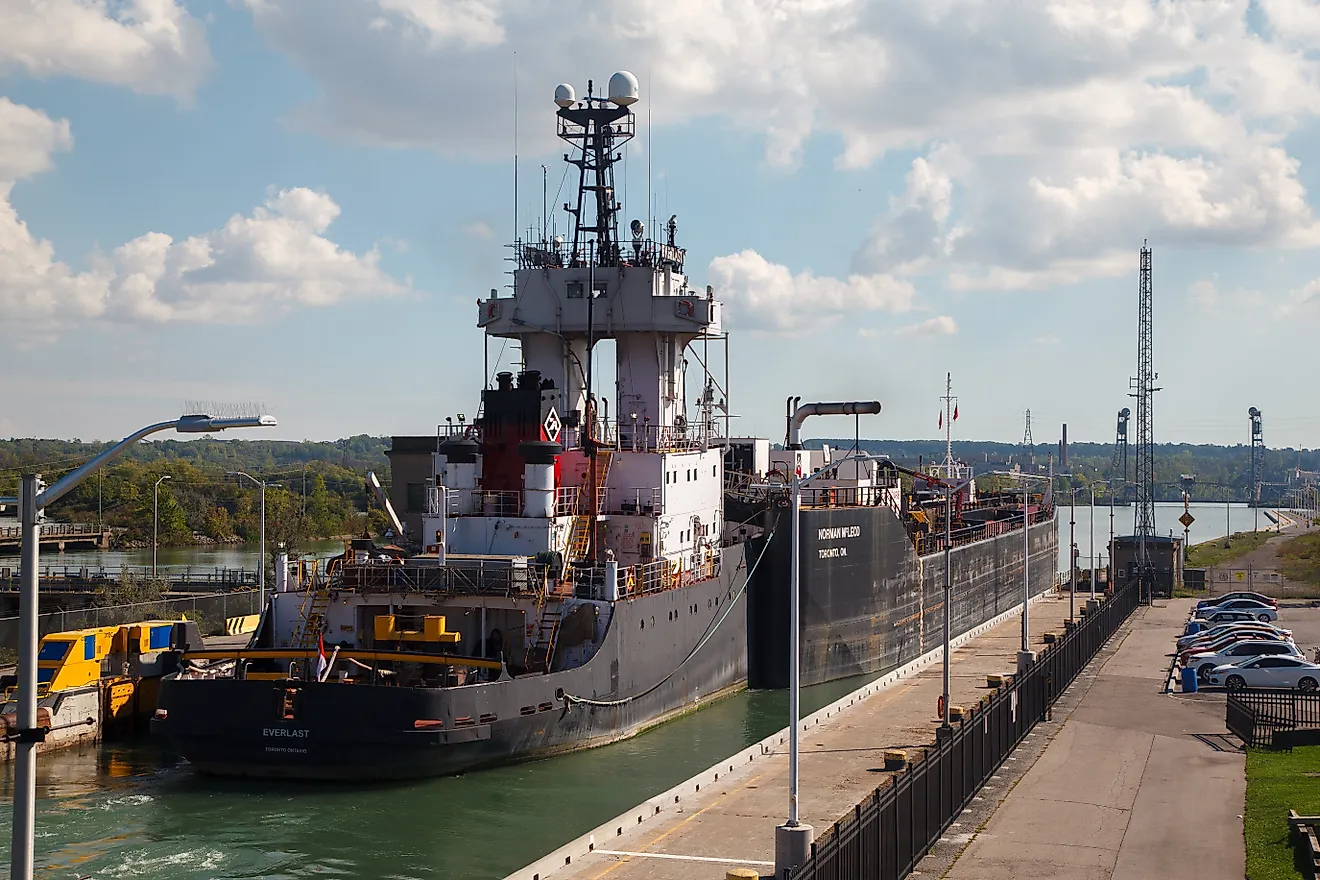
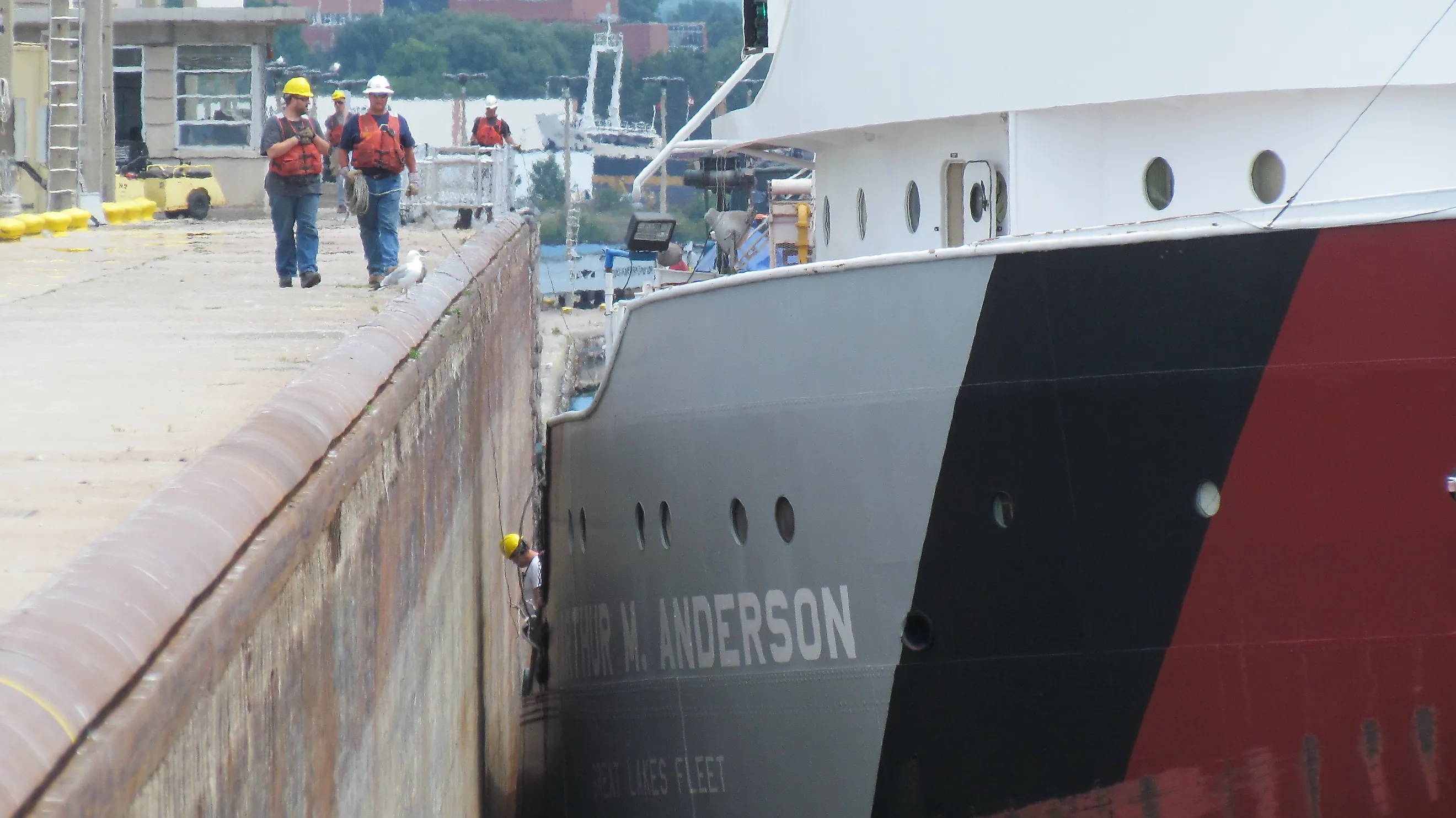
Barges deliver to vessels at anchorage or while moored at cargo berths, which provides flexibility when a dedicated fueling berth is unavailable or the ship cannot spare time for one.
A ship discharging 68,000 tons of ore over eight hours is alongside anyway. Fuelling during that window costs nothing in sailing time.
Slowing Down Buys A Lot

How often a ship needs fueling is partly a decision rather than a fixed quantity.
Reducing speed by 10 percent cuts hourly fuel use by about 27 percent, because resistance rises steeply with speed. The effect is large enough to change a season's consumption materially.
A gallon of fuel moves a ton of cargo 610 miles on the lakes. That efficiency is the whole economic argument for the ships.
Steam Plants Change The Numbers

Not every laker is a diesel, and the survivors of an older generation burn considerably more.
Steam-powered freighters consume more fuel than diesel vessels of comparable size, which is why repowering from steam to diesel has been a standard winter layup project for decades.
A steam ship therefore needs bunkering more often across a season, even at the same tank size.
The Last Fill Of The Year Matters
Fuelling decisions tighten as the season closes.
Ships keep burning fuel up to the last days of a season, and a vessel has to reach its winter berth with enough aboard to run generators and heating through layup.
In January 2026 the thousand-foot Presque Isle stopped at the Duluth entry specifically to refuel before continuing an iron ore run, nine days before the Soo Locks closed.
The Short Answer

Filling a Great Lakes freighter's 200,000-gallon bunker means moving about 640 tons of fuel oil, which takes roughly six to thirteen hours at standard barge transfer rates, plus soundings, alarm tests, hose connection, a slow start and a slow finish.
It happens about nine or ten times across a 297-day season, usually alongside a cargo berth so the ship is not losing sailing time for it. The slowest option is a tanker truck, which would need fifteen loads and the better part of a day to do what a barge does in an afternoon.